One Last Post on the Decision to Give Meat to Martin

When I posted about deciding to allow Martin to eat limited meats and meat-based broths, Adrian predicted that I might receive two sorts of responses. He thought commentators from the vegan/vegetarian camp would question the earnestness of my ahimsa, since I’m willing to serve my son flesh. Commentators from the other side of the fence would fault me for not doing so sooner, saying that if this might help Martin, then previously I was stymieing his progress in deference to my personal ethics.

I am thankful that I’ve received no such responses, neither on the blog, nor via email (findingmykid@yahoo.com) or the Twitter feed (@findingmykid), nor in person. So far, everyone has been supportive.

Thus more or less armed with approbation, I meant to let the issue go and post no more about the meat decision (as opposed to its implementation—be prepared to hear plenty more about that, as this vegan goes stumbling through Carnivordom). Subsequently, however, I became aware of at least one other vegetarian family reading my blog and facing the same choice, and I changed my mind about posting again. In the hopes of helping others settle, one way or the other, here is my reasoning in greater detail—

When it comes to human-to-other-animal interaction, I try to let two principles govern my conduct.

First, non-human animals are sentient beings with their own interests, and are entitled to possession and use of their own bodies and products thereof. If I do not need what belongs to an animal, I do not take it. I do not wear fur, leather, suede, silk, or wool because I do not need to. And after researching nutrition extensively, I concluded that neither do I need to eat animal flesh, parts, eggs, or milk to be healthy; indeed, it appears to be healthier to forego such foods. Therefore, I am a vegan. I became a vegetarian when I was 16 years old and a vegan when I was 21. I am now 39 years old.

Second, humans come first. That rule seems self-evident to me, because I am a human. Just as I put my family before outsiders, or my community before strangers, I put my species before other species. What’s more, I rank other species and their interests according to how like humans they are. Though it doesn’t always feel this way when I watch the news, humans are the gold standard. We enjoy the most complex lives. Mosquitoes, for example, are not much like humans. I react terribly to mosquito bites, with painful swelling that can last for weeks unless I get to an antihistamine within five minutes. I therefore kill mosquitoes when I can, and I haven’t lost any sleep over that. On the other hand, our cat Freddie (as I’ve noted before; sorry about all the feline scatology) pees outside his litter box. This is at least as annoying as having to take occasional mosquito-related antihistamine, yet I would never kill Freddie. At least not over the peeing.

I applied these two rules to Martin’s situation as follows: It appears that Martin, with his unusual digestive and dietary issues, might benefit from eating animal flesh—unlike a healthy person, for whom a well-rounded vegan diet (as I see the world) is the better choice. Does that mean Martin needs meat? I suppose it depends on how one defines “need.” Certainly, Martin can survive without meat. He might even heal without it; after all, he’s made a lot of progress already. The need, if need it is, arises insofar as animal flesh might help him heal faster, or more completely.

So Martin’s need is not a matter of life or death. For the animals involved, however, Martin’s meat eating is matter of life or death; they are being killed for the possibility that Martin can achieve richer and more fulfilling experiences. On a balanced scale, Martin would lose: An animal’s life, in toto, would outweigh Martin’s hope for a better life.

But the scale is not balanced. That’s where rule no. 2 comes in. Martin is a human, and my son. He starts with a whole pile of barbells on his side. The question, if we’re right about meat helping Martin, becomes whether animal life outweighs the difference between (1) Martin healed as far as possible without meat and (2) Martin healed as far as possible with meat.

I found no easy answer to the question, so stated. I don’t even know the second half of the equation. What is the difference in Martin’s healing going to be with meat, as opposed to without it? I read what I could find on the issue. I asked questions of Martin’s Track Two team. I pondered. I prayed.

In the end, with Adrian’s support, I made the call in Martin’s favor. At least, I hope this winds up being in Martin’s favor. We’re going to try meat for a couple months and see what happens.

We’re doing our best to impose some ethical restraints on the process. We resolved to accept meat only from organic farms where the animals have ample space to roam, or meat from game hunted wild, without bait. None of this eliminates cruelty, of course; the animals are still being slaughtered. But there’s something to be said for kindness before death. We’re also focusing on bigger animals, to minimize the number killed. No pigs, though. I know pigs. They’re smarter than dogs and darn near as affectionate. Too close to humans.

Two nights ago I made my first batch of beef stock. Tearing apart the meat nauseated me. Adrian played back-up, sitting on a kitchen stool and trying to distract. He explained that the white film edging the cut was fat, and not super-durable plastic wrap like I thought. In the end, I managed to get flesh and fat and bone into the slow cooker, along with organic vegetables and herbs. I set it to cook overnight, and yesterday morning I strained a jar  of stock for use this week, and a glass container full to freeze for next week.

My oldest brother, one of Martin’s namesakes, is also a decades-long vegan and a person whose judgment I trust (most of the time; a little sister can’t buy into everything). Yesterday he sent me this email:

I guess if the two main reasons not to eat meat are for cruelty and health, and the nice farm is not cruel, and it is actually healthier for [Martin], then you have to give it a go, because both main reasons are kind of accounted for. . . . I feel for you, this is tough! We feel crummy giving our cats fish, and we didn’t even give birth to them. Anyway, I do think you should review this link before using too much chicken.

I clicked on the link he sent and found an article titled, “Bolivian President Says Eating Too Much Chicken Makes You Gay.”

It’s still nice to get in a laugh, once in a while.

Saturday. Doctor, Therapist, Farm

Until August, Martin attended school just for two hours per weekday. His new school runs more than five hours per weekday, with a decent commute on either end, to boot. Participating in CPSE also carries family responsibilities. We can’t willy-nilly yank Martin out of school, or decide that he’ll skip a day.

As a result, we now concentrate doctor visits and private therapies, when possible, on the weekends. We try to make family fun out of shuttling from one appointment to the next.

Today Martin woke around 7:45 a.m. (an extra 45 minutes’ sleep from school days). He and Adrian completed some RDI exercises while I assembled their weekend breakfast. Martin got squash “French fries” with kelp flakes and one duck egg fried in hemp oil with minced cilantro. Adrian got the same, but substituting a chicken egg and adding a slice of whole-wheat toast.

It was a lazy morning, and despite the early start we managed to leave late for our 10:30 a.m. meeting with Dr. Ingels, the allergist, near Union Square. Because we were setting out for the day, we took the car, which of course made us even later, our route blocked by firemen using their truck and ladder to remove their stationhouse’s window-unit air conditioners, and then by a moving crew marching across 23rd Street with mattresses. A bunch of mattresses. Dr. Ingels pardoned the untimely arrival, and we enjoyed a routine visit. Martin’s tolerance for malverine, piperine, and candida has increased.

From Dr. Ingels’s we headed north, to Pleasantville, for a 12:30 p.m. session with Martin’s HANDLE therapist, Katie. She is the chief proponent of accomplishing Martin’s recovery as gently as possible. We discussed ways to soften the process even more. I talked about Martin’s attention and language lagging this past month. Katie asked about Martin’s sleeping and body control, which actually (I realized) have during the same period been quite good. Attention and language are advanced functions, she reminded me. Sleep and control are building blocks.

We grabbed lunch at the Pony Express in Pleasantville and ate in the plaza by the train station. Martin had rice crackers and homemade white-bean hummus. He investigated some trees, ran to the fence to watch a train pass below, peered with interest at (but did not speak to) another little boy. Overall, he seemed better. I’m beginning so sense a return of his attention, since we reduced the Biosode from 1x dilution to 2x.

From there we moved on, even further north, to the highlight of the day (for Martin, and perhaps Adrian) and an onerous task (for me). We drove to Hemlock Hill Farm in Cortlandt. We had researched farms on the internet in search of one that was organic and came close to meeting my ethical standards. We need some meat.

Yes. Meat. We’ve decided to feed Martin limited amounts of meet, and see if it augments his recovery. The choice has been weighing heavily on me these two weeks or so, and I needed to have it over with.

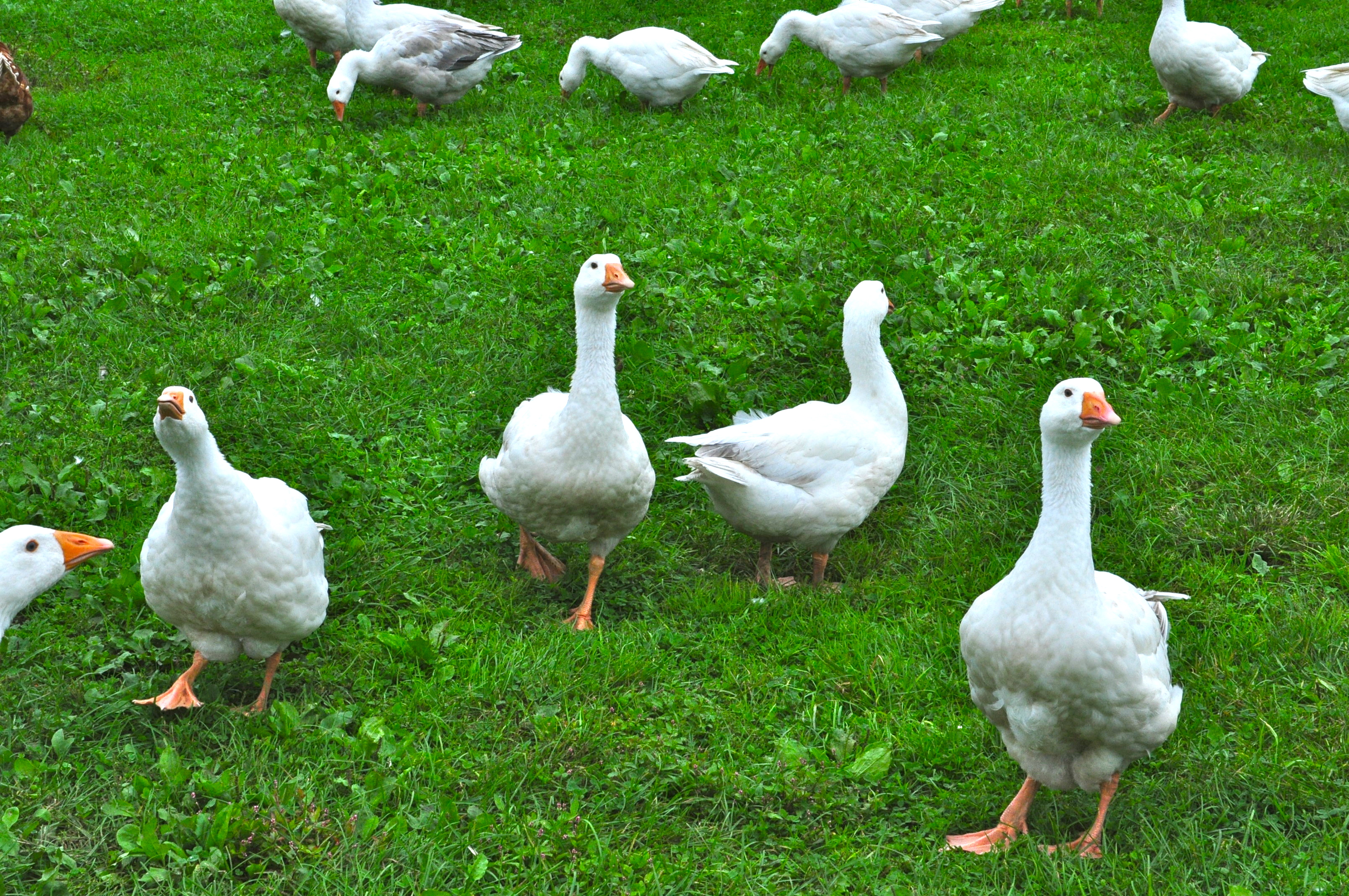
So off we went to Hemlock Hill Farm. Adrian took Martin to wander among the chickens and geese. I entered the little shop the farm maintains, more or less a concrete room with refrigerated glass display counter, freezer, shelving unit, and a few display bins. A man behind the counter asked if he could help me.

“I need—some meat.”

“What kind of meat?”

I decided honesty would be the best approach and ’fessed up that I had no idea what kind of meat. I’m a vegetarian, I explained. My son has a medical condition, and I’m going to try preparing him some meat.

The fellow was friendly and patient. He showed me packaged goat parts and which beef cuts have bone in them. (I’m supposed to put bone in the crockpot for making broth.) He explained how I could differentiate meat of animals killed on-site from that of animals killed at a USDA-certified facility in Pennsylvania. (I didn’t want any flesh from animals who were transported before slaughter. Too cruel.) I read information on what the animals eat—primarily, grass and grain also produced in Westchester County, at another farm. I asked about quail eggs. The farm has had them in the past but did not have any now.

Finally I purchased two frozen shank cuts, bone in. Cow meat. I took a dozen duck eggs, too, saving myself a trip to the farmer’s market.

Then I went out to greet the animals. The ones still alive, anyway. The birds seemed happy and unafraid. Other than wire fences delineating the fields—ducks over there, chicken and geese this way—they have freedom to move about as they please and peck at the ground. The recent rains had left the area muddy, but I could imagine some serious dust bathing when our prodigal sun reemerges. The cows were grazing in a pasture some distance up the road, so I declined the farmer’s invitation to go meet them. She also invited me to hang around until the cows came home from pasture around 5:30 p.m. The day had already stretched long, however, and we needed to be getting back to the City.

Martin knocked off early this evening, exhausted from new HANDLE exercises and playing amongst the fowl.

My mind remains fixated on the cow meat now in my freezer. Tomorrow evening I will try to make a beef broth. I hope that I don’t fail and waste the flesh.

This new chapter will be complicated.

The Railroad, the Weight of the World: Meat in ASD Recovery

In last week’s post titled “Guilt,” I described a chain of events surrounding Martin’s birth: Pitocin, epidurally administered drugs, stuck baby, C-section, NICU. I alluded also to my regret over having allowed the doctors to induce labor, which I believe triggered that chain.

With several years’ hindsight, I feel that I was railroaded into allowing the induced labor. (And I did allow it; I own my decision.) I was 42 weeks pregnant. From my perspective, Martin being two weeks late raised no red flags. Thirty-five years earlier, I myself spent an extra few weeks in the womb, and my instinct now said Martin was not ready to be born. But my doctor asserted, and a second doctor confirmed, that letting the pregnancy continue could only endanger Martin, with no potential upside. Plus, my doctor said, by inducing labor we could schedule the birth, for her once-weekly hospital duty.

It should not require explanation that a woman 42 weeks pregnant, who is being told that she’s risking her baby’s health, is vulnerable. I was vulnerable, and I made a decision that I believed, even at the time, to be wrong.

The mother of a young child with autism, who believes that recovery is possible and is struggling to effect that recovery, also is vulnerable. I am vulnerable, again.

And I am being faced with a choice I wish I did not have to make.

I’m a vegan. Until February, so was Martin. I’ve posted here about some of the tough decisions Adrian and I have made for Martin, regarding animal products in his diet. Since we radicalized his diet, he has started consuming fish oil, honey, ghee, and eggs (at the moment, duck and quail eggs).

Now I am being advised that, given his particular gut and digestion issues, eating meat might benefit Martin. Meat! Cows and pigs and chickens and—whatever other animals people eat, I suppose. I haven’t touched meat in more than 22 years. By this time the whole idea just strikes me as strange. I don’t want to do it, to feed flesh to Martin. At the same time, Adrian and I decided when we started this journey that we will do anything in our power to recover our son. Anything. (“If Martin needs to drink the blood of the Dalai Lama to get better,” I told Adrian one night, “we’re catching the next flight to India, knife in hand.”) Which means that if cows and pigs and chickens may help Martin, I can’t rule them out.

Let me be clear about this: I am not being railroaded into feeding Martin meat. The Track Two recovery team we work with is not the same as the doctors at Martin’s birth. These professionals take time, consider our family’s ethics and preferences, and facilitate our decisions, instead of strong-arming us into their decisions. No one has even framed the meat issue except with respect. Nevertheless, my own vulnerability when it comes to Martin’s recovery leads me to feel attacked. Feeding him meat means compromising a long-held stance. Denying him meat means bypassing a possible avenue to recovery.

Or does it? We’ve made no decision yet. Adrian and I are still investigating, asking questions. If a vegan diet is generally healthiest, what is it about Martin’s body that might make meat a better choice for him? Would it lead to more complete recovery, or faster recovery, or just easier recovery? (I suspect that most parents recovering their children don’t spend hours each week balancing proteins, as I do with Martin’s gluten- and soy- and casein– and meat- and most-other-things-free diet. Chicken breast every dinner would be a heckuva lot easier.) How much meat are we talking about, and what kinds? For how long? How would we know if it’s helping?

I hope to commit to a path soon, one way or the other. I’m way too worked up over this issue.

In the event we do decide to feed Martin meat, please don’t bother combing the blog for meat-based ASD recovery recipes. I’ve been a vegetarian all my adult life, which means I’ve never cooked animal flesh. Seriously, I have no idea how. When we added eggs to Martin’s diet, I had to ask a friend how to hard-boil one. Goodness only knows what will happen if I end up with a hunk of cow parts in my hands.

Back on the topic of Martin’s birth: By the end of the events that began with induced labor, even as I was being stitched up from the C-section, I had wits enough to comprehend that this was not the entry into the world my son needed.

When the doctors announced that, based on my fever and despite Martin’s Apgar score of 9, they were removing him to the NICU, I mustered my strength and called from the operating table, “No, no, that’s not necessary. He’s fine. Adrian, get him back!”

Adrian confronted the doctors, said we did not want our son taken away.

Their reply was as knee-jerk as it was decisive: In the event we refused to surrender Martin for the treatment they believed best, the Administration for Children’s Services would be contacted.

And my son was gone.

Which, I suppose, is another reason still why this blog is anonymous. I’d like to avoid any more authority figures ready to impose their will on my family.

On the other hand, deciding for myself can feel like the weight of the world.

ASD Recovery Recipe: Bean and Almond Soup

My quest for varied and nutritious recipes that meet Martin’s dietary requirements has led me to some cookbooks thick with dust on my kitchen shelves. I adapted this dish from The Vegetarian Resource Group‘s Vegan Handbook, a book I acquired a decade or so ago and hardly have cracked since. I made the soup for dinner tonight. It met the Martin approval test.

1/2 cup navy beans, soaked overnight
1 cup almond flour
2 parsnips, peeled and diced
1/4-1/2 cup minced cilantro
1 tsp cumin
1/2 tsp salt, kelp flakes, or dried celery
1/4 tsp white pepper
1/4 cup fresh lemon juice

Cook the beans for an hour in six cups water. (I also tossed in a kombu frond, which I removed at the end of the hour.) Then add the rest of the ingredients except for the lemon juice and cook another half-hour, until the beans are cooked thoroughly. Use an immersion blender or a food processor to purée the soup. Add the lemon juice right before serving.

With the beans and almonds, this is like a tasty protein blast. Adding plenty of cilantro boosts mitochondrial processing.

ASD Recovery Recipe: Dehydrated Squash Chip Snack

This recipe comes, with very minor modification, from a book called Kristen Suzanne’s Easy Raw Vegan Dehydrating. The chips are easy to make and yummy. If you pack them up for school or to travel, include an unbleached paper towel in the container to help soak up any extra oil and keep them from getting soggy.

4 medium zucchini or yellow summer squash
1/4 cup oil (pumpkin seed oil gives a nice taste but also tints the chips slightly green!)
2 tbsps fresh lemon or lime juice
2 cloves garlic, pressed (right now, I substitute white pepper and dehydrated celery)
1/4 tsp cumin
1/2 tsp salt or kelp flakes
dash of cayenne (right now, I omit)
dash of paprika (right now, I omit)
1/2 cup finely minced herbs of choice

Mix all ingredients other than squash in a large bowl and set aside. Wash the outside of the squash well. Without peeling them, slice the squash into 1/8″ discs (a mandoline slicer works well). Stir the squash discs into the other ingredients, being sure to coat each piece well. Remove the discs one-by-one, shaking off any excess oil, and transfer to a dehydrator. Dehydrate on medium heat for 14-24 hours, to desired crispiness.

Keep away from adults. These are addictive.

ASD Recovery Recipe: Noodles with Nut Sauce (Cheating Just a Little)

Some foods I never cheat on when it comes to Martin’s diet. For example, I never slip in “just a little bit of soy” or “a pinch of refined sugar.” But every once in a while I do try to treat him with a scoop of an item typically off-limits. Tonight is one such occasion. As I’ve written, Martin’s diet now includes gluten-free grains, in moderation (typically no more than 1/4 cup per day). This is because he was getting some ketosis from all the fats, and because we’ve made good progress in eliminating yeast overgrowth. For dinner, I’ve made him buckwheat soba noodles with this nut sauce. The special ingredient? Chickpea miso. The original recipe called for sweet white miso, which as a soy product is totally off limits. I replaced it with chickpea miso. Chickpeas generally are too starchy for Martin’s diet, but hey, every kid needs to party now and then.  I use the South River brand, which is made with rice but gluten- and soy-free.

I’ve also sautéed some cauliflower in sesame oil with sesame seeds, which I will put on top of the noodles and nut sauce for a nice, complete meal.

I adapted this recipe from an old cookbook on my shelf, called The Peaceful Cook by Harriet Kofalk. One benefit of the cookbook, for us at this time, is that it uses nothing in the onion/garlic family. (According to the introduction, “These are stimulants, much like caffeine, and can negatively affect the subtlety of our internal processes.” Hmmm….)

1 cup walnuts or pecans, pre-soaked and dehydrated
1 cup vegetable stock, according to your child’s diet
3 tbsps chickpea miso

Roast the nuts in a dry pan until they are crisp. Combine the miso and stock in a blender or food processer and then, with the blades running, add the nuts a few at a time to form a saucy consistency. Toss with gluten-free noodles or pour over rice.

ASD Recovery Recipe: Umm, Like, White Chili? Or Stew? Chili-Like Stew?

This began as a recipe for “vegetarian white bean chili” that I had found someplace and copied onto a note card. Of course, the loss of tomatoes, peppers, onions, and garlic from Martin’s current diet means that “chili,” in its usual form, does not work for us. So I changed nearly every ingredient in the recipe and came up with something between root-vegetable chili and a stew. It was delicious. Martin ate the chili/stew as is. After Martin went to bed, I set aside a portion for his next-day lunch and mixed the remainder into tomato sauce, which I served with gnocchi for me, Adrian, and our houseguests. Happiness all around.

1/4 cup oil (I used sunflower)
1 cup navy beans, pre-soaked
1.5 cups vegetable juice (I juiced an acorn squash, two parsnips, and some celery)
1 turnip, diced
3 ribs celery, diced
1 yellow squash, peeled and diced
1/4 cup fresh cilantro, chopped
1 tbsp fresh oregano leaves
1 tbsp fresh basil, chopped
1/2 tsp ground cumin
1 tsp celery salt (I used my mother’s, which is all celery and no salt)

Half-cook the pre-soaked beans in filtered water, until they are softened but not squishy, then drain. Combine the half-cooked beans with the vegetable juice and squash; cook over medium-high heat. Meanwhile, sauté the turnip and celery in the oil until soft. When the beans are almost cooked through, add the turnip-celery mixture and the spices. Finish cooking.

ASD Recovery Recipe: The Actually Tasty Broccoli-And-Greens Purée

I promise to return, tomorrow, to my ASD recovery six-month review. Meanwhile, I realized this evening, as I prepared it, that I have not yet posted the recipe for my most-favorite go-to dinner for Martin: Indian broccoli-and-greens purée. You may be thinking that broccoli-and-greens purée sounds too healthy to be tasty. This dish is indeed healthy. On the other hand, I pile on the fats and spices to make it rich and delicious. As evidence of its appeal, I offer an anecdote: This evening Adrian was helping Martin eat, while I meted out the day’s final supplements and prepared Martin’s room for bedtime. Martin was watching a Sesame Street video and obviously content with the food. Nevertheless, at some point Adrian (who had already polished off his own portion of purée) called, “Martin says he doesn’t want any more of his dinner. He says I can finish it.” Yes, my husband was attempting to steal food from our three-year-old son. It’s that yummy.

As to why this is a favorite go-to dish, it requires very little that is fresh, except for sweet potato or squash, and ginger, which can all hang around for quite a while before going bad. That means I can schedule broccoli-and-greens purée toward the end of the grocery-shopping cycle and not worry about the ingredients spoiling before I prepare the meal.

The most challenging ingredient is cashew cream. I make cashew cream at home. I soak raw cashews overnight in purified water, drain and rinse them, Vitamix them at high speed with more purified water, strain through a nut-milk bag to make cashew milk, then cook the milk over medium heat (stirring constantly to prevent scorching) until it becomes creamy. This concoction keeps well in the refrigerator. If you want to avoid making cashew cream at home, replacement options for this recipe include (1) a nondairy cream cheese that fits the requirements of your child’s current diet, such as Dr. Cow; (2) a nondairy yogurt that fits the requirements of your child’s current diet; or (3) creamed coconut (I like the Let’s Do…Organic brand), very modestly diluted with warm filtered water.

This recipe is adapted from a version of nariyal sak found in Lord Krishna’s Cuisine: The Art of Indian Vegetarian Cooking. That’s a book about Vedic cooking, which among other things does not use onion or garlic—very helpful to me in these trying months until Martin is allowed to have them again. As I’ve made clear, I think onion and garlic are sustenance of the gods, except (apparently) Lord Krishna.

10 oz. frozen broccoli
10 oz. frozen spinach or kale
10 oz. frozen something else green, like asparagus or green beans
1 sweet potato (or 1/2 acorn squash), peeled and diced
2 green chili peppers (I leave these out right now)
1″ chunk of ginger root, peeled and sliced
1/2 tsp turmeric
2 tsps ground coriander
1 tsp salt (I replace with kelp or dried and ground celery)
1/4-1/3 cup ghee
2 tsps cumin seeds (preferably pre-soaked and dried)
1 tsp garam masala (this is an Indian spice, available at most groceries)
1/4-1/3 cup cashew cream (see introduction, above)

Put the frozen veggies, sweet potato or squash, chili peppers if using, ginger root, turmeric, coriander, and salt or salt replacement into a large pot, turn the heat to medium, and cover. Stirring occasionally to prevent sticking, let everything simmer until the sweet potato or squash is very tender, about 45 minutes. Then purée the cooked mixture in a food processor.

Heat the ghee over medium-to-medium-high heat in a large frying pan. (I know it seems like a lot of ghee, but everything else in the recipe is salubrious. Cut yourself a break and throw in ghee with abandon.) When the ghee is hot, add the cumin seeds and let them sizzle for 30 seconds until they darken a little, then scoop in the entire puréed greens. Cook until all the ghee is absorbed into the greens mixture, about five minutes.

Reduce the heat to medium-low and stir in the garam masala and cashew cream. Warm through and serve.

If your child is able to have grains, rice makes an ideal accompaniment to this dish. I try to complete the Indian effect by quickly frying, in ghee, the quinoa “pita breads” my mother makes for Martin and pretending that they are naan. That is mostly for my own amusement. Martin wouldn’t recognize a naan if it crawled into bed with him.

ASD Recovery Recipe: Eenie-Meenie-Zucchini-Tahini

If a food is vaguely pasty and not clearly identifiable as puréed broccoli, my son calls it “hummus.” Skordalia, blended dahl, even nut butters—in Martin’s palate, they’re all hummus. I don’t mind so much; after all, he likes hummus, in all its iterations. Nevertheless, I crave some variety in monikers, and I’m not above going cutesy to get it. That’s how this recipe, a version of which Kathleen Reily sent me as “zucchini hummus,” instead became known in my home as eenie-meenie-zucchini-tahini. If you can throw a bunch of stuff in a food processor or Vitamix, you can make eenie-meenie-zucchini-tahini. Saying the name ten times fast is much more challenging.

2 peeled zucchini, roughly cut
1 cup raw tahini
1/3 cup fresh lemon juice, or mixed lemon and lime juice
1/2 cup olive oil (or another light-colored oil such as macademia, to taste)
sea salt
1-2 tsps ground cumin

Process all ingredients in a food processor or Vitamix until smooth and creamy. Among other small variations, this recipe can also be made with garlic (I would say four cloves raw or six cloves roasted). When Martin can eat garlic again, I’ll go back to adding it, because with the exceptions of hibiscus tea and (some) desserts, everything tastes better with garlic.

ASD Recovery Recipe: Curry-Lentil Patties

This is another recipe adapted from the Vegan Planet cookbook. The cookbook suggests serving the patties with three-fruit chutney. That’s not available for Martin, but I find that either homemade cilantro-coconut chutney or else a cilantro-avocado spread make a nice alternative. Another variation is to dice fresh curry leaves (if you can find them) and sauté them with the squash, then decrease the curry powder accordingly.

olive oil
1/2 cup minced onion (I substitute celery)
1/2 cup lentils, pre-soaked
1 cup diced butternut or acorn squash
1/2 cup raw almonds, pre-soaked
2/3 cup sunflour (or sesame seeds, soaked and dried)
1/4 cup minced parsley leaves
2 tsps curry powder
1/2 tsp salt
1/8 tsp cayenne (I leave this out)

Cook the lentils and drain them well. Bake or sauté (do not boil, because it makes the patties too wet) the squash until soft. Heat a spoonful of olive oil in a frying pan, add the onion, cover, and cook five minutes until soft. Transfer the onion to a food processor, leaving as much oil as possible in the frying pan. Add the remaining ingredients to the food processor and process until smooth. Form into patties, about ½-inch thick. Add some more oil to the frying pan and fry the patties until browned on each side.