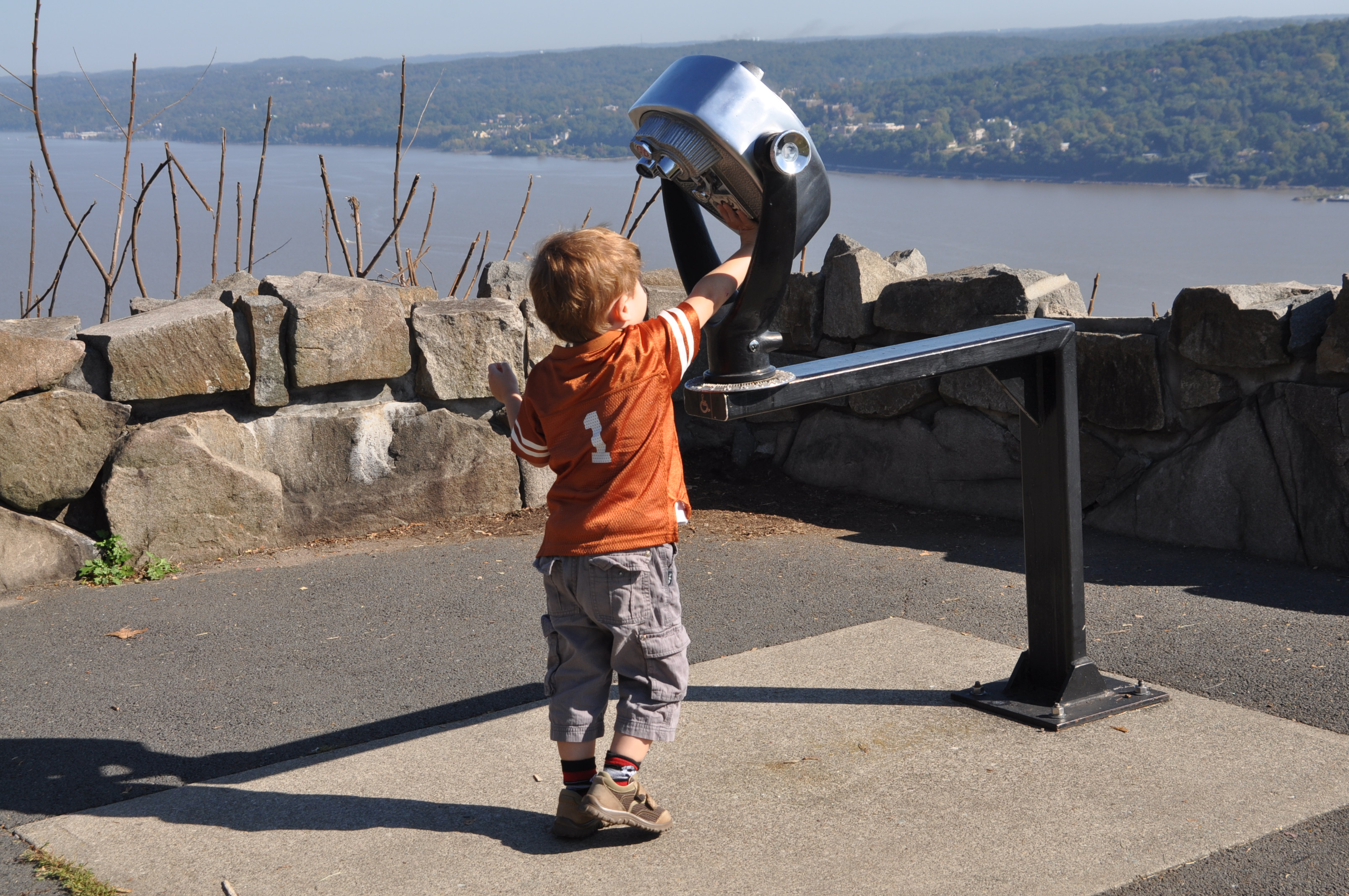
Got Questions? Martin Has Answers

Adrian reported yesterday that Martin has been giving substantive answers to questions. That’s not a skill I know Martin to have. Martin can repeat questions. He can respond yes or no to a yes-or-no inquiry. (That’s a recent development; Martin added “yes” to his vocabulary only this year.) He can express a preference when presented with two alternatives, such as, “Do you want to watch Ernie, or Big Bird?” And he can provide a concrete, expected response when presented with a known scenario—What song is this? Which instrument is this? But he cannot yet answer an open-ended question with various possible responses.

At least, I didn’t think he can. I was suspicious when Adrian said otherwise. According to Adrian, he had asked Martin, “What’s the name of a teacher at school who plays the guitar?” and got a name. He also had asked Martin, “What did you do today with Miss Jenny [a babysitter]?” and got a response that involved the playground and a merry-go-round.

Lucky shots, I thought.

Still, I decided to test the claims. Samara was sick today, so I picked Martin up from school and took him for a walk. After suitable time had passed, I knelt to catch his attention.

“Martin! What did you do in school?”

Martin made eye contact and responded, “What did you do in school?”

“That’s right. Can you tell me what you did?”

“Gym.”

“Gym? You had gym? You went to the gym?” Gym. That’s a real answer. I was giddy.

Thus egged on, Martin expanded his answer: “Class—gym class.”

Gym class! Although I had no idea whether in fact Martin did have gym class today, those two words provided sufficient proof for my standards. Martin can answer questions. I wonder how long this has been going on.

I’m going to keep pushing the skill. Martin had better get himself ready for plenty of open-ended questions.

Heck, maybe by Christmas we can achieve something as advanced as nodding his head for yes.

Kitchen News: An Update on the Hunt for a Food Processor with Glass Bowl

I amaze myself. I’m anxious to replace my food processor, which has a plastic (and, by now, cracking) bowl, because I think high velocity, blades, and heat are a recipe for chemicals from plastic to get into Martin’s food. What my anxiousness means in practice is that I’ve just managed to kill an entire morning searching for a food processor with a glass or stainless-steel bowl, with marginal success.

Between being on hold and actually conversing with a representative, I spent half an hour on the phone with Robot Coupe. That company sells numerous commercial models with stainless steel bowls (though the feed shoots, pushers, and blade components may contain plastic). The only models possibly appropriate for home use, according to the representative, are the R100, which has a plastic bowl, and possibly the R2N Ultra, which has a metal bowl (some other parts plastic), weighs 36 pounds, and sells for more than $2,300.

Another option is an Electolux, the Dito Dean MUGXU, with 3.2-quart stainless-steel bowl, a commercial model nonetheless small enough for countertop use. But at 35 pounds (how can I store that?) and more than $1,000, well . . . .

I’m hatching a new plan.

I use the food processor primarily for puréeing and for getting rid of chunks in soup. My first thought was to get a glass container for my Vitamix, which resembles an extra-powerful blender capable of puréeing. Unfortunately, a call to Vitamix got me the bad news that, although the company has glass containers in the R&D department right now, none are expected to be available for at least a year. In the past, Vitamix manufactured stainless-steel containers, but those would not be compatable with my more recent model.

So for the time being I’m going to invest in a new stainless-steel immersion blender. I already have a KitchenAid blender with a glass jar, though it does have some plastic around the blade that comes in contact with food. I hope to use those two appliances to work around the food processor as much as possible.

For tomorrow evening I have broccoli-and-greens purée on Martin’s menu. Time to blend in batches and hope for the best.

It’s in There

I’m frustrated, insofar as I feel like we haven’t made any significant progress since mid-summer or so. Things are trending upward, yes, since the bad month of September. Still, I feel stalled. Anxious. I wonder whether we will meet our goal of making Martin neurotypical by age six or so. I wonder whether we will ever meet our goal.

Adrian is quick to point out that I may be too close to the situation. We have made progress, he says. Martin’s proprioceptive awareness has improved, to the point where he consistently looks downward when descending stairs. And just this weekend Martin demonstrative excellent pacing, walking at our speed while holding hands with us, stopping when we stopped.

That’s all true. But I see continued—even, perhaps, increased—echolalia. I see lower name responsiveness than over the summer. I even see some scratching and messy visits to the potty, signs of yeast overgrowth. Yeast! I thought we were done fighting yeast months ago.

In times like these, I take comfort where I can find it. Adrian and I had the opportunity last week to speak with Martin’s school instructors. His speech therapist said this: “Martin has his good days and his bad. Some mornings I feel like I’m not reaching him at all. Other mornings he comes in, greets me by name, and sits down, ready to work.” That reflects our experience at home. Some afternoons Martin flits from toy to book to floor to window, unable to settle, deaf to his own name. Other afternoons he plays contentedly with his Thomas trains assembled on the coffee table, indistinguishable (except for limited language) from a typically developing peer.

That’s the comfort. So long as Martin sometimes behaves like other three-year-olds, even if it happens only when the blue moon rises, I know he has that capability. I know that the attention and sociability and self-awareness exist within him, and that the only hurdle is discovering the combination to unlock those skills.

I gaze upon him and think: Neurotypicality. It’s in there.

Quote of the Last Six Days: What Isn’t Tried

I got this quote off the giant flip-pad at my Weight Watchers meeting this afternoon, which attributed the words to “Anonymous.” The quip could’ve originated anywhere, I suppose. No matter. I decided it’s fair game for my Occasional Quotes series.

What isn’t tried won’t work.

Self-evident? Yes. Still, it encapsulates my philosophy these days.

I’m about to embark on a purge of destructive forces from our home. Environmental toxins. Molds. Electromagnetic fields (EMF’s). We live in a 150-year-old building tucked into a massive modern metropolis. Goodness only knows what my efforts will uncover.

I suspect that this is going to be a lot of work, and that in the end it might require even more lifestyle changes. We’ve already tossed the cordless telephones and microwave. The television, receiver, stereo, DVD player, and speakers are hooked to a single power unit so that the electricity to them can be easily cut. The wireless printer, which serves all four household laptops, is shut off anytime it’s not actively receiving data or spitting out paper. I’ve removed almost all plastic from the kitchen. (I’m on the hunt now for a food processor with a glass bowl. I’ll post the link if I find one.)

Perhaps next we’ll learn that the air-conditioner in Martin’s room is spewing EMF’s. Maybe the whole room is bad and we need to move him down the hall to the guest quarters. We have wireless internet, very helpful to me working at home. Will I have to run cables through my home office, and to Adrian’s desk, and to our bed where I usually end up writing this blog?

Staring down possibilities like these, it’s legitimate to ask whether any of this will aid Martin’s recovery. It’s equally legitimate for me to respond that I have no idea. Maybe it will help.

If I don’t try at all, definitely it will not help.

There are lines to be drawn, of course. I can’t keep Martin in the proverbial bubble. (I tried. He got out.) If I discover that Martin’s favorite train (Rosie) or his nighttime clutch blanket (John Paul) is tainted, I’m going to need to hear some pretty solid evidence before I rip the toy from his hands. I have to weigh what’s reasonable.

Before you ask—yes, my definition of “reasonable” has expanded, exponentially, since we started ASD recovery.

Truth be told, I’m hoping to discover that the only toxic items in our household are these horrible old Russian posters Adrian has hanging in the upstairs hallway. Lifestyle change or no, I’m willing to kick those puppies to the curb.

Mainstream Positive

I sacrifice many words on this blog to complaining about mainstream medical professionals. Or if I don’t, I mean to. I have myriad gripes about “the mainstream” and, especially, Martin’s Track One team.

It’s only fair, then, that I disclose positive experiences with the mainstream, too. Today I had one.

Martin is vaccinated. Almost fully vaccinated, a choice I now regret. (I don’t believe that vaccines “cause” autism; it’s more complicated. That digression I’ll save for another post.) He’s missing one currently due booster, which I don’t want him to receive. His school, however, requires certification that all students have all vaccinations and boosters. I’ve been in a bit of a bind.

Martin’s pediatrician, Dr. S, satisfied with the near-complete vaccination protocol he’s already undergone, has expressed a willingness to move forward only at my comfort level. I decided to ask her for a medical exemption to delay this last shot until we have more time to consider how it will affect Martin’s treatment.

Dr. S, however, has been absent from the office for some days and will not return within the school’s paperwork timeframe. So this morning I ended up referred to the back-up pediatrician, Dr. R. She took my phone call immediately.

I was nervous about whether Dr. R would be as willing to work with me on a medical exemption. I explained the situation, and that I had previously discussed with Dr. S holding off on additional vaccinations. Dr. R pulled Martin’s chart, reviewed Dr. S’s notes, and agreed to issue the temporary medical exemption for Martin. I was hung up the phone happy and grateful.

Five minutes later the phone rang. It was Dr. R again. In reviewing Martin’s chart, she had noticed that we’ve undertaken a biomedical protocol for treating ASD. She has other patients on the spectrum, whose parents have asked questions about what they can do. Would I be willing to tell her about our experience?

Would I? You betcha! I agreed to meet Dr. R at her office at lunchtime.

We ended up spending an entire hour together. Dr. R knew virtually nothing about DAN! or biomedical approaches to autism, other than tidbits she’d heard about modified diets. I started by disclaiming any understanding of the science behind curing autism, and said that I can only relay our family’s experience: what we’ve done, who we’ve seen, and how Martin has changed. Then I prattled endlessly, pulling no punches about the challenges or the gradual, yo-yo nature of the progress. Dr. R impressed me with her willingness to listen. She wrote the names of books and websites for her own follow-up reading. She asked questions about what resources I’ve found most helpful, and where she might direct other ASD patients’ families. She never once raised her eyebrows or looked at me like I’m loony for giving recovery a try.

I came away from the discussion with renewed faith in the medical establishment. If ASD recovery really does work—and Martin’s progress so far suggests it does—then the way it’s going to reach more spectrum kids is one ear at a time. Practitioners like Dr. R who at least are willing to listen might may help turn the tide.

Fever Has Its Benefits. Meat I’m Not So Sure About

I’m not sure how this meat thing is working out. In addition to throwing up in the car last Friday, Martin has appeared queasy since we started giving him beef broth. He opens and closes his mouth and licks his upper lip when he eats. He’s sallow, pasty-faced with pinkish circles weighing down his eyes. My poor little guy.

It’s not so bad as all that, you may accuse. Those impressions probably stem from your prejudices against meat in his diet. The vomiting was motion sickness. Adrian drives like a maniac.

Fair enough. But we’ve spotted some less-subjective signs, too. Martin has been sleeping restlessly and waking early. This morning he materialized in our bedroom at 5:54 a.m.; usually we have to toss him like a football just to rouse him at 7:00. And the crabbiness! Dealing with Martin’s tantrums has given me a headache for the past few days.

He seems to be on the constant verge of coming down with something.

To tell the truth, I wish he would. I’m hoping for a fever. Half a dozen times daily I press a hand to his cheek, feeling for warmth. No such luck.

I want a fever because fevers help. I’ve read about several studies, and anecdotal evidence, confirming the “fever effect” in kids on the spectrum: a temperature eases the symptoms of autism. Children become suddenly more verbal and responsive, and they make better eye contact.

At the same time, kids on the spectrum rarely get fevers. Much less often than neurotypicals. In case anyone questions where I got that fact, let me explain my method: One of Martin’s health practitioners once mentioned to me that ASD kids don’t get fevers (at least, not prior to biomedical intervention or detoxification) because their systems are too weak to mount an immuno-response, which is what a fever is. I followed up on her comment with a highly scientific investigation, in which I randomly asked acquaintances whether their ASD children get fevers. Everyone I spoke to responded with some form of, “Funny that you ask! I can’t remember him ever having a fever.”

Martin never got a fever, either. All through infancy and toddlerhood, past his third birthday—nothing. He had occasional colds, and stomach bugs, but no fever. We took this as an indicator of unusually strong health. Only later, after the ASD diagnosis, did we learn that absence of illness and fever could indicate health problems. Later still did we realize that wanted Martin to get a fever, to experience the body’s way of burning off malicious intruders.

We started homotoxicology in early May. We hoped it would lead to a fever for Martin. It didn’t. At least, not for several months. Not till we’d let down our guard.

We were vacationing in rural Maine late in July when a fever, his inaugural fever, struck Martin unexpectedly. It was Saturday evening. We’d lugged Martin’s oils and drops and supplements and special foods from New York to the rental house, but nothing for a fever. No homeopathic remedies. Not even a thermometer to determine how high the mercury rose. Without much else at hand, we comforted Martin with wet cloths draped across his brow.

Around midnight the fever spiked. Martin’s skin sizzled to the touch as he flopped restlessly about the king-size bed where we’d installed him. Adrian and I hatched a panicked plan: Adrian stayed with Martin while I woke my brother Eddie, who was staying with us, to accompany me on a thermometer-seeking expedition. (We focused on finding a thermometer so that, at a minimum, we could know if Martin’s temperature rose so high we needed to visit an emergency room.) Eddie and I located a Wal-Mart on-line that, according to its webpage, stayed open 24 hours. We plugged the address into my GPS and drove almost an hour through the black New England woods, arriving just after 1:00 a.m. to find the Wal-Mart closed. Quite closed. Since midnight. Until 6:00 a.m. So we doubled back into the only town we’d passed and checked every convenience store, grocery, or gas station we could find, to no avail.

We returned to the house around 2:15 a.m., empty-handed. I found Adrian awake and vigilant, watching over a sleeping Martin. The fever had diminished. I climbed into bed with them and dozed off and on until Martin woke around 7:30 Sunday morning, still feverish, whereupon I plopped him into a lukewarm bath, over his protests.

Then I dragged Eddie back out the door, this time to a grocery with pharmacy we’d seen during the night. We bought a thermometer. The children’s fever medications, however, were unsatisfactory. Having never been called upon to use one before, I’d never read their labels or realized how many chemicals and additives they contain. At this stage of the recovery game, I could not imagine giving such a tonic to Martin.

By lucky coincidence, as I stood bemusedly in the grocery-cum-pharmacy, a friend who was joining us in Maine called en route from New York. She and her husband were at a Whole Foods Market. Did we need anything?

“Belladonna!” I replied, referencing a homeopathic antipyretic that we kept stocked at home. “Please. Belladonna.”

The new thermometer showed Martin’s fever to be higher than 102 degrees, though he felt much cooler than he had at midnight. Our friends arrived with the belladonna, two doses of which lowered Martin’s temperature to normal by late afternoon. Everyone relaxed, Eddie went kayaking, and we were back to vacationing again.

Those studies I referenced on the “fever effect” note that the behavioral improvements fade when the fever does. I can well believe that to be the case for dramatic behavioral improvements, like a non-verbal child suddenly speaking, or a nonresponsive child making eye contact. Martin experienced no such major changes while feverish; he was only fussy and miserable. Nevertheless, the fever seemed to bring on subtle advances—increased willingness to hold hands, some expansion of one- or two-word declarations into sentences—that remained with Martin after he felt better. For that reason, based solely on my family’s experience, I believe that suffering a moderate fever helps Martin’s recovery, and I keep hoping that his current queasiness, whether or not related to beef broth, might preface a rising temperature.

Now, if I were to ask my poor brother Eddie his opinion about fevers, I’m certain he’d prefer that Martin refrain from sponsoring any more midnight junkets through the middle of Maine.

The Uncertain Footing of Doubts

Before Martin was diagnosed, when we had a hunch something was wrong, we consulted a good friend who works in EI. Our friend visited Martin, and, with her professional insight, discerned immediately what Adrian and I, first-time parents lacking any significant experience with toddlers, could not identify: that Martin likely had autism. She patiently answered our questions and pointed out signs such as Martin’s sporadic eye contact, lack of functional language, and tendency to drift instead of moving with direction and purpose.

She mentioned also Martin’s difficulty descending stairs, which resulted not only from underdeveloped muscles and coordination, but from limited awareness of his surroundings. When Martin walked down stairs, he never looked at his feet to find the next stair; he stepped down and assumed the stair was there. As a result, his footing was unsure and he risked stumbling.

Once we became aware of the stair problem, we started taking notice. It’s been a constant issue in the year since our friend visited.

Martin woke nearly an hour earlier than usual this morning. He’s been doing that these past few days, since he’s been perhaps a bit ill. Waking so early leaves him tired throughout the day, and when he’s tired, he’s not at his best. (We can’t let Martin nap; doing so ruins his sleep for at least one and as many as three or four nights.) We had a bad morning. Martin cried about everything. At one point he sat at the kitchen counter flipping through a board book, oblivious to me five feet away calling, “Martin. Martin? Martin. Martin! Martin,” to no avail, until in desperation I turned to Adrian and begged, “Where is he?”

It was the kind of morning that gives me doubts—doubts about whether we’re advancing and, especially, doubts about whether we’ll ever reach our goal of making Martin indistinguishable from his neurotypical peers. On a rational level, I know how far we’ve come in the past seven months. (Last month I laid the progress out, perhaps more painstakingly than interested anyone but me, in my series of “ASD Recovery Six-Month Review” posts.) On an emotional level, at any given moment when I’m not witnessing Martin perform a new and fabulous feat, the doubts come knocking. Tenacious little suckers, those doubts.

When Martin, Adrian, and I left for church at 10:00 a.m. Martin and I had been awake four hours already, ample time for me to sink into a psychological dumpster. That’s pretty much where I was floundering as I trudged after Martin and Adrian, down the winding flights of stairs from our walk-up apartment.

Halfway down Adrian gave a psst! and motioned to Martin. Below me I saw Martin barely touching the handrail, looking steadily at his feet as he descended, finding each stair before stepping. It was the first time I’d seen him do so for a sustained period. The action wasn’t accidental. Martin was doing what people are supposed to do when they walk down stairs, what happens instinctively for the neurotypical.

Suddenly I was fine again, lifted from the psychological dumpster. I was hopeful. I was satisfied.

It’s a glorious irony, this role reversal. Martin, literally, walks with steady footing now. And I, figuratively, step with trepidation and falter often.

A Little Bit Here, a Little Bit There

Pretty good week, this last one. Pretty crap day, today. Martin unresponsive, lacking attention, and throwing tantrums instead of transitioning. Tired and not himself. Mildly ill, even. Yesterday he threw up in the car, a special surprise that may have been tied to his beginning to eat meat products. (Since we started with the beef broth Martin has, now and again, after meals, appeared nauseated.)

Still, even on this crap day, some skills shined. Martin’s language, when he chose to use it, was appropriate and expressive. Also, we went shopping around Union Square, and three times (that I remember) he intentionally caught the eye of a salesperson and said, “Hi!”

I think in those terms, now. What worked today? What didn’t? I scrawl my observations into the daily log I keep for Martin.

I’ve tried to apply the same thinking to Martin’s recovery, on a meta-level. Which treatment or therapy is working? Which is not as helpful? Those, however, are much tougher questions.

The truth is, I see Martin making progress (two steps forward, one step back, usually), but it can be tough to discern the individual catalyst of progress like saying hi or trying to catch a stranger’s eye. Most likely, I suppose, every such advance results from some combination of the treatments we undertake.

As I have described previously, we see Track One doctors, who as far as I can tell have evaluated Martin but done nothing to help him. Apart from Track One doctors, this is Team Martin:

Track Two doctor. Martin’s excellent Track Two physician is riding the edge of autism recovery. I like to call her “post-DAN!” because she is so on top of treatments beyond the standard DAN! protocol. She oversees every facet of Martin’s biomedical recovery.

Home consultant. I’m new to this world of autism recovery. Questions come up on a day-to-day basis. Kathleen Reily answers them. She also helps me, for example, plan Martin’s diet, find local practitioners, and research kitchen products (water filter, lead-free glass, cutting boards not treated chemically, &c.). If I’m the coach of Team Martin, Kathleen is the manager.

Homotoxicologist. A big part of recovery lies in driving toxins and pathogens from the body. Martin’s homotoxicologist, Mary Coyle, works that angle, in coordination with his Track Two doctor.

Cranio-sacral therapist. I drive Martin all the way to Pleasantville, in Westchester, to see Diane Diamond. She helps figure out what’s not functioning well in Martin’s body and makes appropriate adjustments. She once told me, based solely on putting her hands on Martin, “I’m sensing some bile blockage. He’s not processing all this fat in his diet.” A week later, a urinalysis confirmed her assessment medically.

HANDLE therapist. We visit Katie Penque every four-to-six weeks. She observes Martin, interviews me and Adrian, evaluates how Martin’s current HANDLE exercises are working, and suggests and helps us learn new exercises. Katie and Martin’s Track Two doctor are also the proponents-in-chief for the “less is more” approach to recovery.

RDI consultant. RDI incorporates a variety of games and routines, but really it is a therapy that becomes part of daily life. Allison Zevallos helps us make that happen. She makes a home visit every month or so. In between those visits, Adrian emails her videos of Martin in action, which she reviews for a weekly phone consultation with both of us.

CPSE preschool. Martin attends a top-notch preschool for children with learning delays and developmental disabilities. Adrian and I are profoundly grateful for this service, which is provided through the Department of Education’s Committee on Special Preschool Education. Martin spends more than five hours per weekday at his CPSE school.

Speech therapist. Martin’s preschool provides him a bilingual speech therapist, in accordance with his individualized education plan, or IEP. She works to unlock language skills like pronoun use and asking questions, which Martin’s ASD has hidden.

Physical therapist and occupational therapist. Martin also sees these two professionals at his preschool. Together they assist him with gross and fine motor skills, practical life lessons like watching where he’s walking and being aware of the world around him, and performing everyday tasks.

So what among all this is facilitating Martin’s progress? Adrian and I credit HANDLE therapy for helping Martin develop better control over his body and lose some of the jerkiness that characterized his earlier movement. His physical therapy likely augments HANDLE in that regard. We credit RDI with helping Martin (this is an emerging skill, coming about slowly) learn to read faces and expressions and to better pace himself with others, so that he can undertake activities like holding my hand as we walk together. His occupational therapy likely augments RDI in that regard. It’s all puzzle pieces, coming together.

I consider the biomedical process—the restricted diet, the supplements, the detoxification—to be the sticky backing that holds those puzzle pieces in place. It was the biomedical process that got Martin sleeping and rested, eased his gut pain, and reduced the lethargy that used to characterize his days. Without that foundation, the pieces would probably still jiggle around, unable to interlock fully. Without the stronger body biomedical recovery is giving us, the therapies could have less effect.

A little bit here, a little bit there. I don’t want to spend too much time figuring out what progress comes from where, so long as we’re moving in the right direction.

The Most Beautiful Words, Ever

Yesterday evening I was doing a new HANDLE exercise with Martin called “Airplane Flagger.” Martin lay on his back on the floor, and I manipulated his arms: from his chest outward, from flat at his sides to over his head. At some point Martin mistook Airplane Flagger for “prelude to tickles,” which is not a HANDLE exercise but a fun game when I pin his hands above his head in order to tickle his underarms.

I figured, What the hay. Let’s make it tickle time, and set to tickling. I just love the joy of his unadulterated little-boy laughter.

A few seconds later I released his arms and let him catch his breath. I waited, poised above him, fingers pressed together in tickle-threat formation, holding Martin’s expectant gaze as RDI suggests. Martin could hardly contain his anticipation. “Again,” he said between gasps. “Again.”

So steady was Martin’s eye contact, I had to draw the moment out. I leaned closer and asked, “What? Whaaaaaat?”

And he produced the most beautiful words, ever.

He focused his eyes on my face, deliberately. He paused and considered. Finally, he said without bewilderment or guess, with the self-assurance of an accomplished orator:

“I want you to do that again.”

The sentence nearly overcame me. Instantly I analyzed it. An original thought, not heard and repeated. Subject. Object. Infinitive phrase. Adverb modifier. Perfection.

Martin’s previous best sentence, to my knowledge, came six or seven weeks ago, before he tumbled into the distraction that characterized last month. Dinner had just concluded. Adrian gathered Martin and announced bedtime. Martin became mildly distressed and protested, “I want to do sleepytime with Mommy.” That was a good, solid sentence—also included an infinitive phrase, and threw in a preposition—but “I want you to do that again” exceeds it in complexity, and requires proper use of both “I” and “you.” Prepositions are sand traps for an echolalic boy; he repeats what we call him (“you”), instead of registering the interconnectedness (the speaker is “I”). Perhaps we are approaching a milestone in his understanding.

Once my shock faded, as you can well imagine, I acceded to his wish and tickled. Again.

My son is a miracle.

As of September 28, a Weekday. And Some Sunshine

On August 5 I posted about my typical weekday. One reader sent this comment, via email:

You are not only an afternoon sous-chef/lawyer, but you have incredible perseverance (re utilizing every minute of the day) and patience. Somehow you maintain confidence it will be okay in the long haul. I got tired just reading it, especially the activities even after Martin went to bed. Someday it will all be all right.

That sounds sad to me. Does it sound sad to you? As if I’m so overwhelmed that I survive only by clinging to confidence in a better future for Martin?

Okay. Fair point—sometimes I am so overwhelmed that I survive only by clinging to confidence in a better future for Martin. It happens.

But I’m determined to stop being such a downer on the blog. If you are a reader acquainted with me off-line, you know that, in person, I am not a walking bummer. To the contrary, I’m quite sunny. (Adrian, the only party besides Martin with 24-hour access to me, might disagree. Fortunately for me, I’ve not yet added a “Husband’s Page” to the blog.) The reason I’m quite sunny is that I have a stable family and a blessed life. What concerns me most is how close my son will come to neurotypicality, and whether we can cover the distance quickly enough to overcome a late start to social interaction. That concern weighs heavily, but it’s not poverty, or terminal illness, or homelessness, or hunger, or unemployment, or abuse. Mine is a concern that, overall, I feel I have the tools to conquer.

Today I am posting optimism and contentment. Martin’s attention is returning, after that bad month we had. Yesterday I phone-conferenced with Martin’s excellent Track Two doctor, who ran some tests regarding his adrenal stress and is preparing appropriate homeopathic relief. Although the “meat thing” has proved difficult for me, Martin seems to be taking to beef broth without issue. Two evenings ago I enjoyed myself thoroughly at a happy hour for parents from Martin’s new special-education preschool.

Furthermore, since Martin started his new school earlier in September, my days have improved, time-wise. A typical weekday now looks like this:

6:40-7:00 a.m. I rise. I feed the cats. I check email and respond to any urgent missives. I prepare Martin’s morning homotoxicology and other drops, which “cook” ten minutes in hot water, to burn off the alcohol in which the active ingredients are suspended. I start Martin’s breakfast, which these days alternates among duck egg with squash fries (weekend treat), muffins with Dr. Cow “cream cheese,” grain-free veggie pancakes, and the occasional bowl of buckwheat or quinoa cereal with nuts. My mother just sent a waffle maker and recipe for almond waffles, so I’m going to add those into the rotation.

7:00-8:10 a.m. Busy time. Adrian won the desirable job of waking Martin (he’s like a sleepy little bunny rabbit in the morning) and the less desirable job of getting Martin onto the potty and then dressed. While they are thus occupied, I finish making Martin’s breakfast. I’m also running up and down the stairs from kitchen to bedrooms, bringing some supplements and maybe doing a HANDLE exercise or two. Adrian brings Martin downstairs by 7:30. I help Martin with breakfast and remaining supplements and oils, while Adrian showers and gets ready for work. I also fix Martin’s lunch during this time, because I like it to be as fresh as possible. His typical school lunch comprises nut butter slathered on homemade crackers (which get soggy if I prepare them the night before), accompanied by a dish like sauerkraut, avocado, pear, or hard-boiled quail eggs. By 8:00 Martin is teeth-brushed and ready. He makes one final visit to the potty with Adrian. At 8:10 precisely they walk out the door together, Adrian wearing a laptop/document backpack and Martin wearing a zebra backpack stocked with school supplies, lunch, and toddler training pants. Adrian puts Martin on the school bus.

8:10-9:00 a.m. Kitchen and me time. I empty the dishwasher, load in any plates lying around, give the kitchen a once-over, and if necessary do basic prep work for dinner. Then I get myself washed and dressed, and walk to the corner coffee shop for a soy latté.

9:00 a.m.-3:15 p.m. Lawyer time. I spend as much of this time working (as a lawyer, my “real job”) as possible. I may also sneak out to the natural foods store or continue dinner prep. Occasionally, daringly, I start a blog post. Samara picks Martin up at school at 2:15. They dawdle, wander here and there, take the subway home, usually arriving around 3:15.

3:15-6:15 p.m. Flex time. I keep doing lawyer work, as necessary. I assist Samara with Martin’s afternoon and evening supplements. I finish preparing dinner. I do HANDLE exercises with Martin. Some days Samara takes Martin to the park or a play date. By the time Samara leaves at 6:15, she has Martin bathed, pajama-clad, and halfway through his dinner.

6:15-7:00 p.m. Sleepy time. Martin keeps a 6:30 bedtime these days. That’s when we head upstairs to read a book, brush teeth, and snuggle. While Martin dozes off I sit in the rocker and check Facebook, read, or play Scrabble on the iPad. Adrian, when he’s home for bedtime, doesn’t hang around while Martin goes to sleep. I can’t leave. I cherish seeing Martin off to rest at day’s end.

7:00-10:00 p.m. More flex time. Some days I need to head back to my desk for more lawyer work. Some days there is laundry accumulated, or a pressing household task. Always there is kitchen work, for Martin’s special diet or for Adrian’s snack when he comes home between 8:00 and 10:00 p.m. My favorite evenings are when Adrian comes early, and I go for a walk or out to meet a friend.

10:00 pm.-? Bedtime and blogging. Sometime after 10:00 I head upstairs to read, talk through the day with Adrian, and blog.

I can manage this schedule, much better than the chaos before Martin began full school days. In fact, Samara now takes one day off per week. I cut work at 1:30 then and pick Martin up at school myself, and the two of us hang out for a couple hours.

Here’s what I still cannot figure out, though: Despite this new schedule, help from my mother on Martin’s food, and what should be more time for me, still I rarely put away the computer or iPad before 1:00 a.m. Honestly, I can’t even tell you what I’m doing all that time. Playing Scrabble, emailing, writing, reading, who knows? My next project—lights out by 11:00 p.m.