ASD Recovery Recipe: Zucchini Mini-Muffins (Have Grains)

This is my mother’s recipe for zucchini mini-muffins. (They don’t taste like zucchini. For some reason, my mother bakes a lot with zucchini. Her glazed carob-zucchini cake is legendary.) These are gluten-, soy-, and casein-free, but they are a newer development for Martin; he was previously grain-free entirely. My mother is making them now with duck eggs. Martin gobbles these muffins.

3 cups grated zucchini
3 eggs, beaten
2 cups almond flour
1 cup quinoa flour
1/3 cup ghee
1/2 cup sweetener (honey, agave, coconut crystals)
2 tsp cinnamon
1 tsp baking soda
1/2 tsp sea salt

Combine all ingredients and pour into oiled muffin or mini-muffin pan. Bake at 350º until a toothpick inserted into the center of one comes out clean.

Autism Recovery Is Impossible. Like, Everything About It Is Impossible

So garlic and onion are gone from Martin’s diet, along with all tomato, peppers, eggplant, nightshades in general, and (hen) eggs. At least for the time being.

You may remember that a couple weeks ago Martin visited a (second) naturopath/allergist, who deemed Martin sensitive to phenols in those foods. He recommended that they go away for about six months, while we treat the sensitivities.

Well, that’s impossible, I thought at the time. We’re so restricted already, and my taste strategy consists of 90% garlic, 8% onion, and 2% whatever else winds up in the mixing bowl. No way I can lose garlic and onion.

This afternoon, as I modified a vegetable chowder recipe to make it garlic-free, I realized that what I melodramatically deem impossible seldom is. In a very short time, cooking without garlic and onion has become second nature. I’ve found ways to substitute. For onion, I try to consider the overall composition of the dish, what flavor I’m shooting for—fortunately, I have rather imprecise aim—and whether celery might not work, or the sharper celeriac, or another root vegetable like a turnip or a parsnip. And while I do miss my trusty sidekick garlic, its absence has prompted me to experiment more with my spice rack’s eager understudies like white pepper (doesn’t fall under the pepper prohibition) and fenugreek. Yes, my recipes taste different. But no, they do not suck. Or at least not enough that Martin has noticed.

I intimated in an earlier post that every step of this process began as impossible. Long before we radicalized Martin’s diet, before we even came to understand that recovery is possible, Adrian and I heard about mainstream medicine’s lone concession to diet’s effect on autism: that a gluten-free diet, for reasons allegedly unknown, may benefit some persons on the spectrum. Back then, I thought going gluten-free would be so difficult, so monumtenally life-changing, that I would at best give it a try for a month, then abandon the effort if I saw insufficient results.

Then we radicalized, and our consultant Kathleen was explaining to me that we’re not talking just gluten-free. We need to be thinking grain-free (impossible). Corn-free (impossible). Soy-free (we’re vegetarians; we love soy). Nearly fruit-free. Starchy vegetable-free. You get the picture.

Back then, my heart sank as Kathleen spoke. I trembled at the thought of what might go next.

Yet here we are. Pancakes without flour or eggs? Give me some cauliflower, spices, and duck eggs. I’ll get it done. Hummus without garbanzos or garlic? I’m on it.

We’re facing new challenges these days, as I delve deeper into what it takes to make our home safe for a child living on the spectrm with its attendant sensitivities. Commercially available household cleaners, other than crunchy-granola natual stuff, went first. The wireless phones are gone; I actually have to sit down at a desk when I want to talk. Blackberries are off, when possible. Tap water is fltered twice before it passes Martin’s lips. No fluoride toothpaste. No plastic utensils or storage containers in the kitchen. No microwave. No aluminum foil.

But we still have a wireless internet router, and a wireless printer/scanner/fax. I haven’t yet had the apartment tested for electromagnetic fields. And we live in New York City. Even setting aside the omnipresent aroma of car exhaust and doubtless gazillons of satellite waves beaming through our home, we have construction, and construction dust, on three sides of us right now.

It’s all impossible.

ASD Recovery Recipe: Sweet Potato Cakes

In yesterday’s post about Martin’s menu, I referred to Indian-spiced sweet-potato-and-yellow-split-pea cakes with fresh cilantro. These are pretty good, so I thought I’d post the recipe. In the event that your child is not up to sweet potatoes yet because of the carbs, winter squash makes a good substitute. This recipe is very heavily adapted from one for potato cakes that I found in a little “In a Nutshell” volume called Indian Vegetarian Cooking: A Step-by-Step Guide. I find that it makes sense to soak the split peas overnight, and then to set them to cook around lunchtime for that evening’s dinner. You can also cook the sweet potatoes in advance. Another option is to make the whole recipe in advance, right up to forming the patties. Then refrigerate them and dip and egg and cook when ready. I also cook a few without the egg for myself, as I don’t eat egg.

1 cup pre-soaked yellow split peas
2.5 cups filtered water
2 tsps oil (I prefer coconut with this recipe)
oil or ghee for frying
5 fenugreek seeds
1 onion or 4 stalks celery, finely minced
1 tbsp seeded and finely minced green chilis (I leave these out right now)
pinch of ginger powder
minced fresh cilantro (I pile it on, like half a cup)
2.5 cups mashed sweet potato
1 egg, beaten (duck egg works fine)

Cook the split peas thoroughly and allow them to cool. Heat the oil and cook the fenugreek seeds for a few seconds, until they become fragrant. Add the onion or celery and fry until it softens and begins to brown. In a bowl mix together the split peas, oil with seeds and onion/celery, and all other ingredients except egg and cooking oil or ghee. Form this mixture into flat patties. Dip each patty in the beaten egg and immediately fry in hot oil or ghee, until brown on each side. I usually drain them on brown paper bags, but that’s not completely necessary.

Serving Up Recovery: An ASD Menu

Recently I posted the details of Martin’s diet. This, accordingly, is an appropriate time to answer the question, “So what exactly does he eat in a given day?” I will do so by use of an exemplar—say, yesterday. Here is what Martin ate yesterday:

Breakfast—Two duck eggs, cooked with minced fresh dill in macademia oil; squash “French fries” misted with olive oil and sprinkled with dried seaweed granules.

Lunch—Edward & Sons plain unsalted rice crackers; avocado mashed with fresh lemon thyme.

Snacks—One nut-butter (grain-free) muffin; four basic cookies; four coconut haystack treats.

Dinner—Indian-spiced sweet-potato-and-yellow-split-pea cakes with fresh cilantro; sauerkraut minced with broccoli sprouts.

Yesterday was unusual insofar as lunch was improvised, instead of leftover entree from the evening before. That was because a grocery-shopping mishap on Friday (i.e., I failed to go grocery shopping until after Martin was in bed) resulted in an improvised dinner of zucchini, acorn squash, and broccoli sauteed with a scoop of cashew butter for protein. The amount I cooked was small, limited by what was lingering in the fridge pre-grocery shopping, and Martin ate it all. None left for lunch the next day.

Yesterday was also unusual in the sugary (well, honey-y) nature of Martin’s snacks. Generally speaking, I would consider four cookies, four haystacks, and a muffin too much sweetener/honey for one day. But Martin had a birthday party to attend. He can’t eat pizza and ice cream with the other kids, so I packed enough for him to live it up on the terms we have.

In my daily log book for Martin, I keep a record of everything he ate, alongside his HANDLE exercises, a supplements/oils checklist, how he slept the night before, and notes on his demeanor, diapers, and symptom level for the day. Too much? Possibly, but I do find the information handy from day-to-day.

ASD Recovery Recipe: Basic Cookies

This recipe I can’t credit to any particular source, because by now I’ve made it so many times and changed it around so much that it’s an amalgam of different recipes and my own kitchen needs. This is our most basic recipe for baked cookies. Let me forewarn that, without eggs or anything that should not be eaten raw, the dough is edible. That’s a danger.

3 cups nut flour (usually, I use 2 cups almond and 1 cup hazelnut)
1 ripe pear, puréed
1/4 cup honey
1/3 cup coconut oil
3 tsps vanilla extract
1/4-1/2 tsp salt
1/4 tsp baking soda

Combine all ingredients and mix well. Form into little balls, place on an oiled (my choice is usually coconut, almond, or macademia oil) cookie sheet, and flatten into cookie discs. Bake 10-15 minutes at 300° until the cookies are golden but not yet brown.

I made these cookies this morning, for Martin to take to a birthday party this afternoon. For an added kick a whisked I quail egg and used it to glaze the cookies before baking. This had a two-fold benefit. First, it gave the finished cookies a shiny professional appearance. Second, because I don’t eat eggs, it will keep me from stealing the delicious morsels from Martin.

Something’s Fishy

In my recent post describing Martin’s diet, I mentioned that we had added three non-vegan products: eggs (now, duck and quail eggs), ghee, and honey.

I neglected to mention fish oil. I suppose it didn’t make the cut because, in my mind, it falls more on the “supplement” side, and less on “diet.” Fish oil is the most recent non-vegan addition to Martin’s diet. For me, it was also the most difficult to come to terms with, as it is not only non-vegan, but non-vegetarian. I’m certainly hoping that Martin will not be swallowing it for long.

If you think in vegetarian terms, you might be wondering why I decided to allow fish oil. What happened was that Martin’s excellent Track Two doctor wants Martin to have 1,000 mg (in any combination) of eicosapentaenoic acid (EPA) and docosahexaenoic acid (DHA) daily. There are good sources of DHA that are vegetarian, usually under the brand name life’s DHA. I searched and found the highest-DHA vegetarian oils I could. Those oils have plenty of these omega fatty acids for the general population. With Martin needing so much DHA and EPA, however, I was having to give him several tablespoons of the vegetarian oils in order to hit the 1,000 mg mark.

Martin, you may remember from the diet post, was previously showing some signs of ketosis. I want to keep healthy fats in his diet, but not to overdo it. Since Martin already takes MCT oils twice daily, and his diet encompasses plenty other oils, I felt that several additional tablespoons of vegetarian oil with DHA was, indeed, overdoing it.

So I bit the bullet, so to speak—I’m trying to work this into some metaphor about shooting the fish or something, and I’m failing—and got Martin some fish oil, with which I am able to clear 1,000 mg EPA/DHA with only one teaspoon. I was worried about the possibility of an allergic reaction, as one of my brothers is terribly allergic to all seafood. No signs of that so far.

The whole decision reminded me of when Adrian and I thought the hardest thing we would be doing for Martin, diet-wise, was trying to keep him vegan. Then, after Martin’s ASD diagnosis but before we radicalized his treatment, we wondered how we would ever be able to go gluten-free with him. Those days seem so bygone, almost quaint.

Drum Roll, Please … The Diet!

We’re still in Chicagoland. Martin is asleep in our hotel room, tended by his grandmother, and I’m in the hotel common area. I brought my laptop down here so as not to zap Martin with unnecessary EMF’s from the wireless internet and computer battery; EMF’s demand hyper-vigilance this week, owing to the LED treatment (which has gone swimmingly, as I will explain once we’re back on our home turf). With these few minutes of peace, I think I’ve found a good time to post what Martin’s diet looks like these days.

I’ll start by saying that I am vegan and have been for all of my adult life. (Don’t worry—I’m not judgmental. It just happens to be the choice that works for me.) Adrian is “pescatarian,” so he eats eggs, dairy, and fish. Martin, until this February, was vegan.

When we first radicalized Martin’s diet, he was entirely grain-free. No wheat, rice, buckwheat, quinoa (not technically a grain, but…), amaranth, millet, oats, anything. He also ate no soy or corn. No fruit except coconut, avocado, lemon, lime, and about one pear and one tomato per week. No starchy or sugary vegetables, so potatoes, sweet potatoes, carrots, peas, and the like were out. No casein (milk protein), so no milk, cheese, or yogurt. (That category was not a problem for a tiny vegan.) No legumes except lima beans, navy beans, and occasional lentils or split peas. No peanuts. No preservatives or refined sugars. No sweeteners except very limited green stevia extract, raw agave nectar (never heated above 118º), cooked and puréed pear, or coconut crystals. Everything must be organic, and nothing is canned.

I suspect that most families who embark on an autism-fighting diet rely heavily on meats, but that wasn’t an option for us. Martin’s was a diet based primarily upon pre-soaked nuts and pre-soaked seeds, dark greens, and oils. In the beginning I was having trouble finding enough protein for Martin, I wanted at least one more sweetener, and his excellent Track Two doctor wanted some dietary cholesterol. So Adrian and I made strategic decisions to add a few non-vegan products that I could get comfortable with:

>>> eggs (I found a farm I like in Trumansburg that supplies eggs to my favorite natural-foods store—Perelandra, over in Brooklyn—and Adrian really liked that I started cooking him weekend brunch eggs at home);

>>> ghee (clarified butter, which has the casein removed); and

>>> raw wildflower honey (either from the farmers’ market or the commercially available Really Raw brand).

We’ve had some changes over the past six months, both adding ingredients and taking away. The biggest change is that Martin now gets to eat limited gluten-free grains. This came about because Martin was showing some signs of ketosis, which is an issue often associated with low-carb diets. Martin’s doctor opined that ketosis was not a healing state for him. So now I serve Martin’s Indian-style dishes with brown basmati rice; he gets occasional gluten-free oatmeal-squash breakfasts; my mother makes him crackers with quinoa flour and other gluten-free grain flours; and I generally look for opportunities to slip about 1/4 cup of grain into him daily.

We also got to add in sweet potatoes, which are starchy but nutrient-rich. And just recently brown bananas entered the fray, as a sweetener for green smoothies and such.

But we’ve lost some foods, too, based on testing for phenol sensitivities. For at least the next few months, Martin will not be tasting any chicken eggs (we’re resorting to duck and quail eggs), garlic, onion, or nightshades (for example, eggplant, or peppers other than black pepper).

Cooking for Martin is a continual struggle, but by this point I don’t mind it as much, and my confidence has grown. It has helped a lot that my mother stepped in with baking and other assistance she can offer from her home. I also like to challenge myself (1) to make sure that Martin’s diet does not mean he does not get desirable and well-prepared meals; and (2) to try to come up with at least one new recipe per week to add to our ever-changing smorgasbord. I am extremely lucky that Martin has never been a picky eater. He’s as happy with a cumin-infused cashew-cream broccoli-spinach purée as many kids are with chicken nuggets and French fries.

I should also point out that I have consulted with two certified nutritionists to make sure that Martin is getting all the nutrition he needs, despite his dietary limitations. That was a comfort to me, especially during the early how-am-I-ever-going-to-make-this-work? days.

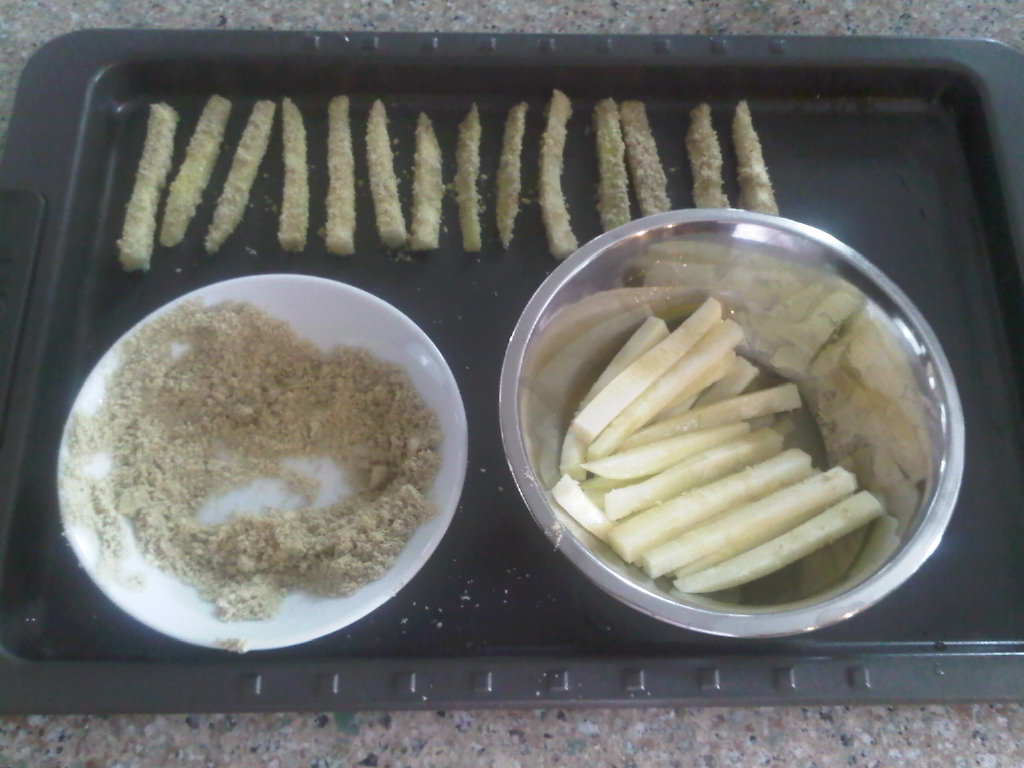
Recovery Recipe: Zucchini Seed Fries

When Martin eats egg for breakfast (this morning: duck egg cooked with broccoli sprouts in hemp oil, sheesh), he likes to have “French fries,” too. Martin cannot eat white or red potatoes, and his sweet potato intake is limited. So his French fries are usually butternut or acorn squash, cut into fry shapes, misted with olive oil and sprinkled with salt or seaweed flakes, and baked at 450°.

This morning I had no winter squash. I improvised. The result was a big hit with both Martin and Adrian. Henceforth these will be known in our home as “zucchini seed fries.”

½ of a large zucchini, peeled and cut into “French fry” shapes about 1/8” thick
sunflower (or another) oil
sunflour
sea salt

Place the zucchini fries in a bowl and drizzle them with oil until they are more or less coated, stirring as necessary. Put a small amount of sunflour into a shallow dish. Use one hand to pull a fry from the oil, shake off any excess oil, and transfer to the other hand to coat in sunflour from the shallow dish. (This helps to prevent the sunflour from getting too caked with oil, although I still needed to change it midway for a fresh dish.) Place on a baking sheet and salt to taste. (No need to oil the sheet.) Bake at 400° until browned and sizzling.

The resulting fries have a pleasant nutty flavor and are quite substantial. Note that they tend to break easily and so are better eaten with a fork than as a finger food.

Recovery Recipe: Veggie Pancakes

This morning Martin had his favorite grain-free pancakes, made with duck eggs instead of chicken eggs. He did not seem to notice any difference. Samara tried the pancakes and said they were as tasty as always but that she was having trouble getting past the idea of eating duck eggs. Whatever eggs you use, these pancakes are protein-packed and deliver a hefty serving of vegetables, too. In terms of the vegetables, this morning I pureed a yellow summer squash. I have also made these pancakes with butternut squash, acorn squash, and cauliflower; I find that with those more wintery vegetables, it helps to dice and steam them before pureeing. No steaming is necessary with a tender vegetable like summer squash. This recipe is adapted from one I saw on Pecan Bread.

1 cup pureed vegetables
3 chicken eggs or 2 duck eggs
1 tsp cinnamon
1 tsp vanilla
coconut or macademia oil

Mix all ingredients other than the oil well. If you are using a food processor, put the eggs in last and don’t let them get too foamy. (Usually I puree the vegetables in the food processor but whisk the eggs by hand and then mix everything together by hand.) Heat the oil in a large skillet and pour in batter a few tablespoons at a time. Cook until the pancakes until they are firm on the bottom, then flip them and cook for another minute or two. They come up oily, so I usually drain them on a paper bag before serving. As a bonus, especially when cooked in coconut oil, these pancakes leave a delightful sweet smell lingering for hours in my kitchen.

Recovery Recipe: Sunflour Patties

I’m going out tonight, so I just threw this together and left it, unbaked, in the refrigerator. Samara, who is staying late, will just have to bake the dish for Martin to have a fresh dinner. This is adapted from a recipe I saw once on the Pecan Bread site. One nice facet of this recipe is that, whereas nothing is actually fried in oil, and the baking temperature is not too high, you can use a variety of unrefined oils. Today I used walnut oil.

1 cup sunflour
1/2 cup finely grated squash
1/2 cup finely diced celery
2 tbsps minced turnip (used to be onion, but we lost onions on Saturday)
1 tbsp minced celeriac (used to be bell pepper, but we lost peppers on Saturday)
1/4-1/2 cup minced fresh herbs
1/2 tsp dried basil
1/4 cup vegetable juice (I used squash juice, another creation of my nighttime activities)
1 egg, whisked (today, a duck egg, thanks to the detective work of Adrian)
1 tbsp oil
1/2 tsp kelp granules or triple-blend seaweed flakes (I often use in place of salt)

Mix all ingredients well and pat into a lightly oiled rectangular glass baking dish. Bake 25 minutes at 350º and cut into patties.