Investigative Journalism, Part Two

In yesterday’s post I described three articles that have appeared in the Chicago Tribune. The first, published two years ago, questioned the scientific underpinnings of ASD treatment and profiled the case of an apparently (?) recovered seven-year-old boy whose father contended that the boy would have progressed without, and may have suffered (yet unmanifested) harm from, biomedical interventions. The second and third articles, published last month, reported that this father’s complaint against Dr. Anju Usman, one of the boy’s treating physicians, had led to medical board charges against her. They also provided the detail that the boy’s treatment had been the subject of a divorce proceeding in which his mother, who supported the biomedical interventions, had lost custody.

Today I’m writing about the effect that such an article has on a parent undertaking a recovery journey. Specifically, this parent. Me.

I’ve made no secret that we’ve chosen an arduous path. Treating ASD biomedically means we’re raising Martin inconveniently. We’re navigating 21st-century America without processed or packaged foods, tap water for drinking or cooking, a microwave, grains, sugar, non-organic products, or restaurants. Martin swallows a lot of supplements—I’m not going to claim “six pills at once,” like the father in the Tribune article, but enough—and participates in 16 HANDLE exercises daily. We do RDI. It’s so much that, any moment when I’m not marveling some new achievement, I’m probably contemplating giving up.

Which means that during the past three months I’ve had a lot of time to contemplate giving up.

When I do research about Martin’s treatment, I seek out multiple sources and do my best to weed out bias, hyperbole, and blanket statements. When I speak with Martin’s practitioners, whether Track One or Track Two, I attempt to engage in dialogue: question, answer, challenge.

A mainstream-newspaper “investigation” is a different sort of animal. Because of their stature, we count on the big sources to do our homework for us, to examine every side and summarize fairly. To question, answer, and challenge without our participation. I studied magazine journalism as an undergraduate, and I remember this rule: When you’re going to write a major article, for that moment in time, you must become the world’s leading authority on your topic. In my mind, before the Chicago Tribune reporters sat down to write their original piece, they should have been the world’s leading authorities on biomedical ASD recovery.

And when the world’s leading authorities say a process is “dubious” and “unsupported,” that’s a pretty good reason to quit, right? Especially if the process is taking a toll on you like none you’ve ever known.

I admit that I hesitated, even, before sending last month’s Tribune articles to Adrian. I feared that they might make him want to quit. (A fear unwarranted: I sent them, we discussed, and Adrian remains as dedicated to Martin’s recovery as ever.)

And now I worry that those articles, and the actions of the Illinois medical board, might make other families want to quit. Goodness knows we’ve got the deck stacked against us as it is.

I can’t tell other families whether to continue biomedical recovery or to quit. I would never try. Heck, I don’t even know where my own family’s journey will end.

I can say that I don’t think the Tribune reporters became the world’s leading authorities, or if they did, they failed to demonstrate that. I know at least one family who allowed one of the reporters to meet their fully recovered son, whom Dr. Usman had treated. I saw no mention of any such families in the articles. I saw no investigation into whether (as I thought the articles may have hinted) the father’s complaints simply arose within a divorce context, or were instead prompted by that context. The Tribune presented the incompetent actions of rogue DAN! doctors; it made no mention of the compassion of competent biomedical-recovery practitioners.

All in all, I thought it was lopsided reporting.

But to a parent who’s desperate, and exhausted, lopsided reporting might just suffice to make you throw in the towel.

That, I think, would be a sorry effect.

Investigative Journalism, Part One

[This post has become long, so I’ve decided to break it into two parts, to avoid losing readers halfway. The second part will appear tomorrow.]

Several readers now have asked my opinion on a recent Chicago Tribune article about Dr. Anju Usman.

I have an opinion.

Let me start by saying that, although I know her work by reputation and from speaking with parents whose children recovered under her care, I have never met Dr. Usman. She is not Martin’s excellent Track Two doctor. I lack any particular expertise for interpreting this story. I derive my understanding of the facts from the Tribune (what there is written, and what thence is missing), and have formed my opinion from own experience.

Here is the Tribune saga, based on what I’ve read: Almost two years ago, as part of a series called Dubious Medicine, the newspaper conducted biomedical ASD interventions and published its findings under the title “Risky alternative therapies for autism have little basis in science.” The article highlighted its conclusion up front, namely, that “many of these treatments amount to uncontrolled experiments on vulnerable children. . . . And though some parents fervently believe their children have benefited, the Tribune found a trail of disappointing results from the few clinical trials to evaluate the treatments objectively.”

The role of human-interest centerpiece in the Tribune’s initial story was played by a then-seven-year-old Chicago boy, a years-long patient of Dr. Usman and of Melbourne, Florida’s Dr. Daniel Rossignol. The article begins with the boy’s father, who opposes biomedical intervention, bemoaning his son’s ability to swallow six pills at once. Near the end, however, after its indictment of autism recovery science, the article takes a befuddling turn. The boy at age seven is described as “playful, funny[,] and outgoing”—which to me sounds a lot like “recovered.” The boy’s unnamed mother, according to the Tribune, “declined to be interviewed but [] said in court documents that she believes the boy’s many alternative therapies benefited him [and] argued that her son’s treatment must continue on a regular basis.” The father, by contrast, “said he [thought] his son . . . would have progressed developmentally without any medical treatments” and filed complaints with the state medical boards against Dr. Usman and Dr. Rossignol. He told the Tribune, “I worry very much. There may be latent physical harm. We don’t know.”

Fast-forward to last month. The Tribune ran back-to-back articles on Dr. Usman. The first, “Illinois regulators seek to discipline autism doctor,” reported that this father’s grievances had led to the Illinois Department of Financial and Professional Regulation charging Dr. Usman with “unprofessional, unethical and/or dishonorable conduct” and seeking suspension or revocation of her medical license. It noted as well that the father had in fact sued Drs. Usman and Rossignol, a case that apparently is pending in the Circuit Court of Cook County.

The second article, “Illinois medical board files complaint against star autism doctor,” was similar to the first, with some more detail on that complaint. More interestingly, from my perspective, it included this detail:

The treatments that [the father]’s son received were also the subject of a bitter divorce and custody battle between [the father], who vehemently opposed the therapies, and his wife. She had been a proponent of the therapies for the boy, according to divorce court records. [The father] and his wife divorced. [The father] was awarded residential custody.

If any of the feared “latent physical harm” had evinced itself in the boy, the Tribune makes no mention thereof.

The Tribune articles supply much potential fodder for this blog—like the science underlying autism recovery, and laboratory studies versus field work; how prosecution of heterodoxy curtails the ability to pursue alternative treatments; reporters’ influence on the way we interpret the world. (The also supply much fodder less appropriate for the blog—like the validity of a medical-malpractice lawsuit absent any manifested harm, or the ways a divorcing couple can entrap third-parties into their own anger.) I’m not going to pursue any of those topics.

Instead, tomorrow, I will address the effect that stories like the Tribune’s have on me and, I would guess, others in the thick of a biomedical recovery journey.

Feelings, Nothing More Than Feelings

Twelve years ago, I brought my cat William to the veterinarian and said something was wrong with him.

“Is he eating?” the vet asked.

“Same as usual,” I said.

“Using the litter box?”

“Yes.”

The vet slid her hands along William’s sides, under his belly. “How’s he acting?”

“Seems fine.”

She bent back William’s ears and peered inside and finally asked, “Well, what’s the problem?”

I told her I didn’t know what the problem was. I couldn’t identify anything particularly different about William. I just had a feeling that something wasn’t right.

I find myself operating on the “feeling” principle a lot these days. This morning, after Martin left for school, I had a feeling that he is improved, howsoever marginally. (“Improved” meaning “closer to neurotypical.”) I can’t say why. We didn’t have an outstanding breakfast; he refused to eat anything but the pear chunks from his bowl of buckwheat cereal, pre-soaked walnuts, and pear. (I make gluten-free cereal twice per week, under the “needs a few carbs” rule.) He was mostly quiet, he didn’t want to use the potty, and he resisted his HANDLE exercises.

We did have a breakthrough on Saturday. Friends had brought their daughter, who is a few years older than Martin, over to play. At some point the little girl got hold of her father’s iPhone and opened an app by which she could tap the screen to play music. She tapped away, and the iPhone sang a disjointed cacophony of notes. Martin, sitting nearby, watched the activity with interest but also seemed confused. Twice he turned his gaze toward me, to read my facial expression about the iPhone performance. One symptom of autism (and a symptom that Martin shows) is lacking ability to read facial expressions, and/or lacking interest in doing so. Martin looked to me twice, not once. It was no accident.

Funny, though, I didn’t have a feeling on Saturday that Martin was improved.

Today I do.

Who knows? It’s easy to attack intuition. On a rational level, I can discredit my sense that Martin may be improved. On a gut level, the feeling colors my whole day. I feel like Martin’s doing well, so I do well.

Twelve years ago, the vet found nothing wrong with William by appearance or outward physical condition. Only with her stethoscope did she discover that, by her estimation, William’s heart was beating more than 400 times a minute. My hunch had led us to the misfire between the upper and lower chambers of William’s heart that that eventually would kill him.

When it comes to kids—human or feline—I think I know my own. I hope.

So Do I Still Have to Be Honest?

This was to be the day. I’ve been thinking about it all week, and today I was going to post a disclosure—a confession. It would have read something like this:

We’re not making progress, at least not that I perceive. We got off to an explosive start: Martin zoomed from restlessness to sleep, from lethargy to energy, from drifting to engagement, from low muscle tone to standard body-type. Then, late in summer, the advances dwindled, and Martin backslid in attention and language.

It’s almost winter now, and I’m wondering if we’ll get back on track and whether the burden of an ASD recovery journey really makes sense. I’m even ready to admit that, had I felt this way in August, I would not have started blogging. It’s too difficult, exposing your own aspirations and vulnerabilities on-line (even if anonymously) when the very subject you’re blogging has beaten you into the gutter. Back in August, when I wrote my first post, we weren’t chugging along like we once had been, but it just felt like we’d pulled into a rest stop on the recovery highway. A check of the map, maybe a snack, and we’d be back on our way.

But then the ignition refused to turn. Two or three months later, the biomedical car remains stalled, and Triple-A has not shown. I’m stuck.

 That’s approximately the ode to frustration I had in mind to post.

By now, if I’ve set this up properly, you’re asking why I say what “was to be.” Why am I quoting the ode to frustration, instead of posting it directly?

The answer is that Martin climbed out of bed this morning and said, “Hello, Mommy.” When I plopped into the chair in his room and asked if he’d like to sit on me, he responded, “Sit on you,” getting the preposition correct if not the idiom. He asked to use the potty and did his business without clawing at his legs, which he’s been scratching raw from yeast itch. When I helped him get dressed, he put his arms into his sleeves and then—instead of letting the shirt stay bunch around his chest, as usual—he tugged the hem down over his belly, looking like any neurotypical three-year-old getting dressed. He glanced down with each step as we descended the stairs to the kitchen. He ate his waffle with a fork. When I asked if he wanted more, he said, “I want more waffle.”

It was a good morning.

True, it was just one good morning, and later this afternoon Martin got spacier.

As it turns out, for now, one good morning was enough. I decided not to let my icky desperation take the starring role in today’s post.

Still, I had to reveal what I’d thought about writing. That’s my commitment to honesty here.

This morning I thought I heard the engine try to turn. I can’t wait for tomorrow. We may leave this rest stop yet.

Crunchy Granola (Not a Recipe)

Because I’m vegan, many people assume I wear billowy tunics over yoga pants, enjoy camping, and/or engage in frequent protests. You know—that I’m the crunchy-granola type.

Generally speaking, no. I prefer designer clothes, detest sleeping anywhere that lacks a clean bed and private shower, and have a don’t-rock-the-boat personality ill-suited to getting in people’s faces. Though I respect everyone’s views, I won’t be occupying Wall Street anytime soon.

At the same time, trying to recover Martin is making me crunchier. I’ve already banned artificial-chemical-based cleaning products from our home. Our food is organic, and I spend a lot of time on farms picking it out. Our water is filtered, twice.

The ingredient list of Martin’s body wash reads like the recipe for a fragrant dessert: organic coconut oil, organic olive oil, organic aloe leaf juice, organic vanilla bean extract, organic orange oil, kosher vegetable glycerin, potassium citrate, organic shea butter, and organic calendula extract. I firmly believe that, in the event of New York City food shortage, my family could live several weeks, quite salubriously, off Martin’s body wash.

Martin uses a natural, BPA-free toothbrush. Fluoride-free toothpaste.

Blackberries get turned off in the car. Electronics see their plugs unsocketed without mercy. The microwave sits forlorn, idle, wondering what he did to piss me off.

Martin spends more than 12 hours per day in contact with his mattress and sheets, so I’m on the hunt for a natural mattress. I’ve found them for babies. So far nothing in toddler/child size, though. Same for sheets. I may need to replace his toddler bed with a big-boy bed in order to get organic, undyed sheets that fit.

And now I’m learning about flame retardants applied to most children’s pajamas, and how they might affect Martin’s brain. In fact, dyes and treatments used on children’s garments in general may pose neuro-sensitivity hazards. So I’m shopping for organic clothes. Jeans, a three-season coat, and pajamas arrived today.

Have you ever had occasion to note the cost of organic clothes for kids? Martin’s wardrobe is about to get a whole lot more limited.

Shower curtain liners are made with PVC. Get them hot and steamy, it seems, and they’ll release those chemicals into the atmosphere. I used to worry about litter-box fumes. Now it’s eau de PVC. I just ordered a hemp shower curtain. I’ve become Woody Harrelson.

Bottom line: The crunchy-granola life may be my destiny after all. I just can’t believe the toxins to which we expose children every day.

It’s almost enough to make a protester out of me.

Stupid Yeast

We’re battling a renewed outbreak of yeast. That’s why Martin’s attention has dipped so low. I’m certain now. All the signs point to yeast. He’s scratching his legs. He’s grinding his teeth. His pee stinks. His energy flags. He has trouble settling to sleep. He giggles drunkenly.

Finally realizing that yeast is at work here (again) stirs mixed emotions. On one hand, I’m beyond frustrated. We started fighting yeast in February, and by the beginning of summer we had it under control. I even allowed more carbohydrates to sneak into Martin’s diet. Not many, but more—quinoa pitas, rice crackers, banana muffins. On my mental checklist, “balance yeast” had thick line through it. But now yeast is out of whack again, and I’m learning that as soon as one strain is defeated, another may flourish.

On the other hand, I’ve expended so much attention on Martin’s diminished attention without knowing the cause. I’m relieved that we have a culprit now. The yeast realization provides a roadmap. We conquered yeast once before, and we’ll do it again, adjusting diet and anti-yeast supplements (sac boulardii, &c.) as necessary.

Indeed, pinpointing yeast helps me filter Martin’s current issues. Yeast clearly does no favors for attention, energy, or language; I’ll call those the “yeastier areas,” and admit that they’re in bad shape. Yeast doesn’t seem to affect body control or mood as much. I posted several days ago about what’s going right, even now. To that list I will add that Martin is steady on his feet, engaging in few self-stimming behaviors, transitioning well, and more or less happy. I’ll call those the “less-yeasty areas,” and hope that their current chart-topping performance means we’re making progress despite the yeast flare.

I’ve said before: It’s an amorphous enemy, this autism. ASD is defined by symptoms, not causes. The causes may differ for every child, and they may change within one child.

Then again, every child—neurotypical or otherwise—is different, too, and every child changes throughout life. When we’ve finally wiped out autism, Martin will create some new worry to keep me up at night.

Well, bring it on.

Burgers

I made hamburgers. I browsed a few recipes on-line and read about adding ingredients like eggs, Worcestershire sauce, breadcrumbs, and onion powder.

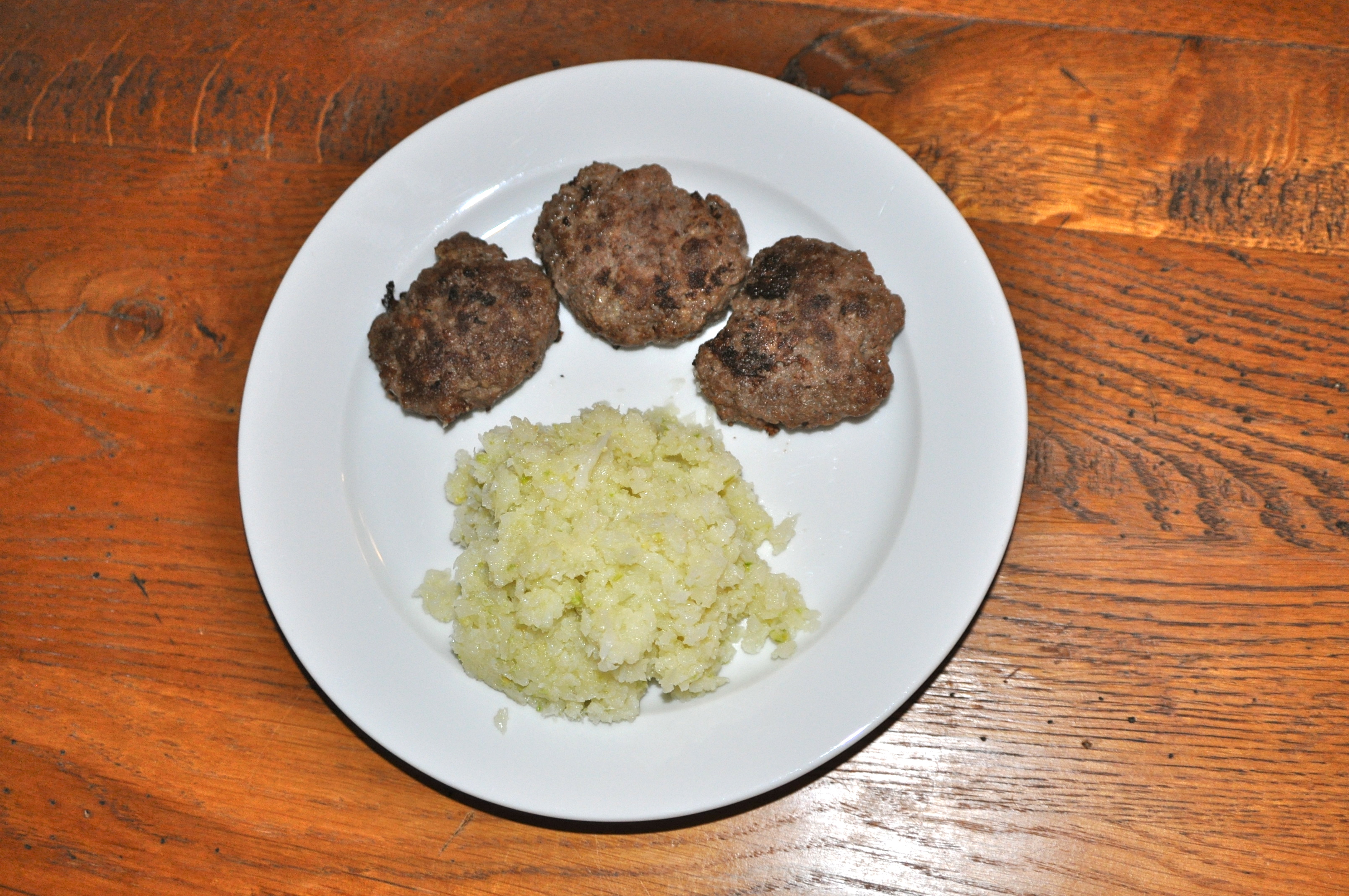
I went with quail eggs, sunflour, coconut aminos, and a dash of white pepper. I fried the hamburgers in macadamia oil and served them with mashed cauliflower for dinner.

This weekend Martin ate the leftover hamburgers as breakfast, accompanied by sweet-potato French fries. Adrian asked, “Will he be having a Coke with his burger and fries?”

How did they taste—any good? I wish I knew, but I’m not about to try one. Martin ate them without complaint.

Such an obliging boy, my Martin.

Intruders in the Sanctuary

We brought Martin to the Woodstock Farm Animal Sanctuary today, in celebration of a friend’s birthday. We played with ducks, chickens, turkeys, lambs, goats, pigs, and cows. Usually I love to do stuff like this, to admire animals whom society at large treats as commodities for food/clothing/additive production.

It’s more difficult now, of course, because Martin is eating meat. Merriam-Webster defines a vegan as “a strict vegetarian who consumes no animal food or dairy products; also: one who abstains from using animal products (as leather).” Abstaining from using animal products entirely is, more or less, impossible; living in this world demands using products made by others, and too many of those products—film, computers, pain relievers, wines, McDonalds French fries—contain, or are manufactured with, animal parts for one to avoid them. But for many years I’ve done pretty well, at least on the big stuff: meat, eggs, dairy, leather, wool, and so forth. For the most part, I’ve avoided the stuff you really cannot have without using animals.

Not anymore. How can I press my forehead against a steer’s and stroke his muzzle, when this morning Martin ate leftover hamburger with breakfast? How can I allow a turkey to nestle between my shins, when our car contains a Thermos of turkey-neck broth?

I’m glad that we’re managing Martin’s dietary changes without resort to caged, agribusiness animals. I’m glad I’ve visited the farms where his meals grow and die and observed that, other than the part about being slaughtered early, their lives aren’t that different from those of the sanctuary animals. I’m satisfied that, as Adrian remarked this morning, we’re using meat for a distinct, defined purpose (dense protein and easily digestible fats to hasten Martin’s recovery) and not out of laziness, or like a celebrity chef determined to sample as many varieties of flesh as possible, only for the sake of doing so.

Beyond those comforts, I’m still having trouble navigating the decision. I need to envision an end-point, when this chapter closes and Martin, recovered, returns to being a vegan. I know he may not always stay that way; as he matures he’ll make his own choices. Still, I can try to point him in the direction our family prefers, which I don’t feel I’m doing at the moment.

As for right now, I need to find a way to apologize to all these animals. I’ve decided to add the money we spend on Martin’s ghee, eggs, honey, and meat and send an equal amount to a farm sanctuary with outreach/education programs.

It’s a start. Kind of.

Do You See What I See?

Samara has been ill this week, and not working. Last night after Martin went to sleep she came for a visit and brought new toys and books, including two bathtub boats and a ride-in fire engine. We left the boats on the dining table, and the fire engine in the front hall.

This morning, as Martin sat at the kitchen counter waiting for breakfast, he spun on the barstool. He likes to spin, and I tend to assume it’s a self-stimming behavior. (Or just plain fun. I went ga-ga for my Sit’n Spin as a kid. Remember those?) Only a quarter-turn into his spin Martin leapt from his barstool, ran to the dining table, and seized the bathtub boats.

Most of our apartment—kitchen, den, family room, front hall, dining area, reception salon (that’s a couple chairs and coffee table that I’m making sound as fancy as possible)—comprises a single, large space, so there is a lot to observe, and the dining table stands at least fifteen feet from the kitchen counter. Moreover, the dining table was stacked with books, papers, a laptop, several items waiting to be Freecycled, and sundry junk, so the bathtub boats were kind of obscured. Certainly non-obvious. I would not have noticed them; I don’t notice unfamiliar items in my home until they (1) trip me, (2) bite me, or (3) emit an unpleasant odor. But Martin, somehow, spotted his new toys in a partial second. Before I even realized what he was doing, he was on the floor playing with them. He refused to return to the kitchen counter until I told him to bring the bathtub boats along.

Now I find myself wondering: When Martin is spinning on the barstool (before we progressed with biomedical intervention, he used to spin himself without a barstool, too) or running, apparently haphazardly, around the perimeter of the apartment, is he actually noticing—processing—his surroundings at a rate faster than I could?

Earlier today I was driving the West Side Highway with Martin when a truck passed and pulled directly in front of us. From the backseat, Martin said, “That’s a piano truck.” I looked up and saw, written on the back of the truck, a company name along with “piano sales and service.” There was no picture, only lettering. Holy crap! I thought immediately. Martin can read. I have one of those autistic genius kids who just learns everything on his own. I was getting ready to phone Adrian with the miraculous news when the truck made a left turn and I saw, on the side that must have faced Martin when the truck passed us, a gigantic picture of a piano.

I do have a tendency to get carried away like that. So I’m trying not to take too much from Martin’s spotting the new toys mid-spin. In fact, I’m trying to see two sides of the event. It may demonstrate that Martin possesses a strong awareness of what’s around him and is not vacationing in Martinland as often as I sometimes think. On the other hand, it may suggest that Martin has a hyper-sense of order and, even in our disarrayed home, perceives immediately what changes from one day to the next. I’m going to keep an eye on Martin’s interactions with his environment and see if I can figure out whether it’s the former, the latter, or a combination.

Anyway, after I let him bring his bathtub boats to the counter, Martin ate his scrambled quail eggs and sweet-potato fries peacefully. About ten minutes later I went to the bathroom. When I returned, the barstool was vacant again.

This time I found Martin in the front hall, sitting in his new fire engine.

It’s Not All About Martin. At Least, Not All the Time

The Giants beat the Bills on Sunday.

I’m a major Bills fan, so that sucks.

But it doesn’t suck as much as it might, because it was a hard-fought game on a sun-shiny 68-degree day, and Adrian and were sitting in MetLife Stadium, cheering. With friends. Without Martin.

Years ago, when we decided to have a child, Adrian and I vowed that we’d never give up being a couple for the sake of being parents. We were both 35 years old when I got pregnant. We had a decent society, some other couples with children, but mostly child-free couples and single persons. Concerts, dinner parties, sporting events, the usual. That’s still pretty much our crowd—the type of people who ask about the kids but really don’t want them lingering at get-togethers.

In fact, I’ve always been uncomfortable hanging out with women who define themselves by motherhood. When Martin was younger, pre-diagnosis, and Samara had a day off, I would take Martin to a neighborhood playground and hover awkwardly while he ran and climbed. I didn’t belong to any of the nanny clusters that congregated there, and the full-time mothers seemed to have a language of their own, organizing “walk-dates” and exchanging tips for rainy-day hotspots. I couldn’t seem to find crowd organized around the principle of “the kids are fine, let’s grab coffee and talk about books and sports.”

When Martin was diagnosed, long before we undertook or even heard of biomedical recovery, Adrian and I made a supplementary promise: that we would never become a family defined by the spectrum. Our friends should think of us as cool folks (okay, maybe that’s a stretch), not folks who have a son with ASD. We have grown-up lives that lovingly encompass but also stretch beyond autism.

So we make every effort to concentrate on our marriage, and even our independent social lives. Once a week Adrian comes home early enough for me to go out to dinner with a girlfriend, or to the Rangers game, or even just to the wine bar on the corner, solo, with the iPad for reading. Those evenings it doesn’t matter whether I haven’t slept more than three hours, or I’ll have to stay up late doing kitchen work afterwards. I go out. And Friday night, every Friday night, Samara works late so Adrian and I can have a date, alone or with friends. We just have to maintain those connections to each other, and to the world.

Right now Adrian is testing my commitment to this practice. For our recent anniversary celebration, he gave me—a vacation. He hasn’t told me where we’re going, only that we leave right after Christmas and I should bring a swimsuit and hiking boots. He’s conspired to have my mother in town, taking care of Martin, while we’re gone.

I need a vacation. I love escaping the City mid-winter. The idea of lying poolside with a fruity cocktail is warming my insides right now. And I know I can count on my mother to follow my instructions regarding Martin.

At the same time, part of me doesn’t want to go. Part of me thinks I can’t go. I don’t believe anyone, his grandmother or otherwise, can do for Martin everything in our day, from supplements to diet to RDI interactions to HANDLE therapy. When I traveled four days to Germany this summer, I cooked all of Martin’s food in advance, and Samara moved into our apartment and teamed up with Adrian to manage the daily routine. That was hard enough. Now Adrian is talking about more than a week away, both of us, no parent at home. Unrealistically, I imagine everything getting messed up, Martin desperate to see us, Martin facing multiple set-backs to delay his recovery.

Then I tell myself to imagine how much more I can do for him once I’m rejuvenated. I try to set aside my fears.

Adrian is right. We need breaks, to forget about parenting and act like the carefree couple who fell goofy in love a decade ago. We can’t let autism recovery run over what Adrian and I have unto ourselves.

Besides, it’s not like there aren’t enough threats to our marriage.

Adrian, for example, prefers the Giants.