Burgers

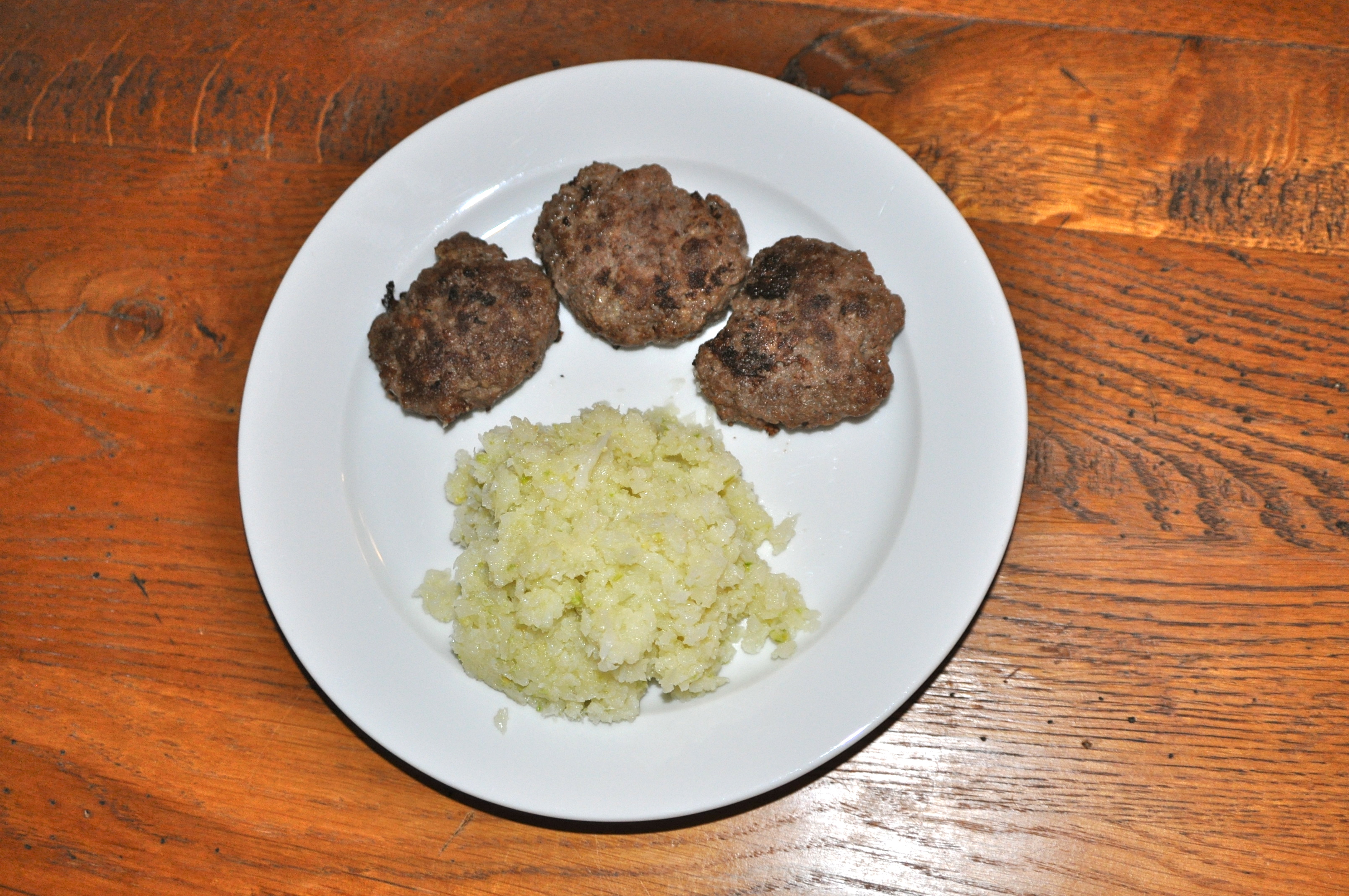
I made hamburgers. I browsed a few recipes on-line and read about adding ingredients like eggs, Worcestershire sauce, breadcrumbs, and onion powder.

I went with quail eggs, sunflour, coconut aminos, and a dash of white pepper. I fried the hamburgers in macadamia oil and served them with mashed cauliflower for dinner.

This weekend Martin ate the leftover hamburgers as breakfast, accompanied by sweet-potato French fries. Adrian asked, “Will he be having a Coke with his burger and fries?”

How did they taste—any good? I wish I knew, but I’m not about to try one. Martin ate them without complaint.

Such an obliging boy, my Martin.

Turkey Necks Have Vertebrae. This Is News

I am learning so much.

Today I learned that turkey necks separate easily at the vertebrae when cooked.

You, perhaps, already knew that turkey necks separate easily at the vertebrae when cooked.

I did not.

I suppose I never considered the issue. Never had occasion to.

Martin has become an eager drinker of the meat broth that is supposed to be so beneficial to him. He’s slurping several cups a day. Today I dragged out the super-sized slow cooker—as opposed to the regular-sized slow cooker for daily use (sigh)—and brewed my third batch of broth. The first two batches were beef-based. This time turkey’s number was up.

If animals have to perish for Martin’s recovery, I want to make sure, at least, that we exploit as much of each animal as possible. At the same time, I’ve been informed that nontraditional body parts make good broth. So during the week I visited a farmer and purchased a bag of fresh turkey necks.

(Discussing turkey sections with the farmer was one in a series of adventuresome conversations I’ve been having, right up to the limits of my own tolerance. I discussed methods of execution with a guy who kills ducks once a week. I interrogated a bison rancher about why his bison are transported to slaughter at another site. I got a five-minute lesson in cooking emu eggs, from an emu—shepard? rancher? farmer? What do you call a person who raises emus?)

I thawed the turkey necks overnight in the refrigerator, but they were still quite frozen this morning, so I plopped them into the slow cooker to let them thaw as the filtered water heated. After an hour I fished a neck from amidst the rosemary, cilantro, tarragon, celery, seaweed, broccoli stalks, and carrots. I set the neck on the cutting board I’ve reserved for meat and started chopping away, to no avail.

Now, I’ve seen plenty of (live) turkeys. I know that they can twist and fold their necks all sorts of directions. Had I been thinking clearly, I would have realized that the ability to shift the neck implicates the presence of vertebrae. I was not thinking clearly. I was thinking, “There’s a turkey neck on my counter.” I made a few more attempts at hacking, trying not to touch the flesh, then returned the turkey neck to the slow cooker. The illogical idea running through my mind was that a turkey neck must be one solid bone.

Yeah, I know.

A few hours later I wielded metal tongs to pull the by-now-tender meat from the necks as they bobbed around the slow cooker. To my surprise, the necks broke easily into pieces. Half-inch-long pieces. With a triangular bone inside each.

Oh, hey! Vertebrae! That makes sense.

Something about the presence of meat in my kitchen apparently makes me dense. Next time I’m using turkey necks, I’ll be better-informed.

Now, emu eggs. Lesson or no, that’s an escapade I’m not quite ready to undertake.

ASD Recovery Cooking: Science Experiments in the Kitchen

Running with an idea I found in the GAPS book, I decided to start fermenting beans before Martin eats them, to improve digestability. Last weekend I soaked navy beans for 18 hours in double-purified water (I use Aquasana and Berkey filters), drained them, and rinsed with more double-purified water. Then I put the beans into a lead-free glass jar, covered them with double-purified water, and added a small amount of GI ProHealth non-dairy yogurt starter.

I sealed the jar, with the intention of leaving it sealed until this coming weekend, for a total seven days. Alas, the best-laid plans must wander astray. This afternoon, Samara, thinking the jar contained beans for fake hummus, popped it open, peered inside, and said, “Ugh, I don’t think these beans are good anymore.” I don’t know what effect, if any, the jar being opened will have on the fermentation process. I resealed it and now await the exciting outcome on Saturday. In the event that the experiment fails, I will try again next week—affixing a Do not open until Saturday! note to the jar.

A Little Bit Here, a Little Bit There

Pretty good week, this last one. Pretty crap day, today. Martin unresponsive, lacking attention, and throwing tantrums instead of transitioning. Tired and not himself. Mildly ill, even. Yesterday he threw up in the car, a special surprise that may have been tied to his beginning to eat meat products. (Since we started with the beef broth Martin has, now and again, after meals, appeared nauseated.)

Still, even on this crap day, some skills shined. Martin’s language, when he chose to use it, was appropriate and expressive. Also, we went shopping around Union Square, and three times (that I remember) he intentionally caught the eye of a salesperson and said, “Hi!”

I think in those terms, now. What worked today? What didn’t? I scrawl my observations into the daily log I keep for Martin.

I’ve tried to apply the same thinking to Martin’s recovery, on a meta-level. Which treatment or therapy is working? Which is not as helpful? Those, however, are much tougher questions.

The truth is, I see Martin making progress (two steps forward, one step back, usually), but it can be tough to discern the individual catalyst of progress like saying hi or trying to catch a stranger’s eye. Most likely, I suppose, every such advance results from some combination of the treatments we undertake.

As I have described previously, we see Track One doctors, who as far as I can tell have evaluated Martin but done nothing to help him. Apart from Track One doctors, this is Team Martin:

Track Two doctor. Martin’s excellent Track Two physician is riding the edge of autism recovery. I like to call her “post-DAN!” because she is so on top of treatments beyond the standard DAN! protocol. She oversees every facet of Martin’s biomedical recovery.

Home consultant. I’m new to this world of autism recovery. Questions come up on a day-to-day basis. Kathleen Reily answers them. She also helps me, for example, plan Martin’s diet, find local practitioners, and research kitchen products (water filter, lead-free glass, cutting boards not treated chemically, &c.). If I’m the coach of Team Martin, Kathleen is the manager.

Homotoxicologist. A big part of recovery lies in driving toxins and pathogens from the body. Martin’s homotoxicologist, Mary Coyle, works that angle, in coordination with his Track Two doctor.

Cranio-sacral therapist. I drive Martin all the way to Pleasantville, in Westchester, to see Diane Diamond. She helps figure out what’s not functioning well in Martin’s body and makes appropriate adjustments. She once told me, based solely on putting her hands on Martin, “I’m sensing some bile blockage. He’s not processing all this fat in his diet.” A week later, a urinalysis confirmed her assessment medically.

HANDLE therapist. We visit Katie Penque every four-to-six weeks. She observes Martin, interviews me and Adrian, evaluates how Martin’s current HANDLE exercises are working, and suggests and helps us learn new exercises. Katie and Martin’s Track Two doctor are also the proponents-in-chief for the “less is more” approach to recovery.

RDI consultant. RDI incorporates a variety of games and routines, but really it is a therapy that becomes part of daily life. Allison Zevallos helps us make that happen. She makes a home visit every month or so. In between those visits, Adrian emails her videos of Martin in action, which she reviews for a weekly phone consultation with both of us.

CPSE preschool. Martin attends a top-notch preschool for children with learning delays and developmental disabilities. Adrian and I are profoundly grateful for this service, which is provided through the Department of Education’s Committee on Special Preschool Education. Martin spends more than five hours per weekday at his CPSE school.

Speech therapist. Martin’s preschool provides him a bilingual speech therapist, in accordance with his individualized education plan, or IEP. She works to unlock language skills like pronoun use and asking questions, which Martin’s ASD has hidden.

Physical therapist and occupational therapist. Martin also sees these two professionals at his preschool. Together they assist him with gross and fine motor skills, practical life lessons like watching where he’s walking and being aware of the world around him, and performing everyday tasks.

So what among all this is facilitating Martin’s progress? Adrian and I credit HANDLE therapy for helping Martin develop better control over his body and lose some of the jerkiness that characterized his earlier movement. His physical therapy likely augments HANDLE in that regard. We credit RDI with helping Martin (this is an emerging skill, coming about slowly) learn to read faces and expressions and to better pace himself with others, so that he can undertake activities like holding my hand as we walk together. His occupational therapy likely augments RDI in that regard. It’s all puzzle pieces, coming together.

I consider the biomedical process—the restricted diet, the supplements, the detoxification—to be the sticky backing that holds those puzzle pieces in place. It was the biomedical process that got Martin sleeping and rested, eased his gut pain, and reduced the lethargy that used to characterize his days. Without that foundation, the pieces would probably still jiggle around, unable to interlock fully. Without the stronger body biomedical recovery is giving us, the therapies could have less effect.

A little bit here, a little bit there. I don’t want to spend too much time figuring out what progress comes from where, so long as we’re moving in the right direction.

One Last Post on the Decision to Give Meat to Martin

When I posted about deciding to allow Martin to eat limited meats and meat-based broths, Adrian predicted that I might receive two sorts of responses. He thought commentators from the vegan/vegetarian camp would question the earnestness of my ahimsa, since I’m willing to serve my son flesh. Commentators from the other side of the fence would fault me for not doing so sooner, saying that if this might help Martin, then previously I was stymieing his progress in deference to my personal ethics.

I am thankful that I’ve received no such responses, neither on the blog, nor via email (findingmykid@yahoo.com) or the Twitter feed (@findingmykid), nor in person. So far, everyone has been supportive.

Thus more or less armed with approbation, I meant to let the issue go and post no more about the meat decision (as opposed to its implementation—be prepared to hear plenty more about that, as this vegan goes stumbling through Carnivordom). Subsequently, however, I became aware of at least one other vegetarian family reading my blog and facing the same choice, and I changed my mind about posting again. In the hopes of helping others settle, one way or the other, here is my reasoning in greater detail—

When it comes to human-to-other-animal interaction, I try to let two principles govern my conduct.

First, non-human animals are sentient beings with their own interests, and are entitled to possession and use of their own bodies and products thereof. If I do not need what belongs to an animal, I do not take it. I do not wear fur, leather, suede, silk, or wool because I do not need to. And after researching nutrition extensively, I concluded that neither do I need to eat animal flesh, parts, eggs, or milk to be healthy; indeed, it appears to be healthier to forego such foods. Therefore, I am a vegan. I became a vegetarian when I was 16 years old and a vegan when I was 21. I am now 39 years old.

Second, humans come first. That rule seems self-evident to me, because I am a human. Just as I put my family before outsiders, or my community before strangers, I put my species before other species. What’s more, I rank other species and their interests according to how like humans they are. Though it doesn’t always feel this way when I watch the news, humans are the gold standard. We enjoy the most complex lives. Mosquitoes, for example, are not much like humans. I react terribly to mosquito bites, with painful swelling that can last for weeks unless I get to an antihistamine within five minutes. I therefore kill mosquitoes when I can, and I haven’t lost any sleep over that. On the other hand, our cat Freddie (as I’ve noted before; sorry about all the feline scatology) pees outside his litter box. This is at least as annoying as having to take occasional mosquito-related antihistamine, yet I would never kill Freddie. At least not over the peeing.

I applied these two rules to Martin’s situation as follows: It appears that Martin, with his unusual digestive and dietary issues, might benefit from eating animal flesh—unlike a healthy person, for whom a well-rounded vegan diet (as I see the world) is the better choice. Does that mean Martin needs meat? I suppose it depends on how one defines “need.” Certainly, Martin can survive without meat. He might even heal without it; after all, he’s made a lot of progress already. The need, if need it is, arises insofar as animal flesh might help him heal faster, or more completely.

So Martin’s need is not a matter of life or death. For the animals involved, however, Martin’s meat eating is matter of life or death; they are being killed for the possibility that Martin can achieve richer and more fulfilling experiences. On a balanced scale, Martin would lose: An animal’s life, in toto, would outweigh Martin’s hope for a better life.

But the scale is not balanced. That’s where rule no. 2 comes in. Martin is a human, and my son. He starts with a whole pile of barbells on his side. The question, if we’re right about meat helping Martin, becomes whether animal life outweighs the difference between (1) Martin healed as far as possible without meat and (2) Martin healed as far as possible with meat.

I found no easy answer to the question, so stated. I don’t even know the second half of the equation. What is the difference in Martin’s healing going to be with meat, as opposed to without it? I read what I could find on the issue. I asked questions of Martin’s Track Two team. I pondered. I prayed.

In the end, with Adrian’s support, I made the call in Martin’s favor. At least, I hope this winds up being in Martin’s favor. We’re going to try meat for a couple months and see what happens.

We’re doing our best to impose some ethical restraints on the process. We resolved to accept meat only from organic farms where the animals have ample space to roam, or meat from game hunted wild, without bait. None of this eliminates cruelty, of course; the animals are still being slaughtered. But there’s something to be said for kindness before death. We’re also focusing on bigger animals, to minimize the number killed. No pigs, though. I know pigs. They’re smarter than dogs and darn near as affectionate. Too close to humans.

Two nights ago I made my first batch of beef stock. Tearing apart the meat nauseated me. Adrian played back-up, sitting on a kitchen stool and trying to distract. He explained that the white film edging the cut was fat, and not super-durable plastic wrap like I thought. In the end, I managed to get flesh and fat and bone into the slow cooker, along with organic vegetables and herbs. I set it to cook overnight, and yesterday morning I strained a jar  of stock for use this week, and a glass container full to freeze for next week.

My oldest brother, one of Martin’s namesakes, is also a decades-long vegan and a person whose judgment I trust (most of the time; a little sister can’t buy into everything). Yesterday he sent me this email:

I guess if the two main reasons not to eat meat are for cruelty and health, and the nice farm is not cruel, and it is actually healthier for [Martin], then you have to give it a go, because both main reasons are kind of accounted for. . . . I feel for you, this is tough! We feel crummy giving our cats fish, and we didn’t even give birth to them. Anyway, I do think you should review this link before using too much chicken.

I clicked on the link he sent and found an article titled, “Bolivian President Says Eating Too Much Chicken Makes You Gay.”

It’s still nice to get in a laugh, once in a while.

Saturday. Doctor, Therapist, Farm

Until August, Martin attended school just for two hours per weekday. His new school runs more than five hours per weekday, with a decent commute on either end, to boot. Participating in CPSE also carries family responsibilities. We can’t willy-nilly yank Martin out of school, or decide that he’ll skip a day.

As a result, we now concentrate doctor visits and private therapies, when possible, on the weekends. We try to make family fun out of shuttling from one appointment to the next.

Today Martin woke around 7:45 a.m. (an extra 45 minutes’ sleep from school days). He and Adrian completed some RDI exercises while I assembled their weekend breakfast. Martin got squash “French fries” with kelp flakes and one duck egg fried in hemp oil with minced cilantro. Adrian got the same, but substituting a chicken egg and adding a slice of whole-wheat toast.

It was a lazy morning, and despite the early start we managed to leave late for our 10:30 a.m. meeting with Dr. Ingels, the allergist, near Union Square. Because we were setting out for the day, we took the car, which of course made us even later, our route blocked by firemen using their truck and ladder to remove their stationhouse’s window-unit air conditioners, and then by a moving crew marching across 23rd Street with mattresses. A bunch of mattresses. Dr. Ingels pardoned the untimely arrival, and we enjoyed a routine visit. Martin’s tolerance for malverine, piperine, and candida has increased.

From Dr. Ingels’s we headed north, to Pleasantville, for a 12:30 p.m. session with Martin’s HANDLE therapist, Katie. She is the chief proponent of accomplishing Martin’s recovery as gently as possible. We discussed ways to soften the process even more. I talked about Martin’s attention and language lagging this past month. Katie asked about Martin’s sleeping and body control, which actually (I realized) have during the same period been quite good. Attention and language are advanced functions, she reminded me. Sleep and control are building blocks.

We grabbed lunch at the Pony Express in Pleasantville and ate in the plaza by the train station. Martin had rice crackers and homemade white-bean hummus. He investigated some trees, ran to the fence to watch a train pass below, peered with interest at (but did not speak to) another little boy. Overall, he seemed better. I’m beginning so sense a return of his attention, since we reduced the Biosode from 1x dilution to 2x.

From there we moved on, even further north, to the highlight of the day (for Martin, and perhaps Adrian) and an onerous task (for me). We drove to Hemlock Hill Farm in Cortlandt. We had researched farms on the internet in search of one that was organic and came close to meeting my ethical standards. We need some meat.

Yes. Meat. We’ve decided to feed Martin limited amounts of meet, and see if it augments his recovery. The choice has been weighing heavily on me these two weeks or so, and I needed to have it over with.

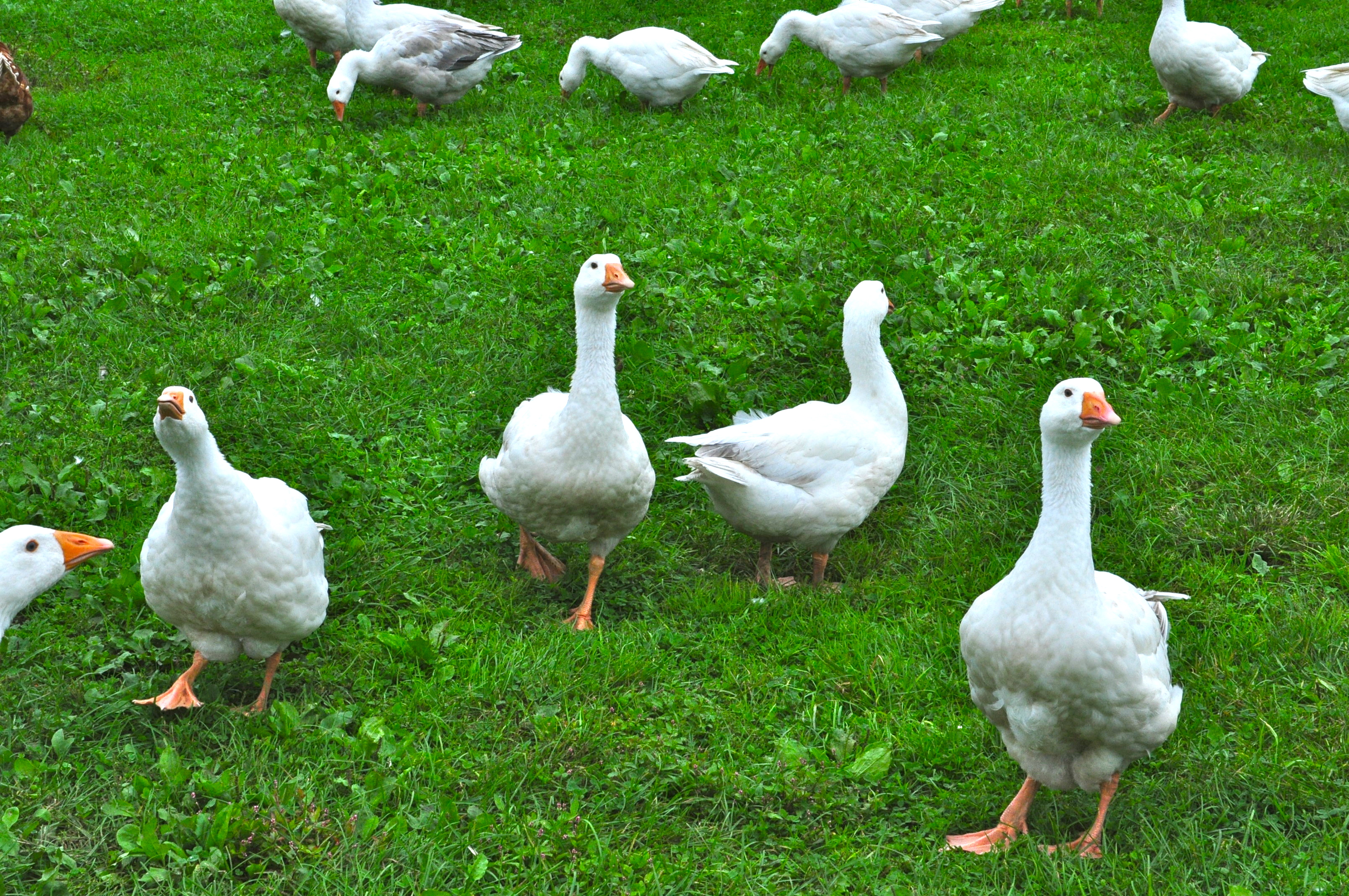
So off we went to Hemlock Hill Farm. Adrian took Martin to wander among the chickens and geese. I entered the little shop the farm maintains, more or less a concrete room with refrigerated glass display counter, freezer, shelving unit, and a few display bins. A man behind the counter asked if he could help me.

“I need—some meat.”

“What kind of meat?”

I decided honesty would be the best approach and ’fessed up that I had no idea what kind of meat. I’m a vegetarian, I explained. My son has a medical condition, and I’m going to try preparing him some meat.

The fellow was friendly and patient. He showed me packaged goat parts and which beef cuts have bone in them. (I’m supposed to put bone in the crockpot for making broth.) He explained how I could differentiate meat of animals killed on-site from that of animals killed at a USDA-certified facility in Pennsylvania. (I didn’t want any flesh from animals who were transported before slaughter. Too cruel.) I read information on what the animals eat—primarily, grass and grain also produced in Westchester County, at another farm. I asked about quail eggs. The farm has had them in the past but did not have any now.

Finally I purchased two frozen shank cuts, bone in. Cow meat. I took a dozen duck eggs, too, saving myself a trip to the farmer’s market.

Then I went out to greet the animals. The ones still alive, anyway. The birds seemed happy and unafraid. Other than wire fences delineating the fields—ducks over there, chicken and geese this way—they have freedom to move about as they please and peck at the ground. The recent rains had left the area muddy, but I could imagine some serious dust bathing when our prodigal sun reemerges. The cows were grazing in a pasture some distance up the road, so I declined the farmer’s invitation to go meet them. She also invited me to hang around until the cows came home from pasture around 5:30 p.m. The day had already stretched long, however, and we needed to be getting back to the City.

Martin knocked off early this evening, exhausted from new HANDLE exercises and playing amongst the fowl.

My mind remains fixated on the cow meat now in my freezer. Tomorrow evening I will try to make a beef broth. I hope that I don’t fail and waste the flesh.

This new chapter will be complicated.

The Railroad, the Weight of the World: Meat in ASD Recovery

In last week’s post titled “Guilt,” I described a chain of events surrounding Martin’s birth: Pitocin, epidurally administered drugs, stuck baby, C-section, NICU. I alluded also to my regret over having allowed the doctors to induce labor, which I believe triggered that chain.

With several years’ hindsight, I feel that I was railroaded into allowing the induced labor. (And I did allow it; I own my decision.) I was 42 weeks pregnant. From my perspective, Martin being two weeks late raised no red flags. Thirty-five years earlier, I myself spent an extra few weeks in the womb, and my instinct now said Martin was not ready to be born. But my doctor asserted, and a second doctor confirmed, that letting the pregnancy continue could only endanger Martin, with no potential upside. Plus, my doctor said, by inducing labor we could schedule the birth, for her once-weekly hospital duty.

It should not require explanation that a woman 42 weeks pregnant, who is being told that she’s risking her baby’s health, is vulnerable. I was vulnerable, and I made a decision that I believed, even at the time, to be wrong.

The mother of a young child with autism, who believes that recovery is possible and is struggling to effect that recovery, also is vulnerable. I am vulnerable, again.

And I am being faced with a choice I wish I did not have to make.

I’m a vegan. Until February, so was Martin. I’ve posted here about some of the tough decisions Adrian and I have made for Martin, regarding animal products in his diet. Since we radicalized his diet, he has started consuming fish oil, honey, ghee, and eggs (at the moment, duck and quail eggs).

Now I am being advised that, given his particular gut and digestion issues, eating meat might benefit Martin. Meat! Cows and pigs and chickens and—whatever other animals people eat, I suppose. I haven’t touched meat in more than 22 years. By this time the whole idea just strikes me as strange. I don’t want to do it, to feed flesh to Martin. At the same time, Adrian and I decided when we started this journey that we will do anything in our power to recover our son. Anything. (“If Martin needs to drink the blood of the Dalai Lama to get better,” I told Adrian one night, “we’re catching the next flight to India, knife in hand.”) Which means that if cows and pigs and chickens may help Martin, I can’t rule them out.

Let me be clear about this: I am not being railroaded into feeding Martin meat. The Track Two recovery team we work with is not the same as the doctors at Martin’s birth. These professionals take time, consider our family’s ethics and preferences, and facilitate our decisions, instead of strong-arming us into their decisions. No one has even framed the meat issue except with respect. Nevertheless, my own vulnerability when it comes to Martin’s recovery leads me to feel attacked. Feeding him meat means compromising a long-held stance. Denying him meat means bypassing a possible avenue to recovery.

Or does it? We’ve made no decision yet. Adrian and I are still investigating, asking questions. If a vegan diet is generally healthiest, what is it about Martin’s body that might make meat a better choice for him? Would it lead to more complete recovery, or faster recovery, or just easier recovery? (I suspect that most parents recovering their children don’t spend hours each week balancing proteins, as I do with Martin’s gluten- and soy- and casein– and meat- and most-other-things-free diet. Chicken breast every dinner would be a heckuva lot easier.) How much meat are we talking about, and what kinds? For how long? How would we know if it’s helping?

I hope to commit to a path soon, one way or the other. I’m way too worked up over this issue.

In the event we do decide to feed Martin meat, please don’t bother combing the blog for meat-based ASD recovery recipes. I’ve been a vegetarian all my adult life, which means I’ve never cooked animal flesh. Seriously, I have no idea how. When we added eggs to Martin’s diet, I had to ask a friend how to hard-boil one. Goodness only knows what will happen if I end up with a hunk of cow parts in my hands.

Back on the topic of Martin’s birth: By the end of the events that began with induced labor, even as I was being stitched up from the C-section, I had wits enough to comprehend that this was not the entry into the world my son needed.

When the doctors announced that, based on my fever and despite Martin’s Apgar score of 9, they were removing him to the NICU, I mustered my strength and called from the operating table, “No, no, that’s not necessary. He’s fine. Adrian, get him back!”

Adrian confronted the doctors, said we did not want our son taken away.

Their reply was as knee-jerk as it was decisive: In the event we refused to surrender Martin for the treatment they believed best, the Administration for Children’s Services would be contacted.

And my son was gone.

Which, I suppose, is another reason still why this blog is anonymous. I’d like to avoid any more authority figures ready to impose their will on my family.

On the other hand, deciding for myself can feel like the weight of the world.

Autism Recovery Is Impossible. Like, Everything About It Is Impossible

So garlic and onion are gone from Martin’s diet, along with all tomato, peppers, eggplant, nightshades in general, and (hen) eggs. At least for the time being.

You may remember that a couple weeks ago Martin visited a (second) naturopath/allergist, who deemed Martin sensitive to phenols in those foods. He recommended that they go away for about six months, while we treat the sensitivities.

Well, that’s impossible, I thought at the time. We’re so restricted already, and my taste strategy consists of 90% garlic, 8% onion, and 2% whatever else winds up in the mixing bowl. No way I can lose garlic and onion.

This afternoon, as I modified a vegetable chowder recipe to make it garlic-free, I realized that what I melodramatically deem impossible seldom is. In a very short time, cooking without garlic and onion has become second nature. I’ve found ways to substitute. For onion, I try to consider the overall composition of the dish, what flavor I’m shooting for—fortunately, I have rather imprecise aim—and whether celery might not work, or the sharper celeriac, or another root vegetable like a turnip or a parsnip. And while I do miss my trusty sidekick garlic, its absence has prompted me to experiment more with my spice rack’s eager understudies like white pepper (doesn’t fall under the pepper prohibition) and fenugreek. Yes, my recipes taste different. But no, they do not suck. Or at least not enough that Martin has noticed.

I intimated in an earlier post that every step of this process began as impossible. Long before we radicalized Martin’s diet, before we even came to understand that recovery is possible, Adrian and I heard about mainstream medicine’s lone concession to diet’s effect on autism: that a gluten-free diet, for reasons allegedly unknown, may benefit some persons on the spectrum. Back then, I thought going gluten-free would be so difficult, so monumtenally life-changing, that I would at best give it a try for a month, then abandon the effort if I saw insufficient results.

Then we radicalized, and our consultant Kathleen was explaining to me that we’re not talking just gluten-free. We need to be thinking grain-free (impossible). Corn-free (impossible). Soy-free (we’re vegetarians; we love soy). Nearly fruit-free. Starchy vegetable-free. You get the picture.

Back then, my heart sank as Kathleen spoke. I trembled at the thought of what might go next.

Yet here we are. Pancakes without flour or eggs? Give me some cauliflower, spices, and duck eggs. I’ll get it done. Hummus without garbanzos or garlic? I’m on it.

We’re facing new challenges these days, as I delve deeper into what it takes to make our home safe for a child living on the spectrm with its attendant sensitivities. Commercially available household cleaners, other than crunchy-granola natual stuff, went first. The wireless phones are gone; I actually have to sit down at a desk when I want to talk. Blackberries are off, when possible. Tap water is fltered twice before it passes Martin’s lips. No fluoride toothpaste. No plastic utensils or storage containers in the kitchen. No microwave. No aluminum foil.

But we still have a wireless internet router, and a wireless printer/scanner/fax. I haven’t yet had the apartment tested for electromagnetic fields. And we live in New York City. Even setting aside the omnipresent aroma of car exhaust and doubtless gazillons of satellite waves beaming through our home, we have construction, and construction dust, on three sides of us right now.

It’s all impossible.

Serving Up Recovery: An ASD Menu

Recently I posted the details of Martin’s diet. This, accordingly, is an appropriate time to answer the question, “So what exactly does he eat in a given day?” I will do so by use of an exemplar—say, yesterday. Here is what Martin ate yesterday:

Breakfast—Two duck eggs, cooked with minced fresh dill in macademia oil; squash “French fries” misted with olive oil and sprinkled with dried seaweed granules.

Lunch—Edward & Sons plain unsalted rice crackers; avocado mashed with fresh lemon thyme.

Snacks—One nut-butter (grain-free) muffin; four basic cookies; four coconut haystack treats.

Dinner—Indian-spiced sweet-potato-and-yellow-split-pea cakes with fresh cilantro; sauerkraut minced with broccoli sprouts.

Yesterday was unusual insofar as lunch was improvised, instead of leftover entree from the evening before. That was because a grocery-shopping mishap on Friday (i.e., I failed to go grocery shopping until after Martin was in bed) resulted in an improvised dinner of zucchini, acorn squash, and broccoli sauteed with a scoop of cashew butter for protein. The amount I cooked was small, limited by what was lingering in the fridge pre-grocery shopping, and Martin ate it all. None left for lunch the next day.

Yesterday was also unusual in the sugary (well, honey-y) nature of Martin’s snacks. Generally speaking, I would consider four cookies, four haystacks, and a muffin too much sweetener/honey for one day. But Martin had a birthday party to attend. He can’t eat pizza and ice cream with the other kids, so I packed enough for him to live it up on the terms we have.

In my daily log book for Martin, I keep a record of everything he ate, alongside his HANDLE exercises, a supplements/oils checklist, how he slept the night before, and notes on his demeanor, diapers, and symptom level for the day. Too much? Possibly, but I do find the information handy from day-to-day.

Something’s Fishy

In my recent post describing Martin’s diet, I mentioned that we had added three non-vegan products: eggs (now, duck and quail eggs), ghee, and honey.

I neglected to mention fish oil. I suppose it didn’t make the cut because, in my mind, it falls more on the “supplement” side, and less on “diet.” Fish oil is the most recent non-vegan addition to Martin’s diet. For me, it was also the most difficult to come to terms with, as it is not only non-vegan, but non-vegetarian. I’m certainly hoping that Martin will not be swallowing it for long.

If you think in vegetarian terms, you might be wondering why I decided to allow fish oil. What happened was that Martin’s excellent Track Two doctor wants Martin to have 1,000 mg (in any combination) of eicosapentaenoic acid (EPA) and docosahexaenoic acid (DHA) daily. There are good sources of DHA that are vegetarian, usually under the brand name life’s DHA. I searched and found the highest-DHA vegetarian oils I could. Those oils have plenty of these omega fatty acids for the general population. With Martin needing so much DHA and EPA, however, I was having to give him several tablespoons of the vegetarian oils in order to hit the 1,000 mg mark.

Martin, you may remember from the diet post, was previously showing some signs of ketosis. I want to keep healthy fats in his diet, but not to overdo it. Since Martin already takes MCT oils twice daily, and his diet encompasses plenty other oils, I felt that several additional tablespoons of vegetarian oil with DHA was, indeed, overdoing it.

So I bit the bullet, so to speak—I’m trying to work this into some metaphor about shooting the fish or something, and I’m failing—and got Martin some fish oil, with which I am able to clear 1,000 mg EPA/DHA with only one teaspoon. I was worried about the possibility of an allergic reaction, as one of my brothers is terribly allergic to all seafood. No signs of that so far.

The whole decision reminded me of when Adrian and I thought the hardest thing we would be doing for Martin, diet-wise, was trying to keep him vegan. Then, after Martin’s ASD diagnosis but before we radicalized his treatment, we wondered how we would ever be able to go gluten-free with him. Those days seem so bygone, almost quaint.