Easy Peasy, Puddin’ Squeezy

Martin’s school sent home a note to all parents, asking us to make sure our kids keep sneakers in the classroom, to wear to the gymnasium.

I, of course, could not remember whether Martin has sneakers at school.

So I asked him.

And he answered, with a nod.

“You do?” I asked. “Which ones?”

“The blue ones with the yellow swoosh,” he replied.

“Those old ones? Do they still fit?”

“They fit. I tie them myself.”

I used the italics, above, for the benefit of those readers outside the autism community. The others, like parents with a child on the spectrum, know the import of asking my child a question, expecting an answer, and still more, expecting an accurate answer. Once upon a time (for example, last year or any other time in memory), finding out whether Martin had sneakers at school would have required writing a note to his teachers and awaiting their response. Being able to ask him—that’s way more convenient.

Last Saturday, while Adrian was out of town skiing, Martin “took me out” to lunch. We had just settled into our seats when Martin said he had to go to the bathroom. “All right,” I said, “go ahead.” He left the table. He returned five minutes later, his hands still damp from being washed. As far as I can tell, nothing eventful happened between our table and the restroom. Later, I left the table for a minute. I asked Martin to stay put, and gave him my iPhone to amuse himself. He stayed put. When I returned, our waiter said casually, “Your son told me you’re going to the trampoline place this afternoon. Have fun!”, as if my son telling the waiter our plans were an everyday occurrence.

In fact, even though Martin was hyperactive and off balance from his Lyme treatment (again!), the whole weekend that Adrian was away ran smoothly. Friday evening Martin and I went to meet his new trombone teacher. Remember how disappointed Martin was when he didn’t receive a trombone for Christmas? Since then, he’s persistently asked to start trombone lessons. Finally I called music schools—most instructors weren’t willing to work with a child younger than 10—until I found a jazzy older fellow who said something like, sure, we’ll just find an alto trombone so your son’s arms aren’t too short to reach every position on the slide. We ended up buying an alto “pBone,” which is a real instrument whose exterior is plastic instead of brass (with a resulting price decrease!). The teacher-student meeting went well, and since then Martin has started his lessons.

Saturday morning Martin and I attended a student production of Cinderella at a local school, then went out to that lunch, and then met another family for a play date at the trampoline center. For dinner I made a cashew-carrot soup, which Martin ate with a spoon, instead of the stainless-steel straw on which he used to rely. Sunday we went to church—Martin participates in Sunday school with the other kids—and then to his hockey lesson. He chose to spend extra time on the ice after his lesson ended.

Once upon a time I dreaded weekends without Adrian; activities with Martin were a chore, but downtime at home resulted in stimming and meltdowns. Last weekend, the Lyme treatment had Martin at his worst. (Things haven’t improved much; stay tuned.) His worst right now is so much more manageable than his best used to be.

I’m thinking right now about parents of neurotypical kids. For sure, they have their own challenges. That being said—holy cow, parenting a child who can answer questions, complete simple tasks alone, and amuse himself for a few minutes now and again feels almost like doing nothing at all.

Parents of neurotypicals: Is it always like this?

I know that we have travails to come, as Martin continues to recover. At some point, he will transition from special education to general education, and we will have to worry about bullying and self-esteem. As he understands more about what his friends and classmates want, peer pressure will become an issue. And we have travails now. Martin’s continued perseveration, though milder than it used to be, perversely annoys me even more. The uneven temperament that comes with the Lyme treatment is bewildering. Parenting Martin will never be laissez-faire, at least not for me.

But, actually, maybe it kind of will be easy. If raising Martin had been like last weekend all along, I might just have more kids. Lots more.

I Feel Ya. No, I Don’t. I Get That. No, I Don’t

The day after Thanksgiving, my stepfather and brother and husband—a/k/a Grandpa and Uncle Rudy and Daddy—took Martin to see The Good Dinosaur. Martin, who had seen the movie promoted on Disney Channel and been asking to go, came home all smiles from the theatre.

“Hi, Martin!” I greeted him. “How was the movie?”

“It was good!” he said.

“Did you enjoy yourself?”

“Yes.”

“What was your favorite part of the movie?” I asked.

Martin didn’t hesitate. “My favorite part was when the dinosaur boy’s dad died,” he said, laughing.

“When his dad died? Wasn’t that very sad?”

“Yes!” Martin said, still laughing. “It was sad!”

Confronted with what must have been a tear-jerking scene for the other movie patrons, Martin seemed unable to suppress his glee.

Last month I lost a friend. We weren’t close; we’d known each other in junior high school, and reconnected a few years ago via Facebook, and discovered that we shared interests in fitness, real food, and faith. By the time we reconnected, Jenny was already fighting her second bout with breast cancer. I knew that she was in and out of chemotherapy and making frequent doctor visits. Yet, to me, her cancer never seemed present or imminent, because I never saw her in person and because her Facebook posts were always upbeat.

One night, just before I went to bed (alone; Adrian was away on business), I checked Facebook and saw that another user had just tagged Jenny in a post something like, “Pray for Jenny. She’s gone into the hospital and isn’t doing well.” I prayed for Jenny that night. I didn’t worry too much. She’d been in the hospital before and gone home quickly. Besides, her status updates that week had been banal: She loved her new juicer. She was considering seeing a doctor a few towns away and wondered whether anyone would like to share the ride. Everyday stuff.

Jenny must have been on my mind overnight, because when I woke around 5:30 a.m. I checked Facebook again immediately. During the early morning hours, a different user had posted, on Jenny’s wall, something like, “Jenny’s been taken off the ventilator. Her husband asks for prayers that she passes in peace and they can grieve.”

Only days earlier, on-line, Jenny had seemed vibrant and untroubled. I decided that “taken off the ventilator” must mean that the doctors wanted to give her the chance to pull through on her own, and she would.

At 7:15 a.m., Jenny’s aunt posted something like, “R.I.P. my beautiful niece. You fought hard.” By that time, Martin was seated at the table eating breakfast, so I set down my iPhone, left the kitchen, and started to speak with Jenny, in case she could listen. I’m glad we found each other through Facebook, and I’m sorry I didn’t realize how advanced your cancer was. I wish I’d realized. I would have said more to you. I would have talked about sleeping over at your house in seventh grade, and some of the crazy afternoons we had in your family’s swimming pool. Remember?

When I returned to the kitchen to finish giving Martin his supplements, I was crying. He noticed (that’s encouraging) and asked me why.

“I just lost a friend. My friend died. My friend died, and it’s making me very, very sad that I won’t see her again, or talk to her.”

“Oh,” Martin said. Then he smiled, giggled, and said, “Your friend died!”

“That’s not a funny thing. It’s something that’s making me sad.”

Martin said, “Okay,” and kept giggling.

It was, fair to say, one of our more—ahem—challenging moments. I stood in the kitchen, still crying, and my son had no response other than to laugh at my grief.

Here’s one whopper of a reason I stick with biomed, with trying to heal Martin from the inside out: You can teach a lot of things. You can teach eye contact. You can teach small talk and germane responses. You can even teach how to mimic emotion. But you can’t teach empathy.

At least not any way that I know how.

And Then, Martin Does the Rejecting

You know, from last week’s post, that Martin has started participating in mainstream gymnastics. His class meets Thursday afternoons at our local JCC.

I also mentioned, in that post, that Martin attends a three-hour special-needs program at the JCC on Saturday afternoons. The Saturday-afternoon affair is a mixed bag: The kids swim, cook, do arts and crafts, and play outside, and those in attendance have a wide variety of challenges, from autism to cognitive impairment to hyperactivity. Martin has participated for almost two years. He’s always seemed to enjoy himself.

Last month, on a Saturday, two days after his first Thursday gymnastics class, Martin said he didn’t want to go to his JCC program that afternoon. At first, I thought he didn’t want to go because Adrian and I were both home and the weather was nice. I was planting my organic greens while Martin played on his swing set and Adrian worked. Martin had seen me prepping vegetables and fish to grill, and he might have thought that he would miss a cookout if he left. (The food was for family dinner that evening.) “Don’t be silly,” I told Martin when he said he wanted to stay home. “You love going to the JCC.” Still he persisted. Still I thought that he was just reluctant to leave a lazy Saturday in our yard, and that he would be eager when we arrived at the JCC.

He wasn’t. He walked in with me, and even hugged his friend Will hello. Then he grabbed my waist and begged me to take him home. I try not to give in to Martin’s activity whims; if I did, we’d be forever paying for lessons that he doesn’t use, for classes that he wants one week and not the next. So I tried to leave the classroom. Martin, in very un-Martin-like fashion (these days, anyway), started to cry. I asked the instructor whether anything had happened to make Martin uncomfortable. No, she replied, not that she could recall. I thought back to the previous Saturday. Adrian had picked up Martin and brought home a cheerful boy. No apparent issues. Now Martin kept crying. Eventually I did leave, without him. I snuck back and peeked in his group’s room. He was sitting on the floor, playing with a toy intended for a baby, pouting. He looked as miserable as mysophobia in a dumpster.

I phoned Adrian from the car. Was it possible Martin had a bad experience at the JCC? Had someone hurt him? Was I wrong to leave him there?

No, Adrian opined. We’ve never seen any indication of that. Martin is always in a good mood when we pick him up. He’s never appeared frightened or abashed. Plus, there are so many staff members present that he’s never alone with anyone. He just didn’t feel like going. Stop worrying

Indeed. When we returned three hours later, Martin admitted he’d had a good time.

The next Saturday, two days after his second gymnastics class, Martin again said he didn’t want to go to the JCC. In this encore, the tears started earlier, before we left home, and Martin was more insistent still. He did not want to go to his special-needs program. Adrian and I got Martin calmed down, and asked why he wanted to stay home. The conversation went something like this:

Adrian:           Martin, listen. We know you don’t want to go. Can you tell us why? Did something happen at the JCC?

Martin:           Because I don’t like it there. I don’t want to go.

Me:                But, Sweetie, you’ve always loved going to the JCC. You have fun there.

Martin:           I want to go to the gymnastics class on Thursday.

Adrian:           You go to both. You don’t have to pick. You go on Saturday afternoon, and then again for gymnastics class on Thursday.

Martin:           I just want to go to gymnastics class. I don’t want to go on Saturday anymore.

Me:                Why not?

Martin:           Because I don’t like it.

You get the idea. It was a frustrating conversation. Nevertheless, two themes emerged: First, Martin had no problem with the JCC. To the contrary, he was anxious to go back on Thursday to his gymnastics class. For that, I was relieved. At least I could stop worrying that he’d had some negative experience or been accosted by a staff member or any of the other random horrors that float incessantly through my motherly head. Second, since he started the gymnastics class with typical kids, for whatever reason he did not want to return to the special-needs program.

As it was the second week in a row, and Martin was more determined than we’d ever seen him about anything, we agreed to let him stay home. Even after we affixed conditions to the deal—no iPad, no snacking before dinner—Martin accepted.

Adrian and I speculated what might be prompting the change of heart. Now that Martin was participating in a “typical” class, was he starting to understand the difference between mainstream and “adapted”? Did he want to identify himself more with the typically developing kids? Was he rejecting his special-needs peers? Or having experienced gymnastics, was he no longer so into the less-challenging fun program? Was he just spending too much time at the JCC?

By coincidence, the first Saturday that we let Martin stay home, Jenny was observing the JCC’s Saturday-afternoon fun program. Jenny is the facilitator who takes Martin to Tuesday-afternoon Kids’ Klub at our church, and also is a graduate student in special education, and the observation was an assignment for her course work. Later, after her observation, I asked Jenny for her thoughts on Martin’s wanting to stay home. Jenny said it might be a combination of factors. She noticed that the kids with more challenges in the Saturday-afternoon program kept the instructors busy, and so Martin and some of his higher-functioning (ugh! that expression again!) peers were left to their own devices. She also said that some of the kids had behaviors that might be agitating Martin, and that the room got busier and nosier than Martin is used to otherwise.

Jenny’s opinion, based on her experience at the JCC special-needs program and our church’s mainstream program: half and half. Half, the myriad special needs and activities on Saturday afternoon are not what Martin is into right now. Half, Martin wants to be more like the typically developing kids in the church club and the JCC’s gymnastics class.

My response? Half and half. Half, I am sorry if Martin has started rejecting the special-needs community of which he’s been a part for years. I want my son to be happy to play with any child, whatever his or her challenges. Half, I am bubbly-giddy if, in fact, Martin sees himself as typical and the mainstream kids as his peers.

Praise Him in the Morning

I have to tell you about church this weekend. I’ve got to tell you about church this weekend.

The children were scheduled to sing “Praise Him in the Morning” during the service. When the children sing, so does Martin. He attends the church’s Tuesday-afternoon Kids’ Klub each week, where the children practice with their music minister. This weekend was already the third or fourth time Martin has sang at church since December. Even in that short space of time, I’ve seen the level of assistance he needs decrease rapidly. Initially, he stood in the nave with the other children but really didn’t sing, and sort of wandered. Now—

Actually, let me start with something else. The children were asked to arrive 20 minutes before the service, for a final rehearsal. We were late and made it to the narthex only five minutes before the service. I told Martin to hurry and shooed him toward the rehearsal room downstairs. He turned back and started to ask me to come. Just at that moment, one of the women who helps with Sunday school was passing. She said, “Oh, are you going to rehearse? Come on. You can come with me.” Martin hesitated only a second before heading downstairs with her. Until recently, Martin never would have done that. He would have insisted that I come, or staged a meltdown if I didn’t.

I entered the sanctuary with my father, who was visiting for the weekend, and chose two seats on the aisle near the back.* Soon the children, about 20 in total, appeared and headed together down the aisle. Martin left the group and came to me with a happy “Mommy!”

“Hi, Sweetie,” I said. “Do you want to sit with me, or with the other children?”

I don’t think Martin had realized the children would be sitting together near the pulpit (they do that only on “performance” Sundays), because when he saw them filling the front pews, he scampered up the aisle to join them. By then most spaces were filled, and I feared Martin might get frustrated and return to me. He didn’t. He bopped around a little and finally made space for himself amongst the older boys.

The service began. I watched Martin, fearful that, out of my reach, he might do something disruptive. Not my Martin! I can’t say he paid any attention to the service—let’s reiterate: he’s six—but he did sit quietly. Only once did he start talking, whereupon the fifth-grader next to him promptly and effectively shushed him. And once he quasi-snuggled the boy to his other side. (We’re having some issues right now with respecting personal space.) That boy was patient, and the incident passed. Through the opening hymn, the prayer, the Kyrie, the first reading, the responsive psalm, the second reading, and the Gospel, Martin behaved.

Finally the children shuffled onto the chancel. First they sat and heard a three-minute lesson from the director of the mission committee. Then they stood to sing. Martin knocked it out of the park. Not only did he stand almost still; for at least 80% of “Praise Him in the Morning,” he sang along.

(Yes, I recorded the performance on my iPhone. Yes, even before the sermon ended, I had sent the file to relatives and friends.)

After their big performance, the children sang a short goodbye song and headed off to Sunday school. There was a substitute teacher, which in the past might have worried Martin. Not this week. He participated fine. When I reclaimed him for the Eucharist, he was wearing his art project around his neck, a medallion on which he’d written, “I am a child of God.”

After the Eucharist, the pastor asked everyone to sit down, because he had many announcements and business matters to review. By then Martin was antsy, so I let him take his snacks from my purse and walk to the gymnasium, where coffee hour is held. That exercise makes me nervous, because coffee hour invariably includes an open table offering goodies not allowed on Martin’s restricted diet. Furthermore, the pastor really did have a lot to talk about, so ten minutes or more passed before I left the sanctuary and found Martin in the gymnasium.

He was sitting at a small table for children, eating a bowl of fruit. We had this conversation:

“Mommy! I went to the food and got myself a bowl and filled it with fruit.”

“You did? All by yourself?”

“Yes, and then I got this spoon and this napkin, and now I’m eating. I did it all by myself.”

“Martin, that’s terrific. And where are the snacks that we brought from home?”

“Here, look! I made my almond bar into a ball and put it with the fruit!”

I was absolutely tickled by Martin’s independence, and by his wise choice: With the food was a cream-filled chocolate cake, which Martin had walked right by to serve himself fresh fruit. I decided to celebrate by offering him a little orange juice. “Sure!” he exclaimed, and then asked if he could pour it by himself, which he did, without spilling a drop.

Who is this boy? Who is this kid who sits with the other children instead of with me, who sings with the chorus, who makes good choices and takes initiative to serve himself? He’s Mr. Independence.

He capped the performance Sunday evening, when we went out to eat. At the particular restaurant, Martin can eat the burger (grass-fed beef, with no additives) or the fish cooked in olive oil. He refused to reveal his choice until the waitress came. After I ordered, Martin asked me, “Is it my turn?” Then he looked directly at the waitress and said, “Um, I would like to order a burger, please.” I was about to begin reciting the additional directions when Martin stopped me and said, by himself, “No bread, no bun, please.” The waitress asked, “Would you like cheese?” Martin replied, “No. I can’t have that.” My job was limited to whispering, to the waitress, “Could you substitute steamed broccoli for the French fries?” And we were done.

I don’t use this term much: It was one heck of an FUA day.

*Informative note: In the suburban church we attend (new since we moved), the younger kids don’t stay for the sermon. After the Gospel reading and a short children’s lesson with the pastor, they proceed to the basement for Sunday school and don’t return until the Eucharist. Until last December, I didn’t stay for the sermon, either. I accompanied Martin to Sunday school, to help him participate and make sure he didn’t monopolize attention. One Sunday in December, the Sunday-school teacher, whose own son is recovered from autism, told me, “You don’t need to be down here anymore. We’re fine.” I expressed skepticism, and she said, “Really. Go upstairs. Sit near the back. I’ll send one of the older kids up if we need you.” I made it about ten minutes before I snuck back down and peeked in the door. They were fine. Martin was playing. No chaos.

Since that Sunday, I walk downstairs with Martin if he wants me to—which happens less and less—and then I return to the sermon. Still, I choose a seat on an aisle, near the back, in case the teacher needs me. Once, an older child came upstairs to ask me whether Martin could eat the gummy snacks they were having. He couldn’t, so I whipped a GAPS-compatible brownie out of my purse. That’s the only time I’ve been needed.

Most Special Guest Post Ever

As you can (ahem!) probably tell, this blog doesn’t get much editing. As to most entries, I draft, read through once, add any links or photos, and post, sans quality check.

Occasionally, however, I request a second opinion before I post, because I’m writing about a friend or relative and want him/her to have the story before the world does, or in order to check whether my words will convey what I want them to. In the entry titled “For Diana,” I wrote to a fellow ASD parent who has commented thoughtfully on my blog over the past two years. The topic of “For Diana” was our disagreement about approaches to treating autism. In that instance, I asked Adrian to read the draft before I posted. I was looking for a gut-check: Was I respectful toward Diana’s position? Did I address her comments without extraneous points? Did I acknowledge my own biases? Adrian did a commendable job. He pointed out one paragraph where my words sounded “snide” (I edited that) and suggested one comment to which I could add more depth (I tried).

And then, to my surprise, he started to add his own thoughts to what I had written. Adrian listens, and responds, when I talk about Martin’s challenges, treatment, and achievements. The “big decisions”—should we try chelation? is HBOT worth the investment? where should we live? where should Martin go to school?—we make together, based on information I assemble for Adrian to review. Beyond those discussions, Adrian rarely volunteers his thoughts about autism, or recovery. Autism recovery is my department. Adrian’s departments are vacation planning, opera excursions, history lessons, and the family economy. Adrian enjoys a probative biography of Nixon; my desk is littered with articles about MTFR mutation. Indeed, if we decide to tell a friend or family member that Martin has autism (we’re guarded, in that regard), I am the one who sits the initiate down for that talk, without Adrian present.

Yet here he was, freely telling me why he thought Diana’s opinion was mistaken. His statements were original, and different, and not echoes of mine.

“You should write that down for my blog,” I said when Adrian finished. “Really. It would mean a lot to add your voice to Martin’s story as it evolves. Otherwise it’s always just me, speaking for both of us.”

“Maybe,” Adrian said. “I guess I could think about it.”

We left the topic at that. I didn’t want to push Adrian. In addition to his autism reluctance, Adrian doesn’t enjoy writing in English, other than technical finance and legal documents. English is not Adrian’s first language, or even his second, and despite his thorough fluency (better grammar than most native speakers, I tell him!), he’s never seemed to gain full confidence.

A month passed. And then almost another month. And then Adrian sent me an email with no re: line and no content other than an attachment titled “martin.docx.”

Here is what he wrote:

I am Martin’s father. My wife, Maria, asked me to write a note for her blog on Martin. The request was made in response to a reader advocating that our approach to Martin’s autism is not worth pursuing. The commentator argued, thoughtfully and politely, that trying to recover a child from autism is tantamount to wanting to “change” the child, while in fact the child was just fine but different. Being “different” would not merit trying to change the child, and could at some point be perceived by the child as a rejection of what he or she is. “I don’t want to return my son to full neurotypicality because I don’t see him as having been in a certain place and then having regressed or changed,” wrote the commentator. “I don’t understand how the language and idea of ‘cure’ and ‘recovery’ is consistent with teaching our kids to love and accept themselves as they are.

The commentator is not alone. Many people in the unwilling community bound by autism argue that there is nothing that requires addressing or treating autism. An autistic person is perfectly healthy and happy, just not neurotypical. It is up to us to accept autistic persons as they are.

Maria and I have a very different attitude towards autism.

To me, autism is a deeply uncomfortable topic. To my wife, it is a topic in which she has simply become an expert. I view autism as a topic that occupies too much space in our lives. Maria sees it more like an important, unavoidable part of our lives. I have been shaken by the existence of autism in our family. She has decided to confront it.

But we both share a commitment to doing everything we reasonably can to bring our son back to neurotypicality.

From my standpoint, this is not about accepting or rejecting one’s child. This has little to do with my personal relationship with my child. This is about the responsibility of a parent to prepare his or her child to live in the actual world.

One of the most critical things a parent has to do is to raise a human being who can, to the greatest extent possible, fend for himself in the real world. My job as a father is not only to love and nurture my child—and, as a result, to be accepting of him—but to prepare him for the world in which he will have to live. Martin will have to live in a world that I will not always be able to shape in a way that works best for him. I may or may not be able to help him and be there for him along the way, and there will certainly be a time when I am no longer going to be able to be there for him at all.

If autism does one thing, it makes a parent realize the thousands of social cues and communication skills that create a successful social interaction.

Martin, for example, insists on yelling “Go away!” to any person who wants to assist him if he happens to be dealing with something by himself. Even among expert professionals (like his teachers), a curt, impolite “Go away!” triggers a shock reaction. Martin is still prone to asking inappropriate questions (“Is that your husband?”, “What year were you born?”, “When did you get into your mommy’s belly?”) of any person he just happens to meet.

But it is not only this kind of obvious behavior that needs to be addressed; it is the more subtle rules of social interaction and communication that make people successful. Understanding, especially what is not being communicated verbally. Listening, to the nuanced messages that adults use all the time. Acting with emotional intelligence. Differencing when one is being attacked or mocked from when one is just being made fun of. Properly interacting with people in positions of superiority or inferiority, and with peers. All of these are the gifts of neurotypicality and of a good and loving education.

Looking at Martin, I see a child who is entitled to be raised in a way that maximizes his ability to navigate the world. That is my responsibility.

There you have it, readers. Adrian is real. He speaks. And you and I, together, have just learned more about his position on recovering Martin than I’ve known in four years—one more way in which keeping this blog has blessed my life.

Adrian messing around, with his niece and Martin on the back.

Adrian messing around, with his niece and Martin on the back.

2015

My last post reviewed 2014, which got me thinking about 2015.

New interventions are coming down the path, as always. Sitting in my home right now, as yet unpacked, is an ionic foot bath. On their way to us are two Himalayan salt lamps, for air purification and EMF reduction. Are these items just so much hype and bunk? Time to find out. I also ordered an essential oils diffuser. I’ve been applying frankincense and eucalyptus oil to the soles of Martin’s feet and the base of his neck, and witnessing more sharpness when I do. I’d like to see what will result if near his bed I diffuse those two oils, and whatever other oils I find to target his attention span.

I am hoping that 2015 will bring MRT to the greater New York area. I think Martin would be a good candidate for MRT. Unfortunately, because he attends school year-round, i.e., without a summer break, I have not been able to commit to bringing him for the required twelve weeks to any center currently conducting trials of MRT for ASD.

We’re returning in 2015 to some practitioners who helped Martin but fell away for whatever reason. At the beginning of 2013, we switched to a Connecticut biomed doctor when our original doctor moved her practice from Chicago (not too bad to fly there from New York) to California (heckuva long way). In two weeks, I’m taking Martin to California to see the original doctor, distance be damned. I’m figuring that a talented and intuitive doctor who has not seen Martin in more than two years can give us a realistic picture of what progress we’ve made, and what direction we should consider now. I also plan to seek a few sessions with the craniosacral therapist who, in past years, was able to tell me details about Martin’s health and body. I can’t point to any particular reason why we stopped seeing her, other than “too much on the plate.” It’s time to return.

As to me, Martin’s primary care-giver, I have three resolutions. Or maybe not “resolutions.” Publicly resolving to take action brings too much pressure. Let’s say this: I have three notions, and hopes of addressing them.

First, I want to do more thorough research and reading. Unless you are a fellow ASD-recovery parent, you may find this hard to believe, but—I think I do a subpar job when it comes to understanding the science behind Martin’s recovery. I’ve never made sufficient use of his genetic information, or insisted that his doctors do so. I have books I bought, and articles I printed, that I’ve barely picked up. I get so caught up in the everyday mechanics of recovery, the cooking and appointments and supplement orders and logging his health and behavior, that I fail to put aside for making sure I understand it all. Which is another way of saying I’ve been lazy when it comes to doing what I find most challenging.

Second, I want to help Martin understand more about why we do what we do. He knows about foods that “hurt his belly” or “keep him up at night.” As he gets older and his language skills continue to develop, I’d like to explain his health, and how our biomed protocol improves his health. The tricks will be finding a way to bring the explanations to Martin’s level right now, and saying it all without mentioning “autism.” Martin doesn’t know that word, and I wouldn’t care to have him learn it.

Third, I want to put some effort into my own health. I cook GAPS food for Martin, prepare dairy/fish meals for Adrian, and then, for my vegan self, grab whatever I can on the run. I don’t sleep enough. I work out too intensely, or not at all. In 2014 I suffered four major illnesses, one requiring the hospital. That’s got to change.

If 2014 was a banner year, 2015 shall be a confident year. Many underlying challenges are virtually gone, or fading fast. Martin sleeps. He talks. His digestion functions. He has few repetitive behaviors. He still perseverates, but at least he varies the topic. The work we have left to do—primarily socializing and maintaining attention/focus—is more nebulous, and its milestones less pronounced. When it comes to sleep or language, I can measure progress easily. When it comes to how Martin engages other kids, and how they treat him, I have less to chart. So I will have to keep faith, and remain confident that change is occurring, even if I grasp it only in hindsight.

P.S. I have a special announcement for long-time readers. Remember the cat chaos in my home? The hissing and bullying, the senior cats living in the basement? On the advice of a cat behaviorist, we’ve found a new home for the troublemaker-in-chief, George. He’s going to live in Northern California, with the mother of a close (human) friend of mine. He’ll be the only cat in a big house on a big yard, the empire of his dreams. And Martin and I, on our trip to visit the California doctor, will personally deliver George to his new home. Wish all three of us luck.

Year 2014 in Review

A year ago, I woke up on New Year’s morning with the conviction that 2014 would be a banner year in Martin’s recovery.

It’s time for a look back at 2014.

Martin and a boy he played with on the beach, Florida Keys, New Year's 2014.

Martin and a boy he played with on the beach, Florida Keys, New Year’s 2014.

We started several interventions to which, for a change, Martin plainly seemed to respond. (I write “for a change” because these were some of the few times when I was able to isolate particular interventions that helped. More often, it’s just something in “the whole package.”) When I posted in late July about five treatments that were “working now,” I also posted my frustration in jumping to conclusions based on initial positive results. I’m going to report now that at least two of those five “what’s working now” treatments, six months later, still are kicking autism’s butt: camel milk and Candex. Martin’s language took off immediately following the introduction of camel milk, and it hasn’t stopped since. Did you Tuesday’s post about the conversationalist? How cool was that? As for the Candex, Martin still has yeast flares. (I’ve come to accept that candida overgrowth may be a battle we fight for many years. Therein may lie our war.) Since we started using Candex, however, those flares have been milder and of shorter duration. They’ve been manageable.

Martin with his cousin Mandy in the snow, February 2014.

Martin with his cousin Mandy in the snow, February 2014.

And the other three “working now” treatments, the GAPS diet, Enhansa™, and MitoSpectra? We are still on all three. I modified the GAPS diet by adding quinoa and reducing Martin’s meat consumption to one meal per day. (The reduction of meat isn’t particularly a “modification,” I suppose, though it felt that way.) I think Martin’s gut health is better than ever, though I wish he weren’t still prone to yeast flares. As to Enhansa, Martin’s chronic inflammation appears to have eased; I can’t say whether the Enhansa is responsible, or general improvement in gut health. I may stop the Enhansa, as an experiment, and see what happens. I plan to keep the MitoSpectra, for the time being. I reduced Martin’s dosage when a blood test revealed high levels of carnatine, and I feel like I could be doing more for his mitochondrial functioning (hence the quinoa). I’m keeping the MitoSpectra because I haven’t yet discovered that next best thing.

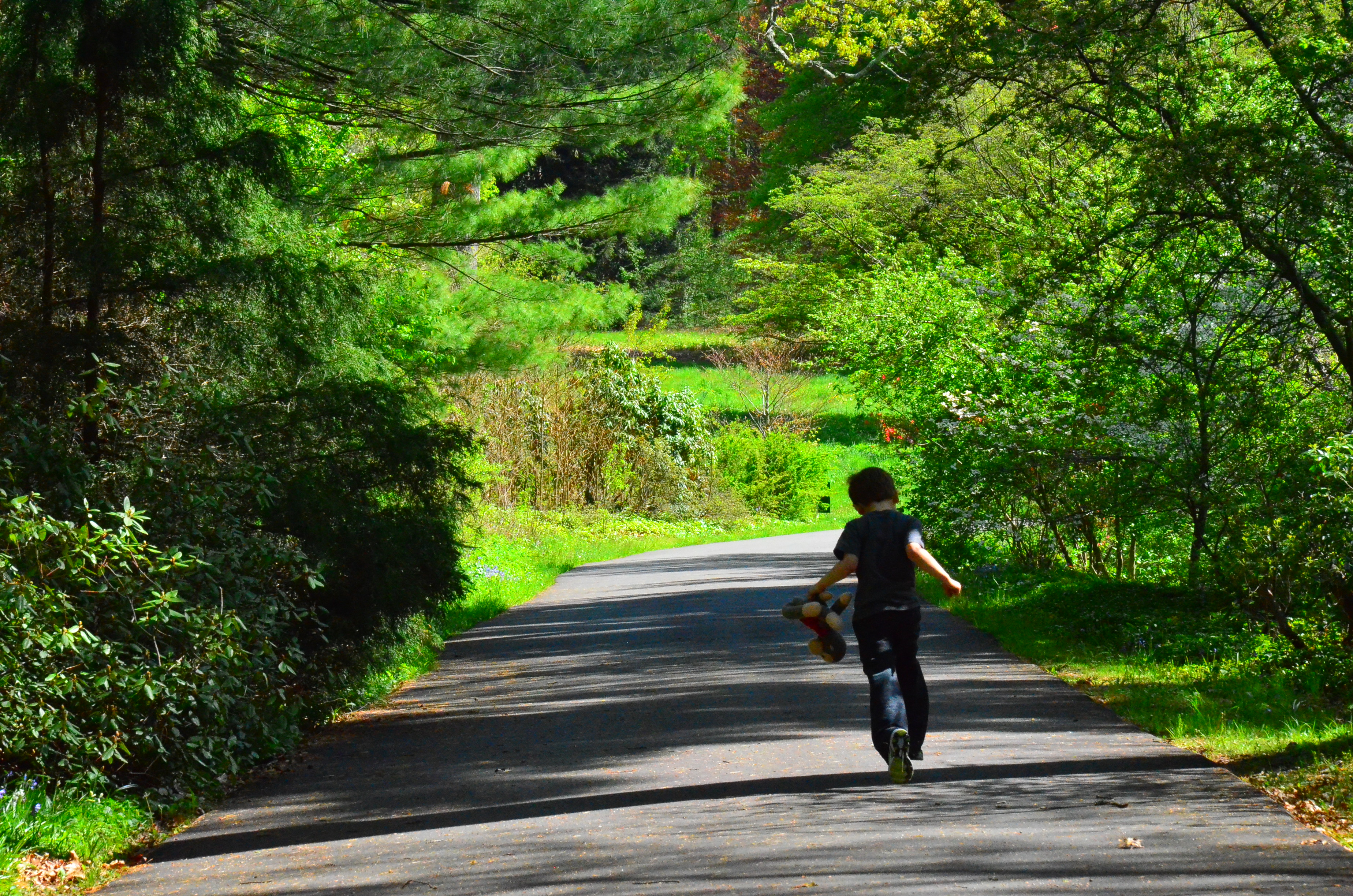
Martin at Planting Fields Arboretum State Historic Park, Oyster Bay, New York, Spring 2014.

Martin at Planting Fields Arboretum State Historic Park, Oyster Bay, New York, Spring 2014.

In the second half of the year, after my “What’s Working Now” post, we started vision(-ish) therapy with Dr. Deborah Zelinsky; Heilkunst homeopathy with Rudi Verspoor; and a weekly facilitated social group with local kids. So far, I give all three a big thumbs up. We are in another period when “things are going well” but I’m not totally sure why. I may be observing a slight uptick in Martin’s eye contact and attention span. I’ll give that development to Dr. Zelinsky. Martin had a fever and apparent healing reaction over the Christmas break. That goes to the Heilkunst. As for the social group, that’s a confidence-builder. Martin is happy to have friends of his own. Last week, for the first time, he asked to bring a game that everyone could play—the lovely wildlife bingo set his uncle Eddie gave him.

Martin rock climbing at a birthday party, July 2014.

Martin rock climbing at a birthday party, July 2014.

Did I make mistakes in 2014? Of course I did. I think the straight-up GAPS diet had too few carbs to meet Martin’s mitochondrial needs. I know there is debate on this point. For my child, I should have known; way back in 2011, when we first went grain-free, Martin showed signs of mild ketoacidosis, and we had to add a few gluten-free grains back in. This time around, I should have guessed that he would need more carbs than GAPS allows.

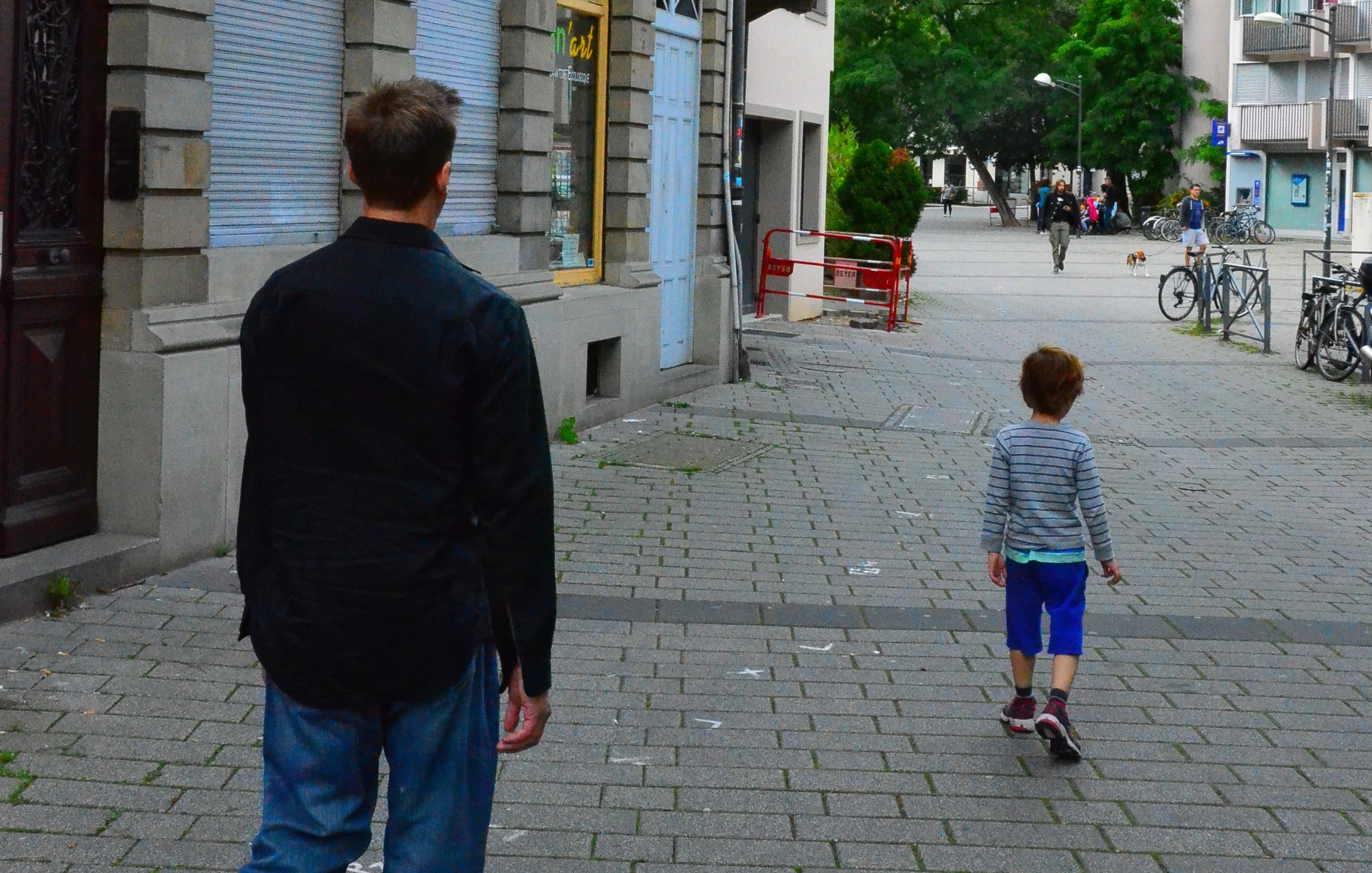
Martin with his uncle Rudy, Strasbourg, France, August 2014.

Martin with his uncle Rudy, Strasbourg, France, August 2014.

I rushed treatments. The mother who launched our biomedical journey cautioned me against the urge to do everything at once. Nevertheless, when I find an intervention that excites me, I might move too quickly. Even today, four years into Martin’s recovery, I’m prone to that amateur mistake. Other times, I just fail to pay attention and mistakenly start two treatments together. C’est la vie.

Martin looking over St. Bartholomá church, on the Königsee, Berchtesgadan, Germany, August 2014.

Martin looking over St. Bartholomá church, on the Königsee, Berchtesgadan, Germany, August 2014.

Despite my tendency to rush, though, I think honestly I can peg 2014 as the year when I internalized “marathon not sprint.” Sure, for years now I’ve parroted the mantra. Autism recovery is a marathon, not a sprint. Autism recovery is a marathon, not a sprint. But what kind of marathon did I really envision? In my “banner year” post, last January, I wrote, “I now understand ‘the long haul,’” and “I no longer fear that some mythical window will close while Martin is five . . ., or seven, or any age.” Even after I wrote that, however, the notions took some time to sink in. It wasn’t until November, when I wrote the “Journey” post, that I finally abandoned the idea that this process will have an end date. Striving for better health may well be a perennial task, one that Martin needs to continue even after he becomes responsible for his own care. Autism recovery is not a sprint. It isn’t even a marathon. Autism recovery is a lifestyle.

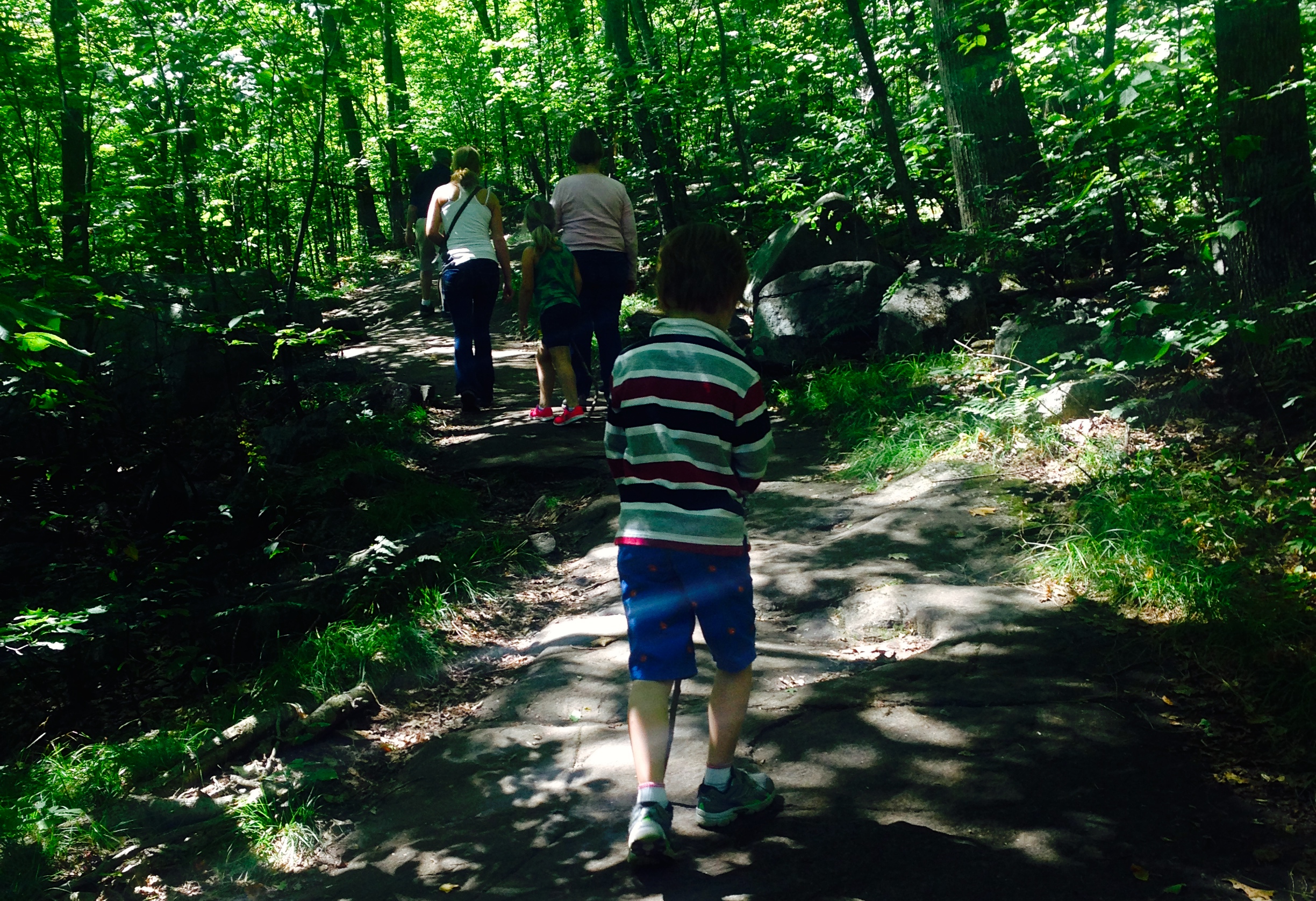
Martin hiking in the Adirondack mountains, near the Great Sacandaga Lake, August 2014.

Martin hiking in the Adirondack mountains, near the Great Sacandaga Lake, August 2014.

Behavior-wise, in 2014 Martin took new interest in socializing with other kids. Although he still isolates himself when he becomes overwhelmed, for the most part he wants to be near his friends, even if just to play side-by-side on iPads. Late in the year, Martin also (finally) made progress on nighttime potty training. He wakes now when he needs the potty, and yells for me. “Thanks, kid.” Language-wise, in 2014—well, wow. Martin has been asking “why” questions (like, gazillions of why questions) for a long time now; in 2014, he started answering them, coherently. He’s become conversational, staying on point for multiple exchanges. He can talk on the phone. This afternoon he’s going to call Uncle Eddie and wish him happy birthday! And the perseveration has decreased. Did I mention that the perseveration has decreased? Yeah, the perseveration has decreased. Such a relief.

Martin, on the left, with his cousin Luke, in the Florida Keys, New Year's 2015.

Martin, on the left, with his cousin Luke, in the Florida Keys, New Year’s 2015.

I am pleased to conclude that 2014 was a banner year in Martin’s recovery. All signs point to significant improvement in health, and corresponding changes in behavior.

May it be one banner year among many.


All of a Sudden, a Whole Bunch More Happens

I have a lengthy post prepared on “my beef with the GAPS Diet author.” It’s all ready to go. But—

Shelving that post! At least for today. Because I must, must, must tell you about what else Martin did this weekend.

  • Saturday evening, back at O’Hare to fly home, we saw another family, with a boy about Martin’s age, boarding our flight. The boy was pulling a Cars-themed roller-board. Unprompted, Martin strolled up to the boy and asked, “Did you bring your own suitcase?”
  • Martin didn’t get to bed until almost midnight Saturday night, so I thought that getting up Sunday morning would be a real problem. It was not. When I entered his bedroom to wake him, I reminded him that it was Sunday and he was going to sing with the kids’ chorus at church. He came to life with excitement. “I’m going to sing with the kids’ chorus!” Then he did it. He sang with the kids’ chorus, three songs. He was too excited and bounced around a little. But he sang and clapped and stayed in more or less one spot, without so much as a point or prod from me. I sat in the front pew and recorded the event.
  • Also at church, during kids’ time, Martin sat on my lap in the circle with the other kids. When he got fidgety, I asked, “Would you like to go sit with Vincent?”, meaning another boy across the circle. Martin nodded yes (nodded!) and scooted to Vincent. Then, instead of just sidling up, Martin asked, “Vincent, may I sit next to you?” Vincent paused for a second—a very long second, for me—then he smiled and nodded. They sat together the rest of circle time.
  • Sunday afternoon, we went to visit friends in another town who have a three-year-old, Sebastian. After some initial shyness, and then goofiness, Martin trotted off to Sebastian’s room, and the two boys played together, interactively, for two hours. They sat at a little table and took turns with different objects, and took turns complaining when each thought the other wasn’t sharing. When I called from the kitchen, “Martin, what are you doing in there?”, he answered, “Me and Sebastian are making apple pie,” and then added, “Well, we’re pretending to make apple pie.” Sebastian is, granted, only three. Nevertheless, the interaction was so significant that Adrian said, “What is this? What’s going on? I’ve never seen this before.”
  • Sunday evening we accompanied the same friends to a jack-o’-lantern display. Martin and Sebastian wore their Halloween costumes (an astronaut and a dinosaur, respectively) and chose to hold hands as they walked.

This evening, Tuesday, I had dinner with the parents of another special-needs child. I told them excitedly about the events described above. One of these parents said, “That’s the thing about special needs. What might sound like nothing to another parent is amazing to us.”

Nailed it.

All of a Sudden, It Happens

Martin and I are on a flight to Chicago, to see Dr. Zelinsky. Two things happened in the airport:

First, the metal detector. I have my qualms about the effects of metal detectors, but I let Martin pass through them. It’s a nod to convenience, I suppose. Plus, at least it’s not one of those x-ray body-scan machines. I have even more qualms about them. Passing through the metal detector used to be a challenge for Martin. He might be scared, or refuse. When he agreed to pass through, he rarely succeeded without setting the machine off by touching its sides—either he clumsily bumped them, or his hands naturally flew apart for sensory input and balance. After one or two tries, the TSA agent would let me walk though with Martin, picking him up or holding his arms down and his body steady.

Today as we approached the metal detector, I lined Martin up and said, “Walk though carefully! Don’t touch the sides!” To my surprise, Martin stood ramrod straight, pasted his arms to his hips, and walked directly though the machine. Then he iced the cake: On the other side, instead of wandering away, he stopped and waited for me.

Second, the Windy City. As we sat at our gate, Martin watched the information screen and asked questions. “What does that number mean?” “Is that a picture of our airplane?” At some point, he looked at the destination name and said, “Chicago is the Windy City.” I couldn’t remember ever having told Martin that Chicago is called the Windy City, so I asked, “How do you know that?” Martin replied, “Because my daddy told me.”

What’s the breakdown? On and off for months, I have tried to get Martin to understand the question, “How do you know that?” If we are driving and he says, “That’s a hotel,” I ask, “How do you know that?”, trying to prompt him to say that he saw the sign or read H-O-T-E-L. Instead, he responds, “But-because it is.” If he makes an assertion beyond his experience, like, “All kids except me eat popcorn!”, I say, “How could you know that?” He responds, “But-because they do.”

This morning was no such exercise. I wondered how Martin knew Chicago’s nickname, and I asked without thinking about whether he could answer. His perfect response, missing even his trademark “but-because,” surprised me a second time.

Two big successes inside ten minutes! Still, you know me: I must always temper my enthusiasm. While we were waiting in the jet bridge, another passenger saw our seat numbers and remarked kindly, to Martin, that we were all sitting in the same row. This prompted Martin to ask me whether our row had three seats together, or two. When I told him that our row had three seats together, and that someone would sit next to us, he had a little meltdown and yelled, “I’m not ever going to sit in two seats again! Not ever!” He was crying as we entered the plane.

Did I mention the two successes?

Yeah, That’ll Give Me a Good Night’s Sleep

Yesterday evening, Martin had another real phone conversation with Adrian. “Are you still at the office, Daddy? Are you coming home? When do you think you’ll come? I’m good. I’m drawing pictures with Mommy. Okay. ’Bye.”

Last night, as he was floating to Sleepyville, Adrian mumbled, “These last sixty days or so, it’s so different. He’s like a new kid.”

I’ll take it.