Del Sur, Interrumpido: Día de las Madres

Sorry, so sorry! I have to interrupt my Del Sur vacation posts for a brief musing on Mother’s Day.

The children’s choir sang at our church Sunday, for Mother’s Day, and Martin sang with them. In addition, Martin was selected as one of three children to read a Bible verse, in front of the whole congregation. He was assigned 1 John 4:19: “We love because He first loved us.”

We began attending this church three years ago, after our family moved out of the City. Almost immediately, Martin began participating in the children’s activities, assisted by the unbelievable coincidence (or divine intervention?) of a Sunday school teacher who had recovered her own son from autism. For the first year, I was too nervous to let Martin participate alone, so I trailed him everywhere. I trailed him to the front of the church when the kids gathered around the pastor for children’s time, because he liked to wander to the organ and hit keys, or make himself at home in the choir’s box.

“Maria!” the pastor called one Sunday as I crept toward the chancel during children’s time, ready to check Martin, who was monopolizing the discussion. “Maria, please sit down. Martin is fine.” Of course, the congregation laughed. I was so embarrassed. After services, I asked whether I shouldn’t come quiet Martin when he talked too much. The pastor responded, “When you came here a year ago, Martin was too scared to open his mouth around me. If now he’s talking a little too much, I can handle that.”

I trailed him to Sunday school in the basement, because I didn’t want the volunteer leaders to feel burdened.

“No, you can’t come,” the Sunday school teacher told me one day. “Go back to your seat. I will send one of the older kids to get you if Martin has any trouble.” When I tried to sneak down and peek through the door, she caught me and shooed me back upstairs.

I trailed him to Tuesday afternoon kids’ club, or sent an assistant along, to make sure he could participate fully and the other children were kind. The kids’ club can be overwhelming; in fact, only this month have I allowed Martin to attend alone—which means Martin is now fully, independently participating in church.

Which brings us to this Sunday.

Adrian and I sat together, five or six rows from the front. Adrian doesn’t usually attend church, but Saturday evening at dinner, Martin had grabbed Adrian’s hand and asked so sweetly, “Daddy, will you not go to the gym tomorrow morning and come to the church to watch me instead?” During the opening hymns and readings, Martin sat with us, clutching the note card with 1 John 4:19.

When the children proceeded to the chancel to sing, Martin led the pack. Their first song, “Praise Him in the Morning,” involved hand gestures for morning, sun, serve, and so forth, and Martin more or less kept up. Then they sang the first verse of “The B-I-B-L-E,” stopping to allow the three children with Bible verses to read. Martin was third. He jumped and flapped his hands for just an instant while he waited, kind of a microburst of nervous excitement. When his turn came, with minimal prompting from a 10-year-old girl, Martin stepped to the microphone and said, “‘We love because He first loved us.’ First John, chapter four, verse 19.” He accentuated the –teen of 19 too much; other than that, the performance was stellar. Finally the children sang another verse of “The B-I-B-L-E” (all the verses are pretty much the same) and a concluding number before receiving their applause and scampering down the aisle to Sunday school.

Adrian recorded the whole performance on his iPhone. I watched from my seat, no concern that I would need to get to the chancel and assist or intervene. Even a year ago, I would have been on the edge of my seat with trepidation, ready to spring to action in case of disruption. This weekend, Adrian and I could have been any two parents proud of their kid.

During coffee hour, an older man I’ve smiled at but don’t recall ever speaking with approached me and said, “Your son did so well today. Even in the time I’ve known him, he’s grown so much.”

It’s going to take a lot to beat this Mother’s Day.

Exasperation. For a Change, His, Not Mine

Martin’s gaining independence delights me for my own sake as much as his. When he could finally be trusted not to leave the house alone or endanger himself climbing the outside of the staircase railing, I could finally shower even when he and I were home alone. When he learned to swim, I could let him play on the swingset without constant fear of the pool 10 yards away. And when Martin finally started getting himself into our SUV—climbing into his booster chair, putting his drink into the cup holder, buckling his seatbelt—that meant no more straining my back to lift him aboard, no more standing in rain or snow waiting for him to arrange himself so I could push his seatbelt across, no more bypassing coffee shops that didn’t have a drive-thru because getting him in and out was such a PITA. Now he even precedes me into the garage, so that when I finally come out, coffee in hand, he’s already settled.

Last month Martin and I were twenty minutes into a car trip when, stopped at a red light, I turned around to speak to him and realized his seatbelt wasn’t buckled. “Martin!” I said. “What’s going on with your seatbelt? Why aren’t you buckled?”

“I forgot!” Martin sounded alarmed as he seized the seatbelt and buckled himself. “Oh, I forgot to put in on.”

“Be careful, buddy. We’re about to get on the highway. That would have really dangerous.”

I’m pretty sure that was a one-time occurrence. Still, since then, I’ve taken to confirming before we leave home, or asking once we’re underway, whether he’s wearing his seatbelt. I rarely remember to confirm before we leave home, which means I’m doing a lot of asking once we’re underway. “Martin, are you buckled?” “Yes.” “Martin, are you buckled?” “Yes.”

Monday I got a different answer. “Martin, are you buckled?” “Yaaaaaa-esssss!”

Exasperation! Martin, the king of repetition and perseveration, was exasperated with my question. As a bonus, his exasperated, “Yaaaaaa-esssss!” had a determinately snippy tone, almost like a pre-teen might utter.

That’s not the place I’ve heard exasperation. We’re on an airplane, and Martin just asked me whether he could order an orange juice. I said no, because he had a juice box earlier today at BareBurger. When Martin was younger, his response to that disappointment would have been a meltdown. His more common response, these days, is a burst of nonsense: “I’m never going to have juice again, ever! Throw all of the juice away! Mommy, we’re going to give the juice to another family!” His response just now was one that’s emerged within the last week or so: “Awwwww!”, that whining protest that children use when they feel they’ve been unjustly denied a privilege. I also got an “Awwwww!” when he wasn’t allowed to watch television at breakfast and when he couldn’t watch Wheel of Fortune because I had the Rangers game on.

I’m not sure I’m ready for all this neurotypicality.

MARTIN MADE FRIENDS

As an undergraduate I studied journalism. We weren’t allowed to use quotes in headlines; the rule was, “When the Pope says, ‘F**k,’ you can quote it in a headline.”

There must be some similar rule for all-capital blog headers. You come to my blog expecting a certain consistency: photos that conceal Martin’s identity, headers in initial-capitals only, maybe some italics but nothing fancy. If I start getting all wacky—curly q’s or design changes, exclamation points, politics, profanity, bold, all-caps—I risk the impression of level-headedness I try to maintain, right? Finding My Kid relies on words and the power of Martin’s journey, not typographic tricks.

Except today. I don’t have words big enough to express what Martin has done, so—

Welcome to the first time Finding My Kid is shouting a header at you:

MARTIN MADE FRIENDS.

We’ve lived in our suburban house for almost three years. The yards in our enclave are large, so although we have neighbors, they are not bumped up against us. We know the neighbors, as in, we know who they are. The teenager next door babysits for Martin. We wave at the others, chat occasionally in the street. (You caught us: Adrian and I are hardly social butterflies.) Martin, however, has never shown any particular interest in children who live around our dead end.

What I’m about to relay is second-hand, as told to me by Martin’s nanny, Samara. I can attest that Samara is guileless in her storytelling, a real just-the-facts-ma’am operative. I work in the City Wednesdays and Thursday, so Martin is with Samara. Last Wednesday, by her account, Martin asked to ride his bicycle after school. She agreed and told him to stay close to the house. He announced that he was riding to the neighbors’ house. Samara, who could hear the neighbors’ six-year-old twin girls (Martin is seven) playing in their yard, asked Martin to wait. Instead, he looked directly and mischievously at her, smiled, and raced across the street to the neighbors’ driveway. By the time Samara caught up, Martin was talking to the girls. He’d met these twins once before, when we participated in a volunteer project at their home. He did not manage, that time, to speak with them.

Samara checked with the twins’ babysitter, who said it was fine for Martin to play in their yard. Samara then returned to our house, within eyesight, to start making dinner. After ten minutes or so, she realized that Martin had disappeared into the girls’ house. She waited a while and then walked back across the street. The girls had other friends over, pre-arranged, and while one sister was playing with them, the other sister was playing with Martin. He stayed another 45 minutes or so. When he returned home, he was proudly carrying a knotted keychain the twin had made for him.

Thursday after school, Martin got off the school bus and asked to ride his bicycle. He rode directly to the neighbors’ house, and upon seeing Martin in their driveway, the twins came out to greet him. Samara again checked with the twins’ babysitter, who again gave permission for Martin to stay and play. The three kids ran around together in the yard for 30 or 40 minutes, until the girls had to go inside to work on their homework. Martin rode back home. To Samara’s surprise, after half an hour, the twins (homework apparently finished) arrived with their babysitter and asked to play some more with Martin.

Meanwhile, from my office in the City, unaware of these Thursday activities, I emailed the girls’ mother to thank her for hosting Martin Wednesday afternoon. She emailed back to say Martin had been a pleasure, that she was thrilled the kids were playing together, and that her daughters were at my house at that very moment.

According to Samara, the girls left our house around dinnertime, and asked if they could return on Friday. Martin has trombone lessons and a social-skills play group on Friday afternoons, so that wasn’t possible; Samara plans to arrange a visit this week instead.

Friday morning, Martin told me he was taking the knotted keychain to school. He wanted to show it to his classmates and tell them about his new friends.

When Martin was still acquiring language, sometimes he would use a phrase or idiom correctly, one time, and then those words would disappear, only to reemerge later with consistency; for example, he once answered a question with “I don’t know” but didn’t say “I don’t know” without prompting again for months.

On Sunday, four days after Martin made his twin friends, his class had a play date. Half a dozen boys showed up to run around a playground. Martin joined their chasing and pushing for a few minutes, then chose to climb by himself. I think he still gets overwhelmed in a crowd, even a small crowd of his own classmates. Later the same afternoon, back home, Martin saw a girl his age, a stranger, riding her bicycle in the street. Immediately, he asked to go ride his bicycle. Adrian, who went outside to supervise, reports that Martin was clearly interested in the girl but couldn’t bring himself to speak to her; even when Adrian and the girl’s father tried to introduce the two of them, Martin hung his head and looked away.

Martin has friends, arranged by me, with whom he plays regularly. Meeting the twins across the street, by contrast, marks the first time Martin has made friends. Based on the experiences Sunday afternoon, I would say that making friends is like saying “I don’t know” once was: Martin showed that he has the skill, and now the skill will disappear for a while before reemerging with consistency.

He just needs to gain some confidence and remember to use the skill he evidently now has.

MARTIN MADE FRIENDS.

IMG_2630

This picture is not (completely) related to this post. But I am so excited that our cherry blossoms are starting to pop, and since we walk by this tree on our way to our neighbors’ house, I’m using that as an excuse to include the picture.

Past Tense

Years ago, when we were only a few months into Martin’s recovery, I was leafing through a magazine I found in our doctor’s waiting room. I don’t remember the publication’s title, or even its purpose; I think it may have been a resource for parents pursuing biomed.

What I do remember were a couple of personal-experience pieces written by typically developing teenagers in support of their ASD siblings. In one, a girl whose brother was already recovered talked about her brother’s autism and how it had led her to advocating on behalf of students with disabilities. Although my memory of the other details is nebulous, I can still recall this phrase: “During the time my family was affected by autism . . . .”

Those words struck me. They were so comforting, how they suggested that there can be an other side to autism, a time when autism is not a daily struggle, when recovery is not the long road (to where?) ahead, but when the reality has become a memory.

I’ve written now and again about autism symptoms that are so far gone that they no longer exist in my daily consciousness.

Martin, for official/school purposes, has lost his autism diagnosis.

We still have work to do. Lots of work. Martin’s executing functioning—meh. As a corollary, Martin’s attention span and ability to plan—ugh. Martin still has a diagnosis. “ADHD,” our new territory.

Yet—.

Last week I attended a conference in California, for the consumer advocacy work I do. I was meeting with the director of a non-profit organization devoted to monitoring toxins in personal-care and household products. She asked how I became involved in representing consumers.

I said, “Through my son. He had autism.”

Attention-Deficit Hyperactivity Disorder (ADHD)

Because we are thinking about changing Martin’s school placement, Adrian and I decided to order a new neuropsychological educational assessment (a “neuropsych”). Martin also had a neuropsych three years ago, before he entered kindergarten, and last year. Those first two neuropsychs were completed by Dr. DS, a practitioner in Manhattan. This time we switched to Dr. PS, a practitioner in a suburb near ours, who knows our local schools and who had never before met Martin. Dr. DS and Dr. PS are mainstream neurodevelopmental psychiatrists, not biomed practitioners. Before Dr. PS started her testing, I enumerated Martin’s issues at this time: paying attention, sitting still, emotional regulation. I did not say “autism,” though she certainly must have seen that word on the previous neuropsychs and the school records I provided.

We had our parent meeting with Dr. PS last week, after she’d had three lengthy testing sessions with Martin. She told us that Martin’s primary trouble lies in executive functioning. She diagnosed him with ADHD, compounded by social/pragmatic language delays.

She didn’t mention “autism.”

Adrian asked, “You’re saying he has attention deficit and hyperactivity?”

Dr. PS answered, “Really, hyperactivity is a minor part. The primary issue is attention deficit, this inability to focus. That stems from the executive functioning and affects his performance in many areas, including school.”

Adrian is Adrian. He likes concrete, definitive responses. He asked, immediately, “Um, why don’t you think Martin has autism?”—not the question I would have posed. I like to leave well enough alone.

Dr. PS said that different practitioners come at executive functioning in different ways. Martin, she said, presents with “a little bit of this, and a little bit of that,” such that, perhaps, a doctor focused on autism might find a mild spectrum disorder. In Dr. PS’s opinion, however, Martin “does not meet the diagnostic criteria for autism spectrum disorder.” He presents much more strongly as a child with attention deficits. True, he retains difficulties with social/pragmatic language, but he is eager to socialize and keenly aware of others. No, she concluded, he doesn’t have autism.

“So,” I said to Adrian as we climbed into bed that night, “we don’t have a son with autism anymore.”

Adrian paused. Then he replied, “I guess we’ve known that for a while.”

I guess we have.

Martin can express himself, now. Martin doesn’t really have repetitive behaviors, anymore. Martin’s perseveration, which once was literal inability to stop speaking, has faded to a penchant for prattling about obscure topics, like marching bands and features of my car’s dashboard. Martin knows exactly what other kids are up to. He won’t let me affix a sport strap to his glasses anymore, because “Zach and John don’t have straps on their glasses.” Martin is awkward, socially, and his attention span has the half-life of hydrogen-7. But “autism”? These days, that seems too harsh.

On the other hand, it feels strange—to say I don’t have a son with autism. We still have a lot of work to do with Martin’s executive functioning, and the spectrum has been a driving component of our life, even of my own identity. We socialize with other autism families. We swap articles about autism. I even pre-board airplanes, on the basis that “my son has autism.” (The pre-boarding will have to stop. I will let airline attendants draw their own inferences, but I won’t lie.) Autism, autism, autism. What do I do now? Find ADHD friends?

Adrian and I have never been public about Martin’s diagnosis. Indeed, we’ve gone to lengths to hide his autism. In part, that’s because “autism” is a scary word. ADHD or ADD, not so scary. People seem to love to self-diagnosis with ADD. Maybe now we can go public with that moniker.

Almost six years ago—the summer that Martin turned two—was when Adrian and I started to realize that Martin had “issues.” Other kids blew out the candles on their birthday cakes. Martin stared into the abyss over his own cake. (We later discovered he lacked the ability to pucker, or to blow.) In the toddler soccer program, when the coach said, “Run and kick a cone,” nine kids ran and kicked a cone. Martin wandered to the next field and tipped over the goal.

By that fall, we were sufficiently concerned to ask a high-school friend of mine, an EI provider, to come take a look at Martin. She did, and she knew immediately that he had autism. The first psychologist, sent by New York City only a couple weeks after my friend saw Martin, said, “It’s autism. You might call it ‘high-functioning autism,’ or, ‘Asperger’s syndrome’.” But though Adrian and I didn’t realize it, Martin was backsliding. He had already lost eye contact and was becoming less responsive every day. By the time the Big Imposing Hospital’s neurodevelopmental team got hold of Martin, several months later, there was no mention of “high-functioning” or “Asperger’s.” They diagnosed Martin with moderate autism and threw in the kitchen sink of co-conditions: delays in every type of communication, low muscle tone and lack of proprioceptive awareness, sleep disorder, possible cognitive impairment, and on, and on, and on.

Let’s call that the low point.

Fortunately, we had already started biomed and the tedious brick-by-brick struggle to free our son from autism.

When he was three, Martin’s special-needs preschool removed him from a self-contained 12-1-1 classroom (12 special-ed students, one teacher, one aide) based on his need for more supervision, and his inability to keep up with the other developmentally delayed three-year-olds. The school placed him instead in an 8-1-2 classroom, in which two other students had 1-on-1 aides (in total, eight special-ed students, one teacher, two classroom aides, and two dedicated aides). Martin was left in that classroom for two years.

When it came time to find a kindergarten—we lived in New York City, where kids don’t just go to the local school, as they might elsewhere—we had Martin’s first neuropsych done. Dr. DS, the Manhattan neurodevelopmental psychologist, confirmed the autism diagnosis as “not a close call.” He told us that our desired elementary school, which has 12-student special-ed classrooms, would not provide enough support for Martin, and would be likely too advanced, academically. He said we were “really looking more at a need for 1-on-1 support” or a six-student ABA classroom.

Forget that, Adrian and I decided. When the desired school, with the 12-student classrooms, accepted Martin, we sent him there. And he excelled.

Two years later, before second grade, it was time for another neuropsych. To get a reasonably comparative assessment, we brought Martin back to Dr. DS.

Dr. DS admitted that he had been mistaken to think Martin wouldn’t make it at our chosen school. In fact, Dr. DS was not so sure Martin still needed all the support the school offered. “I’ve seen some remarkable progress,” Dr. DS said when he presented us with Martin’s report. Martin had moved from the third percentile to the 83rd percentile in receptive language, for example, and though the autism was still prevalent, he had made tremendous gains in other areas, too. What were we doing?

I told Dr. DS about our biomed protocol and nontraditional therapies, like HANDLE and Anat Baniel Method. He listened. At least he appeared to listen. When I finished, Adrian asked Dr. DS what our next steps should be, and Dr. DS said, “Medicate Martin. Now is a good time to start experimenting with medications, so that by the time he reaches third grade, when the curriculum becomes more advanced, you will already know the best combination and dosage of medications, whether it’s depressants, stimulants, or something else.”

Thank you, Dr. DS!

Another year passed, and this time we brought Martin to suburban Dr. PS, who opined that autism spectrum disorder is no longer the correct diagnosis for Martin. She said that her testing revealed an upward trajectory from Dr. DS’s reports. While Martin once had significant delays in all four areas of language, Dr. PS said, he now exhibited delay only in pragmatic/social language. “So looking at his history,” she said, “we can see that Martin was not destined to be a child with receptive or expressive language problems, as those have faded away.”

Destiny? I asked myself. Destiny didn’t resolve Martin’s receptive and expressive language delays. Biomed did.

“What should we be thinking about for next year?” Adrian asked.

Three components, said Dr. PS. First, the choice of school setting. Second, additional therapies and resources. And third, medication. It’s time to start experimenting to find the best medication for Martin’s ADHD.

I’m tempted to write, Thank you, Dr. PS! There’s an addendum, however. I told Dr. PS that we are “hesitant” to medicate Martin because doing so would interfere with our biomed protocol. The progress we’ve made, I explained, has resulted from a restricted diet, supplementation, and constant reevaluation of Martin’s health needs. Dr. PS—remember, she’s a mainstream neurodevelopmental psychiatrist—asked pertinent questions, like what kind of doctor we see and whether the protocol is test-based. (There are charlatans in the autism-recovery universe. I know that.) After I provided sufficient reassurance on those points, Dr. PS said we are probably right not to medicate at this time. If what we are doing biomedically is working, she said, then we should exhaust that route. Experimenting with medication does not have a time limit, and it is okay to start later.

So, actually, really, thank you, Dr. PS. Thank you for listening and reconsidering.

And, for my readers, especially my long-term readers, here’s a special tidbit: Do you remember my lengthy post about Mr. and Mrs. Twice-Exceptional, the Quirky Genius School, and the movie The Imitation Game? You might want to revisit that one.

As she was reviewing Martin’s test scores with us, Dr. PS pointed out a wide discrepancy in the different fields. In many academic areas, including reasoning and some language-based tasks, Martin’s scores were at the top of the bell curve, well above the average range. He uses his formidable intellect and those stand-out skills, Dr. PS said, to compensate for his still subpar executive functioning.

“You see,” Dr. PS told us, “your son is what we refer to as ‘twice-exceptional’.”

Moments

The moment in a ski lodge when your ASD son—whose Lyme-disease treatment has rendered him so hyperactive that your brother Eddie just had to eat half his dinner holding a squirming boy on his lap, to prevent that boy from ransacking the restaurant—hits the “Floor 1” button in the elevator, then turns directly to three adult men who’ve entered and inquires, “Are you also going to the first floor?”

The moment in the airport security line when your ASD son—whose Lyme-disease treatment has turned him so inside himself that he doesn’t always realize when you’ve started speaking to him—takes his trombone case off his shoulder and holds it proudly in front of him, hinting for the TSA officer to ask him about the instrument, and then answers her question with, “Yes, I am very good at playing the trombone. I even take lessons, every Friday.”

The moment in a Whole Foods Market café when your ASD son—whose Lyme-disease treatment has left him so anxious that he burst into sobs when he lost sight of you, momentarily, in a trampoline center—finds his way to the napkins and silverware, selects the right quantity of each, returns without delay, and sets the table, without being asked.

The moment in a restaurant when your ASD son—whose Lyme-disease treatment has made him so sensory-seeking that he continually puts you in tight headlocks, whenever he’s not trying to wipe his nose on your sleeve—lets you cut his roast chicken, then says, “Thanks! I was getting frustrated with that.”

The moment in the car, in Northern California, when your ASD son—whose Lyme-disease treatment is causing him to perseverate on marching bands and musical instruments, regardless of what conversation is actually happening—calls from the backseat, “I like Southern California better. Uncle Rudy lives there, it’s warmer, and it borders Mexico,” and follows up with, “Why do you say you like Northern California better, Mommy?”

The moment when the new neuropsychologist evaluating your ASD son—whose Lyme-disease treatment has made him so drunken-silly that he interrupted the neuropsychologist’s testing with a giggle fit, and later became infuriated with a challenging exercise and shut off her computer—tells you, “I definitely see issues here. I would say primarily ADHD, and secondarily speech processing delay,” and never once mentions the A word.

Easy Peasy, Puddin’ Squeezy

Martin’s school sent home a note to all parents, asking us to make sure our kids keep sneakers in the classroom, to wear to the gymnasium.

I, of course, could not remember whether Martin has sneakers at school.

So I asked him.

And he answered, with a nod.

“You do?” I asked. “Which ones?”

“The blue ones with the yellow swoosh,” he replied.

“Those old ones? Do they still fit?”

“They fit. I tie them myself.”

I used the italics, above, for the benefit of those readers outside the autism community. The others, like parents with a child on the spectrum, know the import of asking my child a question, expecting an answer, and still more, expecting an accurate answer. Once upon a time (for example, last year or any other time in memory), finding out whether Martin had sneakers at school would have required writing a note to his teachers and awaiting their response. Being able to ask him—that’s way more convenient.

Last Saturday, while Adrian was out of town skiing, Martin “took me out” to lunch. We had just settled into our seats when Martin said he had to go to the bathroom. “All right,” I said, “go ahead.” He left the table. He returned five minutes later, his hands still damp from being washed. As far as I can tell, nothing eventful happened between our table and the restroom. Later, I left the table for a minute. I asked Martin to stay put, and gave him my iPhone to amuse himself. He stayed put. When I returned, our waiter said casually, “Your son told me you’re going to the trampoline place this afternoon. Have fun!”, as if my son telling the waiter our plans were an everyday occurrence.

In fact, even though Martin was hyperactive and off balance from his Lyme treatment (again!), the whole weekend that Adrian was away ran smoothly. Friday evening Martin and I went to meet his new trombone teacher. Remember how disappointed Martin was when he didn’t receive a trombone for Christmas? Since then, he’s persistently asked to start trombone lessons. Finally I called music schools—most instructors weren’t willing to work with a child younger than 10—until I found a jazzy older fellow who said something like, sure, we’ll just find an alto trombone so your son’s arms aren’t too short to reach every position on the slide. We ended up buying an alto “pBone,” which is a real instrument whose exterior is plastic instead of brass (with a resulting price decrease!). The teacher-student meeting went well, and since then Martin has started his lessons.

Saturday morning Martin and I attended a student production of Cinderella at a local school, then went out to that lunch, and then met another family for a play date at the trampoline center. For dinner I made a cashew-carrot soup, which Martin ate with a spoon, instead of the stainless-steel straw on which he used to rely. Sunday we went to church—Martin participates in Sunday school with the other kids—and then to his hockey lesson. He chose to spend extra time on the ice after his lesson ended.

Once upon a time I dreaded weekends without Adrian; activities with Martin were a chore, but downtime at home resulted in stimming and meltdowns. Last weekend, the Lyme treatment had Martin at his worst. (Things haven’t improved much; stay tuned.) His worst right now is so much more manageable than his best used to be.

I’m thinking right now about parents of neurotypical kids. For sure, they have their own challenges. That being said—holy cow, parenting a child who can answer questions, complete simple tasks alone, and amuse himself for a few minutes now and again feels almost like doing nothing at all.

Parents of neurotypicals: Is it always like this?

I know that we have travails to come, as Martin continues to recover. At some point, he will transition from special education to general education, and we will have to worry about bullying and self-esteem. As he understands more about what his friends and classmates want, peer pressure will become an issue. And we have travails now. Martin’s continued perseveration, though milder than it used to be, perversely annoys me even more. The uneven temperament that comes with the Lyme treatment is bewildering. Parenting Martin will never be laissez-faire, at least not for me.

But, actually, maybe it kind of will be easy. If raising Martin had been like last weekend all along, I might just have more kids. Lots more.

Instead of Making

To the outside observer, I gather, it seems like I do everything for Martin. Food-wise, at least. I prepare three meals a day from scratch. I buy eggs and meat from farms. In the summer I grow vegetables and herbs. I simmer broth, I pre-sprout beans, I soak and dehydrate nuts, I bake magical allergen-free snacks to send to school.

Let me assure my readers, however, that there are foody activities that I forego. That is, as a general rule, if I can buy a food from a source I trust, I do. I could save money—the grocery bill of a biomed family is out-of-control huge—by actually making everything at home, but there just aren’t enough hours in the day. Examples:

  • Kombucha. I brew my own kombucha. I have a countertop canister and a strong SCOBY, and each time I harvest, I feed the baby SCOBY to my compost bin. So what’s the problem? Well, I drink a lot of kombucha, Martin drinks kombucha, I don’t harvest my brew as often as I should, and what I make never tastes as good as GT’s or Health-Ade. So I brew kombucha and I also buy kombucha. Bottles and bottles of kombucha.
  • Nut cheese. Cultured cashew cheese isn’t hard to make. Here’s a recipe. And another. And another. You know what’s even easier than making cultured cashew cheese? Buying it. Here’s a good brand. And another. And another. (Don’t confuse cultured nut cheese, which is probiotic and healthy, with simple “non-dairy cheese,” which is often starchy junk food that, in my opinion, tastes awful.)
  • Fermented vegetables. I went through a phase of fermenting my own vegetables, in jars in my basement, especially because I wanted more choices than just cabbage sauerkraut. Now there are so many organic brands with non-sauerkraut ferments. BAO makes fermented kale and dandelion greens, beets, and mixed vegetables. Hawthorne Valley Farm, a local brand, has tasty ginger carrots. WildBrine makes smoky fermented kale and red beet sauerkraut, although not all its varieties are organic (I believe they follow the “dirty dozen” list and make those organic) and the Brussels sprout kraut contains soy, making it unacceptable for Martin.
  • Snacks. Martin prefers commercial snacks. He likes to open colorful wrappers, and he likes eating “store food” like his friends and classmates do. His favorite are Lärabars. I have a tortured relationship with Martin’s Lärabars. First, they are not organic, so I fear pesticide residue. Second, their GMO status is unclear. Third, they are high in sugar, even if the particular sugar is sucrose from dates. Fourth, they contain nuts, so I am not allowed to send them to Martin’s school. Still, Martin loves them, and these days it’s not easy to find a snack he loves. (He has long-since rejected previous choices like Go Raw! seed bars, raw macadamias, and jerky.) I would prefer that Martin pick Simple Squares over Lärabars. Martin picks Lärabars.
  • Pre-sprouted nuts and legumes. These can be found in the bulk aisles of health-food stores and Whole Foods Markets, and also packaged. My favorite brand is Living Intentions, which supplies a lot of those bulk aisles; I’ve had the opportunity to meet with representatives of the company, and they seem to be producing honest goods for the right reasons. Buying pre-sprouted saves me the trouble of soaking nut and legumes in FIJI Water and then drying them in my dehydrator. I wish more varieties would become commercially available, like navy and cannellini beans, or macadamia nuts and filberts.

As I said above, our grocery bill, for a family of three, is outrageous already; pounds of organic produce for juicing, meat from free-range animals, eggs laid in a yard, sustainably caught seafood, and raw-milk cheese (for when Adrian craves a bit) do not come cheap. Adding these commercial products feels like tacking a custom stereo to the cost of a luxury care—you stop and think, “Have I just gone overboard?” On the other hand, allowing myself the convenience of some prepared foods enables me to work outside the home, some, gets me more sleep, and helps preserve my sanity for the long, long haul that is autism recovery.

I would love to find more time to harvest my kombucha brew and to culture cashew cheese. I’d have to give something up to make that happen, and the thing I would give up would probably be—blogging.

And then what would we do?

New Year!: We Zipped by a Whole Foods Market

There are times when I should trust my instincts.

Remember when I thought Martin was having a yeast flare, but went with the plan of his his doctor, who didn’t think yeast was the issue?

I was right. Yeast was the issue, and by not addressing yeast directly and immediately, I let it get worse. By four days into our Utah trip, Martin’s skin was a mess. That’s his “tell,” for candida. He gets a mild rash on his legs and belly, which spreads to his arms and backside as he scratches and scratches until he’s covered with bloody nicks. It’s awful. December 30, though we rubbed balm from head to toe, Martin could not stop scratching, and I was washing little spots of blood off his sheets and clothes.

I messaged his doctor, attaching photos. She agreed that we needed to take immediate anti-yeast measures and suggested Martin go back on Candex. This time, I supplemented her opinion with my own and decided to kickstart the new treatment with two weeks of Candidase.

. . . Which explains why, New Year’s Eve, after getting up late and skiing and meeting Adrian’s colleague for a drink, I insisted on driving to the Park City Whole Foods Market for Candidase and Candex.

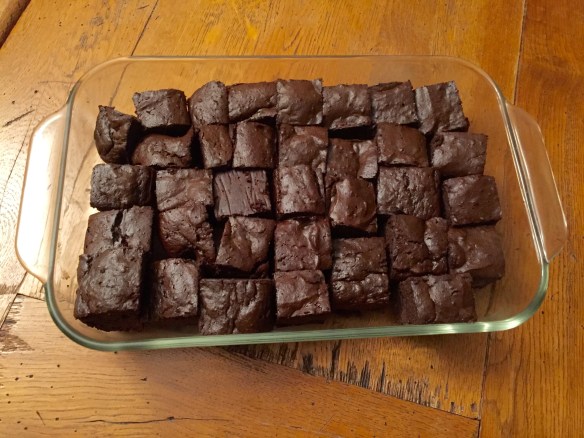
As I wrote this, one week after New Year’s Eve, the situation has improved dramatically. Candidase works best on an empty stomach, so each night after 10:00 pm, I slip into Martin’s room and give him two Candidase capsules, which he swallows without waking. I do the same thing before 6:00 am, and he takes a third dose immediately after school. For the time being, I’ve cut the already sparse grains from his diet, and tried to further limit natural sugars. Last Sunday, just after we returned to New York, I baked semisweet spinach brownies, which are nut-free (appropriate for school snacks) and better than they sound.

FullSizeRender-2

Whenever possible, I’ve been substituting those for the Lärabars Martin loves, which are healthy but, because of the dates, high-sugar, at least by my standards. Instead of a (grain-free but still sweet) baked good like banana bread, Martin has been eating vegetable omelets, sometimes with turkey bacon, for breakfast.

FullSizeRender-3

Martin still scratching, though much less. His belly looks good. His arms and legs are beginning to heal again. He is comfortable.

Honestly, I am disappointed that Martin has had yet another yeast flare. I had hoped that, by this time, his system would be healed enough to keep candida in check.

But who’s got time for wallowing? I’m in battle.


New Year!: We Met One of Adrian’s Colleagues for a Drink

New Year’s Eve, for our après ski, we met one of Adrian’s colleagues at a distillery. This particular colleague, like most, doesn’t know our son has autism, and whereas the colleague has typically developing children in the same age range, he would be able to spot any differences. We didn’t want Martin to “stand out.”

One way Martin still stands out is ordering food. When we are in a restaurant, he likes to order by himself. That’s fine, if we are in a restaurant whose menu we already know. When we are in a new restaurant, I have to ask eight million questions. The hamburger—is that just ground beef, or is the beef mixed with bread crumbs? The sweet potato fries—do they have any breading or coating? What kind of oil are they fried in? What else is fried in that oil? The grilled calamari—could we get that without the garlic butter? And the whole time I’m asking, Martin interrupts, usually to yell what he wants: No, no! I can get the calamari! Can I get the calamari? I don’t want salad! Occasionally he also has a mini-meltdown over what’s available (or not available) for him to eat, in which case I take his hand and lead him outside until he calms down.

So we were glad to arrive twenty minutes before Adrian’s colleague, have a chance to peruse the menu (the colleague suggested the location), and come up with the best option, both nutritionally and in terms of avoiding a meltdown. By the time the colleague joined us, Martin was occupied with my iPhone while happily downing a grass-fed steak and French fries cooked in canola oil.

Wait. Potatoes? Canola oil? Do we allow Martin to eat potatoes and canola oil?

Generally speaking, we do not. Potatoes are an occasional summertime treat, organic and roasted on our outdoor grill. Canola oil almost never works. Most canola oil comes from genetically modified crops, and even non-GMO “Canadian oil” is refined (hexane-processed?), bleached, degummed, deodorized rapeseed oil in which omega-3 fatty acids have been turned into trans fatty acids. Why would I let Martin ingest that?

Well, because we were traveling, and when we travel, and encounter new situations, and have to “perform,” some restrictions loosen. A bit.

Traveling, depending on where we go (for example, I can do more at my parents’ in Texas than I can in a suite in Chicago), alters:

  • Diet, to a modest extent. Martin’s diet is always free of gluten, dairy, soy, corn, and refined sugar. Beyond that, some specifics slip, including the aforementioned potatoes and canola. It can be hard to ensure organic food, or even non-GMO. He might also miss a day or two of broth. We traveled to Utah on a Saturday. He went without bone broth Saturday, Sunday, and Monday. By Monday afternoon I’d got my hands on a marrow bone and simmered a pot of broth.
  • Cookware. Even at home, my cookware isn’t perfect. Stainless steel remains puzzling, in terms of purity, and I’m never sure if my cast iron is seasoned properly or clean. In any event, at home I cook with All-Clad and cast iron, with mostly stainless-steel or wooden utensils. Whenever we travel, we rent accommodations with a kitchen, and unless we are staying long enough to justify a purchase—for example, when we were in Europe for ten days and I bought a fine strainer and a pot, both of which I brought home—I use what comes with the place. That might mean a plastic spatula, or even, egads!, nonstick pans.
  • Detox baths. At home, Martin takes two or three detox baths (two cups Epsom salt and one-half cup baking soda) a week, depending on whether he’s also used the sauna. Epsom salt is heavy to carry, and I don’t always trust other bathtubs. What product was used to cleaned it? Could I rinse it well enough? There is no point in trying to detox Martin in a tub with excessive chemical residue.
  • Exercises. Right now, we don’t have HANDLE exercises to do. Martin does, however, have four short exercises per day for his vision/neuroplasticity. At least, he has four short exercises when we are not on the road.

We do have absolutes, stuff that doesn’t change, regardless of where or when we travel. Martin takes his supplements, always. I’ve handed him pills in rental cars, measured drops at airport gates, mixed powder into restaurant beverages. I also find him fermented foods, daily, wherever we are. Martin no longer takes probiotics, so fermented foods are his probiotics. Plus, it’s easy enough to find sauerkraut or another cultured vegetable these days, if not kombucha.

The last absolutes? Love, and plenty of attention. Martin always gets those.