A&A Part I: The Issue

A couple months ago I wrote about mysterious allergic reactions Martin was having: puffy watery eyes, runny nose, and (later) spots on his face. We suspected maybe a food was the culprit and also started searching for environmental culprits. We also started treating for chronic Lyme disease. The spots have not recurred.

We have, however, had more sneezing and watery eyes. Then, last month, yet another symptom arose. My mother-and-law and I took a day trip with Martin to “Fun4All,” an indoor playscape way out on Long Island. We sat in the snack-bar area while he climbed, bounced, and looked for a friend. Every so often Martin appeared at our table, drank some water, and scampered off. I noticed he was sweatier than usual, and breathing heavily. I was happy that he was exercising so much.

After 90 minutes, Martin was too sweaty, and breathing too hard, and his eyes were watering, and he was coughing. I asked if he wanted leave, and he said he did. Whatever reaction he was having was severe enough that I started looking for triggers. I’d noticed a kind of chemically smell, so I took a picture of a sign posted in the restroom, which said that Fun4All is cleaned with “Simple Green D Pro 5,” a “one-step cleaner, disinfectant, virucide, fungicide, sanitizer, mildewstat & deodorizer” that is “hospital grade.” (In my world, that sounds scary. Very scary.)

We exited Fun4All. In the parking lot, I realized that Martin was wheezing. He was having a full asthma attack, like the attacks that strike my older brothers, who are asthmatic. I used my iPhone’s voice-memo feature to record Martin’s labored breathing, so I could share it with his pediatrician. Then I loaded him into the car and gave him a bottle of water. The wheezing faded within twenty minutes.

That was the first asthma incident. In the four weeks since, Martin has experienced half a dozen more, each time after exercising: ice skating lessons, bicycle riding, playground. He’s also coughed, a lot, had a generally runny nose, and breathed heavily at night.

The search for answers entered high gear. I contacted our environmental consultant to retest our house for mold and mildew, which we also had done before we bought the house. I talked to Martin’s autism specialist (his biomed doctor), who advised me to bring Martin to his pediatrician for traditional allergy testing. The pediatrician also sent us to a traditional allergy/asthma specialist, to evaluate the results of the pediatrician’s tests and to conduct additional tests. I requested a phone consultation with Martin’s homeopath.

Soon we were armed with an albuterol inhaler as well as a nebulizer for bronchodilators. (I don’t like to use pharmaceuticals with Martin, or with myself for that matter, but when it comes to breathing, I am not willing to mess around.) We also found, I hope, some answers.

This is the first of four posts on A&A, allergies and asthma. The next three will cover the potential triggers we’ve discovered. I hope that, in a few months, I will be able to write a post about resolving the Martin’s A&A.

I’m not happy about any of this. We’ve been fighting autism for years now. I don’t need any more A’s on my plate.

IMG_0428

Money

I call myself a fiscal conservative and social libertarian. I support capitalism. I think that, ultimately, the self-interest that capitalism engenders moves “the group whole” forward. Capitalism isn’t an ideal system, but we don’t live in an ideal world. Altruism, community spirit, and a peaceful life unfortunately don’t provide sufficient motivation. Instead, we—we humans—like to compete. A properly regulated and administrated capitalist system should enable workers to choose how they want to profit: financially, with free time, through notoriety or renown, in job satisfaction or altruism, &c. A properly regulated and administrated capitalist system, I think, functions best on the shoulders of an educated populace, and a profit engine that responds to its demands.

I’ve said before: I’m wildly simplifying. A blog post allows only so much depth.

One particularly American notion that I like is the marketplace of ideas. An arena for vigorous debate enables participants to consider and reject, to separate the (non-glyphosate, organic) wheat from the chaff, to ponder what makes stupidity stupid.

Congress shall make no law . . . abridging the freedom of speech, or of the press; or the right of the people peaceably to assemble, and to petition the government for a redress of grievances. Boo-yah.

I also believe that what’s happening to our health, to the immune systems of our children, to the neural functioning of our elderly, results from profit motivation. From greed. Glyphosate, genetically modified organisms, inadequately scrutinized vaccines, a world blanketed in electromagnetic radiation—some part of these developments might arise from a desire to feed the world or protect health or push us forward, but the greater instigator is financial advantage. (Don’t go all frenetic on my implicating this partial list of immunity bandits. I’ve admitted that I don’t science. I’m figuring out what I can, from the resources I have. I’m working on a blog post that lays out my own understanding of glyphosate and its role in autism rates.) Profit-seeking is running amok and trampling the vulnerable. Not the traditional vulnerable, like the poor and migrants. The newly vulnerable victims of our own success.

Run Away from Autism Recovery! It’s Like the Plague!

Last month I invested ten minutes reading a blog post titled “Autism: Whom to Trust, and Whom to Run from Like the Plague.” The author’s thesis is that autism is not treatable biomedically, and that any organization that supports treatment of autism is suspect. More than suspect, actually. TACA, AutismOne, Generation Rescue, they are all really, really bad. Like, plague bad.

The blogger implicates even Autism Speaks, which is a gigantic and wealthy organization that does not advocate biomedical treatment of autism. Autism Speaks concerns itself with raising money and “awareness,” as if, with ASD rates what they are, we need “awareness” more than research. The blogger’s beef with Autism Speaks is that “Only recently, Autism Speaks reversed its stated position on vaccines. For two years prior, they claimed that there was a connection between vaccines and autism.” In a move that marks the blogger as a likely outsider to the autism community, she mis-cites the slogan “Autism Speaks doesn’t speak for me.” She apparently attributes that slogan to (1) “actual autism advocates” who are angry that Autism Speaks, once, mildly, gently, suggested that vaccines may play a role in the development of ASD symptoms, or (2) persons on the spectrum who self-advocate against treatment. Quite the contrary: “Autism Speaks doesn’t speak for me” comes from families like mine, the ones who are angry that Autism Speaks raises the lion’s share of resources but doesn’t address health or cure.

The blog I’m talking about is called Dawn’s Brain and written by “Dawn Pedersen,” who describes herself as “a science advocate, web designer, educator, artist, and mommy.” Her qualifications are “a BA in fine art, an MA in education,” and “an AS in biology” that she will “complete . . . this fall.” As you know, I’m not a medical professional or an autism authority. Still, I (Martin’s mom) am, um, a “science advocate” (when it comes to the science behind immune disorders that manifest as autism), an “educator” (when it comes to addressing the immune disorders that manifest as autism), a lawyer (no asterisk; I just am), and a mommy. I have several impressive-sounding, albeit functionally limited, degrees: a B.A. in religion, magazine writing, and German literature; a master’s in religious studies; an M.F.A. in writing. I have a somewhat-more-useful juris doctorate, and have passed more than one bar exam. Plus, even though I don’t science well, I am smack in the middle of a Ph.D. in autism recovery studies from the University of Martin and His Doctors. I therefore declare myself even more qualified than Dawn Pedersen to talk about autism.

We Are Polarized

Given that Dawn Pedersen seems to be an outsider to the autism community, whose major qualification for assessing that state of autism research is working toward an associate’s degree in biology, it is fair to ask what’s motivating her to deride promoters of biomedical recovery.

I read through the comments to the “Avoid Like the Plague” post. Consider—

Comment from a Reader Named Carmen:

I’m sorry, whoever in the world does not think that gluten/dairy are inflammatory foods that in turn have a negative neurological effect on humans in general but even more so on Autistic people [is] in denial and not looking at the evidence. . . . My 3 year old is autistic and I have seen [LEAPS] and bounds improvement with his overall happiness with these diet changes. . . . Maybe it doesn’t work for every kid/person and it certainly doesn’t “cure” autism but it absolutely eases some of the undesirable (for my son) symptoms. I could go on and on. I guess you’re also saying that refined sugar, chemicals in our food, dyes and gmos don’t make things worse[—]asinine!

Reply from Dawn Pedersen:

All our foods are made of chemicals. Refined sugar breaks down into glucose in our digestive system like any other carbohydrate. There is nothing wrong and everything right about genetically modified foods.

Do you have a plausible explanation for how nutrients can travel backwards in time, to reverse differences in cognitive development in the womb?

You are promoting the very nonscientific explanations I am decrying. You’re promoting ideas that are victim-blaming, and without evidentiary merit or plausible mechanism.

More comments pile on, criticizing Dawn Pedersen for dismissing the experience of an actual autism parent, asking Dawn Pedersen if she’s heard of the CDC’s William Thompson, thanking Dawn Pedersen for her list of organizations to avoid like the plague because it actually provides a handy chart of good resources. To these comments, Dawn Pedersen doesn’t respond.

Her blog, it seems to be, represents a trend: polarization through outright dismissal of any view that isn’t our own.

Polarization: No Open Exchange, No Transparency

Polarization is the opposite of transparency and open exchange of information and ideas. I heard a commentary on NPR opining that it is dangerous and unnecessary even to present vaccine-safety concerns, because the CDC’s vaccine views have no valid counterpoint. NPR is wading into paternalistic reporting, discerning what Americans need to hear and disregarding the rest. (Sorry to pick on NPR. Every mainstream outlet does an abysmal job covering vaccine safety. Investigative journalism? Not. There is even a TED talk arguing, in part, that parents with vaccine concerns should not be heard.) According to recent polling, 52% of American adults are unsure whether vaccines can result in autism, and another 6% say that vaccines can result in autism. If 58% of Americans believed that or were unsure whether the earth was flat, I would want to hear their views. I’m pretty sure they wouldn’t win me over, but I would listen. Today, any journalist who dares mention that Gardasil seems to be leading to injuries and deaths, or that unvaccinated children might enjoy better health overall, or that the Vaccine Injury Compensation Program does compensate children who develop autism faces public excoriation. We’ve left open exchange in the dust.

What about transparency? What motivates Dawn Pedersen? Is she just really, really fired up about quashing any hope of autism recovery, even though she doesn’t seem to have a child on the spectrum? A SeaWorld employee was recently found to be posing, for years, as an animal-rights activist and trying to incite violence within peaceful protests, to make the activists seem dangerous. Monsanto evidently has a behind-the-scenes department devoted to “debunking” science that suggests glyphosate or GMOs are harmful. With all the subterfuge in our world, I wonder what is guiding Dawn Pedersen.

Is it just advertising revenue? The advertisements that popped up when I visited Dawn’s Brain included OceanSpray, Fairmont Hotels, Walks of New York, WayFair.com, intuit QuickBooks, Lexus, University of Phoenix, Hedwig and the Angry Inch on Broadway, and RoyalCarribean International. That’s an impressive list. Dawn Pedersen must be able to show plenty of hits to Dawn’s Brain for ad revenue like that. (And here I come with my little post, stirring even more traffic. Sigh.) Dawn Pedersen, “science advocate,” also has other sites like Kids Busy Book and Draw to Learn, which she promotes on Dawn’s Brain. So she has the motivation to draw visitors to those sites, too.

It’s apparent, at least, that Dawn Pedersen gets a lot of web traffic by promoting the mainstream. By insulting those who peek beneath the surface. She has her sights set on easy targets, like parents trying to recover their children or fighting for healthier foods. Because why? Views are mainstream when most people accept them. People like to hear their views confirmed. People reassure themselves by insulting those disagree with them. People enjoy reading blogs that promote their own opinions. (If you stick with Finding My Kid, it’s a fair bet you think autism recovery is a good idea.) There is much to be gained through dismissing alternative ideas, and I wager Dawn Pedersen is happy to be profiting by doing so.

Always Figure in the Profit Motivation

Don’t get me wrong. I’m no Pollyanna. Dawn Pedersen not the only one profiting off, in this instance, autism. Autism recovery, while achievable in many cases, is so complicated to navigate, and autism can be so devastating for families, that desperation is running rampant. Desperation invites charlatans. One walk through the sponsor corridor of an autism-recovery conference shows as much. Remember what I posted about AutismOne? The guy with magic salts and vibrating machines? He’s not the only one. Vendors hawk antioxidant sweeteners, nutritional shakes, bracelets and amulets to block electromagnetic fields, CD’s of brain-calming sounds, pressure-point stimulators, you name it. Conference sponsors pay for their spot on the floor, and they want to recoup that investment. Parents who’ve found nothing that helps will buy anything.

It is easy to see why some families choose to write off the field of autism recovery altogether.

Beyond the snake-oil salesmen are practitioners making money off what actually works. Take hyperbaric oxygen therapy (HbOT), for example. I believe (despite lack of mainstream confirmation) that it can improve cognition and neural function in children with autism. But it is very expensive, and the gains sometimes don’t seem to stick after the child stops using the HbOT chamber. Thus, although HbOT “works,” it may not justify the tremendous expense (up to $10,000 for a series of 40 dives). Likewise are the controversial ionic footbaths, said to help detoxify the body. They really do seem to help, a little. But they can cost thousands of dollars, and similar results might be achievable through clay or Epsom-salt-and-baking-soda baths. Rest assured, we have no shortage of entrepreneurs ready to sell you an expensive footbath or HbOT therapy. Autism families will pay dearly for any help: vitamin B12 shots, signaling devises to find children who bolt, special combinations of vitamin supplements.

How can you ever be sure? You can’t. Here I will wade into controversy (ha! as if I usually don’t): I never trusted the late Dr. Jeff Bradstreet. He is such a big name in the autism-recovery movement, and many parents insist that Dr. Bradstreet was everything to their children’s healing. Still, Dr. Bradstreet rubbed me the wrong way. At an AutismOne talk this spring, he said that parents “owe it to their kids” to try MRT for at least a week, because it’s “not much money”—only $1,000 in MRT fees, several hundred dollars for a consult with him, travel expenses to Atlanta, and a week’s worth of hotel lodging and eating out, all for a treatment that, by his own (optimistic, it seems to me) prediction, might help 50% of kids. He said “not much money” to a roomful of autism caregivers, many of whom had probably blown their families’ vacation budgets for the year on getting to the AutismOne conference. I wanted to raise my hand and say, “Thank you for your work and research, Dr. Bradstreet, but please don’t advise these parents to give you their last dime on a wing and a prayer, and don’t tell them they ‘owe’ that to their kids.”

I am, however, and of course, grieving that Dr. Bradsteet is among the many alternative health practitioners (many rumored to be proponents of GcMAF) who’ve recently gone missing or died under questionable circumstances. I haven’t looked into this issue much. I’m suspicious about Dr. Bradstreet committing suicide. I mean, who wades into a river to shoot himself in the chest?

For me, any high-profile doctor presents a dilemma. On the one hand, I don’t want to penalize anyone for his/her success. If a doctor is helping children recover and earning plenty, good for him/her. On the other hand, becoming high-profile often requires more self-promotion than attention to individual patients, and sometimes involves selling miracles, like Dr. Bradstreet with his Bravo yogurt or Dr. Zach Bush with his Restore supplement. For me, for my own peace of mind, I prefer lesser-known doctors and practitioners to treat Martin. Otherwise it’s too easy to get lost in hype and lose perspective when it comes to evaluating results. As a biomed parent, I already feel like I have to take a stand against the mainstream world every day. If every other biomed parent says Dr. X or Dr. Y is the super-best, and I end up in disagreement, do I trust myself enough to stand against the biomed world, too?

I Say: Let Everyone Speak, and Prod Them to Reveal Their True Motivations

My husband’s employer has a generous foundation that matches charitable donations. The foundation recently announced a new policy: It will no longer match contributions to organizations that oppose marriage equality or full rights for LGBTQ persons. I, personally, would not donate to any organization that opposes marriage equality or full rights for LGBTQ persons. I, personally, support marriage equality and full rights for LGBTQ persons. Let’s face it—I’ve got bigger concerns in life than your gender or whom you love. Nevertheless, I can’t say that I approve of the foundation’s new policy. The policy quashes debate. It says, “This issue is so settled that we won’t listen to the other side.” When it comes to LGBTQ rights, I think the issue should be settled. I think. Others disagree. I wouldn’t silence their voices.

Decades ago, when I was deciding where to attend law school, I visited Yale Law School and asked about its Career Options Assistance Program. COAP repays the student loans of graduates who choose lower-paying jobs; the law school is expensive and doesn’t offer scholarships, so unless they get some help, its graduates are likely to funnel into big law firms or other high-paying jobs. At the time of my visit, I was smarting from being told, by another school, that I didn’t qualify for a public-interest scholarship because I wanted to work in animal protection, and animal protection isn’t “public interest.” At the Yale roundtable, I asked a dean whether availability of COAP funds depended on the type of work a graduate performed, as opposed to just the amount of money s/he earned.

“No,” the dean answered. “COAP is based strictly on income. We have no interest in dictating which fields our graduates enter.”

That’s the way it should be. We should encourage advocates to get out there and fight for their viewpoint, regardless of whether we agree. There is no value in not bothering even to engage minority positions. There is no value in browbeating others into silence. There is no value in hiding who is (or what funds are) really behind that browbeating. I shouldn’t have to wonder what motivates Dawn Pedersen to decry autism recovery, whether she is just driving traffic to her site, or whether some sponsor is buying her keystrokes.

I have no issue with money used to promote a viewpoint, especially when the source of the funds is acknowledged. I take issue with money used to pretend there is no counter-viewpoint, especially when the source of the funds is not acknowledged.

Does Progress End?

I launched this overblown post by stating, “I think that, ultimately, the self-interest that capitalism motivates moves everyone forward.” In the alternative universe of autism recovery, I find myself rethinking whether we’re still moving forward. We made it to a pretty good place here in these United States. The standard of living is high, chronic hunger affects few (though still too many), the stores are stocked, most everyone can read. We have labor laws to protect our children and zoning to neaten our urban spaces. We have choices.

But we’re chronically sick. Our marketplace demands cheap food, so we skimp on production. Our fertilization methods deplete the soil biome. As a result, the crops are less nutrient-varied. Then we compound the problem by processing the food. We meet the demand for over-consumption of meat by abusing animals on an industrial scale, in ways even our bear-baiting ancestors couldn’t have envisioned. Intensive confinement of animals requires such reliance on antibiotics that many are losing their value.

Even by official statistics, rates of asthma and allergies are increasing. That’s on top of the skyrocketing rates of autism, ADD, ADHD, and other childhood health problems that result in behavioral challenges. We’re raising the first American generation expected die younger than their parents do.

Dawn Pedersen, “science advocate,” might believe, or might profit from asserting, that we’re headed the right direction. As for me, the direction that we are heading is enough to make this capitalist wonder if she’d prefer to move off the grid.

No sponsors were involved in the creation of this post. None of my many degrees includes the art of self-promotion to advertisers. Of course, if you’d like to send me a check, whoever you are, I’ll take it! Party on, autism warriors.

Falling Near

Parents enjoy identifying ways their children are like them, right? That’s why we have expressions such as “the apple doesn’t fall far from the tree” and “chip off the old block.” When I was growing up, I knew a boy so like his father that everyone just called him “Chip.” I don’t even remember his given name. Daniel, I think.

When your child happens to have autism, the process gets reversed. You start looking for ways in which you are like the child. Autism has a genetic component and, like other immune disorders, tends to run in families. Hey, I find myself thinking, do I have autism? Maybe just a little? Is there a reason I’ve always liked to be by myself, a reason I was an awkward child? (Okay, fine. I’m still awkward.) Does everyone trace patterns on wallpaper? Does everyone count the number of steps she takes on each sidewalk square or section of parking lot? Does everyone need to locate all three cats before she can start the washing machine, just in case the 14 times she checked to make sure no cat was in the washing machine were inadequate? Does everyone inspect her front bumper upon arrival home to confirm she didn’t run anyone over, even though she surely would have noticed if she’d run someone over? Or is that only me?

I see so much of myself in Martin’s behaviors, the same behaviors we blame on autism.

Martin dawdles. I dawdle. I seem incapable of moving efficiently from task to task, or focusing on one task. As a corollary, I run late. Virtually always. When I absolutely need to be on time (say, to a deposition or hearing), I comically overshoot the mark and end up half an hour early, hanging out in a random hallway.

Martin remembers numbers and dates precisely, but his episodic and short-term memory are subpar, along with his desire to pay attention. He knows every train station between our home and Midtown Manhattan, the number of moons Jupiter has versus Saturn, the order of his classmates by height, and exactly what we did on November 17. Yet he has no inkling where he left his socks, or what I said we are having for dinner.

Martin has favorite times on the digital clock. They are 1:11, 2:22, 3:33, 4:44, and so forth. If he happens to see one of these times, he makes a special sound, a delighted “haaaw!”

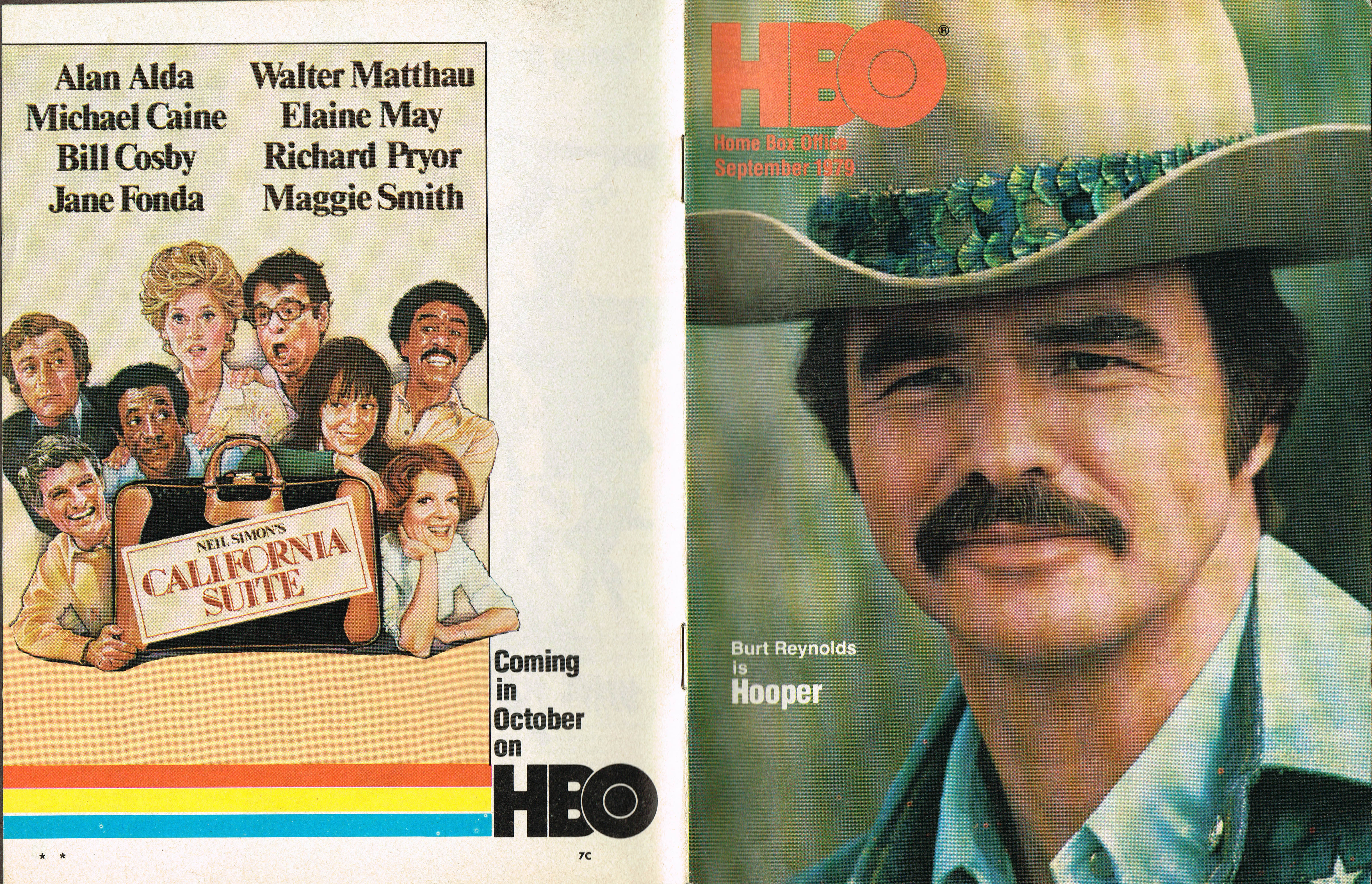
I recall a conversation once, when I was eight or nine, about the length of movies. I said that Superman (referring to the original 1978 version with Christopher Reeve) was two hours and 22 minutes long. My mother became chastised me, saying I was making that up and could not know the length of Superman off the top of my head. But I did. As part of our subscription to HBO, my family received a booklet each month with the program line-up and a description of each movie. A year or two earlier, Superman was a full-page write-up in the booklet, followed by “(2:22).” The same number, three times. I wouldn’t forget such a thing.

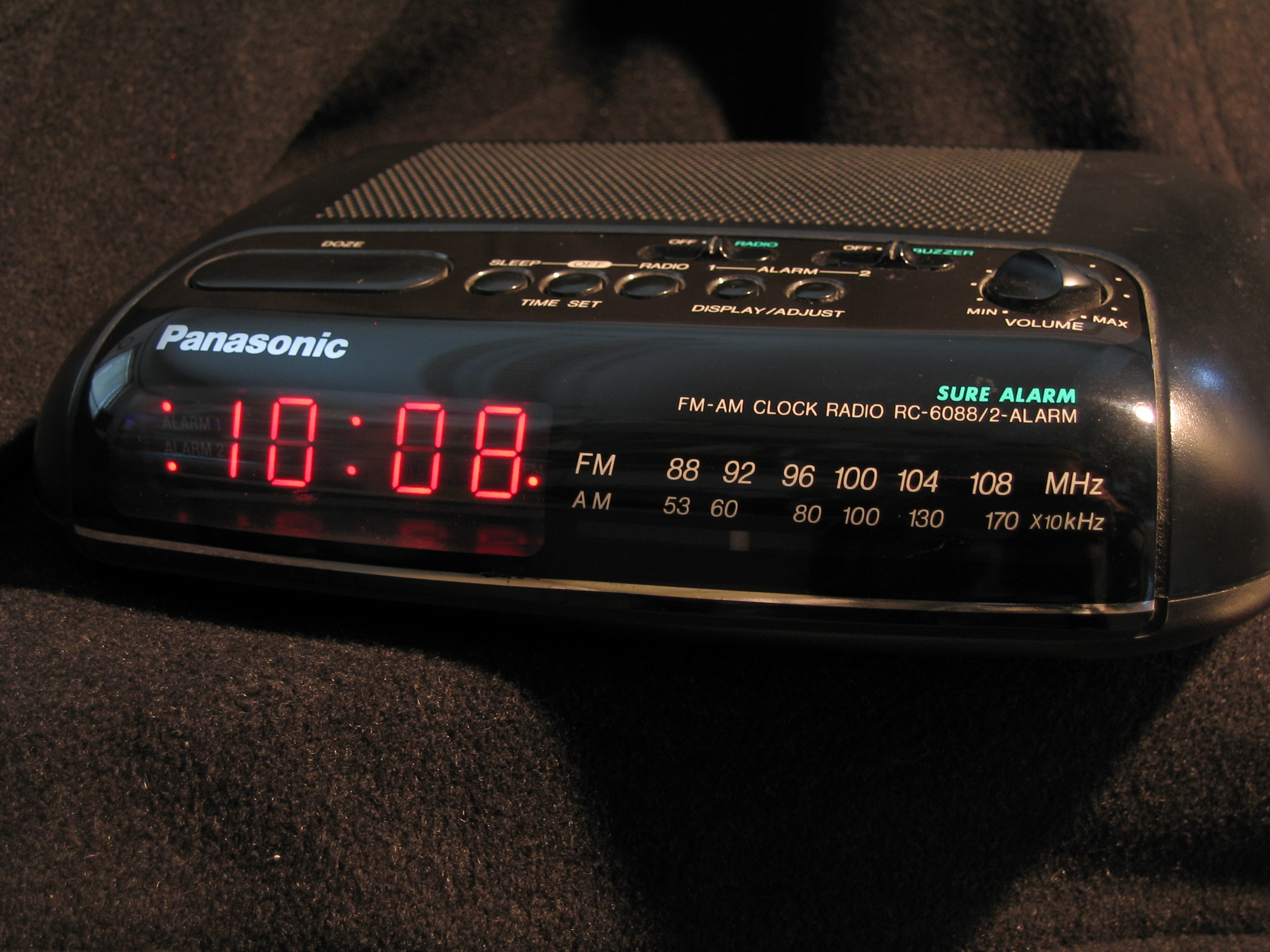
Martin has informed me that, on the digital clock, 4 has four lines, 5 has five lines, and 6 has six lines. I already knew all that. I knew that because I count line segments on the digital clock, have for as long as I remember. 1:11 has the fewest total segments, six. 10:08 has the most, 21. Digital 6 minus one line makes 5. Digital 6 plus one line makes 8. Digital 6 with one line moved makes 0 or 9.

digitalclock   AlarmClockPic

In November 2014 Martin informed me that first Saturday and final Sunday stood alone. He told me this from his bathtub, and although no calendar was nearby, I didn’t need to ask him what he meant. On the paper calendar, November 1 (a Saturday) and November 30 (a Sunday) were each the only date in their respective rows. In February 2015 Martin told me one week was empty. Again, no explanation needed: The last calendar row contained no dates.

november   february

I get frustrated with Martin when he doesn’t pay attention. That’s so unfair of me. When I was in first grade, I took dance class. I never knew any of the steps, because I didn’t pay attention to learn them. I didn’t pay attention in baton, either. I faked the moves and occasionally got caught. Once, at an assembly for baton, a special drawing was held, with much fanfare. I was present but didn’t listen at all. When my name was picked for a prize, I had no idea what I’d won, or what to do. Until someone poked me, I didn’t even realize my name had been called. Did I have autism? Do I now? Maybe just a little?

Should I be treating myself with diet and supplements?

Will I be satisfied if Martin grows up to be like I am now? Or do I want him to be better?

Maybe just a little?

The prize I won, all those years ago, was a fancy new baton, which I was supposed to report to a table to retrieve. I carried it proudly but still never learned the moves.

And you probably will have guessed this already: I just went on imdb.com to check what that website says about the length of the 1978 version of Superman. According to IMDB, the movie was 2:23 long. Wikipedia says the same thing. Ha. That’s what they say. The HBO guide listed Superman at “(2:22).” I can’t find that guide on-line, but I still can see the numbers in my head.

Remember these things? I searched on-line but couldn't find an image of the one featuring Superman. Any collectors out there?

Remember these things? I searched on-line but couldn’t find an image of the one featuring Superman. Any collectors out there?

In the Quiet Times

When Martin and I traveled to California a couple weeks ago, even though we had various engagements and appointments, we ended up with a lot of unhustled time. Martin and I always have a lot of time together, but usually we’re up to something. We’re trying to get breakfast accomplished so he can board the school bus, or he’s doing homework, or we’re driving, or the bath needs to happen because it’s really late and he should be in bed. In California, we had stretches sitting outside Whole Foods Market munching, visiting new playgrounds, hanging out in a coffee shop because we had an hour to fill, relaxing in the hotel, riding the Laguna Beach trolley. Time.

Martin aboard the trolley, taking in the sights. I think we could've ridden the trolley all day.

Martin aboard the trolley, taking in the sights. I think we could’ve ridden the trolley all day.

It was almost like a renaissance in knowing my son as a person. Martin still perseverates: He talks repeatedly about what interests him, like whether a waiter brought him a new fork when his appetizer was finished. Apart from the perseveration, however, Martin has become conversational. I can ask him a question and reasonably expect an answer, and he frequently adds a new question, or some tidbit of related information. We filled those California times, for the most part, by chatting. Imagine that—we were chatting.

Martin, I found out, prefers Southern California to Northern California. He would like to return to Southern California as often as possible. He’s nervous about the ski vacation we’re planning for December. He does not ever plan to become a vegetarian, because he enjoys eating animals. He thinks Taylor Swift is pretty. He will love George, our cat who moved to California, forever. He would rather swim in a pool than in the ocean. He might like broccoli even more than Uncle Eddie does. He misses Adrian when we travel. He considers Will his best friend.

Who knew? And who ever thought he’d be able to tell me?

Sorry for the poor photo quality. I snapped this shot of Adrian and Martin when we returned to JFK and Martin wanted to help by pulling the big suitcase himself.

Sorry for the poor photo quality. I snapped this shot of Adrian and Martin when we returned to JFK and Martin wanted to help by pulling the big suitcase himself.

Want to Know What Terrifies Biomed Parents?

In my last post, about Martin’s disastrous Disney morning, I mentioned a nasty insect bite on Martin’s foot that’s had me worried.

I suppose many parents worry about insect bites. They’re itchy. They can become infected. Some folks have allergies; I myself react so badly to mosquito bites that I have to rely on antihistamines. There is West Nile Virus to worry about and, elsewhere, malaria.

For many of us in the autism-recovery community, I think, bites provoke a special, heightened fear: Lyme disease.

Lyme disease, which is transmitted by ticks, primarily deer ticks, has become endemic in many parts of the United States. Lyme disease is also implicated in the issues that many children on the spectrum have. Worst of all, because Lyme disease is so hard to diagnose, and can mimic other problems, it is difficult to get proper treatment.

In November 2012, a test showed Martin slightly positive to Lyme and one of its common co-infections, bartonella. We treated him with a course of takuna and other antimicrobials, and later tests showed no indicators for Lyme. But who knows? I dread/fear another infection, or one already present and unable to be diagnosed. When Martin plays outside, I spray him with a combination of essential oil in witch hazel or apple cider vinegar. I’m not going to use the chemical repellants, and I need something to keep the bugs away.

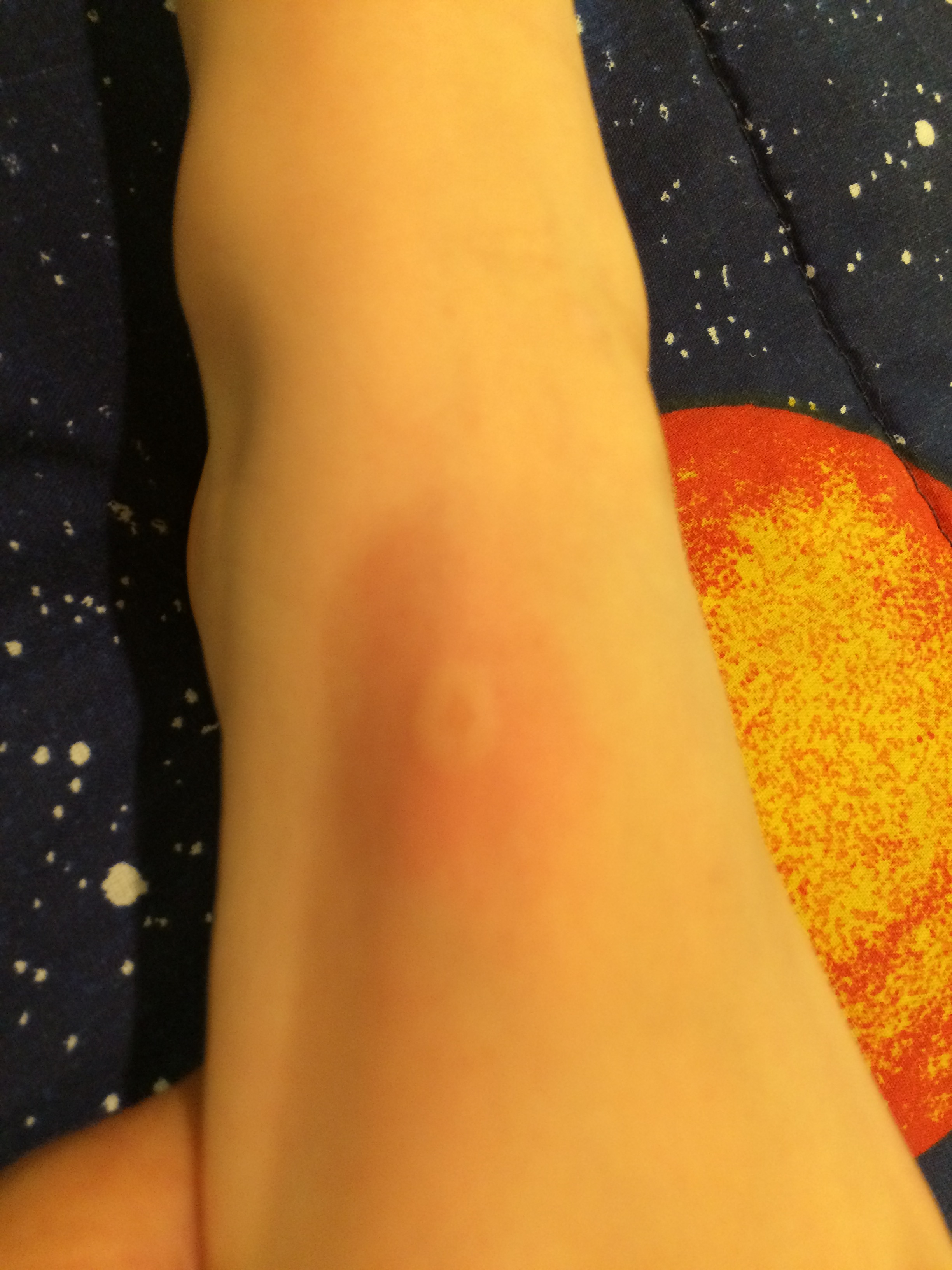
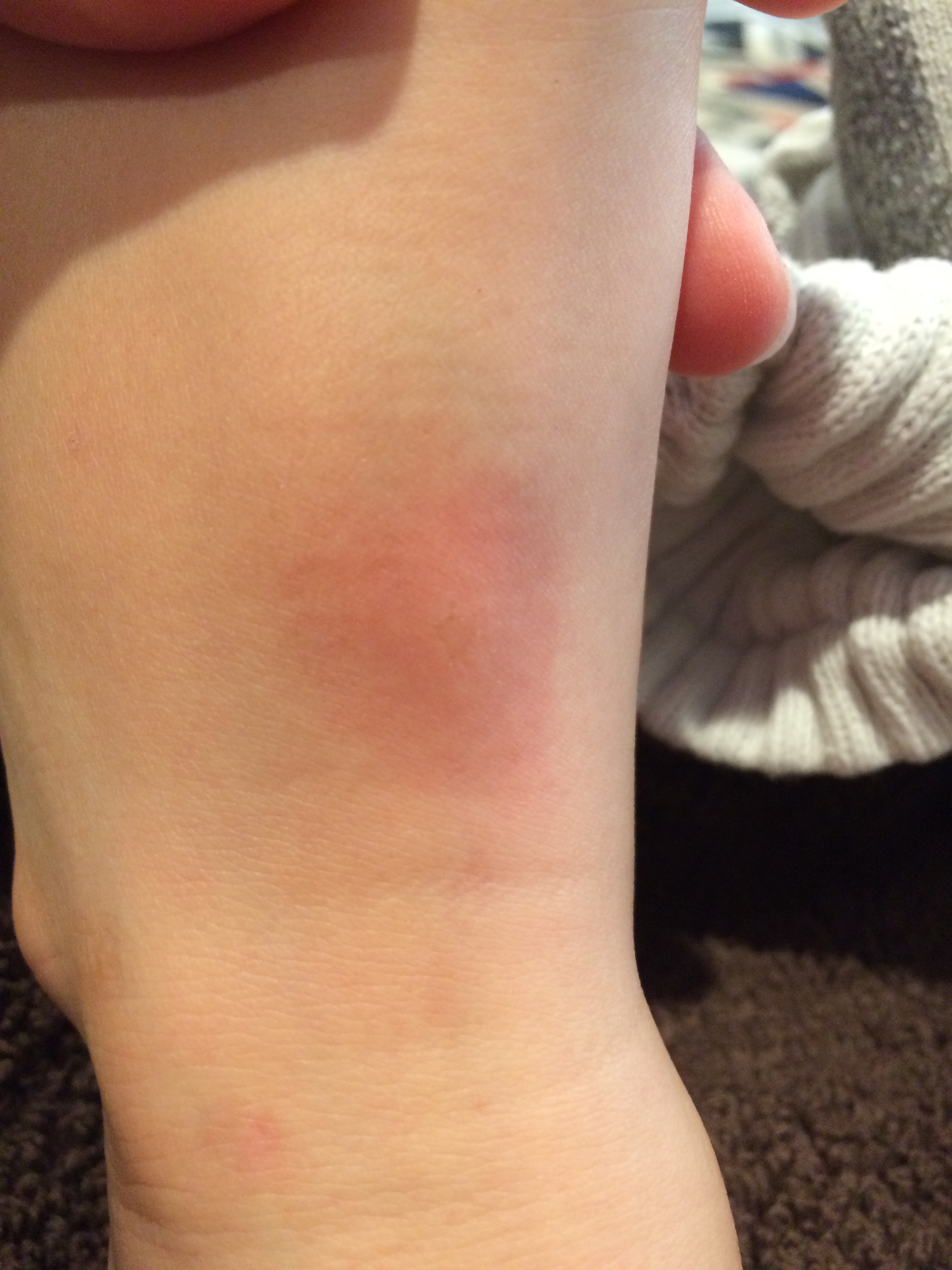
When Lyme disease is transmitted, a tick bite often will form a “bull’s eye” rash, a spot surrounded by a red circle. Can you imagine how I freaked out when Martin’s babysitter, Samara, sent me this picture of Martin’s foot, accompanied by a note that the bite seemed to be bothering him?

IMG_8106

In retrospect, “freaked out” might be an understatement. I exited a business meeting to research Lyme onset and how long the rash should last. I posted the picture to an ASD group on-line, seeking advice. Within ten minutes or so, Samara sent another picture indicating that the bull’s-eye-like rash had faded already into a more traditional insect bite.

IMG_8107

That seemed to be good news; from my quick research, a true bull’s eye would last longer. Also, Samara reported that the bite was now itchy; according to the moms who weighed in on-line (sometimes trustworthy, sometimes not), a bull’s eye usually doesn’t itch.

These developments calmed me enough to stay at work and not demand that Samara bring Martin to meet me at the pediatrician’s office. I did email the photos to Martin’s MAPS doctor, who recommended additional anti-microbial drops as a preventative measure, and told me to visit the pediatrician or emergency facility, for antibiotics, if we noticed any other symptoms. We didn’t, thank goodness. We stayed on the extra anti-microbial drops, in case.

When the Disney morning from hell rolled around, my mind returned to the bull’s-eye-cum-mosquito-nibble. Sometimes ASD recovery feels like a continual series of freak-out moments.

Or maybe that’s just what parenting feels like.

Back Again

Two-and-a-half years ago, we switched biomed doctors. Our first biomed doctor moved her practice from the Chicago area (where Martin and I had flown to visit her every two months or so) to Northern California, and the doctor and I decided, collaboratively, that Northern California was too far for Martin and I to travel from New York. The stress of regular cross-country flights, combined with the missed school days, meant that we would be better off with an East Coast physician instead. We started seeing a Connecticut doctor, less than two hours’ drive from home.

It went fine. With a new practitioner come new approaches. Martin made progress. Not as much progress as I wanted—but then, when does Martin ever make as much progress as I want, and fast enough?

We’ve been doing biomed since February 2011, more than four years. Martin has come a long way during that time, and I’ve come a long way, too. Some of the changes I’ve blogged: the way my perspective has expanded in terms of alternative treatments, for example, or how I finally understand recovery as a process that may never have an endpoint, or my feeling secure enough to admit we do biomed.

Some of the changes I haven’t blogged, at least not specifically. I judge less than I once did. I know—you find that hard to believe. It’s true. When we started Martin’s recovery, I paid lip service to the families who don’t address their ASD kids’ medical issues, while at the same time thinking, “Are you kidding me? Why wouldn’t you want to get your kids healthy?” I’ve become less cynical. I suppose my view of autism recovery has become more like my view of faith. When it comes to faith, I’m evangelical insofar as I’m tickled pink to talk about my being a Christian, and specifically a Protestant Christian. That being said, I believe the best way to make other folks want to be Christians is to go about my business with an honest air of gratitude and openness. The only way to do that is to accept others where they are, for whatever path they’re on, culminating whatever experiences they’ve had. If I thumb my nose at a nonbeliever (whether I do so physically, or psychically), I’ve lost my chance to connect. The same goes for biomed and autism recovery. If I’m condemning in my head, how can I connect, empathize, influence, or even learn anything about myself?

Hey! you’re saying, if you read this blog often. Didn’t I admit just recently that I still judge the parents who do nothing to address autism, who advocate “neurodiversity” and leave it at that? Touché. I did. I’m not perfect. I, too, am on a journey.

When we started biomed, I believed that medical interventions come first, and everything else—muscle and physical therapies, social-skills assistance, speech pathology—comes second. With regard to traditional physical therapy and occupational therapy and speech therapy, I suppose I still believe that. On the other hand, I’ve come to recognize that non-medical assistance with macular and muscular development, and even brain plasticity, have an equal place at the table. My current view, broadly stated, is that biomed and homeopathy heal, and non-medical interventions can help the recovering child “catch up,” for on this journey he has lost many years.

You know that I don’t science. I really don’t. I’ve never scienced. In the midst of an otherwise solid undergraduate education, I fulfilled my core science requirement with a course called “Chemistry for Non-Science Majors.” Nevertheless, in four years of dealing with doctors and trying to understand supplements and reading what I can, including participating in online biomed parenting groups, I’ve learned. Kicking and screaming, I’ve scienced. I stand in awe of the biomed moms who truly, truly understand methylation, glutathione, and the implications of MTHFR mutation. I don’t truly, truly understand. But I know a little. With every passing day, I know more, and I begin to trust my own instincts and to understand what’s going on with my son. I’ve become a more active participant in guiding his recovery—“PANDAS? No, I don’t think so. On the other hand, I’m concerned that his myto cocktail isn’t getting to the underlying causes of low muscle tone, and looking into some ways to address that. What do you think about…?”

Two-and-a-half years ago, we switched biomed doctors. This year, we switched back. That’s right. Martin and I, residing in the greater New York City area, fly all the way to Northern California to visit his biomed doctor. To be sure, there are many fine MAPS practitioners on the East Coast, including the doctor with whom we spent the last two years. But after four years of recovering my son through biomed, I pretty much know what I want. I approached Adrian with the idea of switching back, and argued these points:

  • Our first biomed doctor has something about her. Call it instinct, or call it preternatural Spidey-sense; she feels what’s going on with Martin. Our interim practitioner always asked me what I was seeing with Martin before any given appointment. Our first biomed doctor took one look at Martin and told me what I’d been seeing before any given appointment.
  • Our first biomedical doctor stays abreast the latest developments in autism recovery in a way that, as far as I can tell, almost no one else does. Our interim practitioner, sometimes, responded to my questions with, “I haven’t heard of that,” or, “In my experience, I don’t think that is effective.” Our first doctor doesn’t trust her own experience. By the time I ever asked about a treatment, she’d already attended a roundtable addressing that treatment, and collected the experiences of other luminaries;
  • Our first biomed doctor holds degrees from two Ivy League universities. That doesn’t mean everything, of course. Still, I’m a red-blooded American who believes in meritocracy, that making it to the top means something. (Adrian, though an immigrant, is probably yet more confident in meritocracy than I am.) I trust smarts. Combine those smarts with instinct, and well, I’m practically goggle-eyed; and
  • When our first biomed doctor and I decided, two-and-a-half years ago, that traveling to California for appointments would be too hard on Martin, it was under the assumption that we would continue to come every six-to-eight weeks. I’ve grown since then. Martin has grown. We don’t need to show up in person so often anymore. We could switch back on the assumption that he and I will travel to Northern California two or three times a year. That’s not so bad. We have plenty friends in Northern California. We can take a short journey to Orange County and spend a few days with my brother Rudy. It works.

Following my presentation, Adrian agreed that Martin and I would switch back to the first doctor. Of course he did. When it comes to Martin’s recovery, Adrian is a sanity-check, but one who realizes that I am the parent who’s researched the issues and who navigates the thick of the journey. If I say, “This is best,” he asks the pertinent questions, and unless a red flag smacks him in the face, he agrees.

We’ve been back with the first doctor three months now, including one visit in-person and some email traffic. The reversion has been everything I hoped. By the time we arrived for our visit in-person, the doctor had reviewed all of Martin’s records from the last two years. She said, “I’m looking at these test results and what you’re telling me, and I think there is a parasite issue here that you still haven’t addressed.” She put Martin on a parasite protocol, and he’s had an amazing spring. Amazing. The doctor and I have just decided to extend that protocol.

Is our first biomed doctor some kind of autism-recovery genius, or am I getting better at partnering with our medical professionals? Who knows? Who cares? The journey feels pretty good right now.

Epilogue: Guess who else is in Northern California? It’s George, our cat who needed to be rehomed when he became aggressive toward the other cats. Martin is so excited to visit George on our next trip to Northern California. “Even though he doesn’t live with us anymore,” Martin says, “we still love George!”

George, and you, my son. George, and you.

ROOS

ROOS! Doesn’t that sound like a European soccer star, or maybe an adorable cartoon character?

Yesterday sucked. Martin engaged in behaviors we haven’t seen in months, or even years. He was exhausted. He had been chatting incessantly in bed Tuesday night, and cracking himself up, and he didn’t get to sleep until after 10:00 pm, so yesterday morning I had to drag him from bed. (On a proper night, he’s asleep by 8:00 pm.) Getting breakfast into him was a struggle. When his head wasn’t half on his plate and half on his placemat, he still forewent eating in order to whine, “I have to throw up. I can’t go to school, because I’m so sick.” (He didn’t have to, and he wasn’t.)

After school, the situation only got worse. Every suggestion I made was met with, “No! No, no, no, no, no.” He had a meltdown when Neil Young came on the radio singing “Ohio.” I can’t really identify the genesis of the meltdown; it seemed to be some combination of the song being a live version, my insisting on listening to the whole thing, and Neil Young not being available for a concert this weekend in the New York City area. In any event, Martin subsequently said he didn’t want to hear “Jungle Boogie,” asked me to sample every station for a better choice, decided that actually “Jungle Boogie” was what he wanted to hear, and had a fresh meltdown because the song had ended while we were sampling the other stations.

His homework, which usually gets done in less than 10 minutes, took more than 45 minutes and still wasn’t complete when he went to bed. He cried. He said that he couldn’t do the addition problems and needed my help. (He could do them, and he didn’t need help.) He refused to eat dinner unless I spooned it into his mouth. And he talked. Holy cow, did he talk. He talked non-stop, perseverating on tableware and street signs. Once, I regret, I exclaimed, “Martin, please. Please just stop talking for a minute.” He shouted, “No talking? No talking! Mommy, no talking?” and started to cry again.

Adrian is traveling, so Martin and I were alone. Martin decided that he could not be more than a few feet from me, and that I had to respond to everything he said. Everything.

Sound like the kid I’ve been blogging about lately?

I didn’t think so.

ROOS is a term I’ve heard some parents toss around, since I started doing Heilkunst homeopathy with Martin. As I understand homeopathy (when it comes to Heilkunst, I’m still a newbie), we administer teeny-tiny doses of what injured the immune system, or even just teeny-tiny doses of the energy of what injured the immune system, in order to help the body rid itself of the insult. So if the particular insult to be addressed is a bout of coxsackie, we give the participant some of that energy, in the hopes that his immune system will say, “Hey, what is that? I want that out. I want all that out,” in a way that it couldn’t manage when overwhelmed by the original insult.

As part of this process, while the body is working to clear the original insult, some of the symptoms that accompanied that insult. Hence: ROOS, or Return Of Old Symptoms. For the past week or two, Martin has been working to clear the H1N1 vaccine. If the Heilkunst stuff is working—and I think it is—then that H1N1 injection Martin got in late 2009 had something to do with the development of perseveration and overall discomfort. Now let me add something amazing: This seems to be the most difficult clear we’ve had since starting Heilkunst, and the H1N1 vaccine is the only injection that I ever correlated directly with the development of Martin’s autism. Seriously. Almost immediately after he received the H1N1 shot, I noticed Martin, for the first time, start picking up little chairs and setting them in patterns. I didn’t know then that Martin had autism; six more months would pass before we began to realize, and so at the time I just thought, oh, that’s odd, and chalked it up to Martin having an engineer’s mind, an assumption bolstered when he soon developed a fascination with the upright vacuum cleaner. Fast-forward five-and-a-half years. Poor little guy is trying to purge that weird H1N1 injection, and whatever nastiness lurked within its ingredients.

I finally got Martin into bed around 7:40 last night. I tried to read him a book, about the importance of telling the truth (that’s been an issue lately), but it was slow-going. Every line I read sent Martin on a tangent. Bears in the story? “Mommy, are these my stuffed bears? Mommy, what are their names?” A soccer ball? “Mommy, do I play soccer? Mommy, at the JCC is there a sign that says, ‘Gymnasium’?” A store? “Mommy, at the store, do they have plates and forks and knives? Why?”

Fortunately, he fell asleep promptly. I decided to cut my losses on the day. I cancelled a 9:00 pm business call instead cleaned the kitchen—which I find relaxing; don’t judge!—while engaging in hockey-watching therapy. Tampa Bay and Detroit were playing Game 7 of their first-round series. I don’t care for either team, other than a preference for Detroit because it’s an Original Six team and located in a climate appropriate for playing ice hockey. On the other hand, Brian Boyle and Ryan Callahan, former Rangers whom I still love, both play for Tampa Bay now, and I was happy to see a victory for them.

I went to bed thinking about Rangers’ game coming up tonight, and imagining that ROOS indeed could be just an adorable cartoon character.

Other Stuff, Not Autism

I received another one of those emails. I’m talking about emails that come from someone who knows me and who, because of distance or busy schedules, keeps up with my life primarily through reading this blog. Such emails teach me that readers of this blog see me as a stressed-out, sleep-deprived robot obsessed with her son’s recovery. Maybe not quite that dramatic—but close. This email came from a family friend in Germany. I’m going to apologize now, in advance, to that friend about the poor state of my German-English translation skills, and then translate nonetheless. The email states, in part:

So now and then I read your blog about autism, what you write about yourself, how tired you are. I know the way your days go, and I ask myself how long you can endure this stress. You have taken very, very much upon yourself. “I do everything to make my child healthy.” I know, also, your perfectionism. I’m going to render a diagnosis from afar: burnout. You know I’m no psychiatrist, just a woman who knows what exhaustion feels like. In Germany you’d be sent off to mother-and-child Kur. I don’t want to give you advice, just the benefit of my experience: Let go of some of your perfectionism, and maybe loosen up some of the deadlines. Just do the best, not the absolute best.

[Sigh.]

Here’s the deal: This blog is all about autism, my son’s recovery, and the work entailed in that recovery, because… well, because this is a blog about my son’s recovery from autism. It is not a blog about my life. Martin’s recovery occupies a huge chunk of my time, as it has for the past four years. Martin’s recovery, however, is not my whole life. If I were to write a blog about my life (my fabulous, glamorous, ceaselessly fascinating life!), then my readers would know that, in the past seven days, I did the following:

  • Attended a wine-and-food-tasting fundraiser for Martin’s school, at which I fielded many, many text messages expressing anger that I was not watching Game 4 of the RangersPenguins series, texts like, “A fundraiser? Are you kidding? Write a check, get out of there, and find a television”;
  • Attended a fundraiser for ovarian cancer research, before which I discovered that the dress I wanted to wear, which I had purchased at a boutique located more than two hours from home, still had the security tag attached, meaning that I had to beg local stores, dress and receipt in hand, until I found a clerk with the correct machine to remove that particular tag;
  • Attended a fundraiser for our town’s parent resource center, and left early, accompanied by Adrian, to drive to our favorite bar and watch Game 5 of the Rangers-Penguins series;
  • Re-watched, the afternoon following the live event, Game 5 of the Rangers-Penguins series, while texting with my cousin, who was also re-watching Game 5, about what losers we are for re-watching a hockey game just to relive the glory of the Rangers’ win;
  • Planted the early green leafy vegetables, including kale and arugula and spinach, in my garden boxes, “assisted” by Martin, and repotted Easter lilies from church;
  • Had dinner with Adrian and Martin at a new restaurant, where the server complimented me and Adrian on our son’s excellent table manners (squee!);
  • Rode my bicycle eight miles, round-trip, to Weight Watchers to find out that I gained 1.7 pounds last week, whereupon I cursed all those fundraisers and devised a new motto, “Wine is for the weekends”;
  • Enjoyed a Monday-evening dinner with the other moms from Martin’s playgroup and completely disregarded my new motto; and
  • Worked, a lot, at my flex-time legal job.

Sure, I also spent hours upon hours in the kitchen, making cauliflower tortillas, walnut taco filling, veggie meatballs, bone broth, fermented coconut water, garlic fish marinade, almond-zucchini muffins, a new cookie concoction I devised from sprouted buckwheat and coconut. (You guessed it: Most cooking happened while hockey played on the television.) I escorted Martin to piano lesson and gymnastics, emailed with his biomed doctor, organized supplements, got him measured for new orthotics, and completed daily vision exercises.

I did the autism stuff, and I did other stuff. I had a life.

For the most part, I’m well-rested these days, along with optimistic for Martin’s recovery, content to be lawyering (a little) again, and—dare I say it?—happy.

I’d write more about my everyday non-autism-related life, but I’m not sure my readers could stand the excitement. So I’ll stick to writing about autism recovery, and hope you’ll trust that, indeed, there is more to me.

The Case of the Missing Evenings

I have this memory from years ago, autumn 2011 (or so). We still live in the City. It’s late, maybe 11:30 pm, and I’m in bed, in our tight City-style sleeping quarters, propped on pillows as Adrian slumbers beside me. I have my computer on my lap. We are less than a year into biomed. Martin’s sleep has improved, but we still have bad nights. There is a chance that by 1:00 or 2:00 am Martin will be awake, and will stay awake until 5:00 am or later. I should be sleeping. I should be exploiting every moment in which my eyes can be shut.

I’m not. Instead, in this memory, I’m keeping myself awake to write a post for this blog. It’s not a lone memory, either. It’s an amalgam of moments, dates, times. In those early days of recovering Martin, I managed amazing feats of strength. I worked nearly full-time, I spent five or six hours a day creating menus and procuring and preparing food, I tended to Martin throughout the night, I got by on three or four hours’ sleep, I lost 39.8 pounds. (The 39.8 pounds I lost intentionally. Thank you, Weight Watchers.) And I blogged. What little rest wandered into my grasp, I forewent in order to write.

I’m not the only one. Every day, autism parents do what I’ve just described, and more. Every day, autism parents work, and wade through biomed with two, three, four kids, distant families, unsupportive co-parents, financial concerns that I’ve never faced. Every day, the community that I’ve come to know along this journey reminds me that my struggles, while monumental to me, are but stumbling blocks. I am so fortunate.

From that memory, of me, awake, pounding out blog posts on the near and far sides of midnight—from that memory, fast-forward to now. Martin, virtually without exception, sleeps through the night. I sleep, too. So much more than I used to. I’ve declared 2015 to be a year of taking care of me, and Proyecto Numero Uno is sleep. I’ve rearranged my schedule to make sure I sleep. I used to tuck Martin into bed and then begin chores: preparing Adrian’s and Martin’s lunches, straining broth, baking grain-free muffins, cleaning litter boxes. I’ve become hyper-vigilant about incorporating those chores into my day. Most weeknights I’m in bed by 9:30 pm, not long after Adrian gets home from the office, and asleep by 10:30, and not up until 5:45.

Yet I’m tired. Not bone-tired. Not like in the early days of Martin’s recovery, when I avoided sitting down during the day, because anytime I was off my feet I might fall asleep inadvertently. But tired. More tired that I should be (I think) when I’m getting between seven and eight hours’ sleep per night.

I have several theories on why I might be tired. I think it’s possible that, after years of laboring long hours for Martin’s recovery, and sleeping only when his restlessness allowed me to sleep, I’ve fatigued myself to the point that my own recovery will take more than a few months’ adequate rest. My body may still be readjusting to getting a full night’s sleep. I’ve read also about caregivers’ exhaustion. The situation with Martin is so much better, and easier, these days. Still, making sure his needs are met, completing the work that biomed and homeopathy and therapy require, and worrying about his future take their toll. On the other hand, maybe I’m more relaxed because I can see how well he’s doing. Maybe I’m no longer surfing adrenaline from 5:00 a.m. till midnight. And what if I just need more sleep than I once did? What if I need nine hours now? I was 38 when we started recovering Martin. Currently I’m pushing 43. Holy cow, 43! How much sleep do we middle-aged folks need?

Whatever the cause of my tiredness, here’s one effect: My evenings are gone. They’ve disappeared. Martin and I have been on vacation this week, at my parents’ home in Texas. I’m working, a few hours per day, at my new home-based legal job. Other than that, I’m not doing much. Taking Martin to the indoor playground. Lunching with girlfriends. Challenging my brothers (also visiting) to Scrabble. Losing to my mother at cribbage. Yet, my writing is stymied, because I get to writing in the evening, and then the desire is gone. I mean, the desire to do anything non-trivial is gone. I toy with a crossword puzzle, deal some cards, eat popcorn, search Texas cable fruitlessly for a New York Rangers game, go to bed.

It’s the same story back home in New York. Once Martin is in bed, I’m done. I don’t have any creativity or energy for writing. Even a simple leftover task like emptying the dishwasher seems to take twice as long as it once did.

Scheduling has become more important than ever, because what’s going to get done has to get done before Martin gets home from school. From the time he arrives until bedtime, we have afterschool activities (personal training, church kids’ club, piano lessons, gymnastics, playgroup), homework, detox bath or sauna, vision/integration exercises, and dinner. That means my day, for everything else, spans only from 8:00 am, when Martin boards the school bus, until 3:30 pm, when he arrives home (except Tuesdays, when I leave home at 2:00 pm to pick him up for church). Seven-and-a-half hours for gym, blogging, lawyering, household tasks, grocery shopping, and cooking. The one task I do try to manage at night is to jot down an outline for the next day, an attempt to make it all fit. Even if the outline doesn’t hold, at least I’ve got something to shoot for.

I miss the evenings, the productive evenings.

Epilogue: Of course, there are exceptions. Tuesdays and Thursdays I have help from a sitter. If the Rangers are playing in the Eastern or Central time zone, I don my #30 Henrik Lundqvist jersey, head to a local pub, set my laptop on the bar, and eat dinner while blogging and watching hockey. It’s kind of a tradition by now—“Ah, my sweetheart’s here,” says Jimmy the bartender, in brogue, when he sees me enter. “The Rangers play tonight, do they, love?” At the pub, with my Rangers, I’m in my blogging zone, disrupted only by the occasional drunk who just can’t accept that a chick alone in a bar watching hockey with a laptop actually wants to be left that way.

Going First

Time for another confession.

Here goes:

When I’m traveling with Martin, I pre-board airplanes.

It is absolutely and wholly unnecessary for me and Martin to pre-board. Martin is fine waiting in a slow procession down the aisle. He settles quickly, and once handed an iPad and earphones, utters hardly a peep in flight. Although he used to get agitated by sitting next to other folks, and sometimes delay the boarding process while I negotiated to get him comfortable, that anxiety has more or less passed. We do not need to pre-board.

Nevertheless, we do. I tell the gate agent, “Would it be okay if we pre-board? My son has autism, and it’s easier if we enter an empty airplane.” I speak quietly, so that Martin can’t hear me; he doesn’t know what autism is, or that he has it. I imagine maybe the gate agent thinks I speak quietly because I don’t want the other passengers to know my son has autism.

Ha! fooled you! I’m probably never going to see these people after this flight. Who cares what they know? In fact, they should all hear that Martin has autism, and see how well he’s doing. Biomed evangelism.

Technically, I’m not lying. My son does have autism, and it is easier to enter an empty airplane. I mean, who doesn’t like to get on first? There’s ample space for our carry-on bags. We have time to arrange our little nests with iPads and laptop and water bottle and snacks. I have a few minutes to pray, as is my habit before flying.

I wonder what I would do if a gate agent asked, “Is that really necessary?” I wouldn’t lie outright. Probably I’d have to respond something like, “Necessary? Well, no. It isn’t necessary. But it sure is easier.” Then I’d smile, and probably be allowed to get on first.

I do ask myself whether my requesting consideration might make travel more difficult for families who really need it. If I ask for pre-boarding and the gate agent watches my calm, chatty boy board without issue, will s/he be more likely to refuse future requests? As more and more children are diagnosed with ASD, hyperactivity, sensory processing issues, and obsessive-compulsive disorders, am I contributing to an indifferent attitude of, “Yeah, yeah. Everyone’s got a sob story”? (Someone actually said that once, to a fellow ASD mom I know, as she tried to explain why her son needed to get in the pool even though they arrived late for swim lessons.) One indicator of my ambivalence at the airport is that I do not ask to pre-board if any child in the waiting area appears higher-need than Martin. If I see a caregiver dealing with bolting, or meltdowns, or overt anxiety, I’m going to let that group take the special privileges. All the special privileges. Then I’m going to make them think I’m weird as I hover close by, looking for ways I might assist.

Why do I request to pre-board airplanes at all? I suppose I do so because autism is a pain in the ass, and autism recovery is this overwhelming process, and my family has to fight constantly, has to fight school boards and insurance companies and even doctors just to receive services to help Martin, and I figure that, once in a while, in this one little instance, the world can do us a favor. It is what it is.

And of course, no gate agent ever has challenged me. I’ve daydreamed that “autism” could be a magic word. Sometimes, voila! When Martin and I flew overnight to South America in February, our assigned seats were across the aisle from each other. As I waited in line to talk to the gate agent at JFK, I heard her tell the passengers before me that the flight was full, and that no seat changes were possible. She told me the same thing, and added that, when it comes to traveling with family members, being seated across the aisle from each other is considered being seated together. I leaned across the counter and said quietly, “My son has autism.” Oh? The agent immediately took our boarding passes and started typing into her computer. A minute later she said, “It looks like I can get you seats directly next to each other, after all,” and handed me new boarding passes, 22 rows forward from our original assignments. They were “economy plus” seats, she explained, but we would not be charged the extra fee.

“Thank you so much. You’re very kind,” I said. “One more thing—would you mind if we pre-board?”

Martin, rock climbing this week. Honestly, he's fine in the air. (Wink and nod.)

Martin, rock climbing this week. Honestly, he’s fine in the air. (Wink and nod.)