What’s Working Now

Are you familiar with miracle products?

I participate in various social media groups for parents with recovering children. Often, I see posts like this:

“We just started this [miracle enzyme, supplement, probiotic, oil, &c.] ten days ago, and I can’t believe the progress! My son is making consistent eye contact, he’s increased his vocabulary, and he finally potty trained! Today I got a note from his preschool teacher saying he is more ‘with it’ and making cognitive leaps. I’m kicking myself that we didn’t try this before now. Anyone having similar results?”

And then, comments like these:

Commenter 1: “Yes, yes, yes! [Miracle product] moved my son from babbling to words!”

Commenter 2: “We added [secondary product] to [miracle product], and the gains were even greater. We’ve been on them both for a month and will be continuing.”

Commenter 3: “This is all amazing! Where can I buy [miracle product]?”

Commenter 4: “[Miracle product] got my daughter into Princeton!”

Posts, and comments, touting a miracle product frustrate me.

Miracle-product proclamations frustrate me because autism varies from kid to kid. The health and immune challenges underlying autistic symptoms include, and exceed, neuroinflammation and other chronic swelling, mitochondrial disorder, genetic mutations, leaky gut, yeast overgrowth, oxidative stress, excess propionic acid. Autism exhibits disparate effects on cerebral function in girls versus boys. “Autism” is not a single malady and is never identical. That miracle product? Shoot a paint ball into a crowd. You’re bound to hit someone and splatter a few others. The rest will probably be left wondering what the fuss is.

I can understand that, if you’re thinking about trying a new product, you may want to post an inquiry about others’ experiences with the product. But given that the underlying disorders are child-specific, and that recovery means finding the right combination of many factors over time, why tout miracles? We parents of children with autism, we tread on hope. We’re easily led. When ten marvels in a row fail to help our kid, we end up embittered and broke.

Recovery from autoimmune disorder is a long, tedious slog without shortcuts. Sure, some families recover their children within a year, those lucky dogs. Most take much longer. Many children never get significantly better. The only miracle in autism is that, given our increasingly toxic world, we’re able to fight the spectrum at all. The amazing supplement, probiotic, or whatever, might indeed have given your kid the week of his life. That’s not a wonder. If you must tout a miracle product, don’t do it after a week, or a month. At least wait a year, then let us know if the developments continued, and speak in measured, child-specific terms.

Dear readers, are you wondering why I’m ranting? That was all an introduction to today’s post, which in comparison to its introduction, may seem brief. The topic is what interventions are working, right now, in combination, for my one kid, with his own particular combination of health challenges.

Following “Hard to Blog an Avalanche,” I received several inquiries about what I think has instigated Martin’s recent growth. Usually, when Martin improves and I’m asked why, I answer, “Don’t know. Obviously, something in the millions of things we’re doing is helping.” This year, I have a better inkling. I have seen five interventions correlate, almost certainly, with better health and/or increased speech:

1. Camel milk. Martin started drinking it this spring, and his language took off. Why? Too long for this post. Check back in a day or so to read “What’s the Deal with Camel Milk?”

2. The GAPS diet. I’ve written a lot about GAPS recently, and I’m also working on a post about how I don’t buy into everything that Dr. Campbell-McBride says. For now, it suffices to say that Martin’s digestion has improved.

3. Candex. We have battled yeast overgrowth, in one form or another, repeatedly since we began this journey. Going off just about every form of sugar helped, but only for a while. Nystatin did nothing positive. Earlier this year, poor Martin’s yeast was so bad that he clawed his skin raw. Finally, his biomed doctor said to try Candex, an enzymatic product. The same night he started Candex, Martin had a foul-smelling BM—yeast, I think, leaving his system. The next day, the skin rash began to clear. Since then, the candida has been under control, so much so that I’ve been able to add a little more fruit into Martin’s diet without worrying about the fructose feeding yeast.

4. Enhansa. Lee Silsby Compounding Pharmacy makes Enhansa, or curcumin, a derivative of turmeric. Martin suffers from chronic inflammation, which places undue pressure on his compromised immune system. Turmeric’s anti-inflammatory properties seem to be relieving that inflammation, even to the point that his face has lost its “puffy” appearance. (The puffiness was visible only to me and others to whom I pointed it out in photographs. Still, it was there, and a symptom of his systemic inflammation.)

5. MitoSpectra. This is a proprietary mitochondrial supplement blend of vitamin C (as ascorbic acid), vitamin E (as d-alpha tocopherol succinate), vitamin B5 (panthothenic acid), L-carnitine, and coenzyme Q10. We have used each of the component supplements before, alone and in combination, and indeed Martin still adds separate sources of vitamin C and L-carnatine. MitoSpectra, however, seems to combine the five supplements in a form and proportions that do well for him: He shows more coordination and energy, and less “floppiness.” At times I wonder whether those improvements are dependent on continued use of MitoSpectra; my hope is that, as his immune system overall continues to heal, his own mitochondria will be able to assume the work MitoSpectra is now doing.

Camel milk, GAPS, Candex, Curcuma, and MitoSpectra. Not a miracle, not any one of them.

Each a step in this tortuous recovery path.

Just maybe a longer stride than I’m used to.
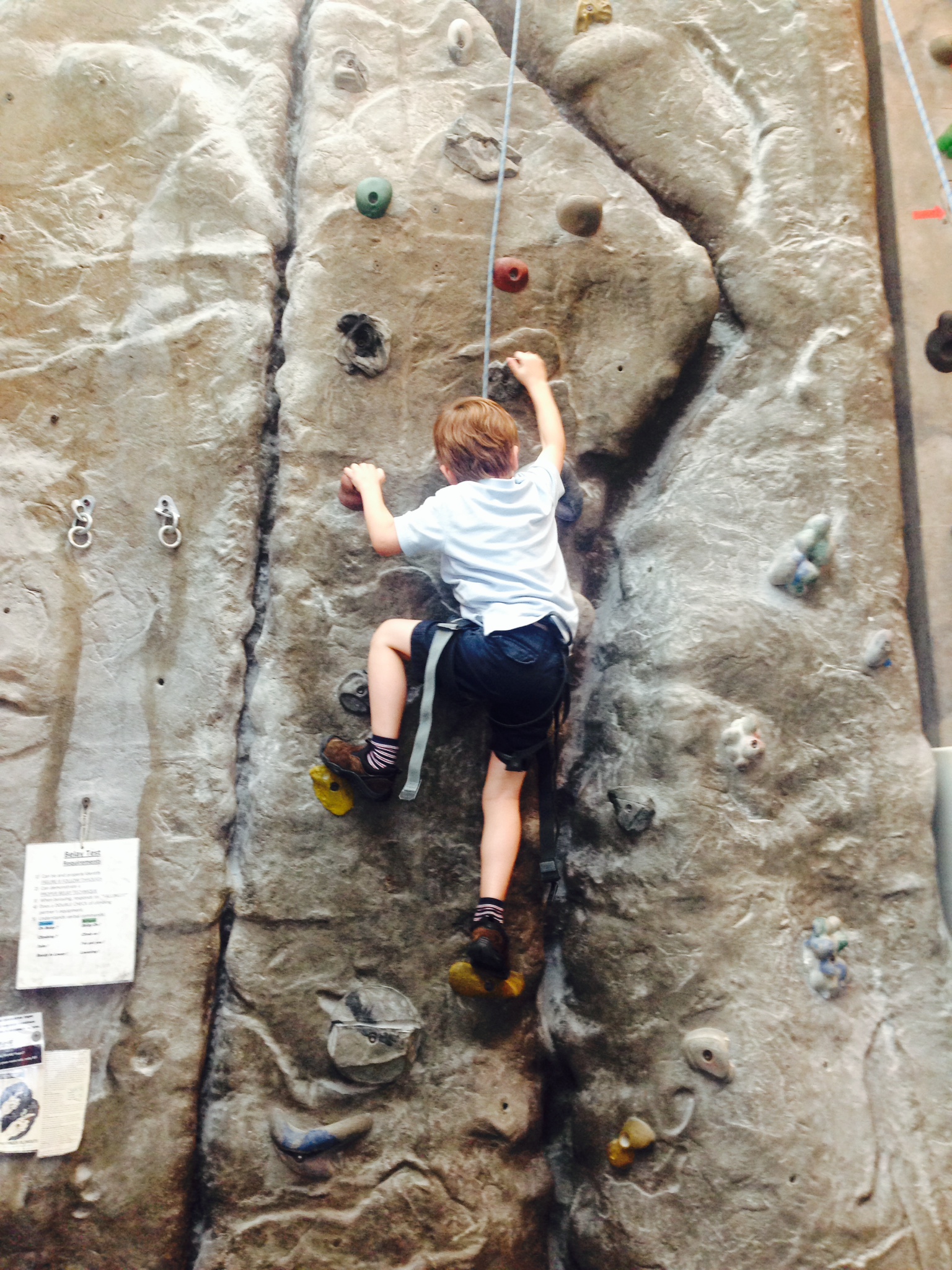
Increased energy, coordination, and willingness to try new things. I'm so into these changes.

Increased energy, coordination, and willingness to try new things. I’m so into these changes.

It’s Hard to Blog an Avalanche

Monday evening Martin and I filling our birdfeeders, in front of the house, when the UPS truck pulled up. My UPS guy and I share a special bond: We’re both New York Rangers fans. We hadn’t talked since June 13, when the Rangers dropped the Stanley Cup finals to the Los Angeles Kings, so we started to chat hockey emotions. Were we heartbroken? Proud? Was this transition season—the Rangers have a new coach—the start of a dynasty? Would we miss Brad Richards?

Martin approached, listened for a second, looked at the UPS guy, and said, “Oh, hi!”

Goodness, I thought. Martin just addressed a stranger, without being prompted. That’s new.

“Hey, little man,” the UPS guy said and patted Martin’s head.

Martin remained while the UPS guy and I finished our conversation. (We will miss Richards! But his time has come!) Then I said to the UPS guy, “All right. Have a good week.”

And Martin said to the UPS guy, “Well, okay, ’bye. See you later.”

Goodness, I thought. Martin just interpreted my social cue and said goodbye, without being prompted. That’s new.

When Martin does something new, and appropriate, and typical, I remind myself to blog. Often I make a note so I’ll remember to write the event. If you’ve been reading this blog a long time, you know about the first time Martin said, “I don’t know,” and the first time Martin interactively shared a toy, and even the first time he understood that my outstretched hand meant I wanted a napkin from him.

The past few weeks have brought so many firsts that blogging them all would be a heavy burden. The firsts are tumbling one atop the other. Thus—

When I brought Martin to playgroup in the City last week, we were late, and his friends were already downstairs. Martin proceeded directly downstairs.

No distraction from the upstairs toys? No direction needed? No dawdling on the steps? That’s a first.

Thursday morning Adrian, fresh from the shower, in a t-shirt and black boxer-briefs, was helping Martin get dressed for school. I overheard this:

“No, Daddy. I don’t want white underwear!”

“What’s wrong with white underwear?”

“I want to wear black underwear, like you. And black socks, too.”

Noticing what Daddy is wearing? Wanting the same for himself? First.

This weekend Martin was in our pool when I asked if he wanted some water. He replied, “No, I’ll have a drink when I’m done swimming.”

Providing more information than I asked for? Thinking ahead? First.

Sunday my brother Eddie was visiting to watch the USAPortugal World Cup match. When Jermaine Jones scored in the 64th minute, tying the game 1-1, Eddie leapt to his feet and whooped. Martin, startled, covered his ears with a pained expression. Then he looked at me, lowered his hands, giggled, and said, “Oh, that scared me!”

Checking my face for reassurance? Immediately recovering from a sensory overload? Laughing at himself? Unsolicited emotion sharing? First, first, first, first.

Seventeen minutes later, Clint Dempsey scored, giving USA a 2-1 lead. Eddie whooped again. Adrian jumped in happiness. I lifted Martin, used my right arm to hold him on my hip, and ran around the family room thrusting my left fist in the air as I shouted, “Yes! Yes! Yes! Yes!”

As I recovered, I realized that Martin, still on my hip, was thrusting his itty fist into the air and shouting, “Yes! Yes! Yes! Yes!”

Independent participation? Imitation just for the heck of it? Not quite a first, but close enough—never before so vivid, or so immediate.

(Better not to ask what happened when Portugal’s Verela scored in the final minute of stoppage, preventing USA from clinching an early second-round berth.)

Monday afternoon Martin and his friend Christopher were in a children’s waiting room, ostensibly overseen by Christopher’s older brother, Benjamin, while I met with Christopher’s mother. When I entered the waiting room, Martin and Christopher were wrestling, gleefully, amidst a pile of toys as Benjamin laughed.

“What on earth are you two doing?” I asked.

Martin looked up from under Christopher and replied, “We’re banging and yelling!”

I assumed Benjamin had accused the younger boys of this. I asked, “Who is banging, and who is yelling?”

Martin said, “I’m banging, and he’s yelling.” Then he returned to struggling with Christopher.

Fully interactive play? Answering questions even while epically distracted? Pretty darn new.

Fifteen minutes later, Martin and I were driving home when he read aloud the name of Steely Dan’s “My Old School” from the radio screen. I took the opportunity for conversation and asked Martin the name of his old school, his preschool. He responded correctly. I followed up by asking which he prefers, his old school or his new school (his kindergarten).

“My new school.”

“Why do you prefer your new school?”

“But because I learn better there.”

Expressing a legitimate preference, and backing it up with a reason? First. Not to mention—I do think he’s learning better in kindergarten. His kindergarten really targets his needs in a way that preschool did not.

On New Year’s Day, I sensed that 2014 would be extraordinary. The banner year may indeed have arrived:

This past month has comprised an avalanche of firsts. I could go on and on. But I will address just one more, the evolution getting on the school bus. In just two weeks, we’ve progressed from me carrying Martin’s backpack and leading him by the hand down the driveway to the bus; to me carrying Martin’s backpack and coaxing him to follow me down the driveway; to me carrying Martin’s backpack and accompanying him as he walks without protest to the school bus; to Martin carrying his own backpack while I follow him; and finally to Martin walking down the driveway, alone, backpack on, and boarding the school bus while I wave from the front step. If I even try to follow Martin, I get a swift, “No, Mommy. You wait here!”

Am I proud? I’m darned proud.

And sorry.

I mean, Martin’s bus driver is also a Rangers fan.

I miss the morning hockey chit-chat.

On another occasion, Martin (right) with Christopher's big brother, Benjamin.

On another occasion, Martin (right) with Christopher’s big brother, Benjamin.

Preferences

Martin has three rain jackets. The first raincoat he acquired when he was two years old. It is a yellow hand-me-down, big enough for a nine- or ten-year-old, from our then-neighbors. The second and third rain jackets are blue and red, and sized much more appropriately for a kindergartner. Samara bought them for Martin a couple years ago.

For a long time, Martin preferred the yellow raincoat, even refusing to wear the blue or the red. He didn’t seem to care that the yellow raincoat was so big that it bunched around his knees, got tangled between his legs, sometimes tripped him. Yellow is Martin’s favorite color. At the first sight of a raindrop, he wanted that yellow rain jacket.

We’ve had a lot of rain lately. To my surprise, Martin selected the blue rain jacket to wear, twice in a row, and then the red rain jacket.

This week it rained again. Five minutes before the school bus was due, Martin and I had the following conversation:

“Which rain jacket would you like to wear—the yellow one, the red one, or the blue one?”

“The red one.”

“The red one?”

“Yes. No! No, the blue one!”

“You want to wear the blue one?”

“Yes.”

“Martin, why don’t you like to wear the yellow rain jacket anymore?”

“But because the yellow one is too long.”

“You don’t like the yellow one because it’s too long? Thanks for letting me know that, Martin.”

Two biggies in that convo: First, Martin told me a plausible reason for his preference. And even though he made his “but because” mistake, he stated his reason plainly and appropriately. Second, Martin rationally chose not to select the yellow item. Kids on the spectrum like repetition. They like sameness. So does Martin, but perhaps his “stuck in a rut” mentality is beginning to loosen.

What’s next? Actually accepting an orange subway seat, if the yellow ones are all occupied?

I dare to dream.

Taking advantage of one of the sunny days. Learning to slide down a pole---to put both hands on, leap from the platform, and wrap his legs---has been a big achievement for Martin.

Taking advantage of one of the sunny days. Learning to slide down a pole—to put both hands on, leap from the platform, and wrap his legs—has been a big achievement for Martin.

Pull

In the post “What Comes Last,” I noted Martin’s continued difficulties with socializing, especially in group situations, when he just doesn’t seem able to find an entrance.

We were at yet another bouncy-house birthday party last month. Adrian and I were alternating between snapping iPhone pictures and chatting with parents. The kids were running wild. Some were interacting, such as throwing sport balls at each other, on the various apparatuses. Others were jumping and sliding alone. Martin, of course, fell into the latter category.

—Until he bounded up to me, exclaimed, “Mommy, come play with me!”, grabbed my hand, and pulled me toward one of the inflatables.

I went. It was the first time Martin had tried to pull me toward anything, ever.

To be clear: It was only me whom Martin tried to pull into a game, not another kid. Moreover, he hasn’t done so again since.

But it happened. As they say: It’s in there. Martin has the desire, and slowly the skill, to bring others to him. I that sometime in the next six months he will try the hand-pull move again, first with me and then, I hope, with other kids.

A blurry action shot: Adrian and Martin clowning at the birthday party. It's blurry because I was standing in the same bouncy house.

A blurry action shot: Adrian and Martin clowning at the birthday party. It’s blurry because I was standing in the same bouncy house.

In Praise of the Wonder Kid

Right around the time Adrian and I were considering a second child, Martin was diagnosed with autism, and we put off the decision in order to focus on getting Martin help. The years since diagnosis have been therapies and special diets and supplements and doctor visits and too little sleep. I was almost 36 years old when Martin was born. By the time Adrian and I cleared our heads enough to think again about a second child, we would have been looking at a 40+ pregnancy. That, combined with the increased risk of having a second child on the spectrum if you already have one, sealed the decision. Martin would remain an only child. All of our resources belong to Martin alone, for his recovery.

But alas, a typically developing sibling sure might help. A brother or sister could provide a full-time role model and, if we were lucky, a buddy to protect Martin from neighborhood cruelty, from slights and oversights and bullying.

With that in mind, allow me to sing the praises of Martin’s cousin, Mandy, who is also an only child. Mandy and Martin were born only ten weeks apart and, though they live four hours away from each other, have known each other since babyhood. They get three or four solid visits annually.

When Mandy came to our home last August—Martin had already turned five, and Mandy was about to—they were finally old enough that I thought Mandy might need some explanation of why Martin seems different. Immediately, I found an opportunity to address the issue: Mandy and her mother (my younger sister) arrived after Martin had gone to sleep for the night, Martin’s regular sitter was at the house, and Mandy was hungry, so I volunteered to take them out for pizza.

Ah, to have a kid who can go out for pizza!

“Hey Mandy,” I said. We were sitting in the pizzeria waiting for our order. “Do you know how to read?”

I knew she didn’t.

“Well, guess what?” I asked. I dragged my voice, to indicate that something amazing was coming. “Martin already knows how to read!” Indeed, Martin started reading young. He read fluently (comprehension is a separate issue) by age four-and-a-half.

Mandy opened her mouth in astonishment and gasped toward her mother.

Ah, to have a kid who gasps toward mom when surprised!

I went in for the kill. “But, Mandy, you know what? You are very good at talking”—she is—“and Martin is not good at talking at all. That’s how it is: Some kids are better at talking, and other kids are better at reading.”

I wasn’t sure this little speech would work.

It did.

Mandy and Martin’s visit that August was delightful. Mandy, who is naturally bossy, in the best way possible, forced Martin to interact constantly, and she decided to talk for both of them. Upon Mandy’s request, and Martin’s acquiescence, they both slept in the big bed in our guest room, and I knew when they woke up because I heard the giggling start. One morning as I stood in the kitchen, they walked through. Mandy had Martin’s arm over her shoulder and was pulling him along by the wrist as she announced, “We decided to go outside.” Martin didn’t mind Mandy’s commanding spirit. It brought out his best. He responded to her every whim, including when she thrust paper upon book in front of him and demanded, “Read this for me!”

The big test came when Mandy had been with us almost a week. Martin had a hippotherapy session, and I brought Mandy along. While Martin was riding, Mandy befriended the farm proprietor’s seven-year-old granddaughter. I could tell that Mandy was impressed to be playing with an older girl, and I thought, This is it. She’s not going to be so eager to hang around Martin when this big kid was in the picture. Maybe she’ll even be embarrassed by her awkward cousin.

Curse me for that lack of faith. As soon as she saw Martin dismount the horse, Mandy scampered over, grabbed his wrist, and ordered him to come play. Then she tugged Martin to the seven-year-old and said, “This is my cousin Martin!”

Mandy came to visit again this February, when my sister and I took the two kids to see The Lion King on Broadway. Saturday mornings Martin usually goes to the Equinox gym with Adrian and plays in the kids’ club there while Adrian works out. The Saturday morning of Mandy’s visit, Adrian volunteered to take both kids to the kids’ club.

After they returned, I asked Adrian whether Mandy had still wanted to play with Martin at the kids’ club, or whether, when in a crowd, she had gravitated to the typically developing children instead.

Adrian reported that when he came after his workout to pick the cousins up, Mandy was indeed playing with the typically developing children.

… And, Adrian said, Mandy was directing those typically developing children to make sure they let Martin play, too.

Thank you, Wonder Kid. Thank you for looking out for Martin.

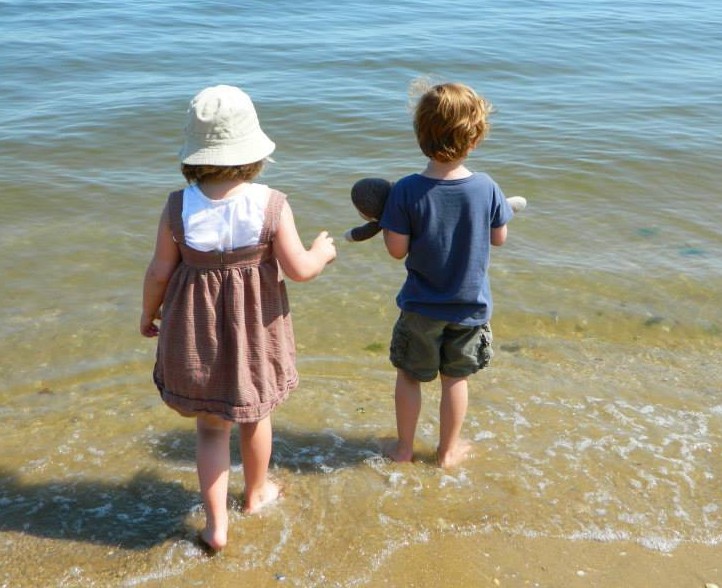
Mandy and Martin on the beach, August 2013.

Mandy and Martin on the beach, August 2013.

What Comes Last

A couple years ago—hard to believe how long we’ve been at this—I lamented to Martin’s (then) biomed doctor that, while Martin’s behavior, sleep, and overall health had improved, I had not seen as much progress in his language. The doctor told me not to worry. “Language,” she said, “often comes last.”

I carried that mantra for a long time: Language comes last. When it took Martin so long to start asking questions, or to use the command form, or to pick up nuances and idioms, I thought, well, language is going to come last.

Or will it?

This year, Martin’s language is much improved. As I’ve written, his speech is not perfect. It often sounds scripted, or rote. Sometimes it seems like he’s exploring a foreign language: Unable to find the easiest or most direct way to express himself, he searches his capabilities and comes up with an unusual (original?) formulation. And his receptive language, his processing delays, still poses challenges; I might be explaining to Martin that we’re going out after lunch, only to have him melt down because he wants lunch, and the “going out” part has registered but not the “first, lunch” part. At his time, he still very much needs the intensive-language-based school program he attends.

That fact notwithstanding, Martin can speak. He speaks in sentences. He asks questions. He orders me around. When he’s not frustrated and mixing up his words, he can express himself, in a manner understood by most anyone who listens with care.

To that extent, language has come.

Language has come, and it did not come last.

Martin’s recovery has two additional, gigantic roadblocks that are not language, though language-related.

First, Martin still can’t “attend.” He doesn’t pay attention. He doesn’t listen. He talks when others are mid-sentence. Unless an activity is one he enjoys (music, eating, drawing), he shows little interest in what others are doing. And even when something does catch his attention, he doesn’t stay with it for long, except for example to stim by hitting one music key repeatedly, or to read his favorite book, The Philharmonic Gets Dressed, over and over.

Martin’s teachers have identified attending as his most significant challenge in the classroom; even with a 3:1 student-teacher ratio, he has trouble following. At home, the nanosecond attention span means it might take Martin 20 minutes to change clothes, because he gets distracted, or succumbs to boredom and starts complaining instead of dressing. It also keeps us from sharing experiences. If I say, “Oh, wow! Look at that bird!”, Martin might glance out the window, then jog away before I can comment on the bird’s color or size, or he might not look at all.

So language didn’t come last, because language has developed more than attention.

Second, Martin still has a lot of trouble socializing.

When we were in Austin around Easter, I arranged a playdate with “Stewie,” the six-year-old, typically developing son of a college friend. Martin and Stewie had never met, and Stewie was not informed in advance that Martin has challenges. We met at a crowded playground. The playdate went remarkably well. Although Martin was less interactive than an NT child would have been, he didn’t spend the playdate in his own world. Several times (some with prompting) he went to find and engage Stewie. He and Stewie stood together and gazed at an inchworm hanging on Stewie’s finger. When one family at the playground brought out a bubble pumper, Martin joined the other children, clapping his hands and chasing the bubbles. Stewie never even shot his mom that quizzical look that means, “Is there something different about this kid?”

The experience with Stewie gave me a sort of high. I texted Adrian: “Martin is having a playdate with a typically developing boy, and he’s doing FANTASTIC!”

But of course, in autism recovery, disappointments find a way to deflate any high, and four days after Martin played with Stewie, we had a much less successful playdate back in New York, with four classmates from Martin’s kindergarten. Martin attends a school for children with speech and language delays. About half the kids in his class also have autism or some other social impairment. By coincidence, none of the four boys other than Martin who attended this playdate had any social impairment. They are the social kids.

What happened was typical of what we experience when Martin attempts to play with more than one child at a time: Martin was left out. In a one-on-one situation, a playmate has few options other than to engage Martin. In a multi-kid situation, those without social impairments gravitate to each other, and away from the awkward boy.

Martin’s classmates, at the playground where we met, decided to fight dragons. They scampered about as a group, swinging imaginary axes, wielding nonexistent swords, screaming with excitement at the game they’d created.

Martin climbed on rocks and monkey bars. He went down the slide and wandered across the playground’s bridges. When I suggested that he join his classmates’ game, he approached the crowd and, using the social skills he’s been taught, ask shyly, “What are you doing?”

But the other boys were too boisterous and engaged to hear, and they ignored him.

Martin sat down, alone.

As he and I were walking to the car to return home, I asked, “How was the playdate? Did you have fun?”

My son responded, “No. I would like to do a playdate with only grown-ups.”

The next morning, Martin said he did not want to return to school. Thinking that he was experiencing end-of-spring-vacation blues, I tried cajoling him with his favorite subjects—“Do you think maybe you will have computer class today? What will you make in art class?”—and enumerating his classmates. “Do you think Christopher will be there? Are you looking forward to seeing Jack, and Quinn?”

When I finished my song-and-dance, Martin shook his head and said, “No. My friends at school don’t like me.”

Some defeats just crush your soul, don’t they?

So language didn’t come last, because language has developed more than socialization.

Which begs the question: What’s going to come last?

How will I know when we’ve reached our destination?

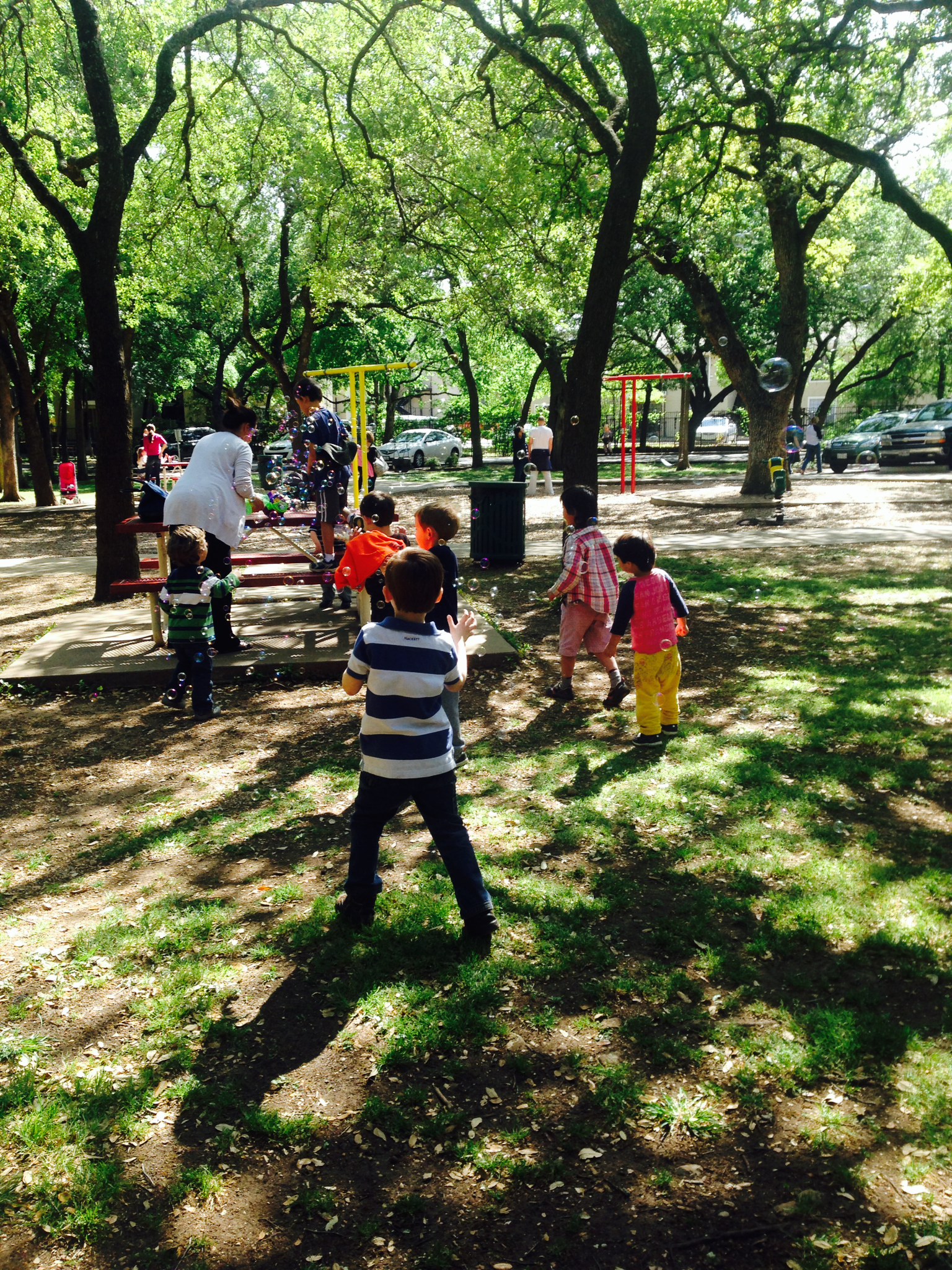
Martin, in the blue and white stripes, joins in bubble fun during his playdate with Stewie.

Martin, in the blue and white stripes, joins in bubble fun during his playdate with Stewie.

ASD Recovery Recipe: Mustard Mushroom Boats

“Mustard Mushroom.” Say that ten times, fast.

Let me begin with full disclosure: Martin ate these mushrooms begrudgingly, and did not like them. C’est la vie. Mushrooms seem to have some beneficial effects for ASD kids. (Again this year, Autism One has a seminar on the topic.) Unfortunately, Martin doesn’t like to eat mushrooms. My go-to method is mincing mushrooms and cooking them with lentils, which are GAPS-legal. Also on the lookout for new ideas, I found a recipe on-line for stuffed mushrooms with mustard (his fave) and altered it to include the base ingredients I had.

 12 crimini mushrooms

one apple or pear

¼-½ cup leftover meat

½ cup mustard

Dice the fruit, and the leftover meat. (I used turkey bacon.) Remove the mushroom stems from the caps, and dice the stems, too. I diced everything to about ¼-inch cubes. If I make this recipe again, I will dice smaller, which may make the “stuffing” more palatable. Sauté the mushroom stems in a bit of olive oil, and if the leftover meat isn’t already cooked, sauté that too.

Mix the stems, fruit, meat, and mustard, and fill the crimini caps with that mixture. I also sprayed the caps with olive oil, to give them a sheen.

Spray a baking sheet lightly with olive oil, and set the caps on that. Bake 15 minutes at 350 degrees.

Some pictures are below. I’m thinking I could really use a “food stylist,” or at least a better camera.

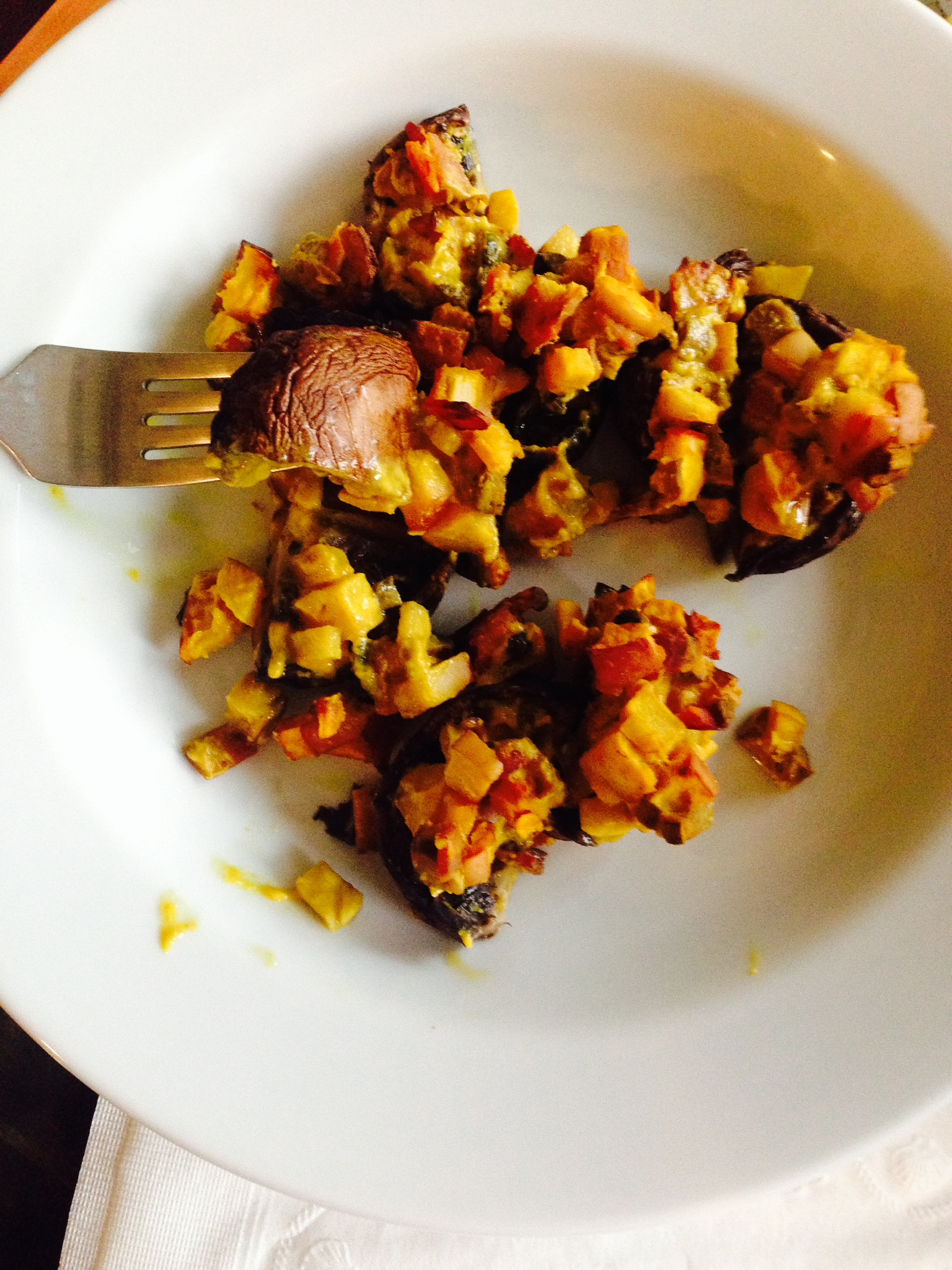
This is the way the mushroom boats looked when Martin's meal started.

This is the way the mushroom boats looked when Martin’s meal started.

Before long the boats became more of a casserole, as I cajoled Martin to eat what were clearly mushrooms.

Before long the boats became more of a casserole, as I cajoled Martin to eat what were clearly mushrooms.

So

I’ve written before about a phenomenon I call “slow-motion childhood”: When your kid struggles for what typically developing kids acquire naturally, you notice micro-steps. Maybe you even get more moments for celebration.

I picked Martin up at school this afternoon. I do that on Tuesdays, so that he, assisted by a special-education teacher, can participate in “Kids’ Klub” at our church. (Yes. Spelling “club” with a K just about kills me. But that’s what they call it.) From the backseat, Martin started talking about the satellite-radio music. He fixates on music: “Mommy, do you hear a bass guitar?” “Mommy, are they playing live?” “Mommy, is there clapping in this song?” Lately he’s taken to memorizing which song I like best from every singer or band we hear. “Mommy, ‘Bennie and the Jets’ is a good song, but it’s not your favorite song by Elton John. You’re favorite song by Elton John is ‘Goodbye Yellow Brick Road’.”

In sum, Martin talks about the music. From his booster seat, he can lean to the side and read the name of the artist and song, every artist and song, on my SUV’s radio screen. There are times when Martin’s reading skills are not as pleasing as you might think.

Martin’s spoken language is pretty solid these days; he can combine words and concepts, and figure out ways to express layered thoughts. “Mommy, were those two songs both by the BeeGees?” “Mommy, George Harrison used to be in the group The Beatles. This is a solo song from after when he was with the group The Beatles.” Still, and even apart from the perseveration, there can be an awkwardness, and a rote pattern, to Martin’s speech. He recycles phrases. New expressions arise rarely.

This afternoon, our first conversation, while on a familiar topic, had a speech breakthrough.

 “Mommy, this song is by the group called Heart. I don’t like the song.”

“I don’t like this song very much, either. I’m not a big Heart fan.”

“You don’t like this song?”

“No.”

“So change it.”

There it was. Did you catch it?

Martin used the word “so” as a coordinating conjunction, in a manner in which the precedent construction—my not liking the song—was unstated and implied. What Martin was saying was, “Because you don’t like this song, you should change the station.” What rolled off his tongue was the casual, idiomatic, and perfect, “So change it.”

So … do you even need to ask?

I changed the station.

In the GAPS

As assorted posts have mentioned, two months ago I switched Martin’s diet to GAPS. “GAPS” stands for “Gut and Psychology Syndrome” and is the work of a British doctor and nutritionist, Natasha Campbell-McBride.

Dr. Campbell-McBride’s book, Gut and Psychology Syndrome, sets forth how autism (along with dyspraxia, ADD, schizophrenia, and other apparent brain disorders) is symptomatic of a compromised immune system, linked with an imbalance in gut flora. The author suggests healing the gut with a diet comprising fresh foods prepared at home, without grains or sugars or other carbohydrates, and with plentiful meat and/or fish stock. (I’m simplifying.)

It’s been more than three years since we started eliminating foods from Martin’s diet. Since January 2011, Martin has not eaten gluten, casein, soy, corn, refined sugar, processed food, additives, or conventional/GMO food. We also introduced some foods that Martin, a vegan since birth, had never had before: eggs, ghee, honey, and fish oil. After some months we also added meat, which was especially challenging because I’m vegan and Adrian is pescetarian. Other variations along the way in Martin’s recovery diet have included restricting oxalates, temporarily avoiding foods to which Martin showed sensitivities, and trying to eliminate all sugars for one summer.

As of February 2014, Martin was eating meat, eggs, vegetables (including limited amounts of starchy vegetables like sweet potatoes), fermented vegetables, legumes, gluten-free grains like buckwheat and rice, and very little fruit. In puddings and baked goods he had complex sugars like raw honey or raw agave. With very few exceptions, like rice crackers, everything was organic and homemade.

Which is pretty good.

The thing is—Martin’s gut still didn’t seem to be healing. His bowel movements were light-colored and fluffy or flakey, instead of firm, and he had started complaining of stomach pain. Again. I thought we were done with stomach pain.

I decided to take the diet a step further. In the ASD recovery world, there are several diets that people adhere to. The formulations start with gluten-, casein-, and soy-free and branch out from there. Two of the most popular diets are the Specific Carbohydrate Diet, or SCD, and GAPS, which is an adapted variation of SCD. I didn’t have a scientific basis for choosing between GAPS and SCD. (Science doesn’t like me. Science doesn’t want me to understand it.) Some parents love SCD. Some swear by GAPS. Because I already owned Dr. Campbell-McBride’s book and was more familiar with GAPS, I decided to try that route and hope maybe Martin would clear some hurdles to gut health.

For extreme gut distress (ongoing diarrhea, for example), Dr. Campbell-McBride suggests various stages from an “introduction” (almost only bone broth) to “full GAPS” (all the GAPS-compliant foods, still incorporating ample bone broth). Martin was not experiencing extreme distress, just a lack of overall gut health. Therefore, I skipped the introduction stages and put him directly onto full GAPS.

Switching to GAPS meant three primary changes. First, Martin has to stop eating starchy vegetables, cocoa (temporarily), rice crackers and his few other grains, all sweeteners except raw honey, and some lesser-used foods like arrowroot, cannellini beans, and roasted nuts. (Raw nuts are acceptable.) Second, he gets to add a few more fruits, if yeast is under control. (Last month, after the nystatin debacle, Martin started taking Candex, which has been helping balance yeast without the side effects.) Third, he drinks meat stock with every meal. Most weekdays he takes only meat stock for breakfast. I make stock weekly, rotating among chicken, beef, lamb, and whatever other meat/bones I can get.

Which brings us to the million-dollar question: Is it working?

Two months is too little time to make a long-term prediction. (By way of digression, I’m not sure I’ve ever used “two,” “too,” and “to” in a single sentence before now.) Martin’s gut is improving; he’s stopped thrusting his fists into his abdomen and complaining of stomach pain, and his bowel movements have become firmer. On the other hand, I’m yet to see unusual progress in his behavior. He’s been up and down, the same jaggedly positive trend as ever in his recovery. I call it 100 steps forward, and 99 steps back. I remain hopeful, nonetheless, that sealing his gut will soon lead to more behavioral improvements, because he will be better able to absorb his nutrients, supplements, and so forth.

At this time, the two-month mark, I’m giving a tentative thumbs-up to GAPS.

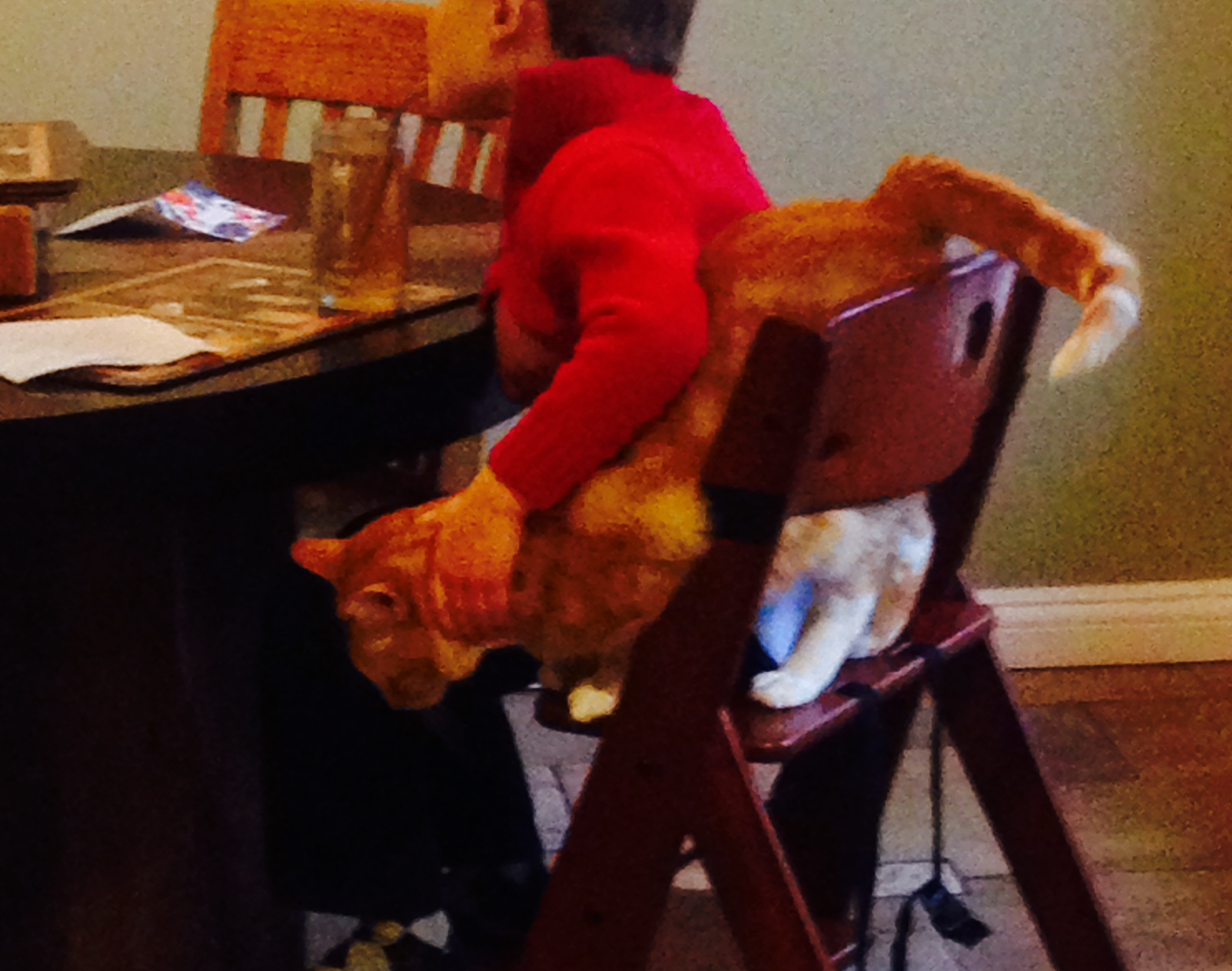
Yes, this is the worst-quality photo ever. Sorry. It's Martin, taking his bone broth for breakfast, "assisted" by our cat George.

Yes, this is the worst-quality photo ever. Sorry. It’s Martin, taking his bone broth for breakfast, “assisted” by our cat George.

Third of Three Firsts: A Nod

The winter seemed eternal this year. Only in mid-April did spring’s first tentative harbingers arrive—daffodil buds, pollen, temperatures in the 60s.

“Martin,” I asked, one of those first warm afternoons, “it’s such a beautiful day. Shall we open the sliding doors and let some air into our family room?”

Martin stopped playing his toy saxophone and looked at me.

As I’ve learned through RDI, I waited five seconds, to give Martin’s mind time to absorb the question, and then said, “What do you think? Shall we let some air in?”

Martin still made no verbal response.

But after another second passed, he looked at me again and nodded. Twice.

Beginning very young, even before his diagnosis, Martin could shake his head no. (He could verbalize “no,” too, when he didn’t want something. Learning to verbalize “yes” when he wanted something, as opposed to repeating the last words he heard, took much longer. I believe that is common in echolalic children.) Nodding, however, never came naturally to Martin. I had to teach him the physical motion; I put my palms over his ears, spread my fingers, and gently maneuvered his head up- and downward. After months of practicing the motion, I could get Martin to nod on his own by requesting, “Can you show me ‘yes’ with your head?”

This time—his nonverbal response to, “What do you think? Shall we let some air in?”—was the first time I’ve witnessed Martin nodding unprompted. The nod was awkward, as they always are. I didn’t care.

I said, “Thank you for answering me with your head, Martin!”

Then I opened the sliding doors, and let the fragrant springtime air drift through our home.

Daffodils (and those pesky dandelions!) bloom in our front garden. I’ll nod to that.

Daffodils (and those pesky dandelions!) bloom in our front garden. I’ll nod to that.