Hubby Eats

Managing Martin’s recovery has taught me more than ever about nutrition.

I love my husband, Adrian, and would like to keep him healthy.

I’m kind of a control freak.

These facts were bound to collide at some point. That’s why, except when we go out for dinner or he has a business event, I now prepare every bite of food Adrian eats.

Years ago, Adrian skipped breakfast and, during the work week, bought whatever for lunch. When he decided to manage his diet better to lose a few pounds, he still skipped breakfast but I started sending lunch to the office with him. In the beginning, I sent a sandwich of cheese, fake meat (usually processed soy), greens, and mustard or vegan mayonnaise on whole-wheat bread; two fresh fruits; and two protein snacks like nuts, or veggies and hummus, or (more) cheese and crackers.

As time went on, the bread became sprouted-seed gluten-free, the fake meat became less processed and more lentil-mushroomy, and the cheese and hummus became organic.

Then the sandwiches and fake meat disappeared altogether. Then I insisted on adding breakfast at home. Then an insulated container of lentils snuck into every lunch, to make sure Adrian had enough to tide him over even when he works late (which he usually does). Then I tried to eliminate cheese snacks. That last effort, the cheese, was unsuccessful, although I did manage to switch him to raw-milk cheese, usually purchased directly from a local farm.

As of 2016, Adrian’s weekday menu is as follows:

Breakfast. Smoothie made from plant-based protein powder, nut milk, peanut butter, and frozen berries.

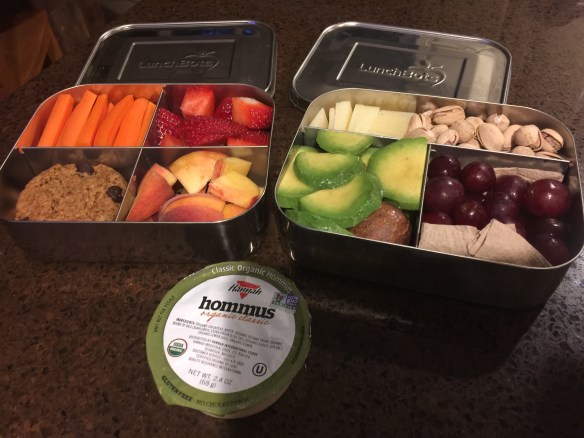
Lunch and snacks. Two bento-style boxes (I use LunchBots) containing avocado (South American by origin, Adrian craves avocado daily), fruits, nuts, cheese, olives, and/or raw veggies, accompanied by a hummus cup or baggie of rice crackers and a container of lentils or legumes.

Dinner: Whatever Martin is eating. Last night, dinner was white beans with home-grown-basil pesto and arugula salad from my garden. Tonight, Samara is preparing her special lentils with onion, garlic, and carrots; Adrian never minds lentils twice in one day. Tomorrow evening, Adrian and Martin will eat fish and fermented kale. In the event Adrian, a pescatarian, cannot eat what Martin is having (say, meatballs), I make him a “hearty salad,” which comprises fresh greens, berries, nuts, and seeds, dressed with olive oil and chickpea miso.

All the food is organic, except the nut milk, because sometimes I buy a brand that is only GMO-free, and the fish, which is wild-caught. Weekends, I make a full breakfast for Adrian and Martin, and we often eat dinner at a restaurant.

Adrian is a corporate attorney at a white-shoe law firm in Manhattan. Last month a visiting friend was ribbing Adrian, asking if he is the only firm partner who brings homemade lunch every day. Adrian laughed and said he didn’t care. “I like my lunch. My lunch is tasty.”

Now, if I could only get my own diet into such good shape.

IMG_3689

Lunch and snacks for Adrian’s day: carrots, strawberries, TigerNut flour cookies, peaches, cheese, pistachios, avocado (coated with lemon juice), grapes, hummus.

IMG_3177

Lentils, heated, being loaded into an insulated container to accompany Adrian’s lunch and snacks.

IMG_3176

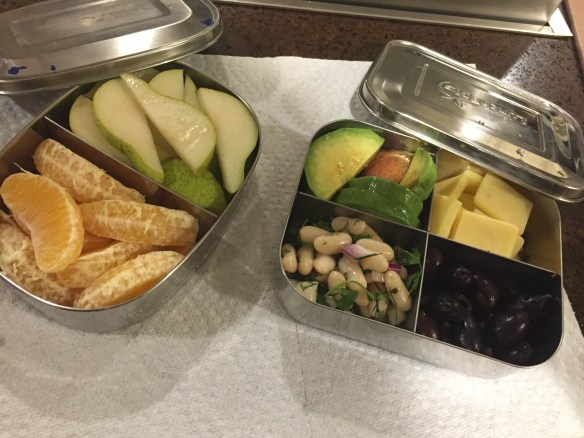
More bento boxes, with oranges, pears, avocado, cheese, cold bean salad, and olives.

Food Porn: Weekend Breakfast

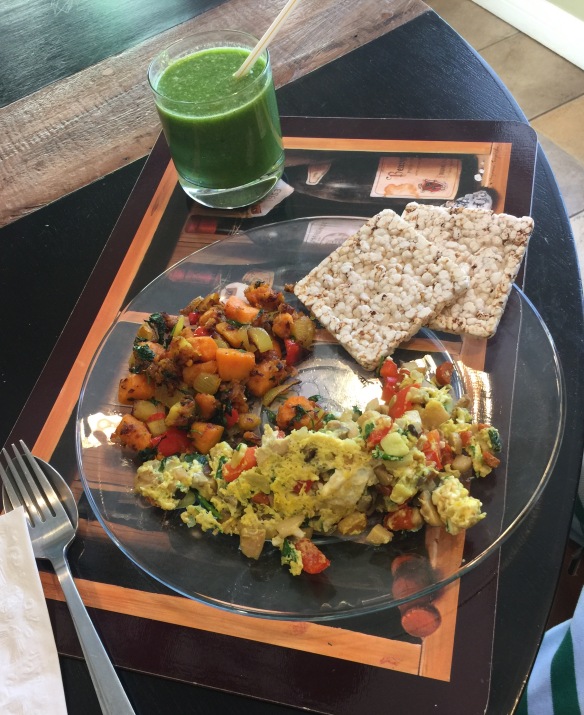
Depending on how much time I have, weekend breakfasts can be extravagant and, because on the volume of organic vegetables involved, expensive. I photographed my way through a recent weekend breakfast, prepared when we were all awake around 7:00 am but no one had to be anywhere before 11:00 am.

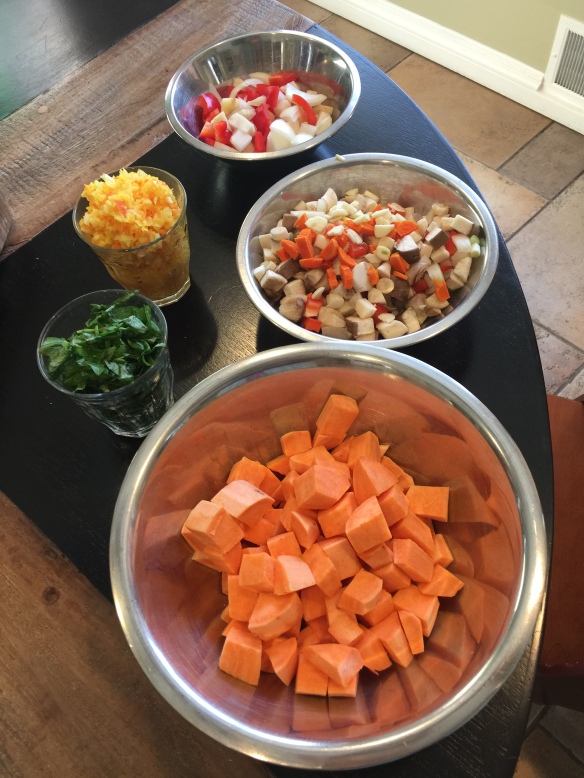
Dish No. 1 was sweet potato hash, and Dish No. 2 was vegetable scrambled eggs. First, I diced/processed my veggies and arranged them for those two dishes.

IMG_1196

In this photo, the middle mixing bowl contains the veggies for the scrambled eggs: carrots, garlic, red bell pepper, Jerusalem artichoke, and several sorts of mushrooms. Martin has declared that he doesn’t like mushrooms, so I sneak them in wherever I can; in this instance, the pre-cooked mushrooms will reduce enough that he doesn’t notice them in the scrambled eggs.

Also in the photo are—

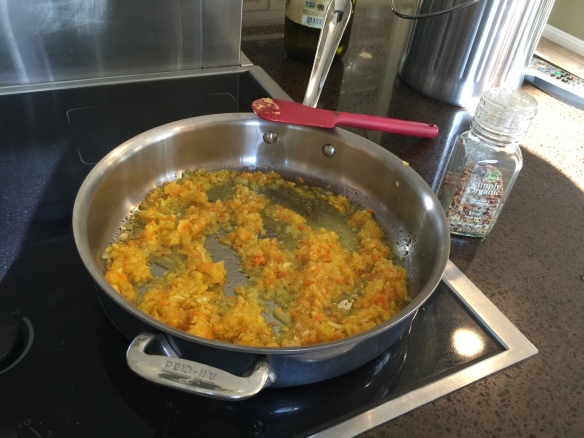
a small glass of yellow “base,” which comprised onion, garlic, and turmeric root (there’s that turmeric again!), processed into a paste, which I put first into the pan, along with cooking oil (usually coconut);

IMG_1202

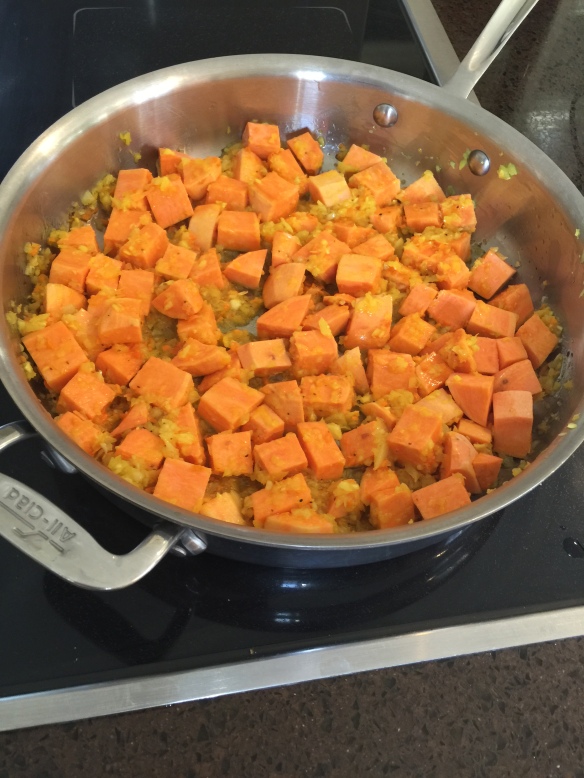
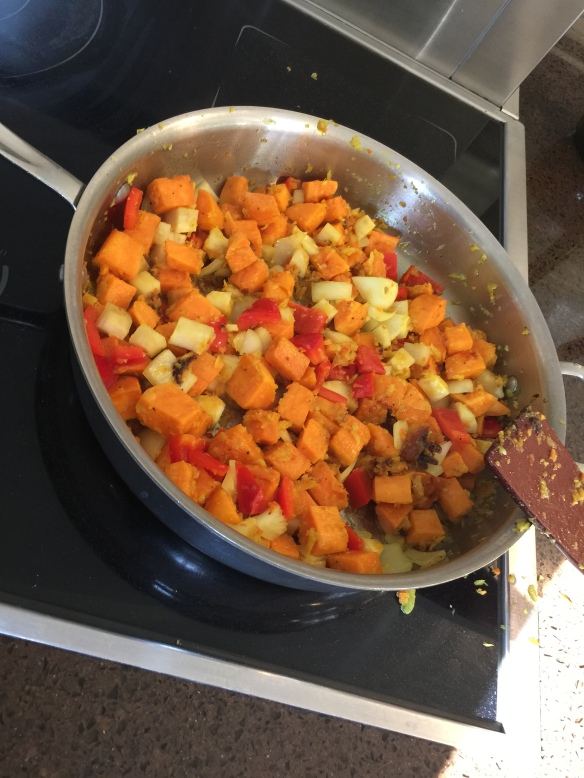
the diced sweet potatoes, which require the longest cooking time, so I added them as soon as the base became fragrant;

IMG_1203

onions and red bell pepper, which I add until well after the sweet potatoes, because they would have burnt before the sweet potatoes were cooked;

IMG_1204

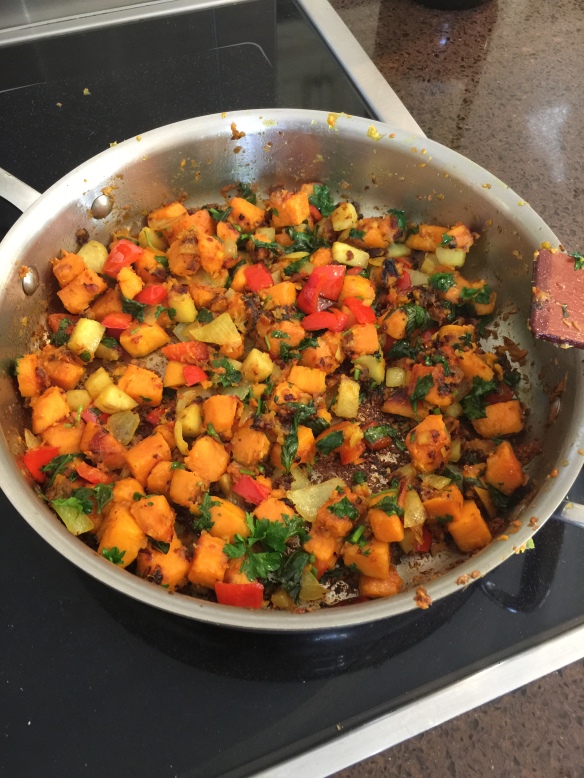
and a glass of minced herbs, which on this occasion were parsley and sage, which went in last, just enough to heat them.

IMG_1211

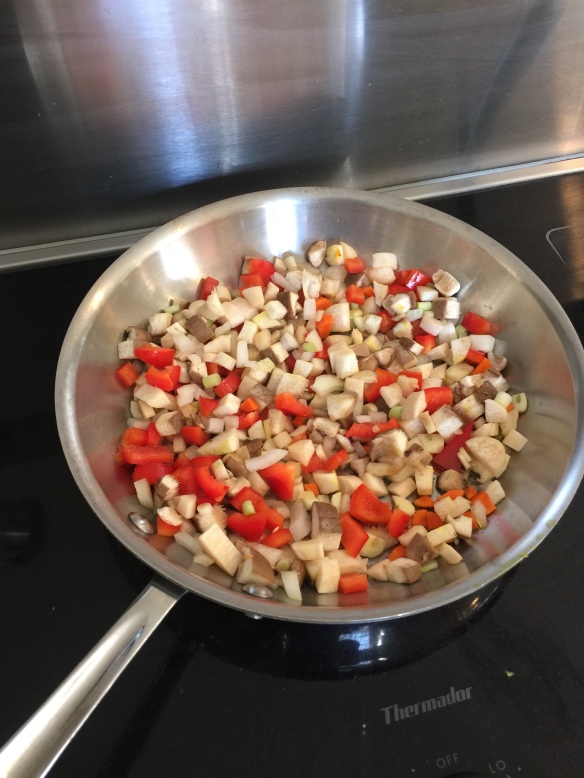
When the sweet potato hash was about half done, I set the egg veggies to cook in coconut oil, separately.

IMG_1209

While both the sweet potato hash and the egg veggies were cooking, I prepped the vegetables for juice. I am very into juicing right now. Juice does have “all the sugar without the insoluble fiber,” which is not great vis-à-vis Martin’s yeast troubles. On the other hand, juicing is GAPS-approved and makes vitamins, minerals, and even enzymes rapidly available, which is terrific for those times when Martin is not so into eating vegetables. (Yes, even super-healthy-diet Martin behaves sometimes like an American seven-year-old.) On this morning, I made “green lemonade”: collard greens, celery, cucumber, kiwifruit, green and red apples, lemon, and turmeric. (Again with the turmeric!)

IMG_1208

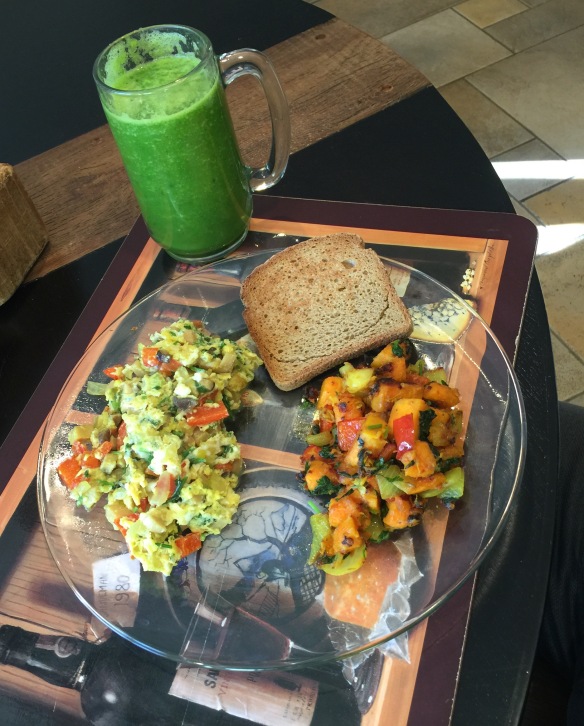
Finally I juiced, added eggs and sea salt to the egg veggies, and served. For Adrian’s breakfast, I added a slice of toast, made from Canyon Bakehouse gluten-free bread.

FullSizeRender-5

I think the Canyon Bakehouse product is good-quality, but it’s still too starchy and processed for Martin. So when Martin insisted that he too wanted toast, I substituted a couple Lundberg Family Farms Red Rice & Quinoa Stackers. Not perfect. Still a grain. Still processed to some degree. But these “toast crackers” made Martin happy and brought peace to breakfast.

FullSizeRender-6

I don’t eat eggs. For my breakfast, I ate the sweet potato hash and drank the juice, and substituted the eggs with Fakin’ Bacon, which is spiced organic tempeh. I try not to eat too much soy; when I do consume soy, organic and fermented is the best way to go.

And I almost forgot: There was one more item that brought peace, and for me and Adrian, a lot of joy, to the morning kitchen—

IMG_1210

Food Porn: Pasta and Broccoli With “Cheese” Sauce

I’ve been lax about posting recipes and cooking tips, which is strange because the No. 1 recovery-process question I get remains, “What does Martin eat?” Many people still find it hard to fathom, in this day, a diet of minimally processed foods; focused on fresh and organic; free from gluten, dairy, corn, soy, refined sugar, and most grains or starchy vegetables; that includes daily bone broth and probiotic/fermented foods; with meat (other than broth) limited to one serving daily; and that is prepared 90% from scratch. I don’t blame them. Before I started this journey, I wouldn’t have known how to manage it at all.

Time to post a few examples of how breakfast, lunch, and dinner look for Martin. Exhibit One shall be this relatively simple vegetarian dinner, which our whole family, including pescatarian Adrian and vegan me, can enjoy: pasta with broccoli and “cheese” sauce:

FullSizeRender-4

The “cheese” sauce—you won’t believe me until you try it—is delicious. The recipe does call for potato, which we generally try to avoid; fortunately, the overall potato content ends up being low, on a per-serving basis. I happened upon the “cheese” sauce recipe when a friend posted the link on her Facebook page.

Of course, I make alterations. I generally try to soak and dehydrate the cashews before I use them, though I may not always manage. I like to replace the garlic powder with a clove or two of raw garlic. I also usually add an inch or two of peeled, fresh turmeric, throwing that root into the cooking water at the same time as the potato. (If you read several of these posts, you’re going to uncover a sort of turmeric leitmotif. I add fresh turmeric to almost everything—including (some) desserts and snacks.)

The pasta is Tolerant brand penne, which lists, as its only ingredient, red lentils. I love the idea of one-ingredient pasta, especially when the ingredient is organic red lentils. That being said, I do have questions about Tolerant, especially how exactly the lentils are processed into pasta, i.e., what the lentils undergo and how they eventually stick together. My friend Stacey and I once found Tolerant’s representatives at a food trade show and peppered them with questions about their processing methods; citing trade secrets, they wouldn’t reveal anything, so I still have concerns. Sometimes the best you’ve got is the best you’ve got, and right now, for pasta, I think Tolerant is the best I’ve got.

(Monday afternoons, Martin and I visit the organic grocery. He loves to run to the Tolerant aisle and yell, “Mommy, do we have enough pasta?”, then dump four or five boxes of the penne into my cart.)

Sometimes I add slivered almonds or pine nuts to this dish. In the version pictured above, the final ingredient was steamed broccoli. I cooked the broccoli before the pasta, saved the leftover steaming water, which absorbs some broccoli nutrients, and cooked the pasta in that water, hope to transfer those nutrients to the pasta. Long shot? Probably.

A tasty entrée that paired well with salad? Definitely.

ASD Recovery Recipe: Smoothies

Alert: This isn’t really a recipe. But it is a food post that could be construed as instructional, and it includes a colorful photograph. That’s recipe enough, right?

When we were vacationing in South America a few weeks ago, Martin and I paid several visits to the hippie-van-cum-juice-stand parked on a beach. Although the fruit and vegetables weren’t organic (organics are hard to find, in Adrian’s country of origin), they were fresh, and the lovely couple running the place created sugar-free (not counting the naturally occurring fructose) smoothies that Martin loved. I was inspired to try making smoothies at home.

Until now, I’ve been discouraged in smoothie endeavors because I can’t figure out when I would give one to Martin. He already has so many liquids in his day. Breakfast always includes 12 ounces of bone broth. For school I send a LifeFactory bottle filled with Fiji water and a splash of organic juice, which he drinks throughout the day. After school he takes eight ounces of camel milk with cinnamon. Then with dinner he gets another 12 ounces of bone broth. Whenever he wants it, I give him filtered water. Where would a smoothie fit in all that? As it is, half the day he’s got a straw in his mouth.

I’ve also wondered if the amount of sugar (fructose) is worthwhile, in comparison to a smoothie’s total nutritional profile. I thought about adding protein powder to boost that nutritional profile, but for Martin I shy away from protein powders, because even the best-quality organic ones seem fractured, or processed, or otherwise not complete foods. The South American beach folks, I noticed, were adding cashews or walnuts into smoothies without compromising the fruit flavor. Nuts! That’s like natural protein powder ground into the drink. Inspiration.

When we got home to New York, I decided to go for it. I found a time: Saturday morning breakfast. True, Martin has soup to drink. But we have a lot more time than a weekday before-school breakfast. Weekends I cook a big breakfast for Adrian and Martin: vegetables, eggs, fruit, avocado, nuts. It seemed like a fine time to add a smoothie. Here’s the concoction I devised:

kombucha, as liquid base

fresh berries

pineapple chunks

pre-sprouted cashews

fresh basil leaves, for the exotic touch.

Big success! Adrian loved it. Martin felt special. Henceforth, weekend mornings are smoothie mornings.

My first smoothie, with the ingredients listed in this post.

My first smoothie, with the ingredients listed in this post.

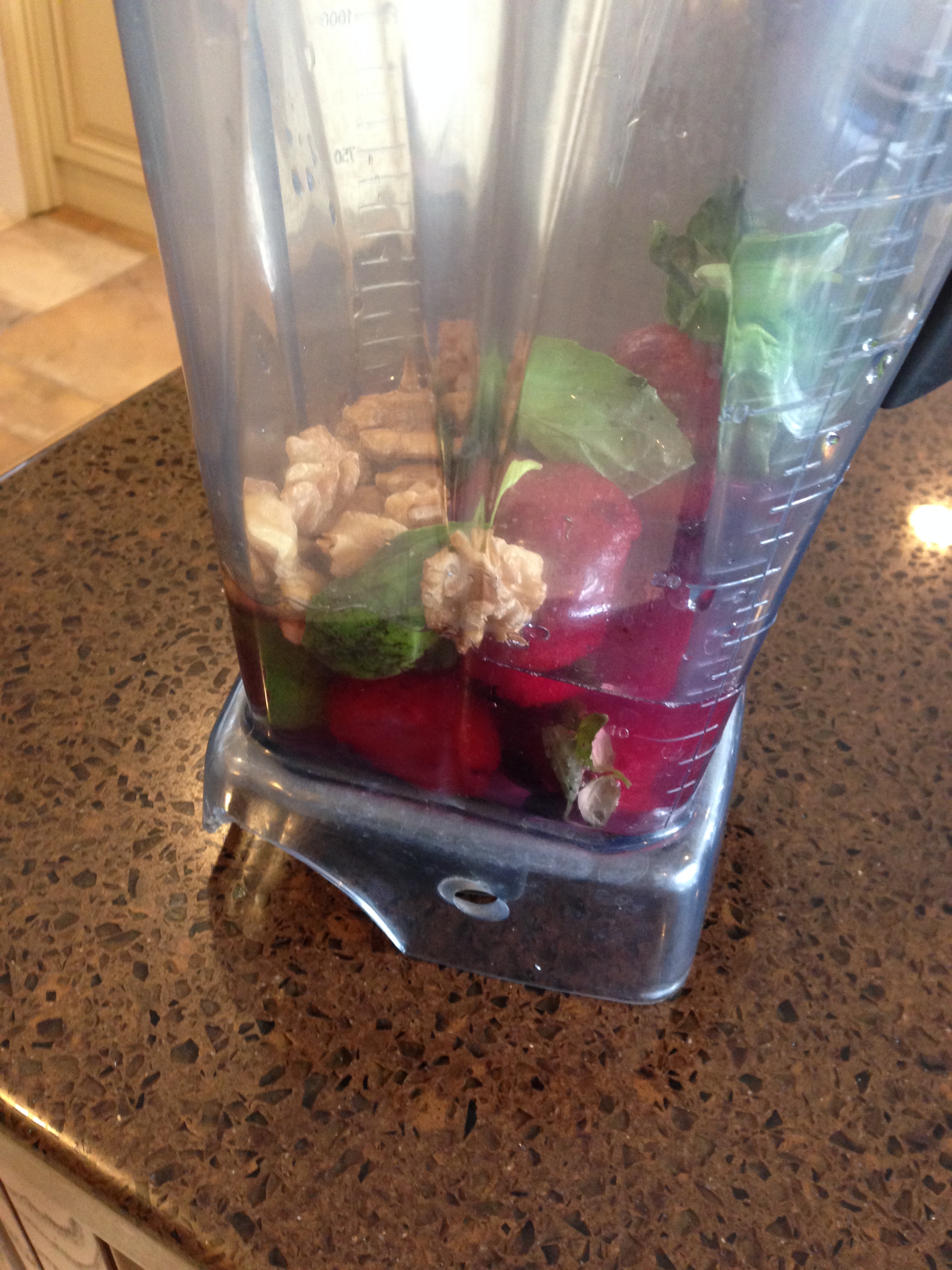
The second time I made a smoothie: Frozen organic berries, sprouted walnuts, basil, and water.

The second time I made a smoothie: Frozen organic berries, sprouted walnuts, basil, and water.

2015

My last post reviewed 2014, which got me thinking about 2015.

New interventions are coming down the path, as always. Sitting in my home right now, as yet unpacked, is an ionic foot bath. On their way to us are two Himalayan salt lamps, for air purification and EMF reduction. Are these items just so much hype and bunk? Time to find out. I also ordered an essential oils diffuser. I’ve been applying frankincense and eucalyptus oil to the soles of Martin’s feet and the base of his neck, and witnessing more sharpness when I do. I’d like to see what will result if near his bed I diffuse those two oils, and whatever other oils I find to target his attention span.

I am hoping that 2015 will bring MRT to the greater New York area. I think Martin would be a good candidate for MRT. Unfortunately, because he attends school year-round, i.e., without a summer break, I have not been able to commit to bringing him for the required twelve weeks to any center currently conducting trials of MRT for ASD.

We’re returning in 2015 to some practitioners who helped Martin but fell away for whatever reason. At the beginning of 2013, we switched to a Connecticut biomed doctor when our original doctor moved her practice from Chicago (not too bad to fly there from New York) to California (heckuva long way). In two weeks, I’m taking Martin to California to see the original doctor, distance be damned. I’m figuring that a talented and intuitive doctor who has not seen Martin in more than two years can give us a realistic picture of what progress we’ve made, and what direction we should consider now. I also plan to seek a few sessions with the craniosacral therapist who, in past years, was able to tell me details about Martin’s health and body. I can’t point to any particular reason why we stopped seeing her, other than “too much on the plate.” It’s time to return.

As to me, Martin’s primary care-giver, I have three resolutions. Or maybe not “resolutions.” Publicly resolving to take action brings too much pressure. Let’s say this: I have three notions, and hopes of addressing them.

First, I want to do more thorough research and reading. Unless you are a fellow ASD-recovery parent, you may find this hard to believe, but—I think I do a subpar job when it comes to understanding the science behind Martin’s recovery. I’ve never made sufficient use of his genetic information, or insisted that his doctors do so. I have books I bought, and articles I printed, that I’ve barely picked up. I get so caught up in the everyday mechanics of recovery, the cooking and appointments and supplement orders and logging his health and behavior, that I fail to put aside for making sure I understand it all. Which is another way of saying I’ve been lazy when it comes to doing what I find most challenging.

Second, I want to help Martin understand more about why we do what we do. He knows about foods that “hurt his belly” or “keep him up at night.” As he gets older and his language skills continue to develop, I’d like to explain his health, and how our biomed protocol improves his health. The tricks will be finding a way to bring the explanations to Martin’s level right now, and saying it all without mentioning “autism.” Martin doesn’t know that word, and I wouldn’t care to have him learn it.

Third, I want to put some effort into my own health. I cook GAPS food for Martin, prepare dairy/fish meals for Adrian, and then, for my vegan self, grab whatever I can on the run. I don’t sleep enough. I work out too intensely, or not at all. In 2014 I suffered four major illnesses, one requiring the hospital. That’s got to change.

If 2014 was a banner year, 2015 shall be a confident year. Many underlying challenges are virtually gone, or fading fast. Martin sleeps. He talks. His digestion functions. He has few repetitive behaviors. He still perseverates, but at least he varies the topic. The work we have left to do—primarily socializing and maintaining attention/focus—is more nebulous, and its milestones less pronounced. When it comes to sleep or language, I can measure progress easily. When it comes to how Martin engages other kids, and how they treat him, I have less to chart. So I will have to keep faith, and remain confident that change is occurring, even if I grasp it only in hindsight.

P.S. I have a special announcement for long-time readers. Remember the cat chaos in my home? The hissing and bullying, the senior cats living in the basement? On the advice of a cat behaviorist, we’ve found a new home for the troublemaker-in-chief, George. He’s going to live in Northern California, with the mother of a close (human) friend of mine. He’ll be the only cat in a big house on a big yard, the empire of his dreams. And Martin and I, on our trip to visit the California doctor, will personally deliver George to his new home. Wish all three of us luck.

Less-Meat GAPS (With Photos!)

I received this inquiry: “The GAPS diet is so meaty. If Martin is eating only one meat serving per day plus broth, what all is he eating?”

Fair question.

I’ll use today as an example, and as I’m writing this, I’m realizing that, depending on how you define “meat serving,” he might have had two.

For breakfast, Martin drank a 12-ounce glass of homemade bone broth and ate a small dish of fermented vegetables—today, eight string beans. Some weekday mornings Martin takes only broth. I prepare a full breakfast only on the weekends, when Adrian eats at home and we have more time.

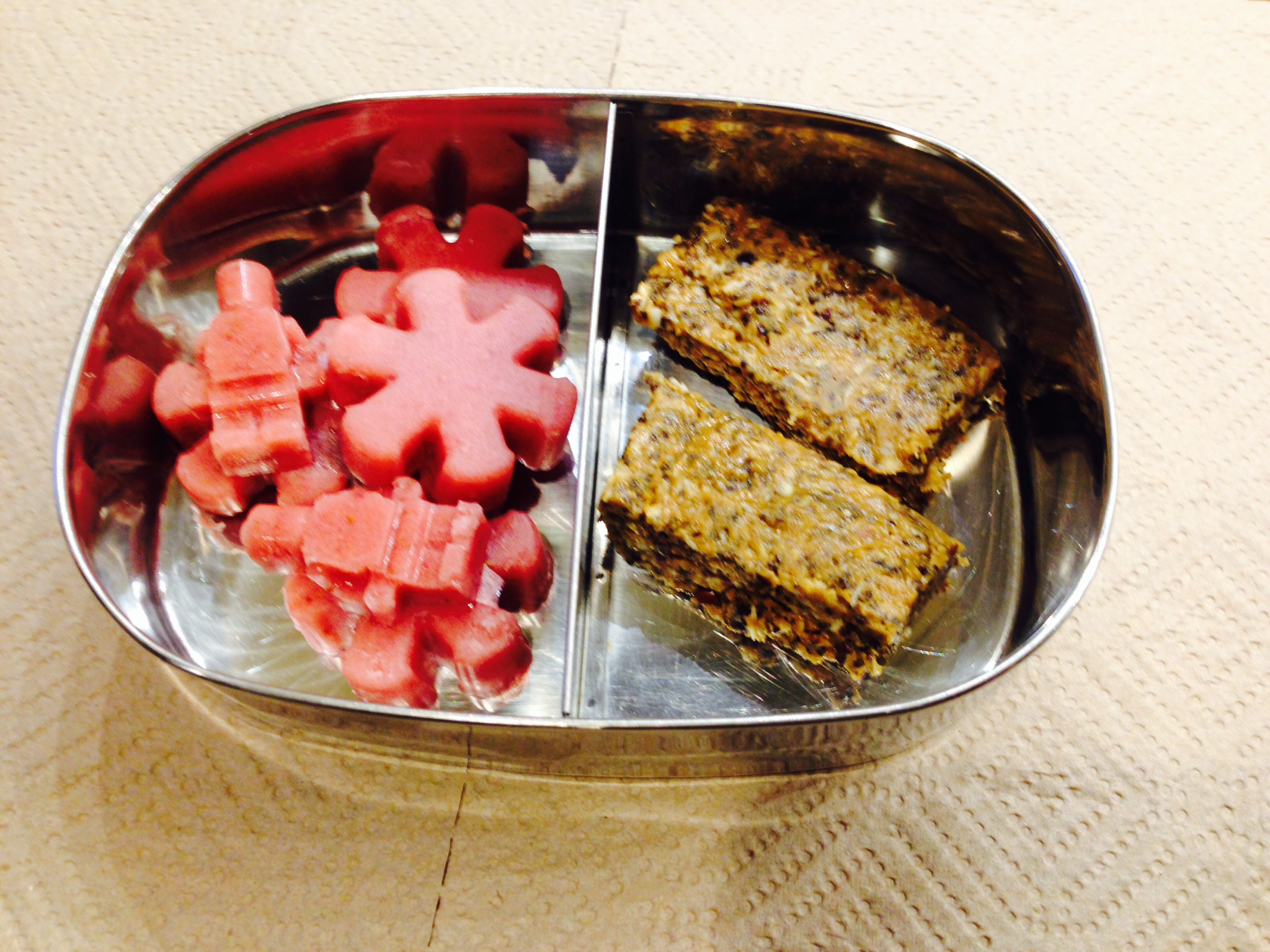
Martin’s school asks that we send two snacks each day, and a lunch. Today I packed both snacks into one container. The morning snack was homemade protein bars. That recipe varies every time; this version had organic SunButter, chia seeds, coconut flakes, cacao nibs, honey, and sea salt. For afternoon snack, he got gummy treats, which I made by heating and pureeing strawberries, then adding pure bovine gelatin and pouring the mixture into silicone candy molds.

photo 3

Did you catch that? Bovine gelatin in the afternoon snack. If you count that as meat, because it comes from a cow, then Martin had two meat servings today.

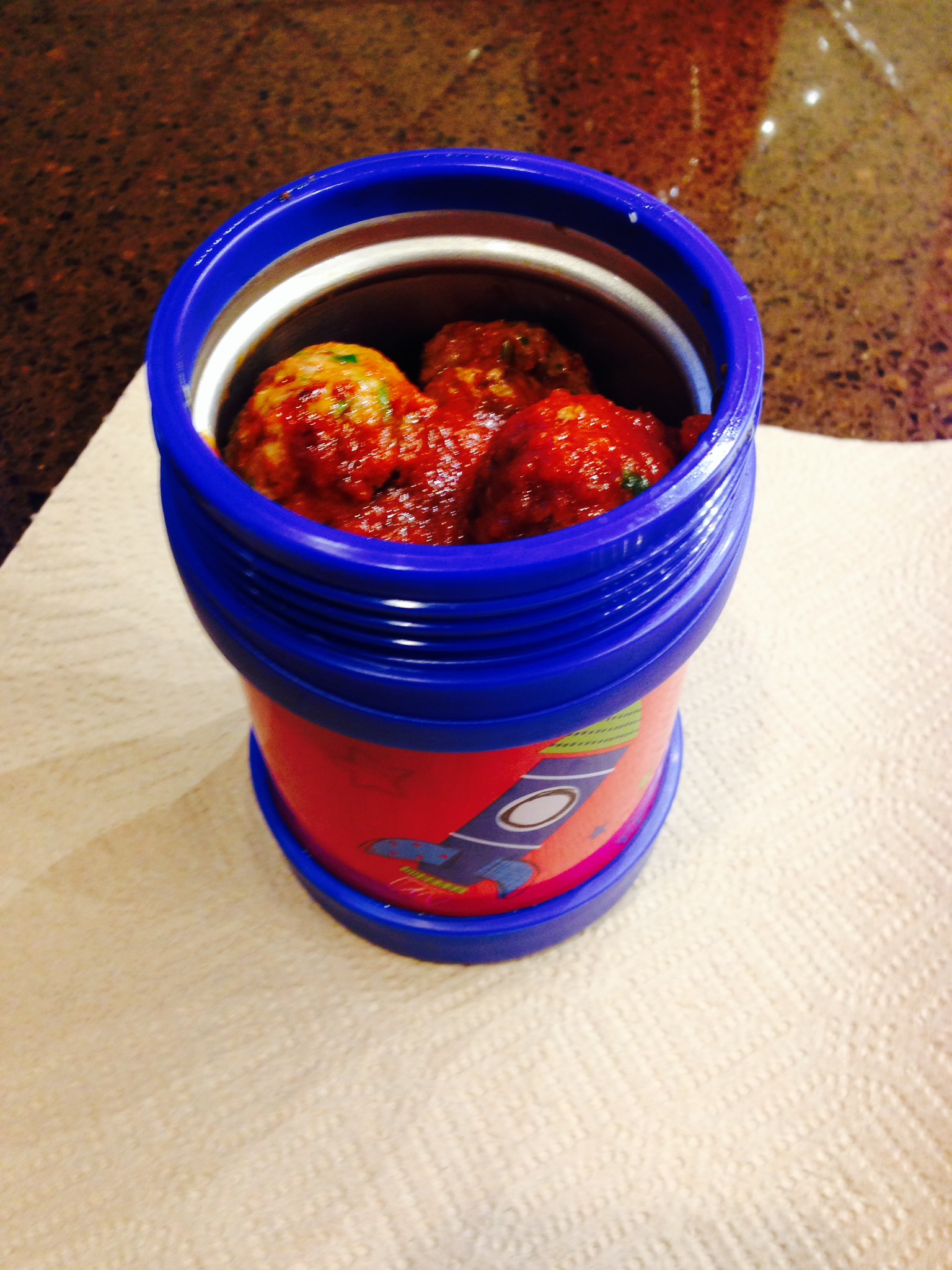
As for Martin’s lunch, if you read yesterday’s post, you already know what it was: meatballs that were actually half-vegetable.

photo 2

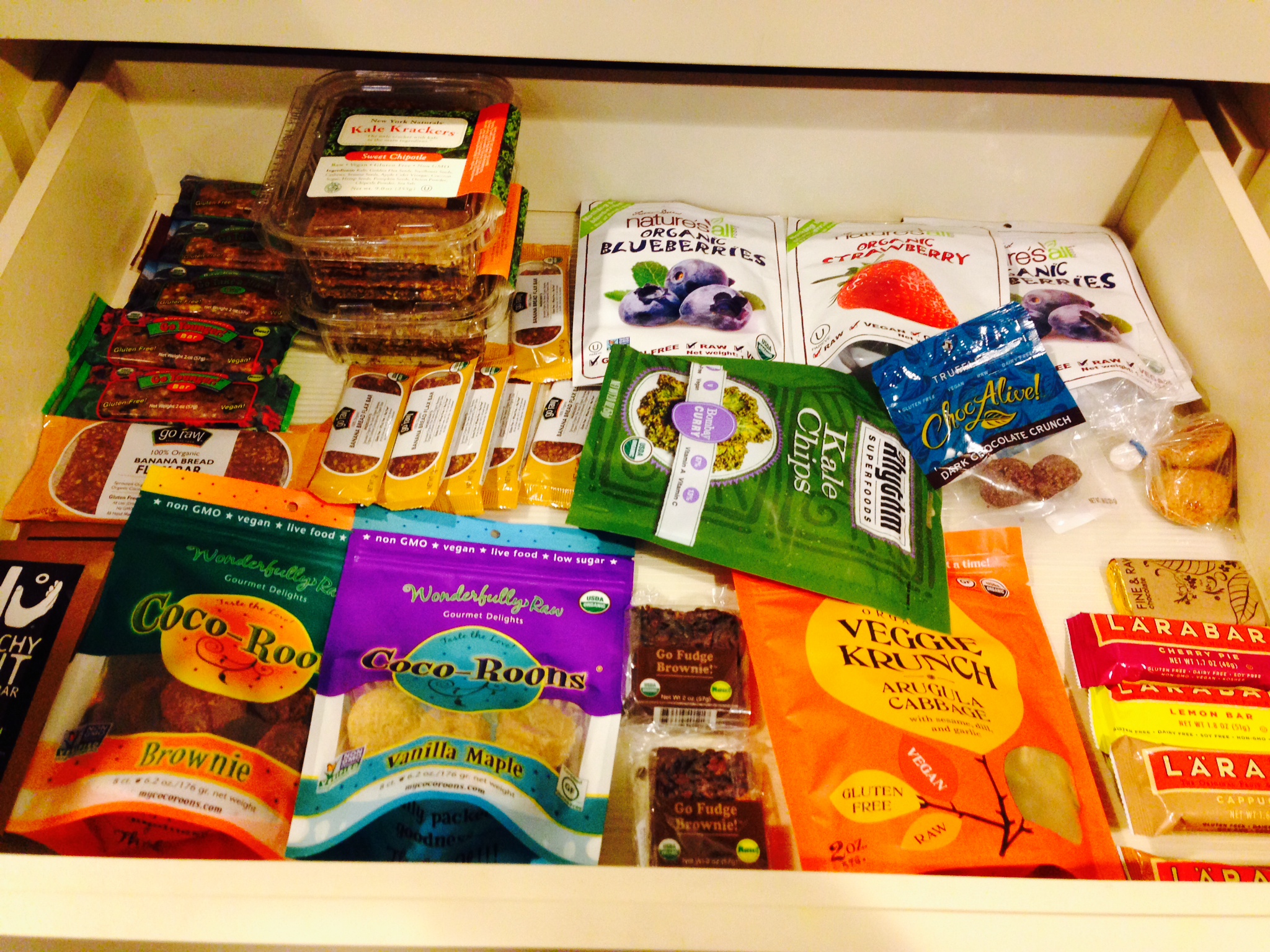
When Martin arrived home from school, per his custom he immediately wanted another snack, which he was allowed to select from his snack drawer. Today’s snack choices looked like this—

photo 1

Martin went with a cappuccino Lära Bar. (Yes, that has a small amount of coffee.) Per my custom, I asked Martin to finish his camel milk before eating the snack. I added cinnamon to the camel milk.

An hour later, when we were leaving for his piano lesson, Martin demanded yet another snack. As I rushed to get him out the door, I came up with some leftover freeze-dried blueberries. He arrived at the music school with purple hands and a purple face.

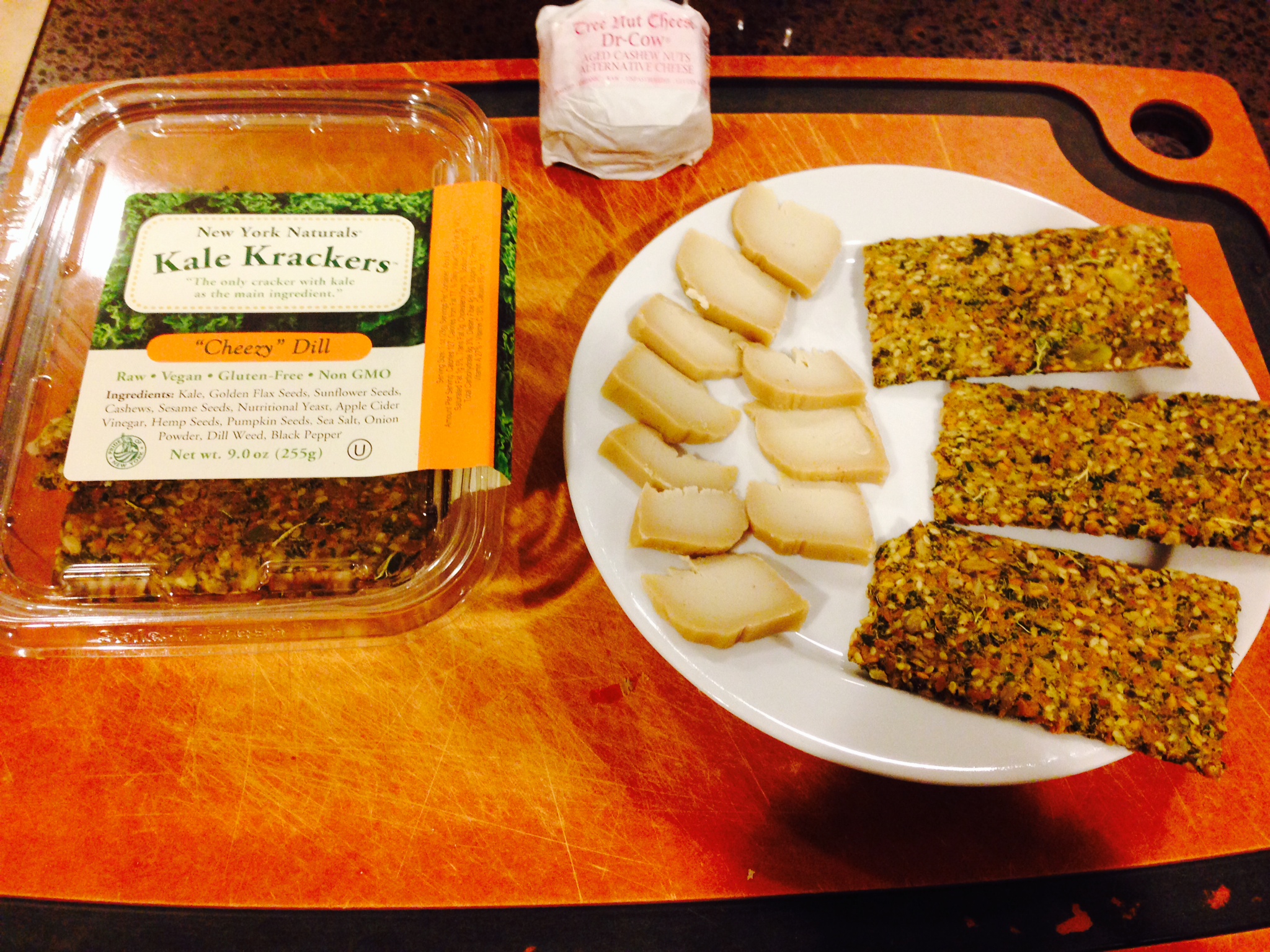
For dinner, I gave Martin the choice of pasta, which I would cook with veggies and olives, or “cheese and crackers.” He decided to have the latter, Dr. Cow fermented nut cheese paired with New York Naturals kale crackers. With dinner he had another 12 ounces of bone broth.

photo 1photo 2

Then, of course, it was time for dessert. Martin got a quarter-cup of “chocolate ice cream,” a cashew-based product sweetened with raw agave. Agave is not GAPS-legal! But there was very little agave, and I decided we would all survive the experience. While I was serving the ice cream, Martin asked, “Mommy, why don’t you put some chocolate chips on it?”, which I did, in the form of raw cacao nibs.

photo-9

Throughout the day, including at school, Martin drank Fiji water from a Lifefactory bottle, into which I mixed a splash of juice and his MitoSpectra powder.

No day is perfect. Today Martin had too much sugar (from honey, strawberries, dates in the Lärabar, blueberries, juice, and “ice cream”) and one non-GAPS ingredient (raw agave). And it’s probably apparent that I don’t have big oxalate concerns at this time; with all the nuts and cocoa, it was an oxalate-heavy menu. Still, he had his camel milk, 24 ounces of bone broth, and veggies in reasonable quantity.

Then he went to bed, and I had wine.

My Beef With the GAPS Diet Author—a Post So Major That It Probably Should Have Subheadings

When I blogged about Martin doing well on the GAPS diet, the brainchild of Dr. Natasha Campbell-McBride, I wrote: “I’ve written a lot about GAPS recently, and I’m also working on a post about how I don’t buy into everything that Dr. Campbell-McBride says.”

All this time, you’ve been wondering, What is it? What does Dr. Campbell-McBride say that my blogger doesn’t buy into?

(You’ve been wondering, right?)

Well, it’s time for that post I’ve been working on.

I’m vegan. I went vegetarian when I was 16 years old, and vegan just after I turned 22. I did it out of concern for animals and the environment, and I stuck with it for the health benefits. I’m 42 now, so that makes me vegan more than two decades. All in all, I feel . . . fit. I am 5’6”, I fluctuate from 125 to 137 pounds. I exercise. I have strength and endurance levels at least commensurate with my age. The two major illnesses I’ve suffered, measles at age 12 and dysentery at age 21, both occurred before I became vegan (and were unrelated to nutrition, as far as I can tell).

I was surprised to discover that Dr. Campbell-McBride, in her book Gut and Psychology Syndrome: Natural Treatment for Autism, ADHD/ADD, Dyslexia, Dyspraxia, Depression and Schizophrenia, writes off veganism as incompatible with long-term health, without explanation. She says that veganism is unhealthy and moves on. I figured that Dr. Campbell-McBride must have more than nothing to back up her opinion of veganism, so I headed for her website and blog. I found a post titled “Feeding Versus Cleansing,” dated 27 March 2012, in which she states, “Purely plant-based diets (vegan diets) are inappropriate for human physiology long-term; they can only be used as a temporary cleansing procedure.” (Disclaimer: I started writing this post in July. I know, I know—it took me a while. Life gets in the way. When I finally got around to publishing my post, I discovered that Dr. Campbell-McBride’s 27 March 2012 post had been removed and replaced with a recycled version, by the same title, dated 15 August 2014. The two posts make the same points; for wording and quotes, I am relying on the 27 March 2012 version. I have it printed out and can post it if anyone is interested in the original.) According to Dr. Campbell-McBride, plant foods cleanse, but by and large, they do not feed/nourish humans. A vegan diet benefits, say, a cancer patient whose body needs cleansing and resetting. Ultimately, the patient, like all humans, must return to eating animal products in order to be fed properly.

Okay.

As I see the issue, Dr. Campbell-McBride makes statements about veganism that sound good in theory but seem unsupportable in evidence. I have read multiple studies concluding, based on evidence, that long-term veganism—lifelong veganism, not a temporary or “cleansing” procedure—when done properly (not, for example, cola and potato chips) makes a person healthier, blocks disease, and adds years to life. The China Study is perhaps the best-known assessment of why veganism works. Dr. Campbell-McBride does not offer any study to counter those empirical conclusions. Indeed, other than one bizarre example asserting that a young woman ate a healthy vegan diet but nonetheless stopped menstruating and wasted away, Dr. Campbell-McBride doesn’t provide even specific examples. She writes assertively about body processes. She doesn’t back her assertions up with evidence.

(Here, I can even provide Dr. Campbell-McBride with a counter-argument: Do the studies on which I rely compare vegans, who tend to be health-conscious and food-aware, with meat eaters in general? Because “meat eater” is the default position in most Western societies, and the average Western eater tends to rely on processed junk instead of real, fresh food. So maybe the key difference in studies of veganism is between “conscientious” eaters and “if it tastes okay, it’s going in” eaters? I would appreciate a study comparing conscientious vegans with conscientious meat eaters. Scientists, have at it!)

I try to be open-minded. If I were to ignore the studies evincing that long-term veganism is the healthiest choice, I could accept Dr. Campbell-McBride’s claims about animal flesh feeding and building humans. Like I said, her statements sound good in theory. But even if I give her credit for the meat argument, she parts even from common sense with this argument: “Mother Nature took billions of years to design the human body; it is an incredibly intelligent creation! As the natural foods on this planet have been designed during the same time, your inner body intelligence knows their composition, and knows what foods to choose for particular needs.” These natural foods that the body requires include “dairy on a daily basis.”

How could it be that a human’s inner body intelligence knows to choose dairy? Milk is indeed a natural food designed by nature over billions of years—designed for a growing calf. That’s right. Cow’s milk has the exact balance of nutrients and proteins that a baby cow needs to grow big. Human milk, what we call breast milk, has the exact balance of nutrients and proteins that a baby human needs to grow big. Cow milk is for baby cows, not grown cows. Human milk is for baby humans, not grown humans. Humans are the only mammals forcing milk into themselves beyond infancy, and to add to this unnatural state they are using the milk of another species. What has that to do with nature? If I were ever to buy into more of the Campbell-McBride theories and start eating animal products (I have no plans to do this), I certainly would not include nature’s baby cow manna.

In addition to asserting that nature has made animals into the perfect food for humans, and apparently that cow milk does double duty as perfect for both calves and for humans of any age, Dr. Campbell-McBride appeals to the senses:

Mother Nature . . . gives us senses of SMELL, TASTE, DESIRE for a particular food and a sense of SATISFACTION after eating it. So, when your body needs a particular mix of nutrients, it will give you a desire for a particular food, which contains just that right mix; this particular food will smell divine to you, and you will feel satisfied after eating it.

And she writes:

[B]efore putting anything in your mouth smell it: [I]f it is the right food for you at the moment, it will smell very appealing. If it is not the right food, it will smell repulsive.

I feel fine now. So after reading Dr. Campbell-McBride’s work, I ask myself: If I eat animal products, could I revolutionize my life? Could I go from “fine” to “friggin’ awesome,” from “fit” to “Wonder Woman”? Could I break 200 pounds in my CrossFit deadlift? Out of curiosity, I’ve put Dr. Campbell-McBride’s “senses” and “body needs” theory to the test repeatedly. When I prepare meat for Martin, I stare at it. I take a deep whiff. I ask my body, “Do you need this? What is your desire?”

Then my body says, “Eeew, no.” Every time. Except when my body says, “What is that? Dead chicken? Back away, quick.”

My body doesn’t seem to be telling me to eat meat.

My own health notwithstanding, what about the fact that I bore a child who developed autism? Could my diet have contributed to Martin’s immune deficiencies?

I am willing, maybe too willing, to blame myself for my own missteps that I believe contributed to Martin’s autism. I’ve owned many of them, right here in this blog: Allowing Pitocin at Martin’s birth, which snowballed to an epidural and unplanned C-section. Not fighting hard enough when newborn Martin, despite an APGAR of 9/9, was whipped off to the NICU for antibiotics. Vaccinations. Living during pregnancy in a home under renovation. Et cetera. But try as I might, I have been unable to find any credible evidence, clinical or anecdotal, linking maternal veganism to autism. If any reader has evidence of such a link, don’t be afraid to forward it to me. I can take it.

I hope by now you’re asking yourself: If this blogger has concluded that some of Dr. Campbell-McBride’s assertions are unsupported, and even contrary to logic, why is the blogger’s son following Dr. Campbell-McBride’s signature GAPS diet? Here are my top three reasons:

  1. In my reading—and I’m no scientist—Dr. Campbell-McBride seems to have a better grasp on restoring a gut than on maintaining a body with a healthy, well-functioning gut. Her mistaken exuberance in carrying her “healing” theories to the “already healthy” realm doesn’t mean I have to assume that the “healing” theories are wrong.
  2. The GAPS diet is in line (not exactly, but some similar properties) with other restricted diets, such as the Specific Carbohydrate Diet or the Feingold diet, that help with gut-related auto-immune issues. I can’t find any widespread studies, i.e., real science, so I troll parent groups on-line for other parents’ experience. Most report improvement on these diets.
  3. I’m an empiricist. I’m giving the GAPS diet a try with Martin, and it seems to be helping his gut and overall functioning. Several years ago, when we cut gluten, soy, corn, and most starch from Martin’s diet (he already was dairy-free), I consulted a mainstream nutritionist and provided her with a week’s worth of menus. She confirmed that even on a very restricted diet we could meet Martin’s nutritional needs. I have some worry about long-term use of the GAPS diet—ammonia build-up, carnitine’s effects on the arteries, that sort of thing—but Martin will not be on the GAPS diet forever. When his gut is sealed up and in good working order, I will experiment with taking animal products back out of his diet. Already I have him down to one serving of meat per day, excluding broth.

In sum, although I plan to have Martin on the GAPS diet, or some modified version thereof, for the foreseeable future, I think Dr. Campbell-McBride is wrong about veganism. (As an aside, I also think that if the whole world started eating GAPS, the environmental consequences would drive us to extinction quicker than we’d like.) My argument having been made, allow me to end with perhaps my favorite statement from Dr. Campbell-McBride’s blog post, at least as pertains to me:

In the clinical practice we see the degeneration of the brain function in people on purely vegan diets and other poor diets: first the sense of humour goes, the person becomes ‘black-and-white’ in [his or her] thinking and behaviours, the sharpness of the mind goes, memory suffers, depression sets in and other mental problems follow. These are all the signs of a starving brain.

Oh, dear. You know now that I’ve been vegan more than 20 years. Is Dr. Campbell-McBride’s parade of degenerative conditions knocking at my door? Adrian, my husband, does complain that my sense of humor tends toward the “Teutonic.” That, however, is not my diet’s fault. Blame the genes: I actually am German. I’m rarely accused of black-and-white thinking; it’s hard to believe that a black-and-white vegan could support a son on the GAPS diet. As for sharpness of the mind, you readers are inside my head, almost daily at this point. How do things look in there? Dull, or sharp? Memory—meh, it’s not fabulous. But I am in my 40s and, more often than not, sleep-deprived.

That brings us to depression and “other mental problems.” Maybe the greatest testament to my brain’s fitness is that—despite having a child with autism, and the daily grind to recover him, and all that we’ve given up to make recovery possible—I am not depressed. I am optimistic and hopeful. Heck, isn’t that a bitty miracle? And if you’re wondering if I have other mental problems, go ahead and ask Adrian. He probably knows me best at this point.

No, wait. Do not ask Adrian about my mental problems. I have a feeling that is not a good exercise within any marriage. Just trust me instead. I promise, I’m reasonably sound.

Reasonably.

I promise.

The kid eats meat. Me? Not so much.

The kid eats meat. Me? Not so much.
ASD Recovery Recipe: Mustard Mushroom Boats

“Mustard Mushroom.” Say that ten times, fast.

Let me begin with full disclosure: Martin ate these mushrooms begrudgingly, and did not like them. C’est la vie. Mushrooms seem to have some beneficial effects for ASD kids. (Again this year, Autism One has a seminar on the topic.) Unfortunately, Martin doesn’t like to eat mushrooms. My go-to method is mincing mushrooms and cooking them with lentils, which are GAPS-legal. Also on the lookout for new ideas, I found a recipe on-line for stuffed mushrooms with mustard (his fave) and altered it to include the base ingredients I had.

 12 crimini mushrooms

one apple or pear

¼-½ cup leftover meat

½ cup mustard

Dice the fruit, and the leftover meat. (I used turkey bacon.) Remove the mushroom stems from the caps, and dice the stems, too. I diced everything to about ¼-inch cubes. If I make this recipe again, I will dice smaller, which may make the “stuffing” more palatable. Sauté the mushroom stems in a bit of olive oil, and if the leftover meat isn’t already cooked, sauté that too.

Mix the stems, fruit, meat, and mustard, and fill the crimini caps with that mixture. I also sprayed the caps with olive oil, to give them a sheen.

Spray a baking sheet lightly with olive oil, and set the caps on that. Bake 15 minutes at 350 degrees.

Some pictures are below. I’m thinking I could really use a “food stylist,” or at least a better camera.

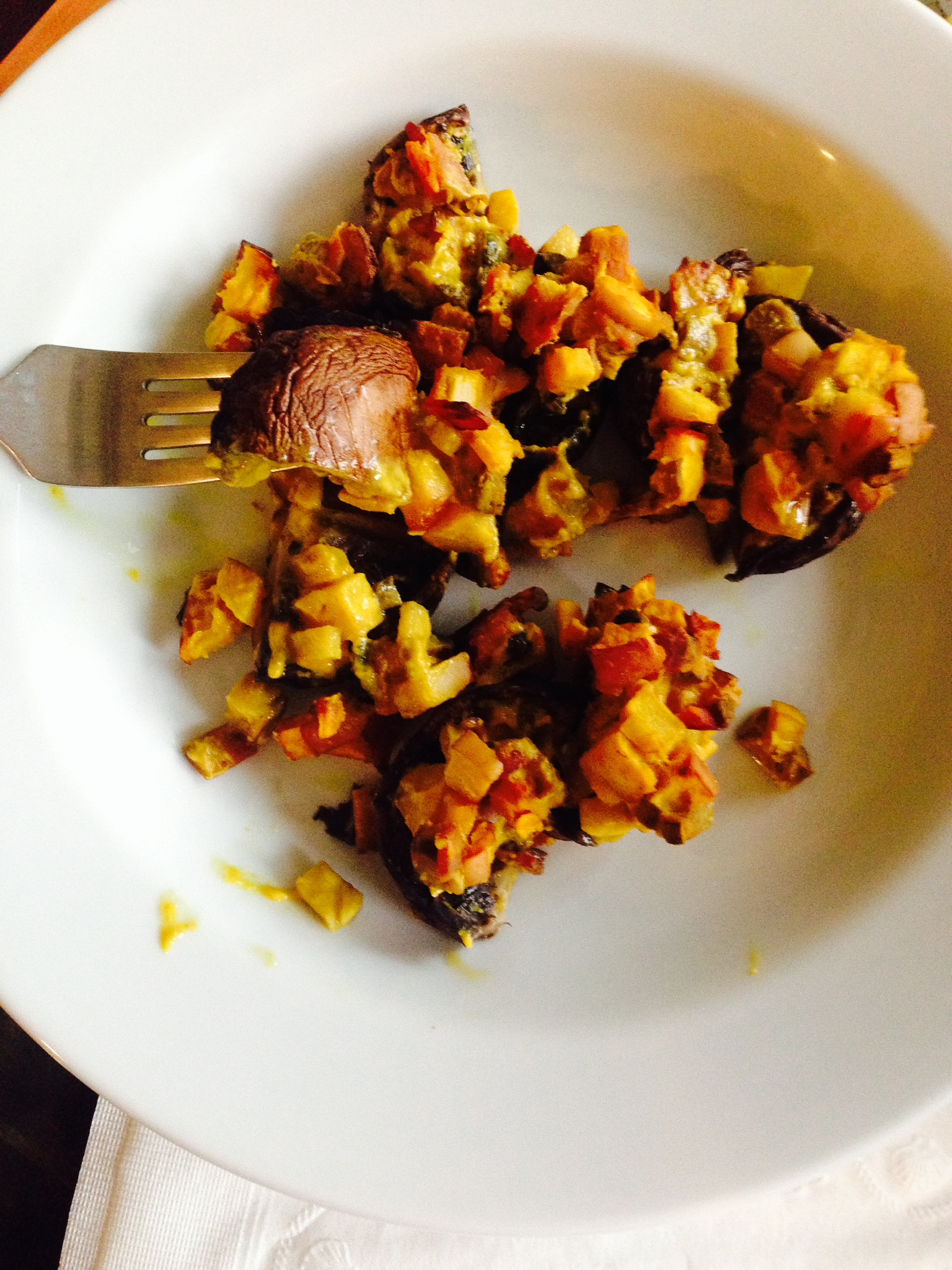
This is the way the mushroom boats looked when Martin's meal started.

This is the way the mushroom boats looked when Martin’s meal started.

Before long the boats became more of a casserole, as I cajoled Martin to eat what were clearly mushrooms.

Before long the boats became more of a casserole, as I cajoled Martin to eat what were clearly mushrooms.

In the GAPS

As assorted posts have mentioned, two months ago I switched Martin’s diet to GAPS. “GAPS” stands for “Gut and Psychology Syndrome” and is the work of a British doctor and nutritionist, Natasha Campbell-McBride.

Dr. Campbell-McBride’s book, Gut and Psychology Syndrome, sets forth how autism (along with dyspraxia, ADD, schizophrenia, and other apparent brain disorders) is symptomatic of a compromised immune system, linked with an imbalance in gut flora. The author suggests healing the gut with a diet comprising fresh foods prepared at home, without grains or sugars or other carbohydrates, and with plentiful meat and/or fish stock. (I’m simplifying.)

It’s been more than three years since we started eliminating foods from Martin’s diet. Since January 2011, Martin has not eaten gluten, casein, soy, corn, refined sugar, processed food, additives, or conventional/GMO food. We also introduced some foods that Martin, a vegan since birth, had never had before: eggs, ghee, honey, and fish oil. After some months we also added meat, which was especially challenging because I’m vegan and Adrian is pescetarian. Other variations along the way in Martin’s recovery diet have included restricting oxalates, temporarily avoiding foods to which Martin showed sensitivities, and trying to eliminate all sugars for one summer.

As of February 2014, Martin was eating meat, eggs, vegetables (including limited amounts of starchy vegetables like sweet potatoes), fermented vegetables, legumes, gluten-free grains like buckwheat and rice, and very little fruit. In puddings and baked goods he had complex sugars like raw honey or raw agave. With very few exceptions, like rice crackers, everything was organic and homemade.

Which is pretty good.

The thing is—Martin’s gut still didn’t seem to be healing. His bowel movements were light-colored and fluffy or flakey, instead of firm, and he had started complaining of stomach pain. Again. I thought we were done with stomach pain.

I decided to take the diet a step further. In the ASD recovery world, there are several diets that people adhere to. The formulations start with gluten-, casein-, and soy-free and branch out from there. Two of the most popular diets are the Specific Carbohydrate Diet, or SCD, and GAPS, which is an adapted variation of SCD. I didn’t have a scientific basis for choosing between GAPS and SCD. (Science doesn’t like me. Science doesn’t want me to understand it.) Some parents love SCD. Some swear by GAPS. Because I already owned Dr. Campbell-McBride’s book and was more familiar with GAPS, I decided to try that route and hope maybe Martin would clear some hurdles to gut health.

For extreme gut distress (ongoing diarrhea, for example), Dr. Campbell-McBride suggests various stages from an “introduction” (almost only bone broth) to “full GAPS” (all the GAPS-compliant foods, still incorporating ample bone broth). Martin was not experiencing extreme distress, just a lack of overall gut health. Therefore, I skipped the introduction stages and put him directly onto full GAPS.

Switching to GAPS meant three primary changes. First, Martin has to stop eating starchy vegetables, cocoa (temporarily), rice crackers and his few other grains, all sweeteners except raw honey, and some lesser-used foods like arrowroot, cannellini beans, and roasted nuts. (Raw nuts are acceptable.) Second, he gets to add a few more fruits, if yeast is under control. (Last month, after the nystatin debacle, Martin started taking Candex, which has been helping balance yeast without the side effects.) Third, he drinks meat stock with every meal. Most weekdays he takes only meat stock for breakfast. I make stock weekly, rotating among chicken, beef, lamb, and whatever other meat/bones I can get.

Which brings us to the million-dollar question: Is it working?

Two months is too little time to make a long-term prediction. (By way of digression, I’m not sure I’ve ever used “two,” “too,” and “to” in a single sentence before now.) Martin’s gut is improving; he’s stopped thrusting his fists into his abdomen and complaining of stomach pain, and his bowel movements have become firmer. On the other hand, I’m yet to see unusual progress in his behavior. He’s been up and down, the same jaggedly positive trend as ever in his recovery. I call it 100 steps forward, and 99 steps back. I remain hopeful, nonetheless, that sealing his gut will soon lead to more behavioral improvements, because he will be better able to absorb his nutrients, supplements, and so forth.

At this time, the two-month mark, I’m giving a tentative thumbs-up to GAPS.

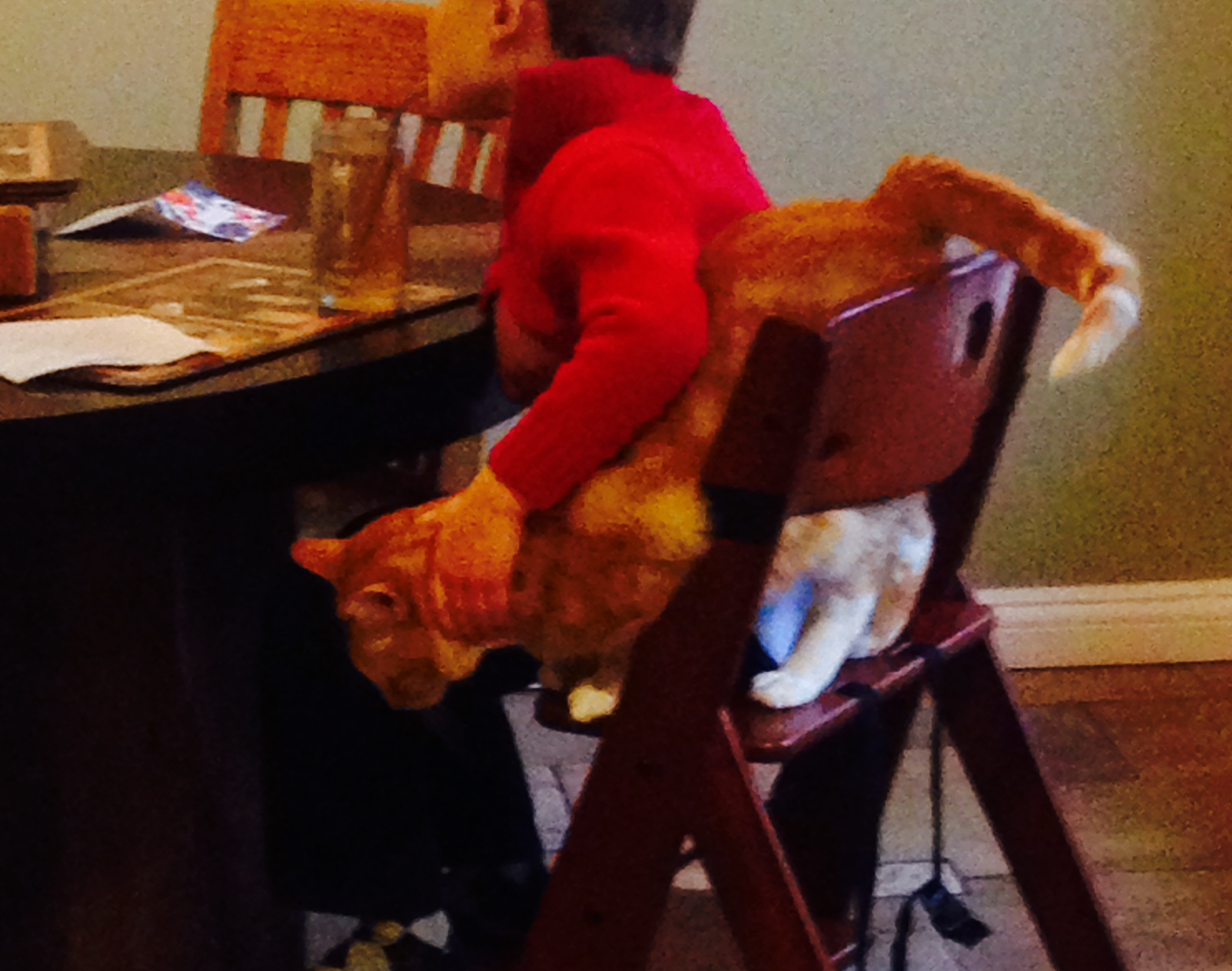
Yes, this is the worst-quality photo ever. Sorry. It's Martin, taking his bone broth for breakfast, "assisted" by our cat George.

Yes, this is the worst-quality photo ever. Sorry. It’s Martin, taking his bone broth for breakfast, “assisted” by our cat George.

More Civility

Last year I took Martin to a friend’s sixth-birthday party. I talked to the birthday boy’s mom in advance and knew they were serving pizza. For Martin I brought homemade GFCFSF pizza and cookies.

I thought Martin would be happy with those choices. With the pizza, he was. I heated it in the hostess’s oven and served it on a party plate, just like the other kids’ pizza. Unfortunately, the situation went south when cake time rolled around. Martin didn’t want just any treat. He wanted the cake. And when he didn’t get cake, he went into meltdown mode.

I might give in to something like a non-organic apple. But I don’t concede gluten-, dairy-, and sugar-laden cake. I picked up my screaming kid and moved to another room, where I held Martin on my lap and tried to calm him with promises of a special cupcake when we got home. (I would gladly have stopped at blessed Babycakes, which sells cupcakes that are free from gluten, dairy, corn, soy, and refined sugar.)

Martin was having none of my peacemaking. He cried and wheezed, inconsolable. At this point, another mother, whom I never had met, entered the room and asked, “What’s the problem?”

“My son is upset because it isn’t a cake he can eat,” I replied.

The stranger came closer and said, directly into my ear, “Just tell him you’re taking his piece home for him to eat there. By the time you get home, he’ll forget about it.”

I had a child on my lap near hyperventilation. This was not the time to explain that I don’t follow lie-now-and-hope-he-forgets approach to parenting. So I replied, “I wish I could, but he remembers everything.”

This woman was not to be deterred, neither by my blow-off attempt nor by Martin’s tears. “What is he, gluten-free?” she asked. “Why don’t you give him some of the ice cream?”

Her voice was loud so I could hear her over the racket, and her tone was sharp so I would know that she didn’t approve of a gluten-free diet.

“It’s harder than that,” I said, trying to sound sheepish so she would leave and let me return my attention to Martin. “He doesn’t eat gluten or dairy or refined sugar.”

I didn’t bother adding soy, corn, starches, most carbohydrates and fruits, non-organic or processed foods, or preservatives to the list of what Martin doesn’t eat. No matter. Apparently gluten, dairy, and refined sugar were enough to earn this stranger’s condemnation. She said, “Oh my God.” Then she rolled her eyes, turned her back to me, and walked away.

So I got what I wanted: She left us alone, letting me return to comforting Martin.

The rudeness I could have done without. Also, the particular phrase she chose, which is offensive to me.

Most of the children attending the birthday party had special needs. Later, after Martin calmed down, I saw this woman with her son. He wore ankle braces and hearing aids, and he engaged in atypical behaviors. Our conversation had been special-needs-parent-to-special-needs-parent, but it sure didn’t feel that way.

What went wrong at the birthday party? First, it was a terrible time to discuss anything. Martin was in full meltdown mode. The stranger could have said, “You have the most intriguing eyes I’ve ever seen, and I would kill for a figure like yours,” and still I probably would have tried to blow her off. Second, she was plainly unwilling to think outside her own box. Really, I don’t even think she wanted to help. She wanted to judge.

Let’s compare to a conversation in which I found myself a few weeks later. This one happened after a meeting of our district’s special-education PTA, when parents were hanging around to mingle. I ended up talking with a woman who introduced herself as the mother of an 11-year-old with Asperger’s. When she asked about Martin, I said that he has made enough progress that I’m not sure whether to say “autism,” “high-functioning autism,” “Asperger’s,” or something else. She asked about what therapies have helped the most. I replied that we do biomedical and homeopathic interventions, and that those, combined with a restricted diet, seem to have made the difference.

We talked some about Martin’s diet. Then the mother said, “I think a lot of so-called autism remedies are snake oil, people trading on hope and desperation.”

I replied that she has a point. Even after years on the biomedical path, I find it hard to distinguish between legitimate interventions and unsupported promises. I try not to let it get me down. I hire and rely on experienced doctors, and I do as much research as I can manage.

The mother asked, “Do you do the dangerous stuff, like chelation?”

I replied that we haven’t chelated yet but plan to; that from what I know, chelation is safe if done properly; and that, in terms of which interventions have relieved autistic symptoms, chelation rates highest in parental reports.

She said, “I hear what you’re saying. But people who say you can treat autism are the same people who say vaccines cause autism. Do you believe that?”

I replied that I think the strict cause-effect narrative has undermined legitimate debate about vaccines. Everyone knows that vaccines are dangerous for a child with a compromised immune system—that’s why parents are told not to bring a child for shots when she has, for example, a cold or an infection, and why a child undergoing chemotherapy cannot be vaccinated. Autism, I said, is the symptoms of an underlying immune disorder, often with a genetic component. The immune disorder may exist before the symptoms manifest. If a child is asymptomatic, his parents and doctors may not recognize the immuno-problems, and they may therefore go ahead and vaccinate. The vaccine, in turn, causes the already compromised immune system to go haywire, and then the symptoms manifest. In such a scenario, the vaccine didn’t “cause” the autism, but it did exacerbate the pre-existing immune disorder and cause the symptoms (i.e., the autism) to appear.

The Asperger’s mother listened to my entire monologue. When I finished, she boosted my ego a little by saying, “You know, you’re the first person who’s ever told me about a link between autism and vaccines without sounding insane.”

We talked for 20 or 30 minutes, this mother and I. Don’t worry! It wasn’t all me rambling on. She knew tons about navigating the special-education system, and I grilled her for tips. We ended up exchanging numbers and thanking each other for the shared insight.

Did I convince this mother to begin biomed with her 11-year-old? Probably not. Did we have a positive interaction? Definitely. Unlike at the birthday party, the special-education PTA event was the right time to discuss helping our children, and the mother I met was curious and open-minded.

Civility is out there.

Even if it doesn’t always seem that way.