Year 2014 in Review

A year ago, I woke up on New Year’s morning with the conviction that 2014 would be a banner year in Martin’s recovery.

It’s time for a look back at 2014.

Martin and a boy he played with on the beach, Florida Keys, New Year's 2014.

Martin and a boy he played with on the beach, Florida Keys, New Year’s 2014.

We started several interventions to which, for a change, Martin plainly seemed to respond. (I write “for a change” because these were some of the few times when I was able to isolate particular interventions that helped. More often, it’s just something in “the whole package.”) When I posted in late July about five treatments that were “working now,” I also posted my frustration in jumping to conclusions based on initial positive results. I’m going to report now that at least two of those five “what’s working now” treatments, six months later, still are kicking autism’s butt: camel milk and Candex. Martin’s language took off immediately following the introduction of camel milk, and it hasn’t stopped since. Did you Tuesday’s post about the conversationalist? How cool was that? As for the Candex, Martin still has yeast flares. (I’ve come to accept that candida overgrowth may be a battle we fight for many years. Therein may lie our war.) Since we started using Candex, however, those flares have been milder and of shorter duration. They’ve been manageable.

Martin with his cousin Mandy in the snow, February 2014.

Martin with his cousin Mandy in the snow, February 2014.

And the other three “working now” treatments, the GAPS diet, Enhansa™, and MitoSpectra? We are still on all three. I modified the GAPS diet by adding quinoa and reducing Martin’s meat consumption to one meal per day. (The reduction of meat isn’t particularly a “modification,” I suppose, though it felt that way.) I think Martin’s gut health is better than ever, though I wish he weren’t still prone to yeast flares. As to Enhansa, Martin’s chronic inflammation appears to have eased; I can’t say whether the Enhansa is responsible, or general improvement in gut health. I may stop the Enhansa, as an experiment, and see what happens. I plan to keep the MitoSpectra, for the time being. I reduced Martin’s dosage when a blood test revealed high levels of carnatine, and I feel like I could be doing more for his mitochondrial functioning (hence the quinoa). I’m keeping the MitoSpectra because I haven’t yet discovered that next best thing.
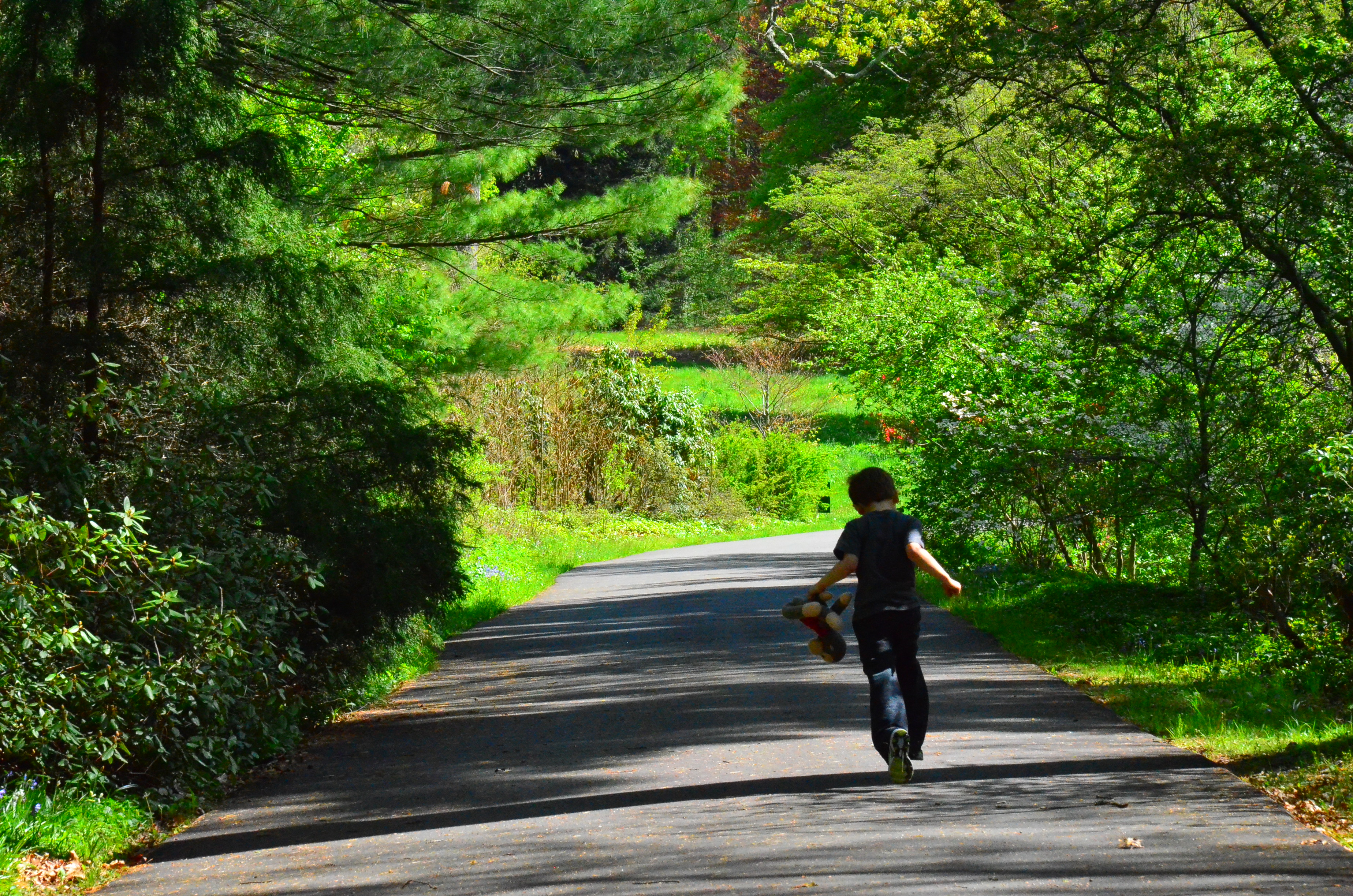
Martin at Planting Fields Arboretum State Historic Park, Oyster Bay, New York, Spring 2014.

Martin at Planting Fields Arboretum State Historic Park, Oyster Bay, New York, Spring 2014.

In the second half of the year, after my “What’s Working Now” post, we started vision(-ish) therapy with Dr. Deborah Zelinsky; Heilkunst homeopathy with Rudi Verspoor; and a weekly facilitated social group with local kids. So far, I give all three a big thumbs up. We are in another period when “things are going well” but I’m not totally sure why. I may be observing a slight uptick in Martin’s eye contact and attention span. I’ll give that development to Dr. Zelinsky. Martin had a fever and apparent healing reaction over the Christmas break. That goes to the Heilkunst. As for the social group, that’s a confidence-builder. Martin is happy to have friends of his own. Last week, for the first time, he asked to bring a game that everyone could play—the lovely wildlife bingo set his uncle Eddie gave him.

Martin rock climbing at a birthday party, July 2014.

Martin rock climbing at a birthday party, July 2014.

Did I make mistakes in 2014? Of course I did. I think the straight-up GAPS diet had too few carbs to meet Martin’s mitochondrial needs. I know there is debate on this point. For my child, I should have known; way back in 2011, when we first went grain-free, Martin showed signs of mild ketoacidosis, and we had to add a few gluten-free grains back in. This time around, I should have guessed that he would need more carbs than GAPS allows.
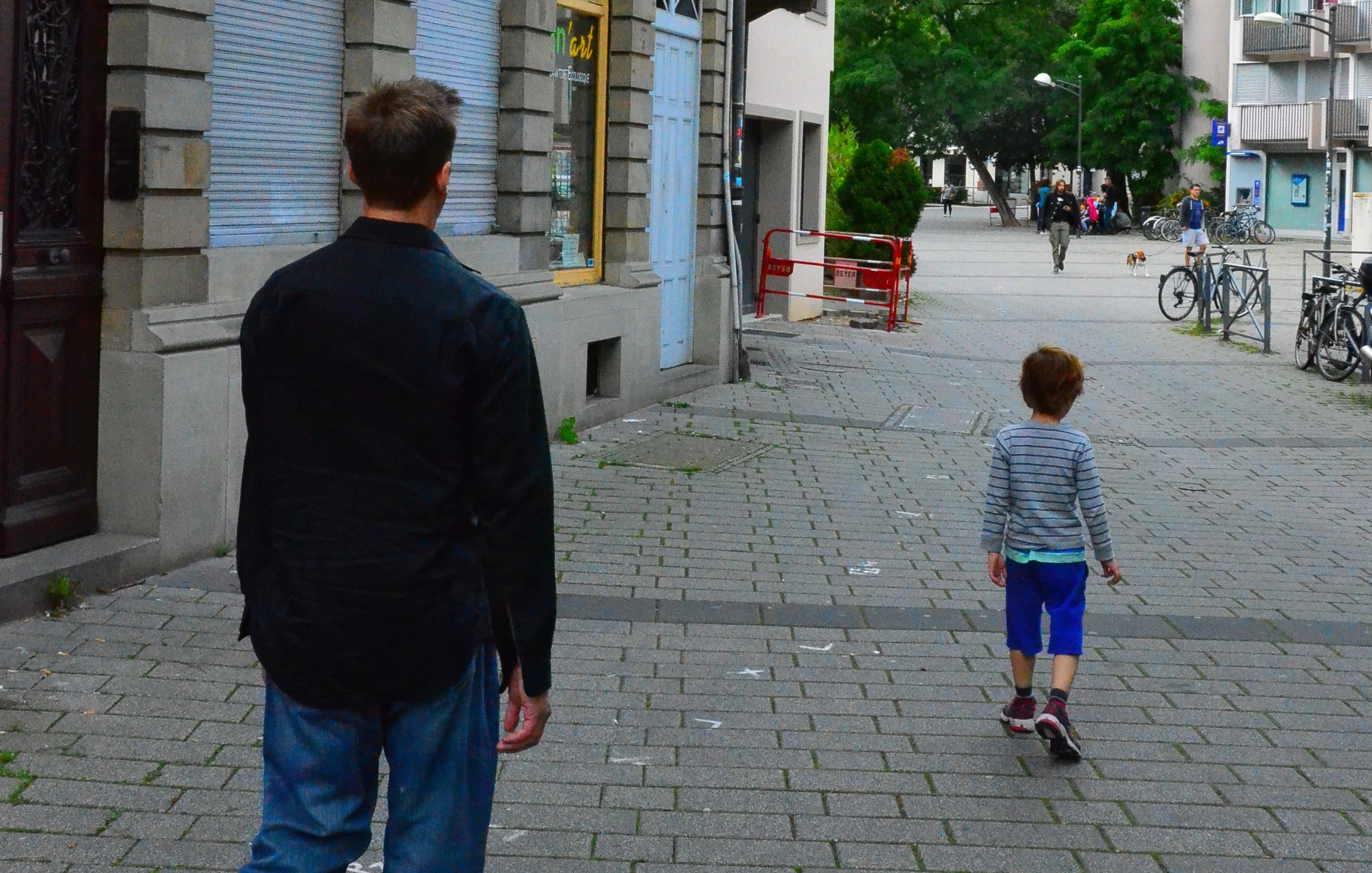
Martin with his uncle Rudy, Strasbourg, France, August 2014.

Martin with his uncle Rudy, Strasbourg, France, August 2014.

I rushed treatments. The mother who launched our biomedical journey cautioned me against the urge to do everything at once. Nevertheless, when I find an intervention that excites me, I might move too quickly. Even today, four years into Martin’s recovery, I’m prone to that amateur mistake. Other times, I just fail to pay attention and mistakenly start two treatments together. C’est la vie.

Martin looking over St. Bartholomá church, on the Königsee, Berchtesgadan, Germany, August 2014.

Martin looking over St. Bartholomá church, on the Königsee, Berchtesgadan, Germany, August 2014.

Despite my tendency to rush, though, I think honestly I can peg 2014 as the year when I internalized “marathon not sprint.” Sure, for years now I’ve parroted the mantra. Autism recovery is a marathon, not a sprint. Autism recovery is a marathon, not a sprint. But what kind of marathon did I really envision? In my “banner year” post, last January, I wrote, “I now understand ‘the long haul,’” and “I no longer fear that some mythical window will close while Martin is five . . ., or seven, or any age.” Even after I wrote that, however, the notions took some time to sink in. It wasn’t until November, when I wrote the “Journey” post, that I finally abandoned the idea that this process will have an end date. Striving for better health may well be a perennial task, one that Martin needs to continue even after he becomes responsible for his own care. Autism recovery is not a sprint. It isn’t even a marathon. Autism recovery is a lifestyle.
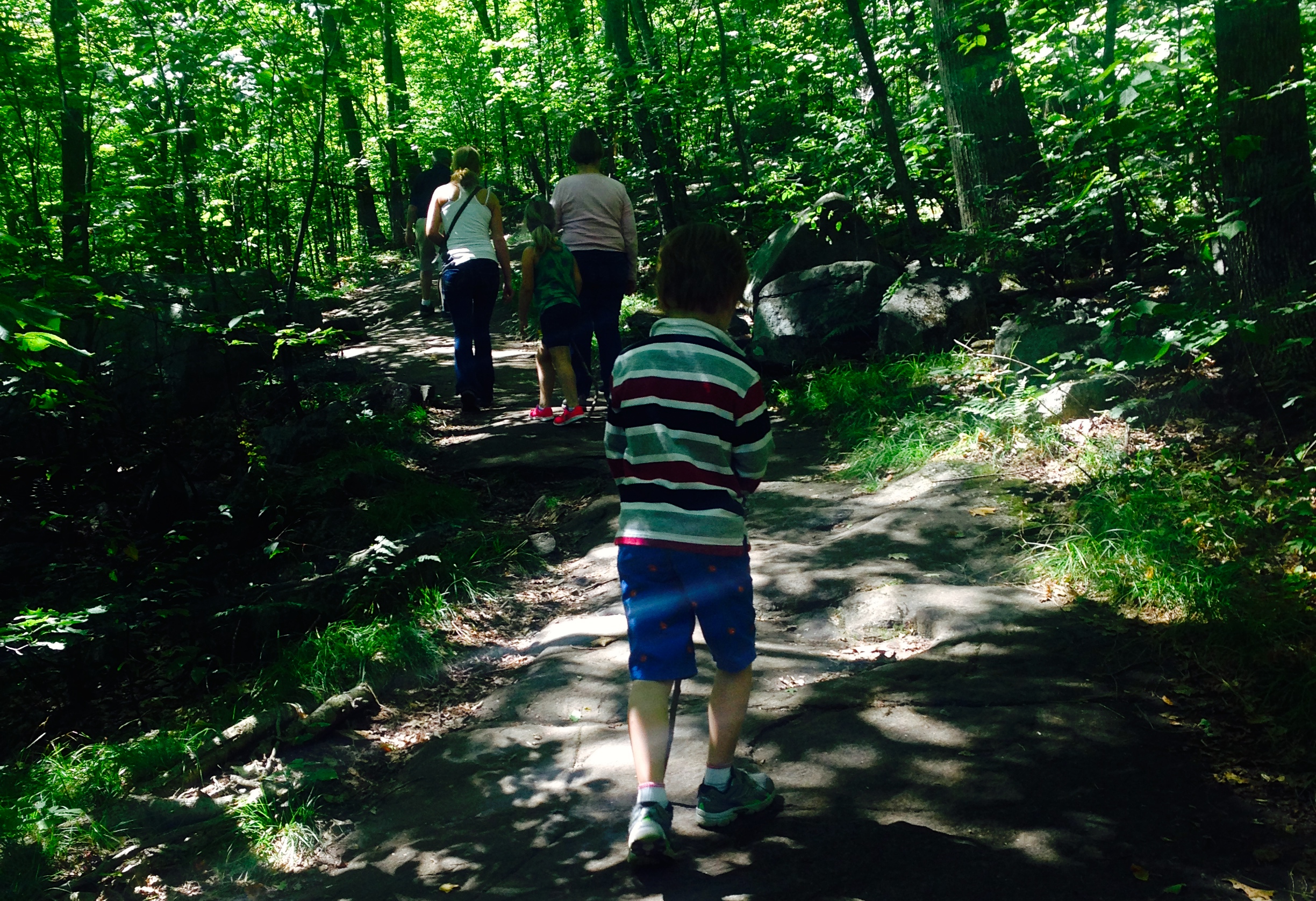
Martin hiking in the Adirondack mountains, near the Great Sacandaga Lake, August 2014.

Martin hiking in the Adirondack mountains, near the Great Sacandaga Lake, August 2014.

Behavior-wise, in 2014 Martin took new interest in socializing with other kids. Although he still isolates himself when he becomes overwhelmed, for the most part he wants to be near his friends, even if just to play side-by-side on iPads. Late in the year, Martin also (finally) made progress on nighttime potty training. He wakes now when he needs the potty, and yells for me. “Thanks, kid.” Language-wise, in 2014—well, wow. Martin has been asking “why” questions (like, gazillions of why questions) for a long time now; in 2014, he started answering them, coherently. He’s become conversational, staying on point for multiple exchanges. He can talk on the phone. This afternoon he’s going to call Uncle Eddie and wish him happy birthday! And the perseveration has decreased. Did I mention that the perseveration has decreased? Yeah, the perseveration has decreased. Such a relief.

Martin, on the left, with his cousin Luke, in the Florida Keys, New Year's 2015.

Martin, on the left, with his cousin Luke, in the Florida Keys, New Year’s 2015.

I am pleased to conclude that 2014 was a banner year in Martin’s recovery. All signs point to significant improvement in health, and corresponding changes in behavior.

May it be one banner year among many.


Unexceptional

We’re vacationing in the paradisiacal Florida Keys, these land slivers with Atlantic to the east and Gulf to the west. I’m writing on our villa’s back deck, just before dawn. My feet are up, and just beyond my toes lie a narrow boardwalk and harbor access. I can barely discern the shadows of a dozen boats docked nearby, and only by the occasional honk of waterfowl breaks the crepuscular still.

Perfect, right?

No. So far, four days in, it hasn’t been much of a vacation for me or for Martin. Just like on Christmas day, he’s been sick, sick, sick. Last Friday, the day after Christmas, he remained sick but appeared to be on the mend. Friday night wasn’t great; the coughing and runny nose kept him up. Saturday morning, though, he sprang from bed and danced about, singing that we were going to Florida, and so we decided that he was well enough to get on the airplane. Indeed, Saturday ran smoothly. The biggest challenge came when we stopped at a friend’s house in Miami. Adrian’s father and niece and nephew, who are joining us on this trip, were already at the friend’s house, swimming. Martin had a monumental meltdown when Adrian said he couldn’t swim.

Saturday night Martin fell asleep with one of his cousins. Before midnight I carried him from that bed because his coughing and fretting were keeping her awake. Martin spent the rest of the night in my and Adrian’s bed, his coughing and fretting keeping us awake. Sunday, Martin participated in vacation activities listlessly until finally, before dinner, he fell asleep on the sofa and we moved him back to my and Adrian’s bed. Monday, Adrian took his father and niece and nephew to Key West. Although I love Key West, I stayed behind with Martin and spent the day coordinating. I spoke repeatedly with his pediatrician and his MAPS doctor back home, communicated on-line with his homeopath, did some research of my own, found a pediatrician here to visit, went to a pharmacy for prescription medication, went to a health-food store for holistic remedies, returned to the pharmacy for a different prescription, and all the while pampered Martin.

The verdict? Martin has a bad cold and middle-ear infections on both side. His chest, thank goodness, is clear.

Last night, Tuesday night, Martin slept through the night, albeit tossing about. I was not so lucky. In the course of nursing Martin, I picked up his bad cold, and despite multiple doses of “nighttime” cold syrup, I spent the night awake, clearing my nose. Around 5:30 am, worried that I would wake Adrian and Martin (who is still bedding with us), I gave up and came out here to write.

What this whole saga stirs in me is the thought of how non-traditional my parenting experience has been. Readers who’ve been with this blog a long time know that Martin didn’t used to get sick. From age one until age three-and-a-half, there was virtually no illness. No stuffy noses. No stomach bugs. No ear aches. No fevers. When he finally did get a fever, eight months or so after we started biomed, we weren’t even sure what to do.

Times are changing. If I’m remembering correctly, this is the fourth time Martin’s been sick, and the second ear infection he’s had, in 2014. The first time he had an ear infection—“Any idea why my son might be waking with his hand over his ear and howling?” I asked an on-line parenting forum (duh!)—Adrian said, “Poor little guy. I used to get ear infections all the time. They’re so painful.” That’s right. Young kids get ear infections. They get stuffy noses. They need fevers. Their illnesses are supposed to disrupt plans, even vacations, from time to time, right? That’s how an immune system develops. Martin’s inability, all that time, to mount an immune response, was atypical.

My only child has an autism spectrum disorder. So many facets of traditional American parenting don’t apply to me. Martin doesn’t attend the local school, or the local day camp. He doesn’t play on the soccer team, or beg to go to Chuck E. Cheese’s, or want a video-game console for Christmas. He doesn’t eat French fries or junk food. He doesn’t, or didn’t, even get sick. Sometimes I find few points of connection between me and parents of NT six-year-olds, and even as Martin becomes more typical, there are facets of childhood we have lost irretrievably.

Perhaps the flipside is joy in unexpected places. How many parents can be happy when a fever gets in the way of vacation? Or when their kids act naturally bratty? Our culture is built upon the drive for exceptionalism. I’ve spent my life trying to be exceptional. Having an exceptional parenting journey thrust upon me has done a lot to temper that drive. Today, in many ways, I’m fighting for an unexceptional life.

Strange, this path.

For Diana

Last week, in response to my “Journey” post, I received this comment:

I read your blog from time to time. We have had a few exchanges, where I argued against the idea of “recovery” and said we just need to support our kids to be successful. You said you thought that was mincing words and we both want the same things. I’m really glad to read that Martin is doing well and progressing. I’m sad to hear you are still trying to “recover” him. Some day he may read what you have written. And he will want to tell you that he wasn’t lost, just different. Keep helping him, of course, but maybe this holiday season there is a moment to see that he is not lost? It is a big job, I know, but it is tough on a kid when “fixing” him becomes his mother’s project. That is a lot to put on you both. I wish you well.

The comment comes from a woman I’ll call “Diana.” I don’t know her, except insofar as she is also a lawyer in the New York City area (that’s what I am), and insofar as she has a son with Asperger Syndrome, who I believe must be 10 or 11 years old now. Diana and I exchanged some comments on this blog in April and May 2012, and again in January 2013; we were respectful of each other’s positions on handling autism, and as is evident in the comment I’ve pasted above, she continues to be positive and respectful. I appreciate that, and I thought that, rather than tuck my response into the less-read comments, I would post it front and center.

Diana, this is for you—

Two and a half years ago, you wrote to me skeptical of the concept of ASD recovery. About your son, you said, “I want him to be proud of who he is and how he is. It is a hard balancing act, because I also want to improve his social skills and give him the most options, so to some extent I am working always to decrease how his ASD presents.” When I engaged you in discussion, you elaborated:

I do remain skeptical of recovery as a concept, but how to approach treatment is up to each parent and there are no clear answers. But the larger question, I guess, is that I don’t want to return my son to full neurotypicality because I don’t see him as having been in a certain place and then having regressed or changed. I don’t perceive an assault on who he is by ASD.

Eight months after that comment, in response to a post I wrote about Adam Lanza, the Newtown gunman, you said this:

. . . I don’t understand how the language and idea of ‘cure’ and ‘recovery’ is consistent with teaching our kids to love and accept themselves as they are. I don’t doubt your sincerity. But for me, I want to help my kid but not cure him. I really think autism is a big part of who he is. For me, lots of therapies are great and work well—but they are seeking to assist and not to fundamentally alter my kid. I like my son autistic and I like other family members of mine autistic. I would encourage you to check out grasp.org and watch the video there—it is a very smart introduction to how functioning autistic adults feel about this question. If we want our kids to be happy adults, I think we need to listen to these adult voices first and foremost. My hopes are the same as yours and I know we are all just trying to do the best by our kids.

We are all trying to do the best by our kids. I believe that, and I appreciate your recognizing and acknowledging it. Still, to be honest, I don’t think, at least not now, that we are undertaking the same goal and just mincing words. Our hopes are not the same: You hope to raise an autistic son whose behaviors are typical enough that he can function in society. I hope to raise a son who has no trouble functioning in society because he is typical.

Autism spectrum disorders do not just happen. They are not random behavioral conditions. Autism is not an individualized Weltanschauung, like the way my brother Eddie is super laid-back and my friend Stacey is Type A. Autism spectrum disorders are the manifest symptoms of health problems, most usually compromised immune function. We continue to debate the extent to which these health issues result more from genetics (MTHFR mutations, &c.), or more from environmental triggers (vaccines, GMO’s, toxins like synthetic chemicals, &c.). What is no longer up for debate, unless you ignore all current science, is that if your child has an autism spectrum disorder, he has some combination of underlying conditions affecting his health, and those conditions are resulting in neural misfires.

Your approach—and I invite correction if I am wrong—seems to leave the health conditions that result in Asperger’s uninvestigated and untreated. Instead, you rely on behavioral therapies “to improve his social skills and give him the most options,” because you are “working always to decrease how his ASD presents.”

You “remain skeptical of recovery as a concept.” I will say that I, personally, within my own circle, know three boys, ages 19, 15, and 12, who have recovered from autism. These are not children whom I have “heard of” or “read about.” They are boys whom I know. I can, and do, talk to them and their parents. Each of the three was diagnosed with autism, from mild to moderate, at age two. They recovered fully, by their parents’ estimation, at ages 8, 12, and six. They are not “quirky.” They no longer have rough edges or trouble with social skills. They are, for every purpose I can see, restored to typical neurofunctioning. They reached this point because their families treated their underlying health conditions, as I am doing with Martin. I know that every child is a puzzle, that not every child who is treated biomedically will recover (at least not with what we know today), and that Martin’s “autism” symptoms may, to whatever extent, persist his whole life. But if you need to know what “recovery as a concept” means, it means this: restoring a child’s immune function and overall health, which in turn alleviates autistic behaviors symptomatic of compromised health.

You “like [your] son autistic and … like other family members of [yours] autistic.” I adore my child. I will adore him whoever he is and however he behaves, a fact that I impart to him daily. But I do not “like” his being autistic, because his being autistic means his health is compromised. If I were to learn today that no biomedical intervention would ever change Martin’s behavior in any way, I would still continue with his special diet and homeopathy and supplements because I want to restore his health. I cannot think of another condition that I would leave untreated, so why would I stop treating his gut-flora imbalance, candida overgrowth, or mitochondrial processing disorder?

You encourage me to consider the experience of autistic adults when determining what course to pursue with Martin. I do. I have read at length about how demoralizing traditional behavioral therapies can be for persons with autism, about how ABA can frustrate and even humiliate its subjects. (Not all ABA. Some practitioners who begin with ABA and find their way to a gentle approach.) I referred above to a 15-year-old I know who reached recovery around age 12. His mother reduced his behavioral therapies after he protested, “Mom, they want to change everything about me!” By contrast, the family continued and even increased biomedical treatment, which by the end of his recovery process, the boy was requesting because of the way it made him feel better.

When Martin asks about why he cannot eat Goldfish® crackers, I explain, “Oh my goodness! If you eat those crackers, you will get those funny poopies, and the ingredients will make it hard to pay attention in school. Remember how that happens sometimes?” The culprits in this equation are the processed crackers, and how they affect Martin inside. When your son asks why you want to “improve his social skills” and “decrease how his ASD presents,” how can you respond? Is the culprit crackers and firm bowel movements, or does the culprit seem like him?

Martin does not know he has autism. He has never heard that diagnosis. He knows that he eats a restricted diet because some foods “hurt his belly” or “make his tummy do funny things.” He knows that the drops and supplements he takes are like Mommy’s vitamins and probiotics, a good idea for almost anyone. We don’t do traditional behavioral therapies. I have found that most traditional therapies—ABA, speech, even to some extent occupational and physical therapy—come with the theme, “Don’t [sit, rock, behave, chant, stim, &c.] that way. That is unacceptable. Try to fit in.” I don’t want Martin to hear that he needs “some work around the edges” (your phrase, from a comment on 23 April 2012). Martin’s behavior isn’t what needs work. His behavior naturally adjusts as his health improves.

(Note: Martin receives traditional OT and PT at school, because they are on his IEP. In that regard, I am grateful that he attends a self-contained special education school, where every student participates in OT and PT, so that they seem like a standard part of the curriculum rather than something directed at changing Martin.)

At your request, I checked out grasp.org; it presents testimonies similar to others I have read, from autistic teens and adults. In return, let me point you toward stories like What Is My Mother Doing to Me?, which was written by a 14-year-old in gratitude for his recovery. I hope that Martin will not have to tell anyone what it is like to be an autistic adult, because he will never know. And if he reaches neurotypicality, I don’t think either of us will regret the result. As I have written before, in all my experience communicating and working with other ASD families, I am yet to hear from anyone who regained his/her health biomedically and subsequently says, “I wish we hadn’t done this. I prefer being autistic to being neurotypical.” (My sample size is not restricted to the three aforementioned recovered boys whom I know personally. I know of dozens of recovered persons, on-line or otherwise.)

You seem to worry that Martin will one day read what I write on my blog. To that I say, he’d better. In part, I write this blog for Martin. I don’t think he is “lost” or that his personhood needs “fixing.” I’m not sure why you use those words. Two weeks ago, when I got socked with a virus and ended up in the hospital, I wasn’t “lost” (except maybe insofar as I passed in and out of consciousness…!). My immune system needed help fighting a health condition, and when I received that help, I recovered. My son’s immune system needs help. I’m struggling to give him that help. I look forward to the day when he understands what I’ve written here, when he receives confirmation that he is so precious and so loved that Adrian and I would scour every corner of God’s green earth to give him every advantage we can.

So that’s it. Your and my disagreement lies in whether it is preferable to treat the health conditions that underlie autism, and let the behavior do as it will, or whether it is preferable to leave the health problems untreated and try to “smooth” the resulting behavior. I’ve phrased the question in a biased way, of course. I’ve done so because I believe it is preferable to treat “autism” biomedically. You take a different approach, and that is fine. We’re cool. I don’t have all the answers.

I do hope you’ll stick with the blog, though, and continue to comment. I feel invested in your son and your journey. I pray that it leads you both to a place of contentment.

Martin in action at the trampoline gymnasium. Not lost. Just getting healthier.

Martin in action at the trampoline gymnasium. Not lost. Just getting healthier.

Journey

When we first started recovering Martin, I envisioned an end date. I’ve written on the topic, that is, “How will I know when we’re done?” Four years ago I thought we might be “there” by kindergarten or first grade; the mother who got me started on this journey pretty much recovered her son by age six. That seemed doable. (Martin is six now, in first grade, and far along but nowhere near typical.)

This year, in conversation with parents whose kids are, for all intents and purposes, recovered or very nearly indistinguishable from typically developing peers, my understanding of this path has changed. I don’t think there will be an end date.

This is not to say that I don’t think Martin will recover. I do. This year Martin’s language and social skills have come so far—almost daily, neurotypicality feels achievable.

I foresee a time when Martin will leave self-contained special education for a mainstream classroom. I foresee a time when physical therapy and occupational therapy and speech therapy will no longer be offered to him. I foresee a time when he will make friends without a parent-engineered play group. Little by little, these needs that Martin has will fall away.

Yet there will be more to do. Martin has lost a significant portion of childhood to autism, and he will always need to catch up in some regard. Moreover, the damage to Martin’s immune system is likely to affect his health even after the biggest strikes are resolved. What I do for Martin may naturally shift behind the scenes as he ages and heals. That doesn’t mean I won’t stop working.

As of today, I see recovering Martin as a permanent part of my parenting journey. It’s like dividing a number half by half by half. You never reach zero, but you get infinitesimally close. Even when Martin is 0.0000000001% away from typical (and therefore more “typical” than most any kid?), I’ll still be lurking around, trying to keep him healthy, giving him what he needs to become the man he was born to be.

Every parent’s adventure is different, and I guess this is mine.

Picture Shock

My laptop’s “sleep” mode is set to play a rotating photo montage. We got our first digital camera to take baby pictures (kitten pictures?) of our cat Levi, early in 2004, which was 11 years ago and, you realize, also one million years ago. That was the advent of digital photography in my and Adrian’s life. The thousands of photos stored in my laptop have been taken over the past decade or so, including during Martin’s childhood before autism.

When I take a two-minute break from working and return to find pre-autism Martin on the screen, my first feeling is usually sadness. My son at twelve months, fourteen months, sixteen months, looks directly at the camera and smiles naturally. He shows us what he’s doing. In one beautiful photo, he’s lifted high on Adrian’s right arm as both of them point toward me, the photographer. Within six months of that photo, Martin got lost in himself. His eye contact, pointing, and connectedness disappeared. He stopped meeting milestones for social development. The repetitive behaviors began.

I try to use the sadness from seeing those photos and turn it to resolve. Slowly, Martin is returning. By now he points again. His eye contact is not as sustained as it should be, but it’s there. He wants to connect, not only with me and Adrian, but with peers. We have come a long way.

Yet we still have to far to go. When I think about that, I become angry—angry at all we have to do to reclaim that easygoing little boy, anger at a toxic world that stole him.

Maybe I should change my laptop’s sleep setting. But no. There’s no use in avoiding reality.

TWIFU

TIFU. Know what it means? Click here (at your own peril) if you don’t.

Now take the T (“today”) and substitute TW (“this week”), because the events I’m about to describe happened on Monday.

In yesterday’s post I talked about starting Heilkunst. Martin’s first two clears arrived last week. I waited to start them, because I hadn’t had time to peruse the instructions for the clears, or to revise Martin’s daily supplementation sheets to include the clears and the accompanying drainage formula. Monday I had the time, got everything prepared, and decided to start Martin’s first clear.

By Monday we also had been waiting more than a week, since our visit to Dr. Zelinsky, for Martin’s new glasses to arrive. Martin, with characteristic precision and fierceness, had said he wanted his glasses to arrive “on Saturday, November 1 and no other day!” They didn’t. So when the glasses finally appeared on Monday, November 3, I was eager to present them to Martin and let him start wearing them.

Here’s what happened after the school bus dropped Martin off Monday afternoon:

3:50 pm. Martin put on glasses for the first time, agreed to wear them generally.

3:50-4:20 pm. Martin played, read, and drew pictures, wearing glasses. He took his afternoon supplements.

4:20-6:20 pm. We went to social-skills group. Martin wore glasses. On the way, he drank his camel milk. The group leader reported that Martin had a great session and participated well.

6:30 pm. Driving home from social-skills group, we pulled into Stop & Shop for Martin to pick out his own Lärabar®. Even though we have Lärabars at home, Martin takes great pleasure in going to the store and choosing one. (No doubt he also likes that Stop & Shop stocks “cherry pie” and “pecan pie” flavors, which I don’t keep at home.) Martin, glasses on, seemed energized, if not decisive. He ran back and forth between the standard Lärabar display and a temporary rack of “seasonal” flavors like “pumpkin pie” and “gingerbread.”

7:00-7:30 pm. Martin sat at the dinner table. His dinner was bone broth and pasta with squash and cauliflower. While Martin sipped his broth, I assembled and administered his evening supplements, including for the first time the Heilkunst drainage drop and a Heilkunst clear. He took them without issue.

7:30-7:45 pm. Although Martin loves pasta, after just a bite or two he pushed the pasta bowl aside and said he wanted to finish only his soup, which he did. He also requested dessert and ate a small piece of chocolate. Then he said he didn’t want to wear his glasses anymore, didn’t want to take a bath, and was going to get ready for bed.

8:00 pm. In his room, teeth brushed, pajama-clad, without glasses, Martin scrunched himself into froggy position on the floor and said his belly hurt. Did he need to return to the potty? I asked. Could I get him a drink of water? Would he like more soup? No, no, no, Martin answered. He climbed into bed and asked me to read him a story.

8:20 pm. Martin was in bed, lights out. From the kitchen, I heard him calling me. I walked down the hall to his doorway. “Mommy, my tummy hurts,” he said and smacked his lips. I realized what probably was coming and started toward his bed. Too late. Within seconds, Martin, his pillow, his sheets and blanket, several stuffed animals, and a small part of the mattress were splashed with vomit. In the mess I saw several undigested supplements, along with the few bits of pasta he’d eaten.

Martin almost never pukes. I think it’s happened maybe two or three times in his life.

And I didn’t know what caused it Monday. That was the TWIFU. I know that I should separate new supplements, treatments, therapies, and even vitamins by at least two-to-three days, in order to pinpoint the cause of any reactions. I know that. What did I do Monday? Without a second thought, I let Martin wear new glasses for several hours and started the Heilkunst. When he reacted, when he puked all over poor Curious George, I couldn’t isolate the cause. Was wearing glasses too much stimulation for Martin’s brain stem? Did he get dizzy? Or did the first Heilkunst clear cause his body to reject something? How could I tell?

I’ve been working at Martin’s recovery for four years. You’d think by now I’d have a clue.

P.S. Because of my carelessness, I had to undertake some additional investigation. By the time I finished cleaning Martin, washing linens, and doing my best with the mattress and pillow, it was late evening. (Admittedly, I would have been awake anyway. The Rangers went to a shoot-out.) I didn’t want to bother Dr. Zelinsky or Rudi Verspoor at that hour. Instead, I texted with another Dr. Z mom I know and posted an inquiry in a Heilkunst group on-line, which generated immediate responses. By the time I went to bed, I was 90% confident that the vomiting was unrelated to the new glasses and instead was a proper reaction to the first clear, which was a clear for the coxsackie virus Martin had two years ago. I was even more confident when Martin woke the next morning with a slight rash on his hands, a much lighter version of how he’d looked during the virus. Still, I can’t be 99.99% confident, and that bothers me.

Conformity

When this blog picks up a new follower, I receive an email informing me, and a link to the person’s profile, or own blog. Usually, I take a look. I’m interested to see who’s interested in Martin. Among the followers are fellow special-needs parents, foodies or Paleo-types who I assume like the recipes, “inspirational” folks, and generic bloggers who (I think) follow bajillions of blogs, hoping to procure reciprocal followers.

I also find that this blog is being followed, increasingly, by readers who self-identify as persons on the autism spectrum. I feel honored to have these followers, and I want to find a way to explain that, although my family is working hard to recover Martin from autism, it is not because anything is “wrong” with Martin, or wrong with living with autism. Unfortunately, I’m not talented enough to do that explanation justice; the issue is so delicate, and complex. So instead, I wrote this post—

Last week I encountered a new member at my CrossFit box, in the 8:30 am WOD frequented by parents who have put their children on school buses and are fitting in a workout before heading to employment. The new member was about my age and dressed in exercise leggings, a sport bra, and a tank top. The same way I was dressed. The same way at least two other women were dressed. The new member and I chatted and ended up walking together to the parking lot, where we discovered that our cars were parked next to each other. The same car, except hers is white and mine is gray. We both drive the European SUV model owned by, as far as I can tell, about 10% of the families in our suburban enclave.

Gosh, I thought as I climbed into my standard-issue vehicle, just how much of a conformist have I become? Here we live in a pleasant suburban area, where I stay at home (working some, though!) while my husband commutes to Manhattan. Our yard and garden are landscaped just like all the other houses, with similar plants in a similarly lush but uncluttered configuration. Like our neighbors, we change our front-door wreath by season: We display cranberries for winter, white flowers in summer, orange berries for “harvest season,” pinecones at Christmas. We fly our flag on the Fourth of July, have jack-o’-lanterns on the stoop right now, and will set out a ceramic snow elf after Thanksgiving. Martin and I attend one of the five local churches. Our family shops at the nearest Whole Foods Market, shows up for fairs and events, runs into neighbors at the pubs and restaurants. Through our actions, we have proclaimed ourselves just like everyone else.

The autism universe includes many people who argue against “changing” an ASD child and instead support some form of “neurodiversity,” in which relating to the world in an autistic way is accepted equally with relating to the world in a more neurotypical way. For example, a group called Aspies for Freedom advocates against most behavioral treatments, and all biomedical interventions, for children on the spectrum. The group, according to a blog post in its name, states, “Autism isn’t a tragedy, or a side-effect of genius—it’s a difference to be valued,” and stands against the “idea that being neorotypical (i.e. not autistic, or another psychological neurotype) is ‘better’ than being autistic.”

As I’ve written, I don’t share the view that encouraging acceptance of all persons means we shouldn’t try to heal the autistic child. The best way I’ve got to explain it is this: There are many ways in which I conform to a suburban-mom lifestyle. There are also ways in which I choose not to conform. I’m vegan. I don’t drive that European SUV around town if I can walk or bike instead. The landscaped lawn and plant beds around our house? Maintained by an organic gardener; we pay a premium to avoid the chemicals our neighbors use. When Adrian and I were buying a house, we chose our town, and not the neighboring village, because we value socioeconomic diversity more than having neighbors like our family. In these ways, I allow myself to be an exception.

And then there is at least one way in which, apart from any choice I make, I cannot conform. That’s autism. Because of autism, my son does not attend the local elementary school, does not play in the Saturday morning soccer league, and spends his free time in therapeutic settings.

So there are choices about conforming that are within my control, and choices about conforming that are outside of my control. I am happier when I can choose whether to conform, when it is up to me whether to fit in or to stand out.

That’s what I want for Martin. I want Martin to be able to choose whether he conforms, or whether he rejects expectations. When he enters a party, I want him to think, “Do I feel like working the room, or do I just want to grab food and skulk off to a sofa?” (I, Martin’s mom, usually grab food and skulk off. Any Myers & Briggs devotees out there? I’m INFJ, strong I.) What I don’t want is for Martin to feel like working the room is not an option for him. When it comes time for Martin to choose a job, I want him to think, “What do I like to do?” I don’t want him to think, “Does that job require interpersonal skills? Dynamic thinking? Will enough support be available for me?”

If Martin wants to act quirky, so be it. If he doesn’t want to make eye contact, so be it. If he doesn’t want to play sports, so be it. If he prefers to be alone, so be it. But these should be Martin’s choices, not choices that are made for him because an immune disorder, a medical condition, leaves him clumsy and makes it difficult to relate to others.

Our school district sends a behaviorist to our home each week. Recently I addressed Martin’s social progress by explaining that Martin has reached a point where he asks about other kids and wants to engage them but doesn’t seem to know how. The behaviorist said that wanting to engage is an important step. She advised that I might foster further development by observing other children with Martin and discussing strategies for approaching the children. Martin might find common ground, she suggested, by asking if the other kids like the same things as he does. What does Martin like? she asked. Does he like Yankees baseball, or Mets? Giants or Jets? Superheroes, like Iron Man or Captain America, that sort of stuff? SpongeBob? Pokémon? Disney? Frozen? Bike riding? Karate?

No, I replied. No, no, no, no, no, no, no, no, and no. Martin likes classical music and drawing pictures. He doesn’t watch television or children’s movies.

You’ve got to get on that, the behaviorist advised. Have him do the same things as other kids. Give him some common ground.

That weekend Adrian and I took Martin, wearing a sports jersey, with his feet in brand-new Spider-Man sneakers, to see Alexander and the Terrible, Horrible, No-Good, Very Bad Day, his first children’s movie outing with us. We are helping him conform now, so that later he can choose for himself.

To my readers with autism, thank you for coming to this space. I hope you feel safe here.

Empowered Moms

These days I don’t feel so empowered, at least not on a macro-scale. I feel good about what I can do, what I am doing, for Martin. I am pleased to see other biomed moms banding together and trying to provoke change—see, e.g., The Thinking Moms Revolution or The Canary Party. I am grateful that other biomed moms create on-line forums and Facebook groups in which I can participate. As for me, my own engagement in collective action is on hold, not really in the realm of “what I think I can handle right now.” I need to recover Martin. Then I’ll change the world.

That all being said, recently I have joined together with two local special-needs moms (not biomed) to get something done. Actually get something done! Last summer, we were lamenting that our kids don’t have much way to make friends, and practice keeping them, here in our small town. When we make play dates for our kids, they engage in parallel play more than interactive play. There are professional resources available, like the play program that Martin attends (and adores) in the City. Unfortunately, those programs draw participants from a wide geographic swath, making after-school or casual get-togethers impracticable for the kids, and the cost excludes many families.

We three moms decided that what our town needs are facilitated social-skills playgroups for special-education students. And then we decided that, if the need is to be filled—we’re on deck. We formed a playgroup of six kids, grades kindergarten-through-second (ours kids plus three more, none in the same school class); hired a facilitator (a master’s student in elementary special education); found a time that works (late Friday afternoon); and got started, rotating each week among the participants’ homes. The facilitator comes prepared with games and exercises designed to foster social skills like sharing, taking turns, greeting, and getting to know each other.

By the fourth meeting Martin had fallen in love with his new playgroup. He calls his fellow participants “my friends from town.” All week he looks forward to Friday. He talks about whose home we’ll be visiting that week; one morning, he even created his own “Friday play date” schedule, listing out each child and checking off the retrospective house. He asks questions about what his “friends from town” do on the other afternoons. He wants to join them.

When the other moms reported similar enthusiasm from their kids, we knew we were onto something. We put together a formal proposal to bring the social-skills playgroup under the auspices of the local special-education parent-teacher association, which would both help defray the facilitator’s fees and also publicize to other parents who might be interested. Then we coordinated with a local Girl Scouts troop whose young women are interested in working with special-needs kids. As part of seeking their Silver Awards, several Scouts are going to come each week and assist our playgroup facilitator with keeping the kids focused.

Getting this project up and running, when so much else is on our shoulders, feels like a big achievement. We were correct that our town needs social-skills playgroups. As of this writing, enough parents have contacted us that we will be able to fill two additional six-member playgroups when we start our spring term next February.

Yay for moms, making stuff happen.

Not a Special Moment

This morning I had one of those disappointments to remind me that, no matter how far we’ve come, I still have a son with autism.

Adrian had already left for work, Martin was eating breakfast, and I’d finished giving his supplements early, so I had five minutes to spare. Bouncing around my Facebook feed I saw several references to Alfonso Ribeiro doing “The Carlton” on Dancing the the Stars last night. I’m not a big DWTS watcher, but who could resist traveling back 20 years and watching The Carlton again? Hastily, I used my iPhone to Google.

The dance was as delightful as I’d imagined, and I thought, “I want to share this with Martin.” I brought my iPhone to the breakfast table and restarted the video for him. I said, “This funny dance made me happy.”

What did I expect in return? I don’t know. Maybe a laugh. Maybe a question like, “Who is that man?” so that I could talk about The Fresh Prince. Maybe just a moment, together, when we would share a kibble of amusement. Just a moment.

Instead, Martin retreated to his comfort questions, the topics on which he fixates these days:

– “Are there children in that audience?”

– “Can we go there?”

Ÿ- “Do you have to practice to be in that audience?”

Each of these questions has, somewhere in the past, an origin. For months now, Martin has wanted to attend anything that resembles a concert, however remotely. When a group comes on the car radio, he says, “Mommy, does this group play shows still?” And then, “I want to go there.” He often melts down if we cannot proceed directly to a Crosby, Stills & Nash concert, or if informed that Adele is not currently appearing in our suburb. When Nick Jonas sang God Bless America before the U.S. Open women’s final, which I was watching on television, Martin deemed the event a concert and lost his cool because I didn’t have tickets. As to whether one has to “practice to go there,” last fall Martin and I attended a community event in which a children’s band and chorus performed. Martin became distressed that he could not climb up on stage and perform too. My attempt to explain that concerts are a culmination of much practice became a fixation for Martin. Now, no matter what is denied to him, he blames “practice.” “Mommy, do you have to practice to be a pirate?” “Do you have to practice to eat food that makes your belly hurt?” “Do you have to practice to go to Arkansas and meet the Duggars?”

There was no sweet moment this morning, watching Alfonso Ribeiro dance The Carlton. As soon as the video started, so did Martin:

“Are there children in that audience?”

“Yes, Martin, I assume so. This is taken from a television program that—”

“Can we go there?”

“No. See, this is taped from a televi—”

“I want to go there.” [He was growing distressed.]

“It does look like fun! But it’s not something we can—”

“Mommy, do you have to practice to be in that audience?” [He was beginning to cry.]

“No! You don’t have to practice to be in an audience. You—”

“I’m never going to go there! Never!” [Here ensued a meltdown.]

“Martin, I was hoping to share this with you, but it’s just making you cry.” [I turned off the video. We made it less than 30 seconds.]

I shouldn’t have said that last comment; Martin is sensitive, and I don’t want to induce guilt for behavior he cannot control. But I was frustrated.

We all have our shortcomings.