Actualización I de Nicaragua: La Ansiedad

As consistent FindingMyKid readers may know, I believe Martin’s primary challenge, these days, to be anxiety. Before I dive back into anxiety, here’s an abbreviated rundown of other challenges and where they stand now:

  • We have the rare night when he’s giggly and detox-y, or too anxious to drift off. By and large, however, Martin falls asleep within 20 minutes and wakes ten (or so) hours later.
  • Martin’s difficulties with social/pragmatic language persist, and his language processing lags; he might transpose “you” and “I” in a complicated sentence, or need a multi-step direction repeated. Other than that, Martin can read, hear, and speak at an age-appropriate level.
  • Energy and “floppiness.” Martin does get tired faster than other kids (thank you, mitochondrial dysfunction!), and when the energy runs out, he becomes clumsy, clingy, and sensory-seeking. This condition is improving and can, I find, be managed by alternating exercise and down-time.
  • As may be clear from the series of school bullying posts, Martin’s interest in playing with other kids has increased—it still isn’t very high, and I suspect he may always tend toward introversion (like I do)—but he has trouble figuring out how to go about becoming involved.
    • Example: In the house next to ours in Nicaragua are twin boys, maybe six or seven years old. We hear them playing in their pool constantly. Martin will creep to the edge of the yard and observe without making any effort to engage them, and he scampers inside when I suggest talking to the brothers. I mentioned this to Samara, who said, “I know. He does not like to be told to play. But I have noticed him getting closer to a few kids from camp.” His interactions are cautious and time-consuming.
  • Martin continues to perseverate, in the sense of “talking endlessly about what interests only him.” The perseveration has lessened from the days when he simply could not stop speaking. Now it’s more like memorizing city skylines and assuming everyone else wants to talk about them, too.
  • Repetitive behavior. As for physically repetitive behavior, occasionally Martin still jumps, or hops three times and runs one direction, then hops three times and runs back the other direction. The difference is that now he recognizes the behavior, and makes explanations, like, “I’m getting my jumps out so I’ll be able to stay still for taekwondo.”

All of that is pretty good—not to mention everything that’s so far gone I no longer think to add it to the list, like echolalia or bolting or lack of proprioceptive awareness.

But then there’s anxiety, the mountain so insurmountable that it’s driving me and Adrian to consider medical marijuana. For months, Martin has been clenching his fists, forcing his lower jaw forward, shouting, crying, opposite-talking (“I’m never using my iPad again! Throw it away! No, Mommy, don’t throw it away!”), and generally controlling our family time with his meltdowns (or threats thereof).

I’ve been hoping that moving to Nicaragua for a few months would alleviate Martin’s anxiety.

Three weeks into our summer, I’m pleased to report that I see progress.

We’ve had two very-high anxiety (and crabbiness) events. The first was July 4. We’d been in Nicaragua only three days. Adrian suggested a trip to Granada, a two-hour drive. Martin hated everything about the journey, couldn’t stop asking what we were doing and when we were going home, whimpered and whined through a boat tour on Lake Nicaragua.

After that, Martin did comparatively well until last Sunday, when he and I and a visiting friend made a day trip to Ometepe Island. Sunday morning was nothing short of a disaster. Even before we boarded the ferry at San Jorge, Martin sank into meltdown mode. The situation worsened when we arrived in Moyogalpa and found the driver we’d pre-arranged for an island tour. In the back seat, Martin lost control. He clenched his fists and jaw, lashed out at me, and screamed in English, “We’re never leaving Ometepe! Now we live here! Now we’ll be here forever!”—to the bewilderment of our driver, who spoke only Spanish. With effort, I got Martin calm enough to proceed through a butterfly sanctuary and then take a hike in the adjacent woods. Thank goodness we took that short hike. Something about the muddy path relaxed Martin. He went ahead of me and my friend (which I didn’t love, because we could hear Congo monkeys barking in the trees, and I had no idea whether they were dangerous) until he reached a clearing with a view of the lake. There he stopped and waited for us, and even posed for a couple pictures before declaring himself the “leader” and heading onward. Although Martin never got comfortable, the day improved from that clearing onward, at least until an arduous and uncomfortably overcrowded ferry ride back, which made him sensory-seeking.
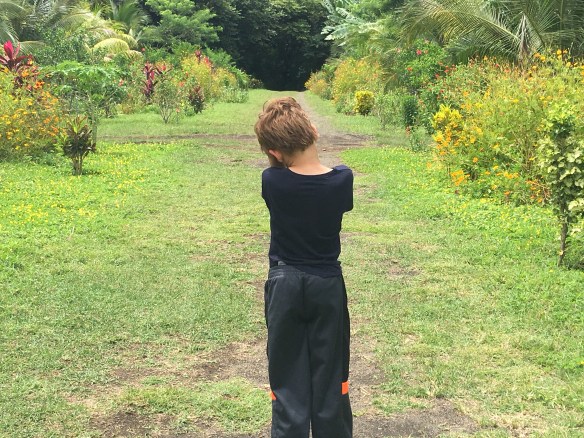
 

IMG_7140

Martin, still unhappy as we headed into out post-butterfly hike.

IMG_7148

The view of Lake Nicaragua that seemed to mark a turning point in Martin’s awful day.

Those two events—Granada and Ometepe—notwithstanding, Martin has relaxed in Nicaragua. Somewhat. He’s still thrusting his lower jaw forward (if I can get him to chew gum, that helps) but not clenching his fists or complaining quite as much. He’s been speaking well to adults, even introducing himself. Day camp seems to be going well. We haven’t had many tears this week.

I’m noodling what might explain the limited improvement:

Limited social pressure. Without school, and especially until day camp started earlier this week, Martin didn’t have the same pressure to socialize.

Relaxed mom. We all know that I’m usually half the problem (if not more) when it comes to anxiety. With less on my agenda (I’m trying to cut down on work for the summer), and plenty of rest, I’m pretty chill.

Environment. There is activity afoot in Southwestern Nicaragua. But it’s nothing like the crowds and traffic and bustle of the Tri-State Area, even in the suburbs where we live.

Health. I don’t love Martin’s diet here. With less variety, he’s eating too many carbs (rice) and other sugars (fruits). On the other hand, I’m pleased with his regular ocean romps and exercise, including day camp, taekwondo, trekking, and pool swimming.

Biomed protocol. We continue treating Lyme disease and babesiosis, and we are ramping up the protocol Martin’s doctor set in June, which includes MC-Bab-2, Sida, and pau d’arco. Often we see improvement as we head into a new protocol.

We saw some anxiety this morning, as today was Martin’s first day-camp field trip—back to Granada, of all places! Stay tuned to FindingMyKid for additional Nicaraguan dispatches, including a follow-up on anxiety.

IMG_7145

This was the happier kid on the second half of our Ometepe hike. Later we had lunch and went swimming in volcanic mineral waters.
Aquí Estamos. Hasta Septiembre

You might want to take a look back at a post from September 2016 titled, “Martin in Paradise.” That post describes how well Martin did during a ten-day stay in Costa Rica, with a clean environment, limited wireless and electromagnetic fields, and daily access to salt-water swimming. The post ends this way: “I find myself questioning whether full and true recovery might require some bolder step, like removal from urban or suburban life. Would I have that in me? Would Adrian?”

Just two days later I posted “Martin Out of Paradise,” which enumerates ways in which Martin crashed when we returned home from Costa Rica. That post ends this way: “Fact. I don’t know what to do with this information.”

Fast-forward ten months, to today. In my last post, I mentioned Nicaragua. In March, I described a conversation Martin and I had about being in Nicaragua.

This is getting obvious, so I will go ahead and say it: I’ve taken Martin to live in the Republic of Nicaragua.

Well, not permanently. We have flights booked back to the States for August 31, in time for Martin to start third grade. We are using this summer to discover whether we can reclaim that paradisiacal magic and kickstart his healthiest school year yet.

It would be cool to tell you that I have the courage to make a permanent change, to roam the world in search of the ideal dwelling place for Martin and then move, for good. Alas, I lack that abandonment. Our biomed journey is financed by Adrian’s job in New York City, and though Adrian is South American by origin, I am ’merican, through and through. I don’t see our family relocating.

At least, not yet.

Pausing for a shout-out to my friend Lakshmi. She and her husband recently sold their home in New Jersey, upended their lives, and returned to India with their two U.S.-born children, in search of a better environment for their son, Partha. I rarely feel alone when I witness what chances other parents will take to achieve full recovery.

But summer! Summer I can do. We’ve rented a house in the hills above the Pacific in Nicaragua’s south, not far from the Costa Rican border. Adrian accompanied us for the first week, to help us get settled. He left yesterday will return for the second half of August. Martin’s babysitter Samara is with us, too, for the whole summer. She’s switching roles to a sort of au pair so that I can work (and blog more!) and seems to be viewing the whole excursion as an adventure. Samara, like Adrian, is South American by origin, and she has never visited Central America.

You might be asking, Why Nicaragua? That’s a good question, given that I myself have never been to Nicaragua before now.

My interest in Nicaragua began last summer. Because we were having family members converging from Boston, California, Texas, and South America, the house we rented in Costa Rica was gigantic, and in a gated/resort community. The rental even came with a “house mother” assigned to keep the place clean and prepare rice and beans, pico de gallo, and guacamole for the vacationers. Contrary to the image “house mother” might conjure, our helper was a lovely young woman named Jasmina. In conversations in my broken Spanish—bless Jasmina for her patience—I learned that Jasmina was Nicaraguan and had left her small children in Nicaragua, with her mother, so that she could work in Costa Rica. When I asked why, Jasmina told me that she could earn much more money working in Costa Rica, even as a domestic.

“Tell me about Nicaragua,” I said.

It’s hard to earn money in Nicaragua, Jasmina told me. But for that, most products are less expensive. The best course is to earn in Costa Rica and spend in Nicaragua.

What is the climate like, and the terrain? Just like Costa Rica, she said. Jungle up to the beaches, which are rocky and sandy. A dry season and a wet season. Consistent temperatures.

Does Nicaragua receive many tourists, like Costa Rica? No. The tourism industry is just beginning.

Are there nice places to stay, and things to do like zip-lining and surfing? Oh, yes! Nicaragua has all those things!

So why are all the tourists in Costa Rica? What’s the big difference between Costa Rica and Nicaragua?

Jasmina didn’t know English, but she knew this word: She replied, “Marketing.”

This conversation stuck with me, when I decided to investigate moving Martin for a summer. Could it really be true that Nicaragua was a discount Costa Rica, perhaps with an even cleaner environment? I gave myself topics to investigate:

* Stability. When I told my mother that we planned to spend the summer in Nicaragua, exactly 14 seconds passed before Sandinistas came up. Memories of the Iran-Contra affair, and the Nicaraguan Revolution, still loom large in U.S. imaginations, my generation and older. In fact, the current elected government of Nicaragua is FSLN (Sandinista National Liberation Front), and I was able to satisfy myself that that nation is politically stable.

* Environment. I had heard that Nicaragua refused to sign the Paris Agreement, or Paris climate accord. (Before the United States’ withdrawal earlier this year, the only other non-signatory nations were Nicaragua and Syria.) Was Nicaragua seeking carte blanche rights to burn fossil fuels and contribute to global climate change? Hardly. I discovered that Nicaragua refused to sign the Paris Agreement in protest, arguing that the climate accord did not go far enough. Nicaragua already sources well more than 50% of its power from sustainable and renewable sources.

* Safety. The U.S. Department of State makes Nicaragua sound like a scary place, albeit mainly in Managua and the Caribbean coastal towns (which are more remote than the Pacific coast). Private websites, however, take a more measured approach and focus on Nicaragua’s recent strides, noting that high poverty levels (not going to deny them) don’t necessarily mean perilous conditions. In any event, I’ve traveled in developing areas before now, and I resided for a while in India before the economic boom, so I know basic precautions to exercise. I never walk with valuables unnecessarily; only what I need for an outing comes along. No fancy jewelry. No partying on the beach after sundown (as if). The house is always secured. And of course, Martin is never unattended.

* Food supply. Organic farming is on the rise in Nicaragua but far from dominant, or even widely available. Most of our food we can find grown locally and small-scale, reducing pesticide risk. Genetically modified food crops are extremely limited in Nicaragua.

* Illness and disease. Nicaragua is jungle, and tropical diseases are present. Then again, I walk around New York terrified of tick-borne illnesses—so, hey, six versus half a dozen. We came to Nicaragua armed with effective non-DEET mosquito deterrents, and we add clothing coverage when trekking, ziplining, or engaging in other activities in dense flora.

* Activities for Martin. I couldn’t expect Martin to do nothing all summer—boredom breeds iPad whining and pattern behaviors. Nor is Martin the type of kid to make new friends on the beach. Fortunately I was able to find a day camp that caters to both Nicaraguans and international kids. The camp has six week-long sessions, and I hope Martin will be able to attend each. Samara also found a local dojang where Martin can continue working on his taekwondo.

We’ve been a week, and Nicaragua hasn’t disappointed. I am still shopping “like a gringo,” i.e., buying too much at the (crappy!) local Palí, as I ask around to discover the best local markets and fish mongers. Martin has been in the ocean every day, whether just wading or floating for hours. He’s sleeping well and has that handsome sun-and-salt appearance. He had his first taekwondo class and managed to work the entire two hours, even though his class at home is only 45 minutes. Day camp is scheduled to begin next week. I’ve met with the director to explain some of Martin’s challenges. Fingers crossed!

As for Nicaragua itself, I could write chapters on what I’ve seen already, but I won’t. This is an autism recovery blog, not a travel-and-adventure blog, however much I might wish otherwise. Besides, everyone knows that my next career will be as a sports blogger for women.

IMG_6882

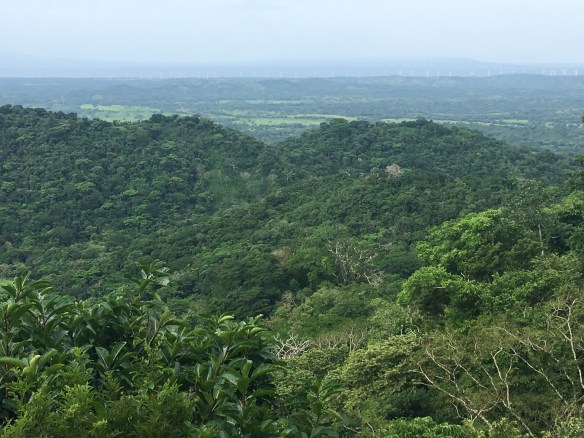
Look in the distance. See those white sticks? Those are wind turbines, dozens of wind turbines powering Nicaragua.

IMG_6907

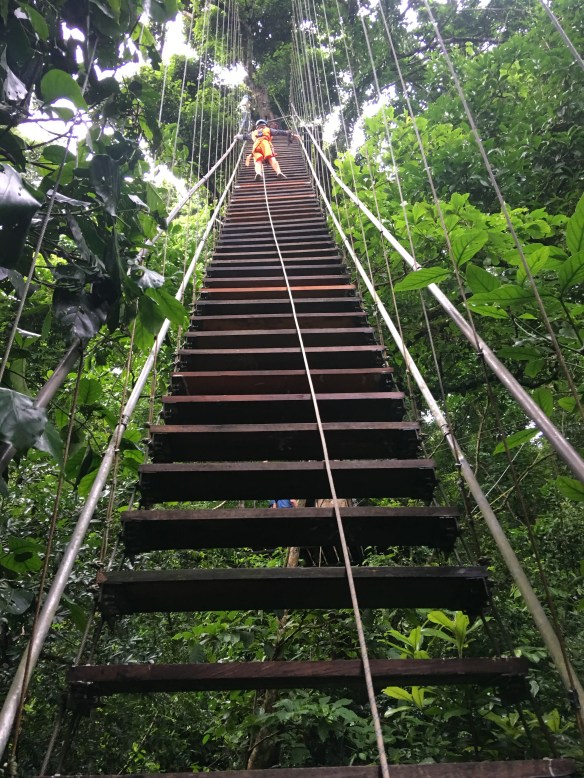
Martin on one of our little jungle adventures.

I Didn’t Wait for a Prescription When I Was a Teenager, So What Makes Me Concerned Now?

Happy Fourth of July! I’m going to spare you another painful post about school and bullying, at least for today.

You’re welcome.

Instead, let’s talk about cannabis. Medical marijuana.

According to governing.com, “[t]wenty-six states and the District of Columbia currently have laws broadly legalizing marijuana in some form,” and once the measures that recently passed in Arkansas, Florida, and North Dakota take effect, the total will be 29 states. “Some medical marijuana laws are broader than others, with types of medical conditions that allow for treatment varying from state to state.” Additional states (Alabama and Mississippi, for example) have passed laws allowing for marijuana possession in the narrow circumstance of an enumerated rare illness.

Recreational marijuana is legal in eight states. That’s not the topic of this post.

Medical marijuana is approved to treat “autism”—or at least some symptoms thereof, in a physician’s discretion—in only five states and the District of Columbia.

I’ll jump in here to say that medical marijuana should be approved in every state to treat (at least) profound autism, as at least one high-profile case in Texas demonstrates. On a personal note, make sure to tune to this blog tomorrow, for my friend Victoria’s testimony before the Minnesota legislature on what medical cannabis has done for her son, Julian.

In my State, New York, eligibility for medical marijuana rests upon diagnosis with “one or more of the following severe debilitating or life[-]threatening conditions: cancer, HIV infection or AIDS, amyotrophic lateral sclerosis (ALS), Parkinson’s disease, multiple sclerosis, spinal cord injury with spasticity, epilepsy, inflammatory bowel disease, neuropathy, Huntington’s disease[,] or chronic pain (as defined by 10 NYCRR § 1004.2(a)(8)(xi)). The severe debilitating or life[-]threatening condition must also be accompanied by one or more of the following associated or complicating conditions: cachexia or wasting syndrome, severe or chronic pain, severe nausea, seizures, or severe or persistent muscle spasms.”

I love the drafting! “[C]hronic pain . . . must also be accompanied by . . . severe or chronic pain,” and “spinal cord injury with spasticity . . . must also be accompanied by . . . severe or persistent muscle spasms.”

For almost a year, I’ve been carrying (but not using) a prescription for medical marijuana for Martin. The prescription was written by Martin’s New York autism physician, not by his California doctor. (And don’t confuse the New York autism physician with Martin’s regular pediatrician. We have a whole medical team.) The prescription is based upon Martin’s irritable bowel disease, which is a qualifying condition, along with the complicating condition of chronic pain. So Martin qualifies for medical marijuana in New York, no doubt. At the time the doctor wrote that prescription, he suggested that medical marijuana could also help Martin with sleeping, attention, and anxiety. Martin was having trouble sleeping again during that particular stretch, an issue that resolved on its own during the intervening months. His attention also has improved this year. His anxiety—well, keep reading.

When, several months ago, I mentioned the prescription to Martin’s California doctor, whom I consider his “primary” doctor for autism recovery, she balked, albeit gently. Martin neither suffers from seizures nor engages in self-injurious behavior, the two autism-related symptoms medical marijuana may help most. Without a clear-cut need, why not err on the side of safety, given the dearth of research available on how cannabis affects the developing brain? I investigated and found that she was correct about the lack of applicable studies. Most research about brain development focuses on recreational marijuana use (of high-THC product) by teenagers; my own search yielded almost nothing about the downsides of medical marijuana in childhood (and I know there must be downsides, regardless of dispute from advocates). With inadequate reassurances, and given that Martin’s sleep and attention are pretty strong these days, I tuck the prescription away again.

But lo! The anxiety. Martin’s anxiety level is so high. (Bad pun for a pot post? Let’s call his anxiety level “Everest-like” instead.) Martin seems to walk the Earth searching for reasons to lose his cool. Two weeks ago, we were Upstate, whence I hail, and Martin had the opportunity to play with same-age cousins he rarely sees. Martin was having a decent morning, acting sociable, until the moment his cousins arrived, whereupon he left reality and switched to talking nonsense (“There are vampires in New York! They are moving to the capital building, to live in the rotunda!”)—eliminating any hope for productive interaction with the cousins. It was plainly his anxiety, up to no good.

And the meltdowns. On the last day of school we invited friends and classmates (both challenged and typically developing) to a pool party. I grilled burgers, beef for the guests and boar for Martin. I had a variety of burger buns on hand for the kids’ diets and allergies. I had no bun for Martin’s burger, because he has never had, or requested, a bun. This time, he did request a bun, and became agitated when I wasn’t able to produce one for him. I wanted to avoid a meltdown, especially in front of the typical classmates, so I let Martin eat an Udi’s® Gluten Free Classic Hamburger Bun. (According to the listed ingredients, these rolls contain resistant corn starch, cultured corn syrup solids, maltodextrin. I never would have given one to Martin under ordinary circumstances.) About ten minutes later, Martin was screaming and clawing at his torso. He’d had some sort of allergic reaction, to something. I pulled off his swim shirt and saw his midsection covered in red welts, with bumps emerging before my eyes. I shoved a spoonful of dye-free Benadryl into his mouth a tried to calm him.

Too late. Martin had slid into his perseverative place, impenetrable by reason or consolation. Awash in tears, he struggled to speak. What brought him there was not, as you might expect, the allergy (terrifying as it had been for me). Instead, Martin had connected the rash with the burger bun and guessed that he would never again receive such a bun. I had no idea whether Martin was reacting to the Udi’s roll; it could as likely have been residue from the beef burgers, or given that he was affected almost exclusively from waist to chest, some contaminant on his swim shirt or something he’d got into around the pool. Martin, however, was not to be dissuaded: The bun was at fault, and now he was never going to get a bun again, never, ever, and Mommy? Can I have another bun? Can you go to the store right now? But never, ever, never again. I hustled the nonsense and tears and screaming into our kitchen, away from the gawking of Martin’s guests.

This is the kind of rigidity that Martin’s anxiety imposes: If I have not foreseen every contingency, including the possibility that he might demand a burger bun for the first time, we risk a setback. If Martin faces any new situation, like meeting cousins, anxiety consumes every social skill he’s developed.

It’s come to the point where I see anxiety hampering Martin’s recovery. His anxiety wrecks havoc with his peers, who respond by alienating him, which further exacerbates the anxiety. The same spiral happens at home. I’m constantly on edge, for fear of provoking a meltdown, and I’m certain Martin perceives that tension, which then prevents him from relaxing. Who could regain health under such circumstances?

You might say I’m approaching desperation. I know that the long-term solution to anxiety is to alleviate its underlying cause, whatever that may be. (I suspect, with little basis other than mommy intuition, that it’s related to the heavy-metal burden we continue treating. Heavy metals can lead to brain inflammation. Cannabis can reduce brain inflammation. Martin’s California doctor thinks the cause is more likely babesia.) But I’m having trouble looking long-term. Martin needs help now.

I’ve been researching. (Remember, I don’t science well.) I’ve learned that the human body produces endocannabinoids, which act as neuromodulators for various cognitive and physical processes, including the regulation of anxiety-dependent behavior.

The cannabis flower secretes compounds known as cannabinoids. Examples include THC (tetrahydracannibinol), which is mostly responsible for marijuana’s psychoactive effects; CBN (cannabinol); CBG (cannabigerol); and CBD (cannabidiol). (Cannabis secretes dozens and dozens of distinct cannabinoids.) Cannabinoids mimic the effect of natural endocannabinoids in our system; they bind to receptor sites usually available to endocannabinoids. THC generally binds to receptors in the brain called CB-1 receptors, while other cannabinoids generally bind to receptors in cells of the immune system called CB-2 receptors. CB-1 receptors affect anxiety and arousal during novel situations. CB-2 receptors affect inflammatory response. Cannabis products can be manipulated to adjust the content of the cannabinoids to address specific concerns.

The endocannabinoid system has been implicated in behaviors associated with autism, such as emotional response, behavioral reactivity to context, and deficits in social interaction; “it can be hypothesized that alterations in this endogenous circuitry [of the endocannabinoid system] may contribute to the autistic phenotype.”

My research also piqued my interest in low-dose nicotine theory, which has shown some success in treating ADHD. That investigation is ongoing.

I’ve been making inquiries with trusted friends in the autism-recovery community. My friend N— noted that she has been administering CBD to her son to help with communication and rigidity, but to little or no effect. I have also given CBD oil to Martin, both the HempMeds® brand and the Plus CBD Oil™ brand (because no THC is present, CBD oil does not usually require a prescription), and have seen nothing from the CBD alone. N— noted that according to the latest research she’s seen, alleviating most autism symptoms requires at least some THC to be present. I think that is correct, and the alternative we are considering currently is using a prescription that would contain some amount of THC: low THC and high CBD.

My friend D—, whose son suffers from both autism and epilepsy along with other medical complications, stressed the importance of careful observation and moving quickly to adjust the cannabinoid ratio (e.g., THC:CBD:CNG) in the hemp product when necessary. D— raved about the difference medical marijuana has made for her son, who has progressed from as many as a dozen major seizures per day to only a few seizures per week. On the other hand, D— was distressed when the THC ratio in her son’s product was increased too much and the nine-year-old seemed “high” before developing a case of the munchies. They quickly reverted to a prior formula.

With my friend R—, I had a lengthy pros-and-cons conversation by text message. For me, the highlight was realizing this, late in the days-long exchange:

My text: “Talked with N—, talked a LOT with Adrian. I think we are going to give mm a shot. I really feel like the anxiety us starting to impede Martin’s recovery. But I’m agonizing over this one. So scared of the effects on cognitive development.”

R—’s text: “I think if you give it a shot for a trial, maybe couple weeks, you aren’t going to do much if any damage.”

My text: “My real worry is that it will work, and we’ll go long-term.”

See how that works? I mean that medical marijuana is intended to be a bridge measure, to alleviate Martin’s anxiety while we work on eliminating the causes of that anxiety. I’m worried that if the bridge measure is successful, we might make it a very long bridge indeed, the attendant consequences be damned.

Last week Martin and I visited his California doctor, and I raised the topic of medical marijuana again, this time more intensely, given Martin’s continuing trouble with anxiety and my own increased facility with the topic.

“You’re looking for my blessing?” Dr. C— asked.

“Not your blessing,” I responded. “This decision I actually think Adrian and I have to make, as parents. But I’d like confirmation that bridging with medical cannabis won’t interfere with any of your protocol for Martin.”

“It won’t.”

With that, the balance tipped. In September, as Martin enters third grade, if nothing has changed with his anxiety, we will likely test low-THC medical-grade cannabis, at least short-term. Having put so much time into research and finally reached a decision, I’d like to get started immediately. But I’m drafting this post from a plane to Nicaragua—I keep thinking I need to tell you about that!—and won’t return home until September. However the laws are evolving in the States, I’m not foolhardy enough to carry marijuana abroad, not in any form.

Ultimately, I know that medical marijuana will not heal Martin. My interest in its use is solely as a bridge measure, to boost the real recovery process.

Have I mentioned that Martin is currently obsessed with bridges?

Opposite Direction

We had that one golden week, immediately after I switched Martin to low-salicylate diet.

The next week wasn’t so good.

This week isn’t so good.

You know what I mean by “not so good”: lots of silliness, little concentration, some meltdowns.

We are still doing low-sal.

I can’t identify any environmental changes since golden week.

What is different is that we are, again, increasing the anti-microbials in Martin’s protocol, trying to reach what his doctor considers full dose.

Martin’s system is sensitive and reactive. I begin to doubt whether we will ever make it to full dose.

I’m going to try an experiment, this week: I’m going to reference Martin’s protocol sheets (I print them at home and keep them all, of course) from our ski week and from the golden week. Whatever dose of each antimicrobial Martin had those weeks, he shall have this week.

I’m writing this at Martin’s taekwondo class. I’m watching him focus on nothing. I’m looking at a kid with half the attention span he had two weeks ago.

And so for a little while, I don’t care whether we are working to reach full dose of antimicrobials.

I just want another golden week.

The Facts of Life

If you’re my age (sorry!) and grew up in the States, you probably know the tune to these lyrics:

You take the good, you take the bad

You take them both and there you have

The facts of life, the facts of life.

 There’s a time you got to go and show

You’re growin’ now you know about

The facts of life, the facts of life.

When the world never seems

To be livin’ up to your dreams

And suddenly you’re finding out

The facts of life are all about you.

How long have you been reading this blog? If it’s a while, then you’ve experienced the good and the bad. You know that, over six years, Martin has moved from virtually no functional language or eye contact to a kid whose social awkwardness is primarily the inability to shut up. Early on, he was removed from a twelve-student, two-instructor preschool class because he wasn’t up to the task. Now he’s in a 22-student, one-teacher mainstream classroom, albeit with an aide. You also know that the path has been beset with obstacles: frustration, setbacks, inexplicable ROOS.

After we switched to a low-salicylate diet, Martin soared. Every day last week, we received a “best ever”-type report from school. His meltdowns reduced by 90%, I estimate. Though he continued perseverating/obsessing about New York City landmarks and trains (not unusual for kids with spectrum challenges), he was able to snap out of it when requested. Over the weekend, we went skiing with friends. Martin played with their typically developing, seven-year-old son, and his ski instructors referred to working with him as “a joy.”

. . . Which brings us to yesterday, Wednesday. No stellar report came from school. The across-the-board 5’s from his Friday report gave way to a crop of more-usual 2’s and 3’s. Martin came off the bus happy but talking nonsense (“Blurb the dinosaur is on the bus and he might eat us! Look out, it’s a birdjay!”). He spent his trombone lesson dancing about and lying on the floor, challenging even his patient instructor. Then he conducted a 90-minute tantrum based on my refusal to give him an iPad until his math homework was done. (Once he decided to stop crying and do the math ditto, he completed it in approximately 45 seconds. Forty-five tear-filled seconds.) He woke during the night, for three hours. This morning his behaviorist reported that he seemed “off” and “someplace else,” that he was acting goofy, that his fingers were in his nose, or in his pants.

PANDAS flare? I don’t think of Martin as a PANDAS kid, but—. Parasite activity? The full moon was last week, not this week. Detoxing? Increasing MC-Bar-1™ too quickly? Mold exposure? Dietary infraction? Mast cell party? I’ve also been unfocused and “off” this week. Adrian says he has, too. After a terrible report on Martin’s day, his behaviorist followed up with this text: “That said, I’ve been bombarded with phone calls this week. Everyone off.” So who the hell knows?

I texted back: “On a positive note, we have seen a real decrease in meltdowns. I hope that is carrying over to school.”

She replied: “No meltdowns reported or documented.”

I said: “I’m going to hang onto the positive, in that case.”

You take the good, you take the bad

You take them both and there you have

The facts of life, the facts of life.

Martin Out of Paradise

Fact: In Costa Rica, Martin slept beautifully. He requested sleepy-eyed early bedtimes, dozed promptly, rose only after 10 or 11 hours. To my knowledge, he woke during the night just once, when a thunderstorm lingered.

Fact: Since we’ve been home (one week), Martin has slept poorly. He lies awake for an hour or more, tosses or talks during the night, wakes too early. Some nights he’s had as little as eight hours’ rest, and poor quality. He’s been exercising plenty: swimming, bouncing at a birthday party, bike riding, chasing his cousin. He’s eaten better than he did in Costa Rica. He’s in familiar surroundings. He can’t sleep.

Fact: In Costa Rica, Martin’s attitude improved. He seemed carefree, less focused on fixations like his iPad and Mickey Mouse Clubhouse. He ate new foods. He walked home alone from a local bar/café.

Fact: Since we’ve been home, Martin’s attitude stinks. He’s been whiny, contradictory, and engaging in opposite-talking. (“I’m never going to use my iPad again! Throw it away!”) He’s grouchy. This morning he refused to try peanut butter on apple. He loves peanut butter. He likes apples. Apparently the idea of combining the two proved too much. An hour later he wandered away from his own bus stop.

Fact: I don’t know what to do with this information.

Martin in Paradise

For the last ten days we’ve been vacationing in Costa Rica. The “we” comprised me, Adrian, Martin, my mother and stepfather, my two older brothers, Adrian’s mother, and Adrian’s brother. Nine people. Nine people together in a house on the beach, off the beaten path.

I had trouble finding organic fruits and vegetables, and I suspect the papaya we ate may have been genetically modified. I used olive oil that was partially refined. The cookware was aluminum. Martin had seafood daily, mercury be damned. He ate way too much rice, probably too much fruit, and even homemade fruit juice. I found some locally made treats with oats, nuts, and raw agave, but I couldn’t get any intel on whether the oats were gluten-free. I gave Martin the treats anyway.

We ran out of several supplements, enzymes, and antimicrobials (poor planning on my part), including mucuna, serrapeptase, MitoSpectra, Nose & Lungs, cumanda, and Boluoke.

We had no set schedule, so Martin never knew what we might throw at him in a day. We didn’t do his vision exercises. His glasses sat abandoned, unworn.

We pushed his limits, sometimes over his protests. We took him zip-lining and horseback riding, made him a passenger on ATV’s and jet skis, insisted on swim lessons.

He had two allergic reactions, one to a horse that left his face bumpy and itchy, and one to an unidentified food irritant (restaurant) that caused a rash to spread from the corners of his mouth down his neck.

In the face of these shortcomings and stress, Martin—soared. Martin’s had trouble sleeping these last couple months. In Costa Rica, he volunteered bedtime by 7:30 pm and slept 10 or 11 hours unbroken. His iPad requests, which at home are a near-constant whine, decreased markedly. On our few prior visits to beaches (I’m not a fan), Martin has refused to let the salt water rise above his knees. After a week in Costa Rica, he bobbed neck-deep as the ocean waves tossed him to and fro. Daily, he refused to leave the beach.

He conversed with his uncles and answered strangers’ questions. He used new expressions.

Overcoming recent food-choice rigidity, he rediscovered tropical fruits and ate mango, pineapple, and papaya with abandon.

Because we were without North American television, Martin could not watch his fixation of late, Mickey Mouse Clubhouse. He managed without complaint. Instead, he drew pictures.

One afternoon, Martin was at a local bar/café with Adrian, my brother Eddie, and my brother-in-law, Pancho. The establishment was about 300 yards from our house, past a swim pool, an exercise plot, and a several haciendas. I was in the house showering when Martin entered the bathroom and said casually, “Hi, Mommy. I came home alone.” I told him to scram—after all, I was showering—and his statement didn’t quite register until I was toweled and dressed and found a text message from Adrian: “Martin is coming home. Make sure the door is unlocked?” Adrian had indeed authorized Martin to walk home unaccompanied, and Martin had achieved the feat, without getting lost or wandering off.

Just sayin’, I would not have let Martin walk home alone. But Adrian did, and out of the decision came some measure of independence.

I’m not saying that 10 days in Costa Rica brought a miraculously fully recovered Martin. Not by a long shot. He was too distracted to get the full benefit of those swim lessons. The pictures he drew were all of marching bands or orchestras. (He used to draw only pictures of The Beatles. Now he draws only marching bands and orchestras.) He engaged in a lot of oral stimming: “mouth noises,” I call the sucking-and-clucking sound he makes. He showed virtually no interest in the other kids scampering and riding bicycles in the neighborhood. Our last full day in Costa Rica was a bad day; sneezing and maybe teetering on sickness, he requested another round of zip-lining but then melted down and refused to participate. He repeated himself, nervously. He spaced out.

Still, overall, Costa Rica brought us a behaviorally improved Martin. Indisputably.

I don’t know what made the difference. Sea water? Clean air? Reduced EMF’s and cellular radiation? Extended family? Time to be a kid?

We’re on the plane now, headed home to the New York metropolitan area. (You know how I love to airplane-blog.) Martin just told me he wants to watch Mickey’s Clubhouse, when it’s on at home. I find myself questioning whether full and true recovery might require some bolder step, like removal from urban or suburban life.

Would I have that in me? Would Adrian?

Cherry-Lime Soda

Martin and I were in the car. He complained he was thirsty, so I offered him a sip of my cherry-lime kombucha “soda.”

Martin examined the label, then handed back the bottle and said, “I can’t drink soda. It has refined sugar.”

“It’s okay,” I said. “It’s not real soda. It’s kombucha.”

He took the bottle again, shook his head, and said, “It says ‘cherry-lime soda.’ I’m not having any.”

I’m telling that anecdote for two reasons. First, I have read about kids who police their own food, who attend birthday parties and turn down cake and pizza. I envied the parents who could trust their kids with food choices. Now it seems I have cultivated such a kid. Martin told me recently that an assistant teacher had tried to give him a “fruit snack”—one of those corn-syrup-and-artificial-color bombs disguised as a fruit product. “I said no!” he declared, with glee. “I said I can’t have that!” Evidently he found it funny that the offer had been made at all.

Second, “cherry-lime” is a cheap way to introduce my long-promised post about Lyme disease. (Get it? Lime-Lyme? What? You’d forgotten how I promised a post about Lyme?) Lyme disease is playing a major role in our lives right now. We are fighting Martin’s Lyme disease with antimicrobial herbs, which sound innocent but provoke reactions strong, and immediate, enough for me to trace them to particular doses. On days when I want Martin to perform—say, when he’s visiting a school or completing a neuropsychiatric evaluation—I withhold or delay antimicrobials, in an effort to “even out” his behavior. It’s all so—

You’ve been on my mind.

Let’s start at the beginning. Some time ago I received this text from my mother: “I am just catching up on your blog.”—hurrah!—“Martin seems to be getting treatment for Lyme disease a lot. Does he actually have it?” Fair question. Absent an acute infection or reaction, Lyme disease is notoriously hard to diagnose. Indeed, controversy surrounds Lyme diagnosis. Some doctors, especially Lyme-literate doctors, or “LLMD’s,” have been accused of profiting by over-diagnosis and treatment. Conversely, some commentators argue that Lyme disease is at epidemic levels, wildly under-diagnosed, and mistaken for myriad other ailments. Clinical practitioners, including Doctor William Lee Cowden, who has worked extensively with Lyme disease, report Lyme prevalence levels even greater than 50% in children who present with autism. Lyme disease is a controversial topic.

I spent my childhood in Upstate New York and now live in Downstate New York, two areas where Lyme disease is widespread. In 1993, while staying in a rural area outside Berlin, Germany, I found a tick embedded in my arm, a known transmission method for Lyme and related diseases. A distant uncle of mine was hospitalized repeatedly for Lyme-related illnesses; I have a friend who lost his sister to a manifestation of Lyme disease; and my child had autism. Lyme has been on my mind for a long time.

In November 2012, Martin showed positive for Borrelia burgdorferi, the causative agent of Lyme disease, in IgG/IgM ELISA testing,. That result was bolstered by evidence of protein bands on IgG and IgM Western Blot tests. Although Lyme disease testing is not entirely reliable, Martin’s integrative physician, whom I’ll call “Dr. S,” found the evidence strong enough to recommend an extended course of antimicrobials as treatment for Lyme disease. The antimicrobials certainly seemed to affect him. For example, Dr. S recommended that I increase takuna by a few drops per day over two weeks, until Martin reached a maximum dose of 30 drops twice per day. Instead of two weeks, it took three months to reach 30 drops twice per day, because Martin reacted so strongly to each increase: crazy laughter, hyperactivity, sleeplessness.

Not long thereafter, we switched physicians because Dr. S moved to California. The new doctor, after running her own testing, said she saw no evidence of lingering Lyme infection and took Martin off the antimicrobial protocol. At the time, I was not Lyme-informed enough to know that (1) takuna and other herbs driving Martin bonkers probably meant Lyme was present and being addressed, or (2) that treating Lyme this way requires a commitment much longer than the six months we’d done the protocol.

Round two, we won’t give up.

We spent two years with the doctor who took Martin off his first Lyme protocol. February 2015, we switched back to Dr. S (all the way in California!), who took a deep breath and started trying to deal with the many issues Martin presented at the moment; the continued Lyme possibility was on the list but not at the top.

July 2015, something bit Martin on his foot, and he developed what might, or might not, have been a bull’s-eye rash. Lyme shot back up the list. With Dr. S’s approval, I took Martin to visit an LLMD in New York. That doctor had us send a blood sample to Galaxy Diagnostics in North Carolina for a “Bartonella ePCR™ Single Blood Draw” test. (If you’ve ever been present for drawing blood from Martin, you’d understand why the “Triple-Draw” test wasn’t for us.) Galaxy cultured the sample in a proprietary “Bartonella alpha Proteobacteria Growth Medium” before subjecting it to Polymerase Chain Reaction (PCR) testing. (If you’d said any of this to me before I became a biomed parent, I would have rolled my eyes.) After several weeks, the culture came back positive. Martin’s blood sample grew bartonella, a co-infection to Lyme spirochete. (The ticks that transmit bartonella also transmit Lyme, and the co-infections can be transmitted in the same bite.) Galaxy’s was the best test we could find, evidently the most definitive, and we got our answer: If bartonella flourishes when Martin’s blood is cultured, then Martin has Lyme disease.

The New York LLMD’s protocol, in such circumstances, is to put the infected patient on an extended course of antibiotics. I objected, explaining that for Martin an extended course of antibiotics could be destructive. I believe that Martin’s autism originated, in part, when he was taken from me at birth, placed in a NICU, and pumped with intravenous antibiotics. Antibiotics can kill healthy gut bacteria and thereby weaken the immune system. We have worked for years to restore Martin’s gut health and digestive functioning; I don’t want antibiotics to risk or compromise that progress. The LLMD listened to my reasoning and asked for my permission to contact Dr. S to discuss a treatment protocol.

Martin is fortunate to have these doctors. The LLMD and Dr. S ended up coordinating a phone meeting to discuss treating Martin’s Lyme disease with more natural antimicrobials versus pharmaceutical antibiotics. (Some studies demonstrate that herbal antimicrobials, or an antimicrobial/antibiotic combination, can be equally effective to pharmaceutical antibiotics alone.) In the end, Dr. S’s position carried the day, and she and the LLMD agreed on a protocol utilizing tangarana, samento, and other natural antimicrobials.

We’ve been actively targeting Lyme disease again since last October. When Dr. S adds an antimicrobial to Martin’s protocol—she substitutes the varieties in and out, to prevent the Lyme from becoming resistant—we begin a process of building to the recommended dose, sometimes as slowly as adding two drops per week. Usually, I can track the effects: When the antimicrobial stirs up too much, Martin becomes hyperactive, irritable, and unfocussed, and we need to increase more slowly.

As with nearly all facets of recovery, we see slow, steady improvement as Martin’s Lyme disease resolves. For example, Martin is holding his longest-ever independent phone conversations with Adrian, and finally eking some progress in reading comprehension. We also have tough days. This spring was a season of meltdowns and oppositional behavior. Even now, Martin is doing a lot of opposite-talking. I’m never going to use my iPad again! Never! I don’t want any dessert! Take it away! I don’t want to ride my bicycle anymore! Throw it away! He is also asking questions just to contradict the response. Do I have hockey practice today? “Yes.” No! No! No, I do not have hockey practice today. He’s not sleeping well. He’s anxious. With patience, and as much composure as I can muster, we are muddling through.

We plan to pull back, for a few months, on treating Lyme aggressively, when Martin begins his new school. That adjustment will be tough enough without die-off behavior.

Sometimes, when when ROOS strikes, the length of Martin’s recovery feels overwhelming. His autism diagnosis is gone, but he still has such trouble with attending and maintaining attention, and he is goofy and immature. Lyme disease, parasites, and the ever-present threat of candida overgrowth—will we ever finally reach the end of these issues, or will my son’s health always be an issue to “manage”?

This is our new world, right? Chronic illness for everyone.

IMG_3464Martin in our pool. The lazy days of summer drag on.

IMG_3810Sunset over the docks in our little suburb. Bring on the autumn.

He Doesn’t Seem to Know

Back to the topic of school.

We’ve been hoping to transfer Martin from his self-contained special-education school to a general-education classroom with an aide. Our local zoned school, at Martin’s grade level, had 26-to-28 kids per class, which is too many, so we looked at private schools. We found two church schools we thought would be good fits. Each school asked Martin to visit, for an entire day, without an aide. Each visit, Martin was at his worst; fighting his Lyme disease has been a rough ride. Combine “Martin is having a bad day” with “Martin is making a full-day visit to a general-ed classroom with no assistance.” The result was no private school placement for Martin.

At the same time, Adrian and I became increasingly convinced that the time has come for Martin to leave his current placement. Martin has started copying undesirable behaviors that he witnesses at school, like whining. Four other boys are leaving the class, including Martin’s two closest social peers. Martin has started self-advocating, telling us that he’d also like to go to a new school. He says he has too many teachers and that he’d like to be in a bigger class, and that he wishes he could go to a school close to home like his friends from play group do. Finally, Martin is finishing second grade, so these decisions concern possible third-grade placement. We’ve been told, by multiple sources, that the distance between second-grade curriculum and third-grade curriculum is the biggest jump in elementary school. Academics (except for reading comprehension and drawing inferences) are Martin’s strong point. Adrian and I worry that the longer we leave Martin in a slower-paced, modified learning environment, the less possible an eventual move to general education will become.

Just when it seemed that leaving Martin in his current school would be our only acceptable, available choice, two late entries arose. First, our district passed a new budget, part of which added additional sections to our zoned school. The class sizes dropped from 26-to-28 kids to 21 or 22 kids. Second, our local Catholic elementary school, which works closely with our district, invited Martin to visit—for a few hours, with an aide—and he happened to be doing well that day. Then the district offered Martin an IEP for general education, with a full-time, one-on-one teaching assistant, plus a consultant special-education teacher, plus resource room, plus regular visits from a behaviorist to the classroom, plus continued speech therapy and, if we wanted more services, occupational therapy, physical therapy, and counseling (services he has in his current placement). This panoply of benefits would be available to us at either our zoned school or the Catholic school.

The decision to pull Martin from his current placement was almost clear. Almost. We still faced this hesitation: Whatever our concerns with academics or behaviors, Martin is safe where he is now. His class is small, structured, and constantly supervised. He faces no playground bullying. He does not stand out because of his differences. His self-esteem is high, his confidence intact. The headmaster of one of the church schools that turned us down earlier this year is a former special-education administrator. Immediately after Martin’s full-day visit there, the headmaster kindly spent 20 minutes on the phone with me and Adrian. He enumerated the reasons why they wouldn’t accept Martin (including, apparently, the 11 times Martin stopped between the gymnasium and the classroom, because he wanted to examine a vase, to look at a photo of last year’s graduates, and so forth). The headmaster also said, in Martin’s favor, “I have to tell you that he made himself right at home. This is quite extraordinary—Martin doesn’t seem to perceive that he has any challenges at all.”

I’d like to keep it that way: that Martin doesn’t perceive that he has challenges. With continued hard work and a little luck, we just might be able to lose the ADHD diagnosis before Martin wonders too much about being different. If we toss him into a classroom of typically developing kids, how much of Martin’s own perception of himself will evolve?

Well, we’re about to find out. Last week, Adrian and I accepted the district’s proposed IEP, placing Martin into general education with an aide, in our zoned school, with one change in plans: At our request, Martin will repeat second grade. He’s changing schools, so the other kids won’t realize that he’s repeating. I hope that repeating second grade will give Martin a chance to adjust to the faster pace of general education before he is called upon to master new material.

Martin’s going to spread his wings. Here’s hoping he can fly.

IMG_3295

Martin, in orange, with friends.

Del Sur V: Manifesto

“Do you know?—maybe it’s possible that he never had autism?”

These words were spoken innocently, by a sympathetic party, and (I suspect) without forethought. It was late evening in South America. Martin was asleep. My mother-in-law and I sat in her kitchen, chatting, I with a glass of white wine, she with her pisco sour. We were discussing Martin and his progress; I mentioned that his official diagnosis had changed from ASD to ADHD with social/pragmatic language delay. My mother-in-law responded, “Do you know?—maybe it’s possible that he never had autism?”

My mother-in-law supports everything we do for Martin, and does her best to accommodate; we arrived from New York to find her fridge stocked with organic produce (still hard to procure in her area) and a cow knuckle and vegetables simmering on her stove, for Martin’s broth. That being said, I’m not sure she fully understands biomed, or our start point and desired endpoint. This is no criticism of my mother-in-law. I’m not convinced that anyone outside the thick of recovering a child understands autism or what healing requires. I’m not even convinced that I understand autism or what healing requires; I’m just a few paces farther down that road than others are.

Still, when my mother-in-law offhandedly suggested that maybe Martin never had autism, I bristled. I bristled because I think I will hear that suggestion a lot, as Martin continues to become more typical. Already I hear hints. A friend who has a mostly nonverbal seven-year-old and does not do biomed remarked recently about how “maturity” is resolving a lot of Martin’s issues. The friend meant no harm; in her mind, biomed doesn’t work, so she needs something else to explain Martin’s emergence from autism. (I didn’t pursue the issue further. I’m cautious, with other autism parents. We’re all doing what we think we can.) And remember the neurodevelopmental psychiatrist’s words? According to her, Martin developed functional language because he was “not destined to be a child with receptive or expressive language problems.” It’s not biomedical interventions. It’s destiny!

I know, from other blogs and on-line communities, that parents who manage to recover their kids from autism face skepticism that their children ever had autism. You may ask, why should they care? The opinion of naysayers doesn’t affect their children’s recovery. Why should I care if another autism parent wants to chalk Martin’s ongoing recovery up to “maturity,” or a doctor implicates destiny over hard work?

Well, I care, we care, everyone should care, because denying biomed has far greater implications than just adhering to ingrained misconceptions about autism.

It is possible to recover from autism. Not to learn to live with autism’s symptoms, which is what behavioral therapies teach, but to eradicate autism by treating the disorder’s underlying medical causes. I know this to be true, because my son is recovering from autism. I’m not deluded. I have the blood work and urinalysis evincing his medical issues. I have the series of neurodevelopmental psychiatric reports describing his detachment, his lack of language, his emotional instability. I witnessed too well his lethargy and physical discomfort. I endured his sleeplessness. I have watched, over five years, as his medical issues alleviated and the autism symptoms improved in tandem.

Every case of autism is different. Yet there are commonalities. The presence of autism points to an immune disorder rooted in the gut, where 70% of the immune system resides. A healthy gut biome has plenty of good bacteria to keep germs and infections at bay. When something depletes the good bacteria—say, antibiotics, or glyphosate—the bad guys start to party. Any further insult, like insufficient vaccine absorption or exposure to environmental toxins, can cause the whole immune system to jump its rails. When you’ve got no properly functioning immune system, you can find yourself with a host of secondary problems, like neuroinflammation, excess propionic acid, a struggling thyroid, glutathione depletion and methylation troubles, opportunistic infections, an inability to secrete heavy metals. And then? Neuron misfires. The endgame that manifests in autism.

Autism rates are on the rise. Stunningly. Think of those graphs that represent worldwide human population: Autism’s growth is similarly exponential, even according to conservative CDC figures. The epidemic is not the result of greater awareness, or expanded diagnoses; if it were, we would expect to see most cases clustered at the mild, almost debatable, end of the spectrum, where the merely “quirky” kids reside. Instead, new autism diagnoses litter the entire spectrum. Non-verbal, acutely affected autism is on the rise just like Asperger’s. Those who deny the rising autism rates are the willful ignoramuses and the irrational optimists. I am out of patience for either.

We don’t know, yet, what “causes” autism, though every day we learn more about factors that may contribute to the development of autism. I mentioned a few above: overuse of antibiotics, unsafe vaccinations, pesticides. Activists speculate about the role of pollution, about electromagnetic fields, about C-section births (or not) and the newborn’s chance to benefit from the vaginal biome. Genetics also play a role, such as the MTHFR mutation or UBE3A mutation.

(Note this: Accepting that genetics play a role in development of autism is not saying that we “can’t do anything about” the autism epidemic. The genetic predisposition to autism has probably been around many generations; only now do new environmental triggers spur the subsequent development of the disorder. Plus, more and more we have to speak not of genetics proper, but of epigenetics, mutations with the capacity to arise or dissipate between generations, or even within a single generation.)

Which brings me to many people’s resistance to accepting the notion of biomed. If we accept that we can reverse autism by resolving the factors that caused it in the first instance—then we admit that something is causing autism. Based on the exploding autism numbers, whatever is causing autism is getting worse. In an over-hygienic world devoted to unlimited consumption, exploitation of animals and the environment, a pill for every ailment, and the temple of convenience, we are doing something wrong. Disastrously wrong. In that regard, progress has stopped. Unless we change course, each successive generation will pay a higher bill for our abandonment of what is natural.

Unfortunately, almost no one seems to want to change course. So people deny that autism is on the rise, or that autism has causes, or that autism can be treated.

This is why I bristle to hear that maybe my son never had autism, or that he’s moving off the autism spectrum because of something other than biomed. It is also why I do not support the “neurodiversity” movement. Don’t get me wrong: I support the goal of inclusion and accommodation for persons living with autism. Did someone insult or exclude your family member with autism? Call me. I will gladly rush over and go Brooklyn on the jerk. But do not hand me acceptance of autism itself as a policy for dealing with skyrocketing autism rates. Do not tell me that autism is “just how some people are” and should not be addressed, because I will respond that schizophrenia and depression—other disorders with medical underpinnings—are also “just how some people are,” and give lie to how misguided neurodiversity is. People with autism should be accepted. Autism itself can, and should, be fought.

We can learn to live with just about anything. City dwellers learn to live with constant light and noise pollution. Our world may be on the verge of learning to live with catastrophic climate change. This ability to adapt does not mean that we should fail to recognize and correct our own mistakes.

My son had autism. My son still has ADHD. One day my son will be neurotypical. Treating his disorder biomedically has made this progress possible.

Full stop.