Mistake, I Think

In December, the following happened:

Adrian and Martin and I were at the reception following the church children’s pageant (in which Martin sang!). By now Martin and I have attended our new suburban church for 18 months. He goes to Sunday school and, with the help of a facilitator, participates in a 90-minute “Kids’ Klub” each Tuesday. He is reasonably well known, to both adult and youth parishioners.

At the reception Adrian and I socialized while Martin wandered, playing mostly alone and munching the snacks I’d brought for him. I looked for Martin often, because these days he thinks it is funny to try to sneak non-GAPS-compliant food. (When he finds me milling around the Sunday refreshments, keeping watch, he says, “Mommy, just go talk to your grown-up friends. I’m fine.”) In one such glance I saw Aiden, a seven-year-old, approach Martin with a big, soft, definitely gluten-and-sugar-and-dairy-laden cookie. Aiden broke off a cookie chunk and said, “Hi, Martin. Have some of my cookie!” Martin seemed interested, but he hesitated and looked around for my assurance.

So what did I do?

Here are the relevant factors:

  1. I was thrilled that Aiden had approached Martin, spoken to Martin like he would speak to any kid, and kindly offered to share his cookie. Thrilled.
  1. I wanted, so badly, for Martin to take that cookie. I wanted him to have a typical-kid moment, and a meaningful interaction with Aiden. Maybe they could be friends.
  1. I wasn’t that worried about the cookie. It would be an infraction, to be sure. It would set back our efforts to heal Martin’s gut, and it might cause some crazy behavior. But we would get past it. (See infra.)
  1. What worried me more was that Martin would get the impression that, on a special occasion, it is okay to take a cookie chunk, or whatever else is offered. Martin already has declared that he is allowed to drink apple juice from a box at birthday parties (effin’ birthday parties!), because once, in the throes of his disappointment, I relented and allowed a juice box. Give him an inch…!

So what did I do? What did I do?

I intervened.

I said, “Martin has food allergies! He can’t have the cookie. But thank you, Aiden! Thank you so much for sharing. What a great choice!” Aiden looked surprised. Then he left Martin alone. In a lame attempt to salvage the moment, I told Martin, “I’m so happy that you checked with me. Would you like an orange? I can peel you one.”

Inside, I felt icky. I felt like I made a mistake.

Did I? I think I probably did. I should have let Martin and Aiden share. I could have talked later with Martin about this “exception” and about how to respond when offered food in the future. I could have asked him to track how his tummy and mind felt. I could have created a hands-on lesson or done role-play. I could have ignored, i.e., pretended that I didn’t see Martin looking for my assurance, and allowed him to do what he wanted, and only later “noticed” what had happened, so that at least the cookie-share wasn’t officially mommy-sanctioned.

I could have, should have, blah, blah, blah. Whatever I could or could not have done, what I did do in the moment was deprive Martin of a typical-kid interaction and of maybe (dare I hope?) the path to a new friendship.

The teachable moment, it seems, was mine alone.

P.S. As long as I’m confessing mistakes, and along the theme of “we would have got past it,” I think I’ll subjoin this little divulgence: We have been taking Martin to children’s (“family”) movies. A lot of the time, Adrian takes Martin, and I get a pass, because try as I might, I just don’t enjoy feature-length animation. (Leave me alone. My oldest brother, Rudy, is an animator. He’s asked me all the pertinent questions. No, I didn’t like Aladdin. Nor Toy Story. Nor Cars. Nor even Fantasia, too much, at least not when sober.)

One recent movie I did attend, because it was live-action, was Alexander and the Terrible, Horrible, No-Good, Very Bad Day. In the theater I purchased a Diet Coke®. I know I should be healthier, and I have done really well curbing my Diet Coke habit, but occasionally, for whatever reason, I still drink a Diet Coke. Attending a matinee showing of Alexander and the Terrible, Horrible, No-Good, Very Bad Day, on a rainy afternoon, when every kid in our suburb seems to be at the movies, qualifies as such a reason. Halfway through the movie, I went to the restroom. I returned to find Adrian, with an are-you-kidding-me? look on his face, restraining Martin on his lap. Apparently, when I left, Martin picked up my Diet Coke and drank most of it. That’s right. My GAPS-diet son, who has consumed neither processed foods nor refined sugar in four years, went to town on motor oil and aspartame. Just one more endorsement on my application for autism-recovery mother of the year.

Mommy Sticks

My family jokes that Martin is “momnmy-centric.” Very mommy-centric.

If I am in the vicinity, Martin is all about me. An interaction with another adult might transpire this way:

Adult, to Martin: “Martin, what did you do at school today?”

Martin, to me: “Mommy, did I go to school last Thursday?”

Me: “Martin, [other adult] asked you a question.”

Martin, to me: “We went to gym class.”

Me: “Can you tell that to [other adult]?”

Martin, to me: “No.”

Mommy-centric Martin needs to talk with me constantly, regardless of whether others are present. One particularly annoying derivative of constant talking is Martin’s anxious reliance on saying, “Mommy.” He might attach “Mommy” to continuous questions, related or unrelated, as in—

“Mommy, is today Friday? Mommy, is Freddie in the basement? Mommy, what am I having for dinner? Mommy? Mommy, is Daddy in the office? How do we spell ‘course’? Are we going on vacation next year, Mommy? Mommy, can you talk to me? Mommy?”

Other times there isn’t so much as even a question with the “Mommy.” He just calls “Mommy!” because he wants to know I’m present, or because he’s nervous, or because someone else has spoken to him, or because he needs to be talking but has nothing to say, or because—. If Martin is eating breakfast and I exit the kitchen, “Mommy!”, yelled from the table, will follow me down the hall. If Martin is playing and I go to the bathroom, I can expect at least four or five “Mommy!” cries before I reemerge. If I plead, “Martin, can you please stop saying ‘Mommy’ for a few minutes?”, he responds with something like, “I’m not going to talk at all. That’s it. I’m not going to talk at all! Mommy, should I not talk at all? Mommy?”

The habit is annoying, to be sure. Even more problematic, other children have started to notice and use it as a reason to tease Martin. At a birthday party not long ago (effin’ birthday parties!), Martin called to me non-stop from the table where the children sat to eat. By the time the pizza was cleared and cake arrived, a couple girls near Martin were mockingly yelling, “Mommy-mommy-mommy-mommy-mommy!” Martin’s cousins Luke and Rosie, who are visiting right now, say, “Oh, mommy-mommy” whenever Martin is absent and we mention his name.

Some behaviors demand radical solutions. Introducing: mommy sticks.

Each morning, since Sunday, I place a glass on the kitchen counter and fill it with 25 pipe cleaners, which I call mommy sticks. When Martin says “Mommy,” I remove one pipe cleaner. If, at bedtime, one or more sticks remain in the glass, Martin wins a surprise. Nothing major. An Angry Birds pencil. Stickers. A coin-sized plastic car. The prize isn’t that important; Martin likes to win, so incentive-based systems work well.

I don’t distinguish among uses of “Mommy.” It might, for example, be completely legitimate for Martin to yell, “Mommy! I think the stove is on fire,” or, “Mommy! Is the cat supposed to be eating off my dinner plate?” Still, doing so would cost him a mommy stick, just as much as randomly calling “Mommy” to the wind. My goal is to get Martin to think about why he’s saying “Mommy,” and whether doing so is worth a mommy stick, instead of vocalizing by habit.

So far, I’m giving two thumbs up to mommy sticks. Four days in a row, Martin has won the prize, and Adrian and I have noticed a marked decrease in “Mommy!” floating around the house. Yesterday, Martin snidely tempted fate; when he saw about a dozen sticks left, he looked directly at me and said, “Mommy. Mommy. Mommy, Mommy, Mommy.” I extracted five pipe cleaners. Still he met his goal. That moment notwithstanding, I hope the system continues to function.

And I wish all behaviors could be addressed this easily.

Oranges, bananas, apples, avocados, onions, and mommy sticks. That's the kitchen counter in our ASD household.

Oranges, bananas, apples, avocados, onions, and mommy sticks. That’s the kitchen counter in our ASD household.

Birthday Parties and Swimming Pools

Birthday parties and swimming pools. I hate them.

I suppose that sounds harsh. Who hates birthday parties and swimming pools?

The problem with birthday parties and swimming pools is that they expose Martin’s remaining social weaknesses.

Case in point No. 1:

In December, two boys from Martin’s class held a joint birthday party at a Chuck E. Cheese. If you’re an American parent, you’ve probably experienced a Chuck E. Cheese birthday party. Video games. Pizza. Noise and flashing lights. Giant automated rodents manipulating musical instruments.

(Digression. More than three decades ago, I had my ninth birthday party at a Chuck E. Cheese. It may be the fog of time to blame, but I remember the place very differently than today’s Chuck E. Cheese. In my memory, Chuck E. Cheese is dimly lit, with more stages and Skee-Ball, fewer arcade consoles, and—could this be pure imagination?—physical play like a ball pit. Also, a candy counter with mammoth speckled gobstoppers. The candy counter was out front, before the entrance turnstile, and I used to duck into Chuck E. Cheese just to pay 50¢ for a gobstopper so big that I had to extract it from my mouth, repeatedly, until I sucked it down to a manageable size.)

I have written before about Martin’s difficulties when we attend class play dates. Half the boys in his self-contained special-ed class have speech/language delays but no social impairments. The class breaks roughly into three groups: the boys who instigate some imaginary game or roughhousing and play together, the boys who play alone and seem uninterested in joining the others, and—Martin. Martin, who wants to participate in cooperative play yet still doesn’t quite grasp the “how,” or have the confidence, to make others include him. Martin, gazing through the window, never beckoned to enter.

Chuck E. Cheese in December was a disaster. The flashiness overwhelmed Martin, and he couldn’t, or didn’t want to, understand any of the video games. I managed to sit him in front of me on a fake jet ski and run a virtual course for a few minutes, until he (quickly) bored. Soon he went instead to fixate on the mechanical mouse band. He ran hither and fro in front of the stage, occasionally tried to climb aboard, refused to venture back to the game section, where his classmates played.

Late in the party, after the pizza, and Martin’s special GFCFSF pizza, I was happy to find Martin and Jack, one of the more social boys, together in a walk-in video console, all smiles, pretending to play the game. I asked, “What are you two doing?” Jack answered, “We’re shooting aliens!” At that moment, Benjamin, another social boy, appeared. He pointed to Martin and said, “You go home!” Then he yanked Jack’s arm and said, “Jack, come play with me!” Jack obliged, exited the video console, and scampered away with Benjamin.

Martin stopped smiling. He looked at the empty space beside him, and said, “Mommy, I’m ready to go home.”

Yeah. Unstructured group play dates suck. Birthday parties suck double.

Case in point No. 2:

Last week, we were vacationing in Florida with my father-in-law; Adrian’s 13-year-old nephew, Luke; and Adrian’s 11-year-old niece, Rosie. For two days of our trip, we were joined also by another couple and their almost-three-year-old son, Marty. (Pardon the confusion. Their son happens to have the same name as the alias I chose for Martin in this blog. Not my fault. I started the blog before they named their son.)

Luke and Rosie, who see us infrequently and (by Adrian’s choice) have never been told that Martin has autism, showed their cousin due attention, amusing him, sharing iPad games, keeping an eye on him near water. If Luke and Rosie perceived Martin’s differences, they may have chalked them up to the language barrier; neither Luke nor Rosie speaks English, and although Martin undoubtedly understood his cousins, these days he refuses to speak Spanish with anyone except Samara. For the most part, Adrian and I were pleased with the children’s interactions. Rosie even had Martin sleeping in her bed at night.

When almost-three-year-old Marty arrived, however, The Martin Show was over. Once an adorable, lightweight—pick him up! carry him around! push him on a swing!—preschooler is on the scene, who wants to hang around with an awkward, sometimes stand-offish first grader? Luke and Rosie turned their attention elsewhere, and Martin was left to his iPad.

One morning, while the rest of the adults went parasailing, I took Luke, Rosie, Martin, and Marty to the resort’s splash pool. Little Marty was in high spirits as Luke and Rosie sprayed him with water, helped him through tunnels, and solicited giggles. Martin, my Martin, responded by focusing entirely on me, asking just-to-be-talking questions. “Mommy, are we in Florida?” “Mommy, did your cat named Billy die in 2002?” “Mommy, are you looking at me?” I told Rosie that I thought Martin might be feeling lonely. Rosie sweetly approached Martin, took his hand, and asked whether he wanted to climb into the model pirate ship. Martin said, “Go away.”

Martin also complained, to me, that he wanted to leave the splash pool and go to the nearby swimming pool. No one else wanted to leave the splash pool, and whereas I couldn’t let either Martin or Marty out of my sight, I told Martin he’d have to wait. He waited, kvetched, begged. At last I told everyone to move to the swimming pool, hoping Martin might re-engage.

Another disaster. I’d forgot the way Martin generally behaves in a crowded swimming pool. He likes swimming these days, I think because of the sensory aspects. Those same sensory aspects seem to prompt him to turn almost entirely inward. He bounces around the pool steps, half-floating, tunes out other children, and if he speaks, directs the comments only to me. He had followed this pattern for three days already at the resort. I’m not sure why I thought it would change now, and it didn’t.

Luke and Rosie, for their part, took over the complaining, because they wanted to take Marty back to the splash pool. So after 15 minutes of Luke, Rosie, and Marty ignoring Martin in the swimming pool, and Martin ignoring them, I moved everyone back to the splash pool. Martin isolated himself again, this time with the added unhappiness of having had to accede to others’ wishes.

Golden. Martin competing with other children sucks. Swimming pools double suck.

I’m going to put birthday parties and swimming pools out of my mind. Instead, I will imagine fluffy kittens chasing butterflies through a meadow.

It’s not denial. It’s survival.

Martin and Marty at the splash pool, occasionally aware of each other.

Martin and Marty at the splash pool, occasionally aware of each other.

In a nice moment without other kids around, Rosie escorting Martin to the children's area.

In a nice moment without other kids around, Rosie escorting Martin to the children’s area.

A Bold Move in the GAPS

In one online forum in which I participate, mothers like to end their posts with “TIA”: for example, “My daughter can’t stop itching her arms. Doesn’t seem to be a yeast rash. Her nose is running, too. Anyone else seeing something similar? Allergies? TIA.”

For my first several months in this particular forum, I thought TIA meant, “This is autism,” like in the movie Blood Diamond, how the characters said “TIA” to mean, “This is Africa.” My interpretation made sense, right? This is all autism we’re talking about. All these weird genetic, health, and behavior issues? This is autism. It was only when one mother ended a post by writing out “thanks in advance” did it occur to me what everyone really was abbreviating with TIA.

As you know, for eight months Martin has been on the GAPS diet. Moving from his already clean diet to GAPS was no big leap. I pulled the non-gluten grains (rice, buckwheat, millet, amaranth) and starchy vegetables (occasional sweet potato) he was eating, along with stray thickeners like arrowroot and tapioca. I made sure nuts were raw instead of roasted. I increased, a lot, the amount of bone broth he takes each day.

Overall, GAPS has been helping Martin. Based on bathroom activity, his digestion is chugging along better than ever. Dr. Natasha Campbell-McBride, the author of the GAPS diet, recommends that it be followed for at least two years. That has been my plan for Martin: two years GAPS, and then a gradual return to an organic diet free from gluten, casein, corn, soy, refined sugar, and additives.

Martin is a “mito kid.” He has mitochondrial processing disorder, which affects the way his cells process, store, and use energy. Mitochondria are energy-converting organelles that produce ATP, the chemical “energy currency” of cells. When the mitochondria can’t do their job correctly, the long-term effects are low muscle tone, lethargy, and floppiness. I don’t have a better word than floppiness, by which I refer to clumsiness, and the tendency to lean on whatever is at hand, to drag one shoulder along a wall while walking, to collapse to the ground, to sit with the legs in a W formation. We’ve had some luck treating mito issues with a combination of MitoSpectra and additional levocarnatine. Nevertheless, I think we could be doing more.

My first reaction, with any health issue, is to ask whether I can treat it through diet. I do believe that food offers solutions to most health problems we’ve brought on ourselves, and something found in nature is usually safer than something synthesized in a laboratory. For mitochondrial processing, electrons move through membrane along electron carriers, in a process that releases free energy. Where do those electrons come from? Carbohydrate food molecules, as they degrade to carbon dioxide. (If you happen to be science-minded, here’s a paper that describes the process in more detail than I can grasp.) The GAPS diet is designed to heal the gut, for any variety of gut-related ailments. The carbohydrates that it allows are specific, for example, the sugars found in fruits. But I have to keep Martin’s sugars in check, because of his yeast flares. Lately I’ve been wondering if he might not benefit from the addition of another carbohydrate. (Carbohydrates differ in their complexity. Not all have the same mito effects.) With Martin’s gut doing so well, I’m willing to risk a try at . . . quinoa.

Yes, that’s right. I am boldly straying from GAPS enough to offer Martin a quarter-cup of quinoa incorporated into his food. He still isn’t having any grains; technically, quinoa is not a grain but a seed within the goosefoot family. (Differing interpretations on the grain/seed divide—specifically, whether quinoa is a kind of kitniyot, and therefore similar to the forbidden grains—is why, as I understand it, Ashkenazi Jews were historically reluctant to accept quinoa as kosher for Passover while Sephardic Jews were not, a debate that may have been settled a year ago, when the Orthodox Union began certifying quinoa as kosher for Passover. Fascinating.) In any event, quinoa is certainly not GAPS-legal, and I’m going to try it anyway and see what happens with Martin’s mito processing. Last night, I put together a sort of quinoa tabouli, with parsley, lemon, and carrots. The quinoa was cooked in bone broth, of course. We’re not going hog-wild or anything. Tonight I am planning to make “imitaters,” which are like tater tots except with white beans, seeds, and quinoa instead of potatoes.

Every so often I try to step back and look at the world I’m occupying. Adding a quarter-cup of organic quinoa to my son’s diet is now something I classify as a “bold move.” What person have I become? What is this life?

TIA.

This is autism.

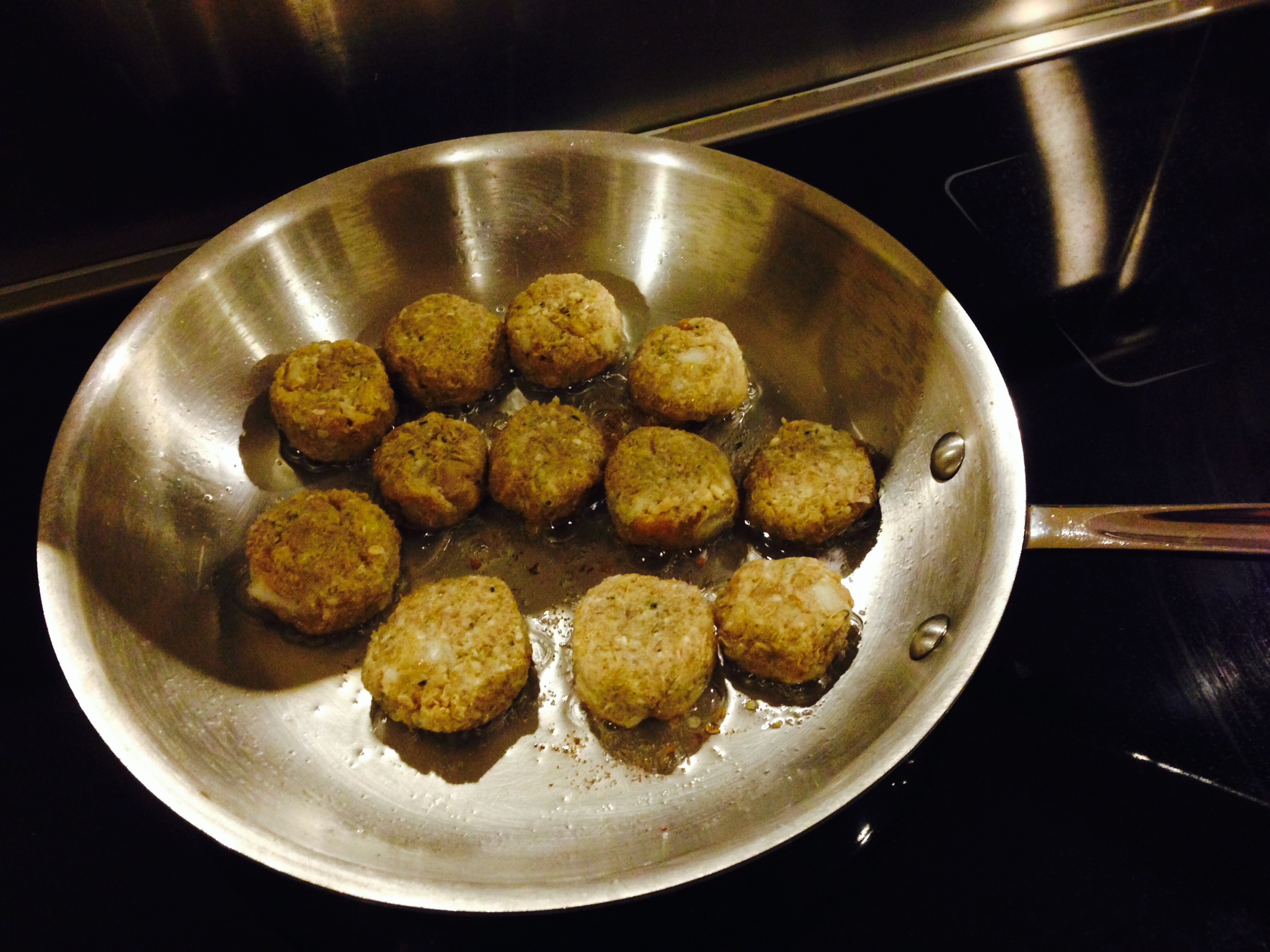
Imitaters are a-fryin' in coconut oil!

Imitaters are a-fryin’ in coconut oil!

Focus (Mine)

Underlying yesterday’s post—underlying the decision to pursue audio or vision therapy, underlying the revelation that sensory processing might be what’s holding Martin back most these days—is an important stopover in this recovery journey. Four years ago, the mother who helped me launch our biomed journey cautioned me to be patient and not to throw the kitchen sink at autism. Work through the issues one by one, she advised. That sounded like sage advice, but how was I supposed to figure out where even to start? When Martin was diagnosed, it felt like everything was broken. Martin had no functional language. He couldn’t sleep without assistance. He ran in circles. Often he appeared not to perceive whether Adrian or I was present in the room. He bolted. He wandered off the edge of playground equipment without noticing till he hit the ground.

For a long time, I did throw the kitchen sink at autism. I had that desperation peculiar to (1) the parents of the newly diagnosed and (2) the parents who can’t seem to find anything that improves the autism symptoms. I wanted to do everything and do it now. I thought we had two years to beat autism, three at most. The urgency was overwhelming.

Those times are over. Martin has improved enough that I no longer think, “Where should I even start?” That has been replaced with, “Eye contact is pretty good. Language is really coming along. He sleeps. He’s connected to me and Adrian, and he looks forward to seeing his friends. Handwriting and fine-motor skills are improving. But the attending—that needs work. Action plan!”

We are nowhere near the end of this journey. No matter. What a difference between where we were and where we are.

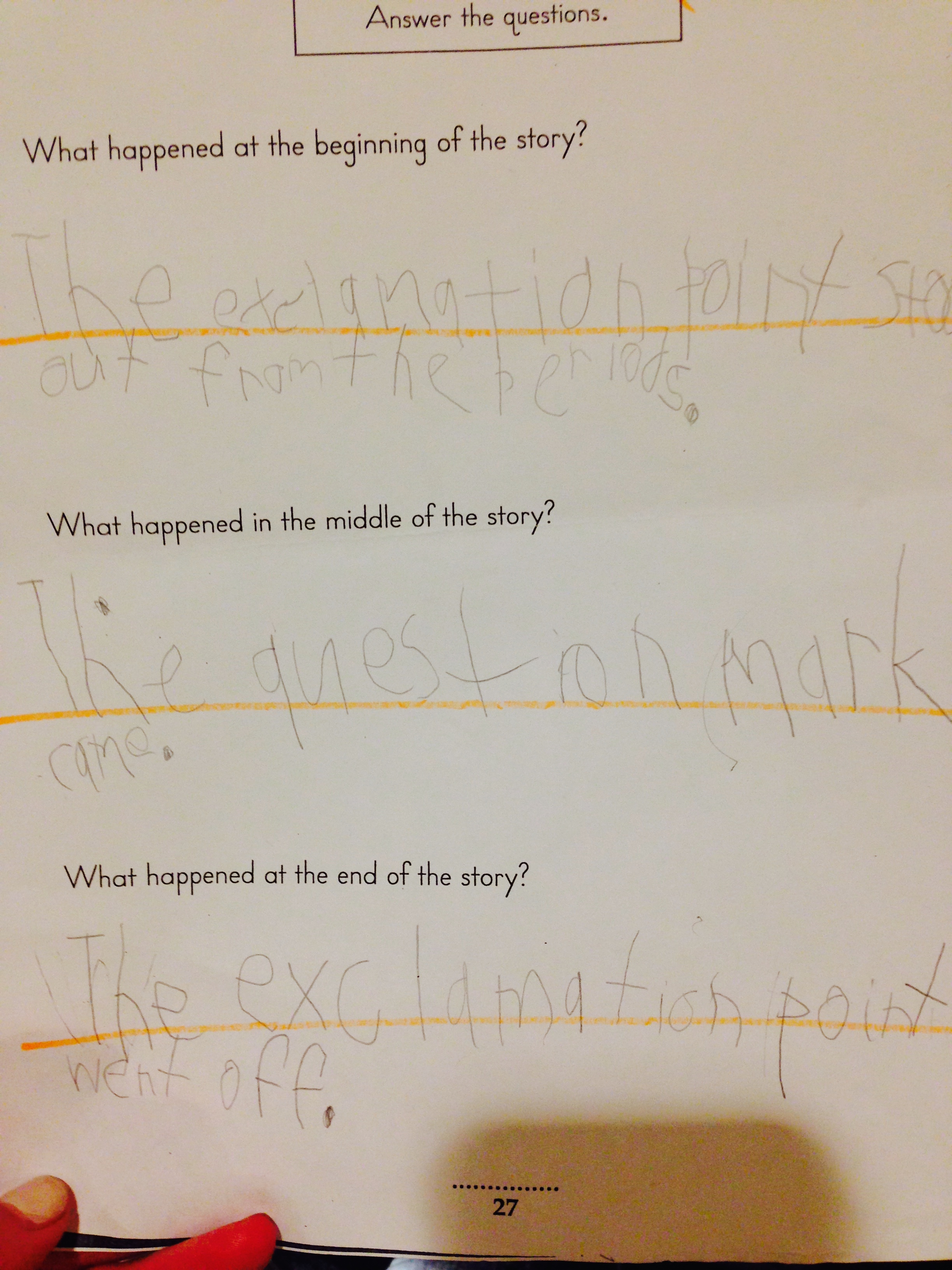
He reads. He understands. He writes. We're doing pretty well.

He reads. He understands. He writes. We’re doing pretty well.

Vacation Winner

In my postscript to “Recovery to Go,” dated August 19, I wrote that Martin and I were taking two vacations in a row: first visiting Austria and Germany with Adrian, and then renting a cabin in the Adirondacks with my sister and niece. Having confessed that much of our European vacation comprised dragging an unenthusiastic Martin from site to site, I promised to ask Martin which vacation he liked better and post the results here.

This morning I remembered to have that conversation with Martin. We were in the car, on the way to the dentist.

“Martin,” I said, “do you remember that in August we took two vacations?”

“Yes.”

“The first vacation we went to Austria and Germany, and the second vacation we rented a cabin with Aunt Kristie and Cousin Mandy?”

“Yes.”

“Which vacation did you like better?”

“Both!”

“Both? You liked both vacations the same?”

“Yes.”

“Are you sure? Maybe you liked both vacations, but one of them you liked a little bit more? Did you prefer one?”

“I liked the cabin on the lake with Poppa John, Abuela, Aunt Kristie, and Cousin Mandy.”

“You did? Why did you like that vacation?”

“But-because it was my favorite!”

So there you have it. To the extent Martin had a preference, it was the Adirondack cabin.

Hardly clear-cut, though. Hardly.

Me in This Equation

The process of recovering a child from autism steals a lot from the primary caregiver. Anyone attempting to recover a child will tell you the same. In my case, I surrendered my law-firm career, most of my time for writing (in the distant past, I wrote fiction, and essays on topics other than autism), and some portion of my social life, and I became a full-time “autism recovery specialist,” i.e., cook, researcher, therapy coordinator, nurse, medi-van driver, HANDLE and RDI provider, statistician/evaluator, proselyte, and housemaid. On top of all that, I have a husband, who is not on the GAPS diet, and who is not recovering from autism, and who nonetheless wants to be fed and, occasionally, conversed with. I am doing everything for Martin, doing some for Adrian, and doing very little for myself.

Well, enough! At least, “kinda sorta enough in a way that doesn’t compromise Martin’s recovery”! In the past few months, I have found that being a full-time autism recovery specialist is getting me down. It is the best job in the world, of course, when Martin is showing rapid progress, as he did this spring. In fact, it is a pretty good job whenever. But I feel like almost everything that has to do with me has been squeezed out of the schedule.

Please, please, please don’t mistake this post for ingratitude. I realize, fully and completely, how lucky I am that Adrian’s income can support our household and Martin’s recovery, without my absolutely needing paid employment. On top of that, we live in an area where therapy options abound, organic food is readily available, and Martin can attend a self-contained school closely fitted to his needs. I am thankful.

Maybe my thankfulness is part of the problem, though. When one voice in my head says, “Hey, wait a second—where do I fit in this equation?”, there is a whole chorus that responds, “Oh, shut up. Don’t you realize how lucky you are?” Then the first voice shirks and whispers, “That’s right! I am lucky. I need to buck up and forget about the ‘me’ here.”

Is this a healthy way to live?

That’s no rhetorical question. I really have pondered it, at length. Less than two years ago, I wrote on this blog that Martin’s autism has caused me, maybe for the first time, to act on my convictions. To do something. If Martin recovers, I wrote, that will be enough for me. I will have achieved. My life will be a success. I ended that post this way:

Not to be fatalistic (just contemplative), I’ve had four decades already. If I can recover my son, I will consider them well-used—even if, in time, this journey comes to seem only a bump in the road.

Lately, I have been wondering whether I need to rethink that sentence. Not the entire post. Just that sentence. I want to recover Martin. I want his recovery more than I ever have wanted anything.

Yet as the weeks and then months and now years of this recovery process have rolled by, and no end has come into sight, I have begun to question whether recovering Martin is enough. The first 38 or 39 years of my life, the years before this recovery path, were spent in preparation for future goals. Since childhood I have wanted to be a writer, with a bent toward writing about religiosity. Because I crave security, I decided that I also would become a lawyer; I seemed pretty good at the skills that go into lawyering, and hey, if there is any profession forever in demand, it’s lawyering. So I worked hard in college and then earned a master’s degree in theology and then went to law school and then clerked for a judge and then joined a law firm and built a litigation practice. Martin entered the world shortly before my 36th birthday, when I was on a break from lawyering in order to complete an MFA degree in writing. When the grueling mommy hours of Martin’s infancy expired, I finally felt ready to stop preparing and start doing. I returned to my law practice, embarked on a major writing project, assembled Martin’s preschool applications (that’s a New York City thing), and looked forward to coasting through the rest of motherhood.

Then autism happened.

What became of the doing? Of the writing and lawyering I had toiled to make possible?

They fell away, tucked behind the relentless routine of autism recovery—the food finding, the cooking, the research, the dread that any moment not spent on Martin is a piece of recovery he’ll lose forever. Or is it? When I started blogging again in January, I said this:

I now understand “the long haul.” I think that, when I started the process of recovering my son, I didn’t really understand how long one might need to haul. . . .

 Fortunately, I no longer fear that some mythical window will close when Martin is five (he’s five now), or seven, or any age. A mother of a recovered 14-year-old told me recently, “Our best year was when he was 12. Twelve years old is when he made the most progress.” Twelve years old is a long, long way off for Martin. If that turns out to be our best year, so be it. We’ll get there.

Now I have realized something more: I can’t turn off the “me” for all the years until Martin is better. For more than three-and-a-half years now, I’ve put everything on hold in order to recover Martin. And I’ve realized I just don’t have it in me to be so selfless for so long.

So I’m making some changes. Not any changes to recovering Martin: We are still doing GAPS diet and biomed and assorted therapies and social-development programs. Instead, the changes are for me. I’ve sorted what I do for Martin into “what must be done by me” and “what can be completed by someone else.” Food control and home-based therapy—those are mine, or at least areas that I must closely oversee. Doctor visits and research into new therapies—mine exclusively. Homework help, laundry, cleaning up after the cooking, chauffeuring—well, those I could reasonably surrender. Very reasonably.

I’m starting to draft real articles about autism recovery for publication not on this blog, publication for which I may need to surrender anonymity. (Writing more. About autism, of course.) I am committing to CrossFit four times per week, not just when I can “manage” it. I am rekindling some of my work with the synod, the governing body that oversees churches in my area. And I have taken a new lawyering job, albeit part time, in a whole different field. (I won’t say too much, except that it’s a field I’ve become interested in because of autism. Of course.) If you’re wondering how all this will be possible, if I don’t give up any aspect of Martin’s recovery process yet still want to sleep, here is the answer: I’m getting a few more hours of childcare per week and three hours of household help daily. No guilt. I’m working again. I can pay.

I’m still an autism recovery specialist.

Just maybe not so full-time.

Martin. And, um, Dora. This kid, Martin. I love him so much.

Martin. And, um, Dora. This kid, Martin. I love him so much.

Recovery To Go

We’re on an airplane. I’ve drafted blog posts on airplanes before. Since his autism diagnosis four years ago, I’ve traveled with Martin from New York to South America (usually to Adrian’s country of origin), California (where my brother lives), Texas (where my parents live), Illinois (often, for doctors). Now we’re on our way to Germany, where I have family, and starting with a side trip to Austria and Slovakia.

“That seems like more trouble than it’s worth,” said a German friend when I told her our plans. “You’ll have to haul his pills everywhere and spend your time finding his special food. Who knows how much he’ll even understand, or remember?”

My friend is right, partly. Everywhere we travel, I tote a massive shoulder bag of supplements, prescriptions, and homeopathic drops. I won’t let the bag be x-rayed, so crossing airport security can be an hour-long exercise. (This trip, it wasn’t. The TSA agent at JFK left all the bottles in the bag, ran a swab or two, asked a few questions, and let me through in less than five minutes. I suspected she must be a mom.) As soon as we arrive in Vienna I will search for organic groceries. We stay in hotels with kitchenettes so that I can cook Martin’s meals and broth. I have organic chicken sausages nestled with an ice block in a cooler-lunchbox that I’ve tucked into Martin’s pajama supply.

Despite my best efforts, Martin will go without some of what he gets in the States. Ashwaganda, for example. The new supply didn’t arrive in time. Or camel milk. I couldn’t find a reliable source for raw camel milk on the go. I didn’t even search that hard. It felt futile. Plus, Martin will have to deal with jet lag, uneven sleep times, unfamiliarity. No way he’s going to be at his best. We’ll lose some recovery ground.

So—why? Why drag Martin across Europe? Why not take an easier vacation, or do a staycation, where I can control Martin’s environment?

I guess it comes down to me and Adrian surviving this autism thing, however long it lasts.

To be sure, there are more kid-friendly vacations. We have lovely beaches and camping venues within driving distance. But I don’t like the beach, and neither does Adrian, although we enjoy hiking, neither of us knows how to camp. For better or worse, we travel more on the “seeing culture” model than on the “relaxing with nature” model. And for better or worse, Martin is our son. Until his independence, the family model is his model.

We could leave Martin home. We’ve done that. Adrian and I went to Israel without him, and to Montreal. On the other hand, we’re a family. I want to share with Martin what I love (hockey!), even if he doesn’t get it yet. Adrian wants to share with Martin what he loves (um… the Vienna Philharmonic, dead composers’ birthplaces, and tragic battlefields, I guess), even if Martin doesn’t get it yet.

We’re parents, after all, and as parents we want Martin to have the experiences that might stick with any kid. Some, he obviously enjoys. Rock climbing. Concerts. The Lion King. Disneyland. Others, we push the envelope more, like when Adrian and I wedged Martin between us on a jet-ski and gunned it to max speeds. Or roller skating. What a disaster! Martin looked like a Looney Tunes character running. Finding fun is trial-and-error for any family. Autism takes so much from us already. Why should we have to be the only family that doesn’t distress the kid once in a while?

Now we’re on a train, from Vienna to Munich. I wish I could write that Martin is observing the placid Austrian countryside, remarking on the farmhouses and windmills. Alas, he isn’t. He’s wearing earphones and playing Garage Band on his iPad. More honestly still, he’s stimming by playing single notes repeatedly. He had a rough few days in Vienna and Bratislava. He is tired, floppy, whiny, unfocussed, and doing his best to make our lives miserable.

Nice try, Martin! Our lives are not miserable. We had a lovely time sightseeing yesterday in Slovakia, where I learned, from T-shirts, that Slovaks are living under a delusion. Apparently they think Marián Gáborík (I just learned that his name has accents!) is “the King.” I always liked Gáborík, and to be sure, he is “a King,” in the sense that he plays now for the Kings. But he isn’t the King. That’s Henrik Lundqvist. Silly Slovaks. Then we returned to Vienna and had dinner at the Palmenhaus. Without us realizing it, Martin ate a sugary sauce on his fresh-fruit dessert. Ooops! Hyperactivity and stomach distress! Then dinner was so relaxed that Martin didn’t get to bed until 10:30 pm. No wonder he’s a mess today.

Adrian and I liked to travel before Martin was born, we liked to travel before Martin was diagnosed, and we like to travel now. Life goes on, even in autism recovery. ¡Vivan las vacaciones!

Postscript: When we return from Europe, Martin and I are ditching Adrian and heading to the Adirondacks for a week, to share a lake house with my sister and niece. “We’re taking two vacations!” Martin declares; I like him to have time with his cousin, and since he attends year-round school, we have to pack travel into the few weeks he has off. Martin is so much better, these days, at expressing preferences. “What was your favorite part of today?” Adrian asked him after we visited Vienna’s Schönbrunn Palace and its extensive gardens, including a playground. “My favorite part of today was when I played in the sand at the castle playground,” Martin answered. After we leave the Adirondacks, I’ll seek Martin’s opinion on which vacation was better, Europe or the lake. I’ll post the results here.

When in doubt, find a playground. This is Martin just hours after we arrived in Vienna. He doesn't speak German, but it took him no time at all to learn the word

When in doubt, find a playground. This is Martin just hours after we arrived in Vienna. He doesn’t speak German, but it took him no time at all to learn the word “Spielplatz,” which means playground.

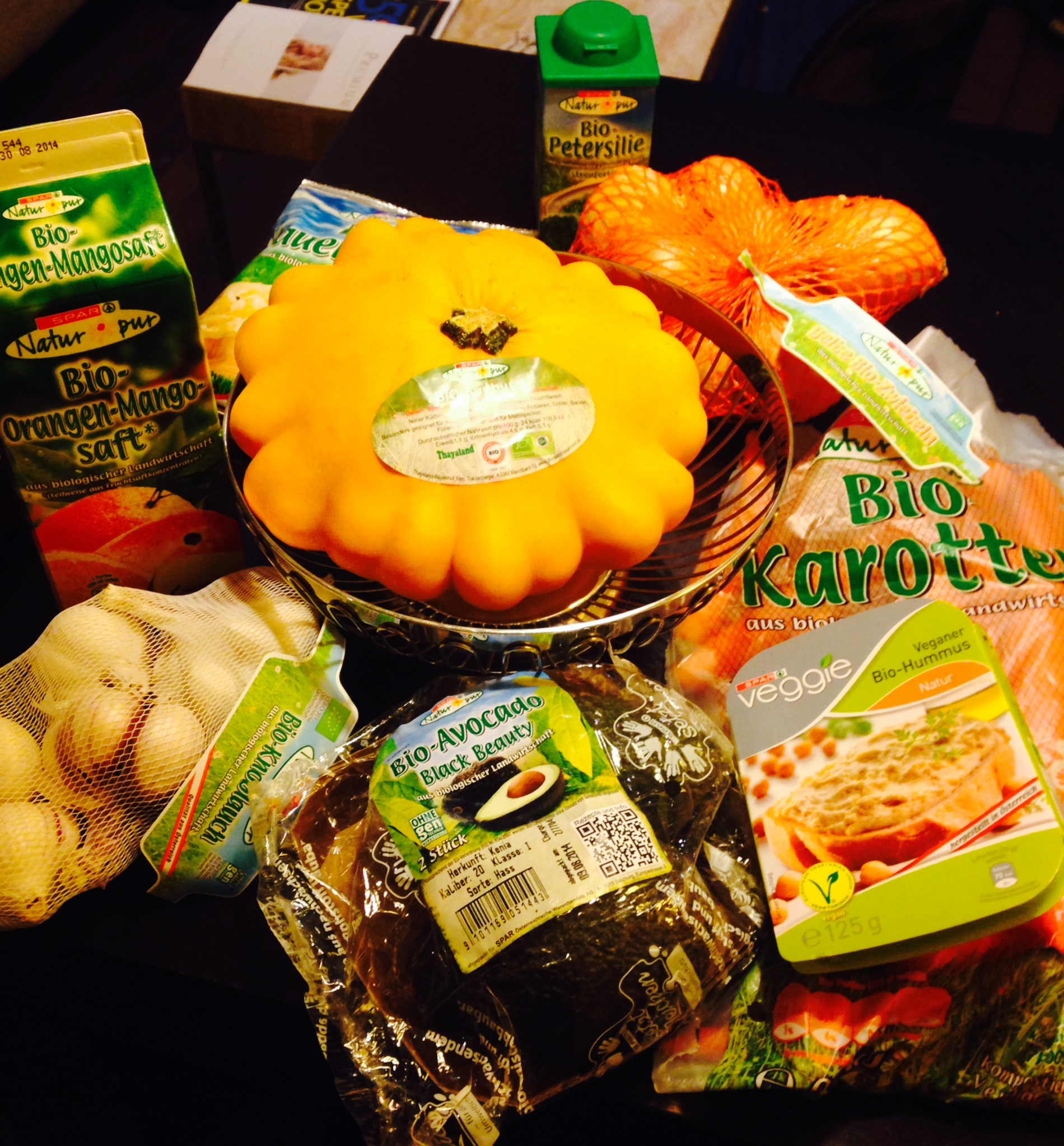
Take that, doubters! I snagged all this organic swag, plus some organic chicken, at a Spar grocery store right next to our hotel in Vienna.

Take that, doubters! I snagged all this organic swag, plus some organic chicken, at a Spar grocery store right next to our hotel in Vienna.

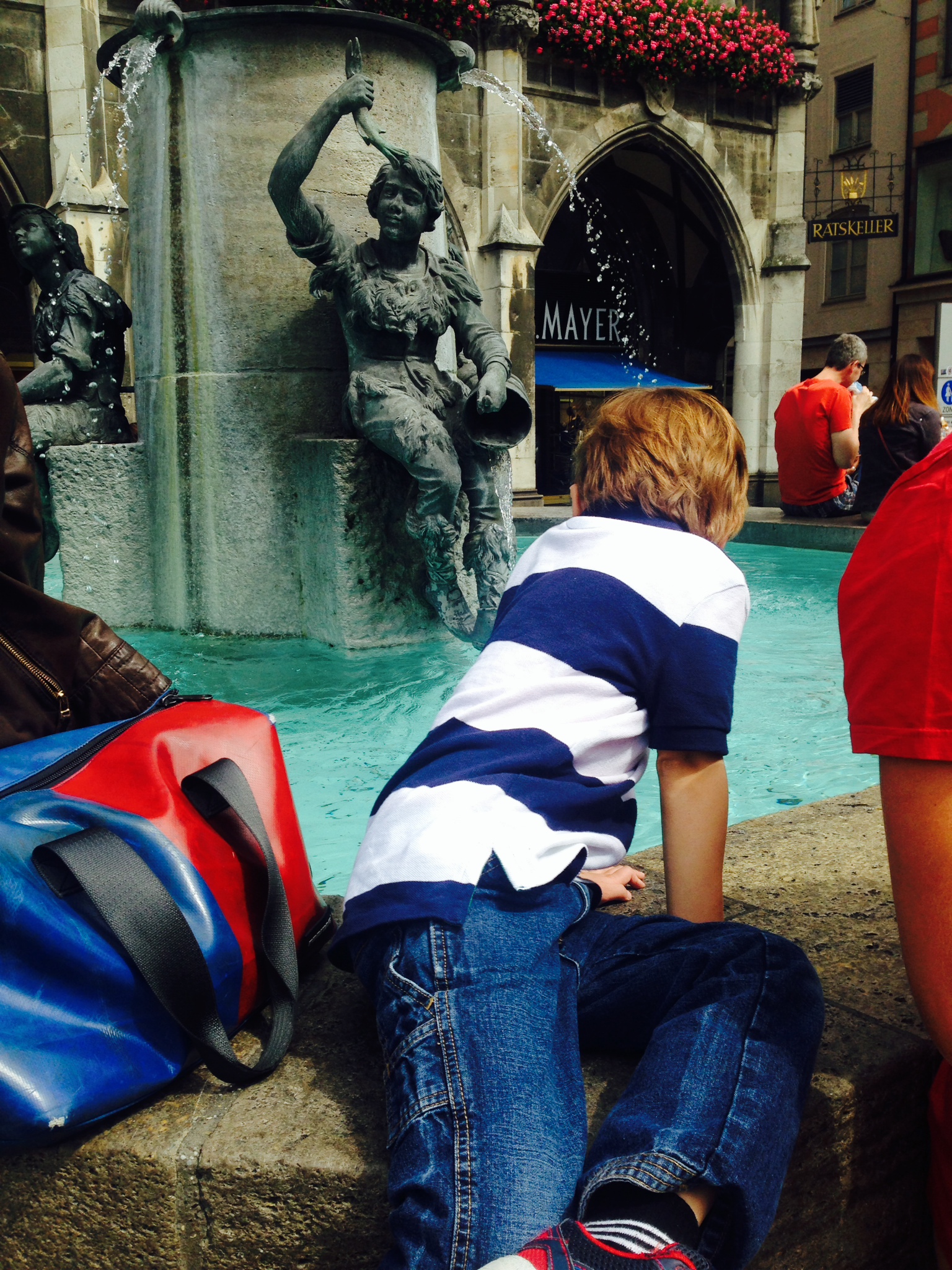
Martin has been feeling better since we arrived in Munich. In this photo, he is checking out a fountain in Marianplatz, in the city center. He just tossed in some Euro coins.

Martin has been feeling better since we arrived in Munich. In this photo, he is checking out a fountain in Marianplatz, in the city center. He just tossed in some Euro coins.

Martin, checking out the English Gardens in Munich. The setting was so photogenic that, a second after this, I handed the camera to a companion and jumped into the picture.

Martin, checking out the English Gardens in Munich. The setting was so photogenic that, a second after this, I handed the camera to a companion and jumped into the picture.

So

I’ve written before about a phenomenon I call “slow-motion childhood”: When your kid struggles for what typically developing kids acquire naturally, you notice micro-steps. Maybe you even get more moments for celebration.

I picked Martin up at school this afternoon. I do that on Tuesdays, so that he, assisted by a special-education teacher, can participate in “Kids’ Klub” at our church. (Yes. Spelling “club” with a K just about kills me. But that’s what they call it.) From the backseat, Martin started talking about the satellite-radio music. He fixates on music: “Mommy, do you hear a bass guitar?” “Mommy, are they playing live?” “Mommy, is there clapping in this song?” Lately he’s taken to memorizing which song I like best from every singer or band we hear. “Mommy, ‘Bennie and the Jets’ is a good song, but it’s not your favorite song by Elton John. You’re favorite song by Elton John is ‘Goodbye Yellow Brick Road’.”

In sum, Martin talks about the music. From his booster seat, he can lean to the side and read the name of the artist and song, every artist and song, on my SUV’s radio screen. There are times when Martin’s reading skills are not as pleasing as you might think.

Martin’s spoken language is pretty solid these days; he can combine words and concepts, and figure out ways to express layered thoughts. “Mommy, were those two songs both by the BeeGees?” “Mommy, George Harrison used to be in the group The Beatles. This is a solo song from after when he was with the group The Beatles.” Still, and even apart from the perseveration, there can be an awkwardness, and a rote pattern, to Martin’s speech. He recycles phrases. New expressions arise rarely.

This afternoon, our first conversation, while on a familiar topic, had a speech breakthrough.

 “Mommy, this song is by the group called Heart. I don’t like the song.”

“I don’t like this song very much, either. I’m not a big Heart fan.”

“You don’t like this song?”

“No.”

“So change it.”

There it was. Did you catch it?

Martin used the word “so” as a coordinating conjunction, in a manner in which the precedent construction—my not liking the song—was unstated and implied. What Martin was saying was, “Because you don’t like this song, you should change the station.” What rolled off his tongue was the casual, idiomatic, and perfect, “So change it.”

So … do you even need to ask?

I changed the station.