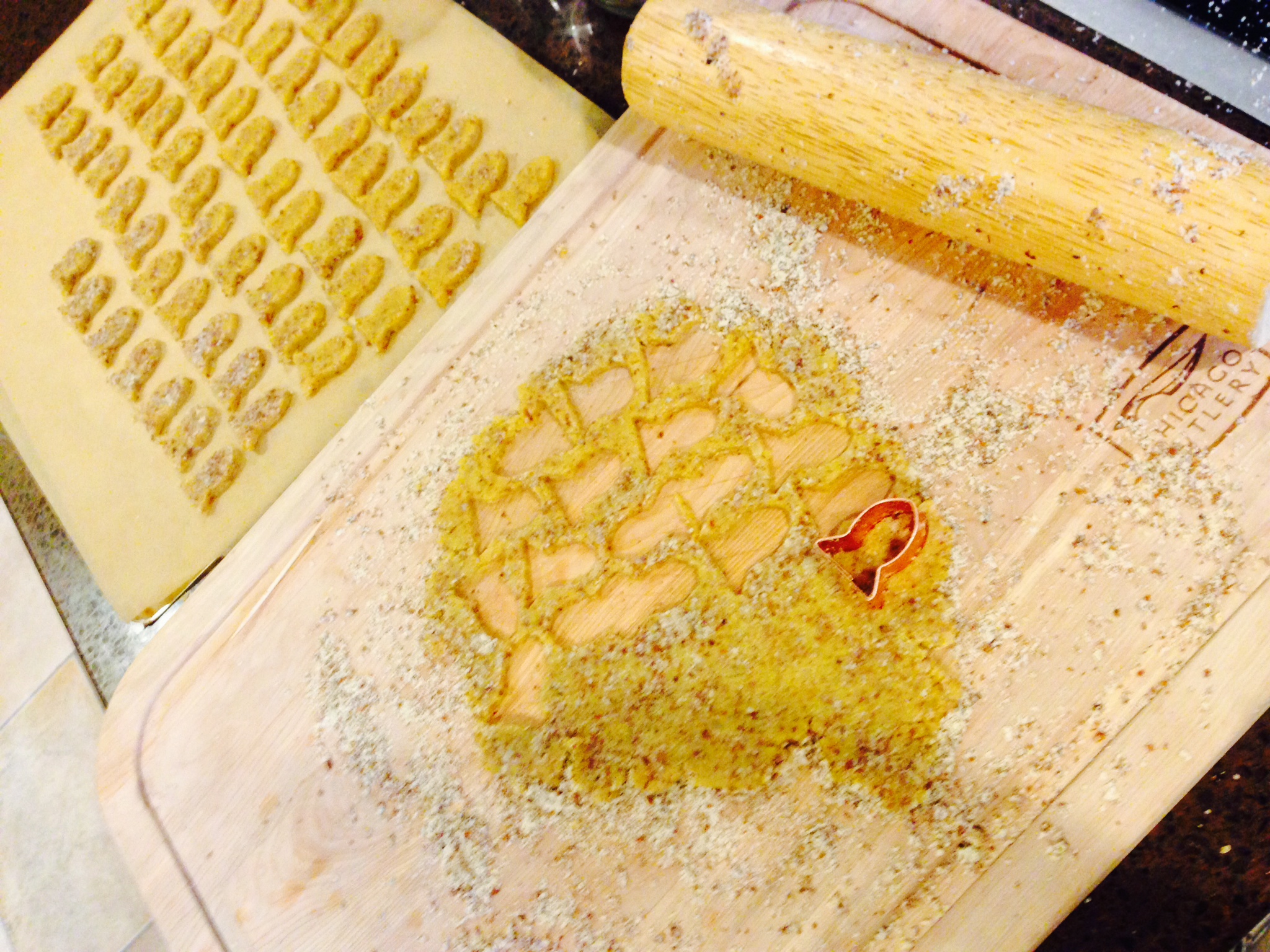
ASD Recovery Recipe: Holiday Cookies, or “Get Off the Freakin’ Goldfish Already”

Readers, are you sick to death of reading my goldfish creations? Are you bored of stories about GAPS almond-flour goldfish, or goldfish made with macadamias that are soaked, and dried, and pulverized?

I can imagine. I’m a tad sick of goldfish myself.

Here’s the thing: Martin will never get sick of goldfish. Like, never, ever. Our local supermarket has a Goldfish® holiday pop-up display right inside the front door. The kids at Martin’s school get Goldfish® as food rewards. The kids at our church share Goldfish® at coffee hour. One elementary-school parishioner has been spotted (by—you guessed it! —Martin) toting a giant carton of Goldfish® around the church gym, scooping out handfuls to cram into his mouth. It’s like my six-year-old is perpetually swimming in a sea of Goldfish® that only he can’t catch.

And so he fixates on goldfish crackers.

And so I spend whole afternoons in the kitchen, fulfilling his goldfish dreams.

Today brought an unintentional goldfish adventure. In a lovely little Facebook group called “Fun Food on a Special Diet,” someone posted a recipe for “holiday roll-out cookies” that turned out to be GAPS-compatible. With memories of mixing and refrigerating sugar-cookie dough from my Grandma Gennie’s recipe, then rolling it out, cutting, baking, decorating, I decided to attempt sugar(-like) Christmas cookies for Martin.

Here is the recipe I used:

½ cup ghee

1 egg

¼ cup raw honey

¾ cup coconut flour (more as necessary)

1 teaspoon baking soda

1 teaspoon lemon zest

Combine the ghee and honey and beat until smooth. Beat in egg. Combine the coconut flour, baking soda, and lemon zest, then beat ¼ cup at a time into the batter. Cover with plastic wrap and refrigerate 30 minutes. Or use my lazy method: Pop the dough into a Ziploc®, smooth out air, and seal the bag before refrigerating.

After 30 minutes or more, place the dough on a parchment paper dusted with more coconut flour, add another layer of parchment paper on top, and roll out to about 3/16” thickness. (The original recipe called for ¼”; I went thinner, though not as thin as 1/8”.) Use cookie cutters to create festive holiday shapes. If you want, brush the top with egg white to create a shine. Transfer to a parchment-paper-lined cookie sheet and bake 10 minutes at 350 degrees.

I suppose you’re wondering how this turned into a goldfish adventure? I got too ambitious with my cookie cutters, that’s how. Instead of traditional shapes like the Christmas tree and snowman I had as a kid, I picked up a set that involve cutting a circle and then stamping a design into the circle with a separate disk. The GAPS dough did cut conveniently into circles that I could transfer to the cookie sheet. On the other hand, the circles were too sticky to release the molded disk, even when I dusted it with coconut flour. That left me with boring circle cookies. How Christmassy are boring circles? I suppose I could have decorated them as ornaments, but as far as decorating goes, I didn’t have many ideas beyond softening up some coconut manna and trying to color it naturally to create icing.

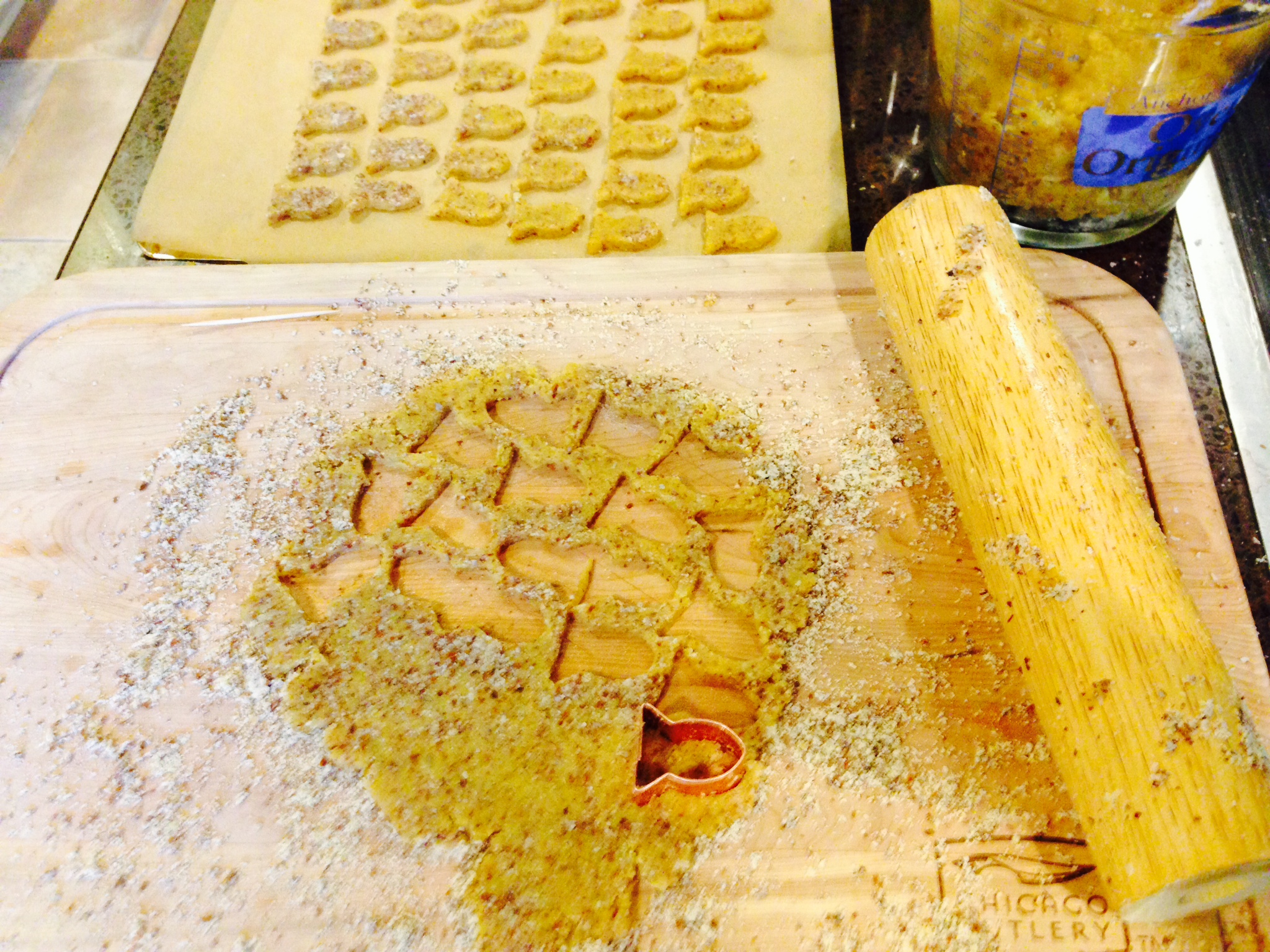
When in doubt, goldfish the recipe. (That’s correct. I made “goldfish” into a verb. Deal with it.) I whipped out my tiny, copper goldfish cookie cutter and went to town. Then I dredged each goldfish in egg white, which I had sitting on the counter because I’d just used the yolks for homemade mayonnaise so that I can devil some eggs for Christmas Day because my son’s autism has magically transformed me into Martha Stewart. Once the goldfish were shiny from their egg-white baths, I sprinkled them liberally with cinnamon and baked.

The result? Cinnamon holiday goldfish cookies. At least that’s the story I’m going with.

The bonus? These goldfish don’t contain nuts, so I’m allowed to send them to school with Martin for a snack.

Autism Recovery Martha parties onward.

photo-18

ASD Recovery Recipes: Snack Tray, and a Bonus for Cara

In this post are recipes for homemade marshmallows, Grinch holiday fruit treats, mint-chocolate candies, berry gummies, and raw almond macaroons.

Martin’s super-tremendous play group rotates among the houses of the six participating kids. The host usually provides snacks. When we’re at someone else’s house, I let Martin have whatever fresh fruit might be available and also bring a just-in-case treat from his snack drawer. When we are hosting, I try to serve snacks that (1) Martin can eat, and (2) the other children, who do not follow special diets, also will enjoy. That’s not easy. Most kids don’t seem to be into homemade treats (Martin also prefers store-bought, packaged foods), and if something comes in a wrapper, they expect refined sugar, not date-sweetened nut bars or sesame seaweed.

Last Friday, for the adults (the parents who hang around, in a separate room, while the kids play), I served fruit and arugula-cabbage chips. I’d bought the chips originally for Martin’s snack drawer. He didn’t like them. I loved them, and last Friday so did the other parents. Perhaps arugula-cabbage chips are a more “refined” taste. In any event, if Martin had wandered by the grown-up table and helped himself to chips, we would have been fine.

For the kids I put together this tray:

photo-17

Pictured are Grinch fruits on toothpicks, mint-chocolate snowflakes, and gummy dinosaurs.

Marshmallows (and the Grinch)

The Grinch is a concoction I’ve seen floating around the Web, on a few sites. It was pretty straightforward to make—green grape, banana slice, strawberry, secured with a toothpick—until the pom-pom atop the hat. Each pom-pom is supposed to be a mini-marshmallow. I couldn’t find any commercial marshmallows that were GAPS-compatible, so I set out to make my own. I found a recipe on Food.com and modified it to come up with this:

1 tablespoon gelatin

¼ cup cold water

1 cup coconut crystals

another ¼ cup cold water

1/8 teaspoon Celtic salt

1 teaspoon vanilla extract

Coat the inside of a small glass loaf pan with a thin layer coconut oil and powder it with coconut flour.

Dissolve the gelatin in the first ¼ cup of cold water and set aside.

In a small saucepan, mix the coconut crystals with the second ¼ cup cold water and stir this over medium heat until the crystals dissolve. Then add the gelatin mixture and bring the whole thing to a boil.

Transfer to a mixing bowl and allow to cool slightly, then add the salt and vanilla and beat ten minutes or more, until doubled in size. Pour into the loaf pan and refrigerate until you can touch the surface without the marshmallow sticking to your finger. Cut into pieces.

At this point, the original recipe instructs to coat the marshmallow pieces in powdered sugar. I wasn’t about to do that. On the other hand, I did have to take some action before I made these bits into pom-poms; because I used coconut crystals as my sweetener instead of refined sugar, my marshmallows came out tan. Pom-poms are supposed to be white! I decided to roll them in unsweetened dehydrated coconut flakes. Not perfect. Close enough.

Mint-Chocolate Candies

The mint-chocolate snowflakes were the biggest hit, though in retrospect, I should have chosen smaller candy molds. They are too a rich candy for thick portions. I used a recipe I picked up at a Generation Rescue cooking presentation at Autism One two years ago (as very slightly modified):

3 cups shredded coconut

¾ cup honey

1/3 cup raw cacao or carob powder

3/2 teaspoons vanilla extract

1 teaspoon peppermint extract

½ cup finely chopped nuts

Blend the coconut in a high-speed blender until creamy. (I think many people would do this in a Vitamix. I love my Vitamix, but I don’t like to do too much for Martin with it, because the vessel is plastic. For this recipe I use my 14-year-old KitchenAid glass blender instead.) If necessary, add a teaspoon or two of coconut oil to facilitate the blending. Set aside.

Bring the honey to a very low boil and stir for a few minutes. Remove from heat and stir in the coconut cream and the remaining ingredients.

Quickly, before the mixture cools, pour into silicone candy molds. Refrigerate until solid.

The original recipe calls for pouring the mixture into an 8×8 pan and slicing when cooled. I have done that, too, using a glass pan. The candy molds are more trouble but add cuteness to the yumminess.

Gummy Creatures

The gummy creatures were the easiest to make. I got the recipe from the same Generation Rescue presentation as the mint-chocolate candies. To make berry gummies, cook fresh (or even frozen, though I’ve had better success with fresh) berries over low heat until they are fragrant and soft, not boiling. Allow them to cool slightly and transfer to a blender. With the blender running, add pure gelatin in a 4:1 berries:gelatin ratio; for example, if you have one cup of berries, add ¼ cup of gelatin. Immediately pour the mixture into silicone candy molds, wiping away any extra. Refrigerate until they pop easily from the molds. Store in refrigerator.

Raw Almond Macaroons

As I am pounding out multiple recipes in a single post, I am going to add one more, for Cara. She’s a mom whose son participates in Martin’s playgroup. Cara complains that I send treats for her three boys and then, when she asks for the recipes, never deliver. Cara has been waiting a while for this one, and in about ten minutes I am going to text her and insist that she read this post, so without further ado, here is the recipe for raw almond macaroons. All measurements are approximate and subject to change based on what’s in my kitchen at the moment of preparation.

2 cups almond flour

½-1 cup coconut oil

½ cup raw honey

½ cup shredded coconut (unsweetened), plus more for rolling

2 teaspoons vanilla extract

½-1 teaspoon Celtic salt

Mix all ingredients. Form into balls approximately one inch in diameter. If the dough is too crumbly, add more coconut oil or, if it can stand to be sweeter, add more honey. If the dough is too oily, add more almond flour. Roll each ball in more shredded coconut. You’re done! To maintain shape and freshness, these are best stored in the refrigerator.

Epilogue

About those marshmallows: After I finished making them, I thought, well, that was a lot of work for just the little Grinch toppers. Maybe I should have bought whatever best-quality organic marshmallows I could find and allowed Martin the tiny infraction of one or two. As it turned out, I needn’t have worried about any infraction. I forgot that Martin—he who once upon a time schemed to get his hands on bananas and ordered strawberries for dessert—recently announced that he no longer likes bananas or strawberries. He refused to touch any Grinch. And the other kids, the ones without dietary restrictions, looked at my tan marshmallows with coconut coating with suspicion and skepticism.

Second Epilogue

The woman who helps me with housekeeping has a daughter with food allergies and a son with social challenges, and as a result she is cautious with their food. During the week she happened to lament, casually, that she couldn’t find any acceptable marshmallows for their hot chocolate. “Did you say, ‘marshmallows’?,” I asked. I yanked my half-pan of leftover Grinch marshmallow from the fridge and cut a bunch of mini-chunks. She sampled one, proclaimed it delicious, and promised to report on whether her kids go for brown marshmallows. We’ll see.

For Diana

Last week, in response to my “Journey” post, I received this comment:

I read your blog from time to time. We have had a few exchanges, where I argued against the idea of “recovery” and said we just need to support our kids to be successful. You said you thought that was mincing words and we both want the same things. I’m really glad to read that Martin is doing well and progressing. I’m sad to hear you are still trying to “recover” him. Some day he may read what you have written. And he will want to tell you that he wasn’t lost, just different. Keep helping him, of course, but maybe this holiday season there is a moment to see that he is not lost? It is a big job, I know, but it is tough on a kid when “fixing” him becomes his mother’s project. That is a lot to put on you both. I wish you well.

The comment comes from a woman I’ll call “Diana.” I don’t know her, except insofar as she is also a lawyer in the New York City area (that’s what I am), and insofar as she has a son with Asperger Syndrome, who I believe must be 10 or 11 years old now. Diana and I exchanged some comments on this blog in April and May 2012, and again in January 2013; we were respectful of each other’s positions on handling autism, and as is evident in the comment I’ve pasted above, she continues to be positive and respectful. I appreciate that, and I thought that, rather than tuck my response into the less-read comments, I would post it front and center.

Diana, this is for you—

Two and a half years ago, you wrote to me skeptical of the concept of ASD recovery. About your son, you said, “I want him to be proud of who he is and how he is. It is a hard balancing act, because I also want to improve his social skills and give him the most options, so to some extent I am working always to decrease how his ASD presents.” When I engaged you in discussion, you elaborated:

I do remain skeptical of recovery as a concept, but how to approach treatment is up to each parent and there are no clear answers. But the larger question, I guess, is that I don’t want to return my son to full neurotypicality because I don’t see him as having been in a certain place and then having regressed or changed. I don’t perceive an assault on who he is by ASD.

Eight months after that comment, in response to a post I wrote about Adam Lanza, the Newtown gunman, you said this:

. . . I don’t understand how the language and idea of ‘cure’ and ‘recovery’ is consistent with teaching our kids to love and accept themselves as they are. I don’t doubt your sincerity. But for me, I want to help my kid but not cure him. I really think autism is a big part of who he is. For me, lots of therapies are great and work well—but they are seeking to assist and not to fundamentally alter my kid. I like my son autistic and I like other family members of mine autistic. I would encourage you to check out grasp.org and watch the video there—it is a very smart introduction to how functioning autistic adults feel about this question. If we want our kids to be happy adults, I think we need to listen to these adult voices first and foremost. My hopes are the same as yours and I know we are all just trying to do the best by our kids.

We are all trying to do the best by our kids. I believe that, and I appreciate your recognizing and acknowledging it. Still, to be honest, I don’t think, at least not now, that we are undertaking the same goal and just mincing words. Our hopes are not the same: You hope to raise an autistic son whose behaviors are typical enough that he can function in society. I hope to raise a son who has no trouble functioning in society because he is typical.

Autism spectrum disorders do not just happen. They are not random behavioral conditions. Autism is not an individualized Weltanschauung, like the way my brother Eddie is super laid-back and my friend Stacey is Type A. Autism spectrum disorders are the manifest symptoms of health problems, most usually compromised immune function. We continue to debate the extent to which these health issues result more from genetics (MTHFR mutations, &c.), or more from environmental triggers (vaccines, GMO’s, toxins like synthetic chemicals, &c.). What is no longer up for debate, unless you ignore all current science, is that if your child has an autism spectrum disorder, he has some combination of underlying conditions affecting his health, and those conditions are resulting in neural misfires.

Your approach—and I invite correction if I am wrong—seems to leave the health conditions that result in Asperger’s uninvestigated and untreated. Instead, you rely on behavioral therapies “to improve his social skills and give him the most options,” because you are “working always to decrease how his ASD presents.”

You “remain skeptical of recovery as a concept.” I will say that I, personally, within my own circle, know three boys, ages 19, 15, and 12, who have recovered from autism. These are not children whom I have “heard of” or “read about.” They are boys whom I know. I can, and do, talk to them and their parents. Each of the three was diagnosed with autism, from mild to moderate, at age two. They recovered fully, by their parents’ estimation, at ages 8, 12, and six. They are not “quirky.” They no longer have rough edges or trouble with social skills. They are, for every purpose I can see, restored to typical neurofunctioning. They reached this point because their families treated their underlying health conditions, as I am doing with Martin. I know that every child is a puzzle, that not every child who is treated biomedically will recover (at least not with what we know today), and that Martin’s “autism” symptoms may, to whatever extent, persist his whole life. But if you need to know what “recovery as a concept” means, it means this: restoring a child’s immune function and overall health, which in turn alleviates autistic behaviors symptomatic of compromised health.

You “like [your] son autistic and … like other family members of [yours] autistic.” I adore my child. I will adore him whoever he is and however he behaves, a fact that I impart to him daily. But I do not “like” his being autistic, because his being autistic means his health is compromised. If I were to learn today that no biomedical intervention would ever change Martin’s behavior in any way, I would still continue with his special diet and homeopathy and supplements because I want to restore his health. I cannot think of another condition that I would leave untreated, so why would I stop treating his gut-flora imbalance, candida overgrowth, or mitochondrial processing disorder?

You encourage me to consider the experience of autistic adults when determining what course to pursue with Martin. I do. I have read at length about how demoralizing traditional behavioral therapies can be for persons with autism, about how ABA can frustrate and even humiliate its subjects. (Not all ABA. Some practitioners who begin with ABA and find their way to a gentle approach.) I referred above to a 15-year-old I know who reached recovery around age 12. His mother reduced his behavioral therapies after he protested, “Mom, they want to change everything about me!” By contrast, the family continued and even increased biomedical treatment, which by the end of his recovery process, the boy was requesting because of the way it made him feel better.

When Martin asks about why he cannot eat Goldfish® crackers, I explain, “Oh my goodness! If you eat those crackers, you will get those funny poopies, and the ingredients will make it hard to pay attention in school. Remember how that happens sometimes?” The culprits in this equation are the processed crackers, and how they affect Martin inside. When your son asks why you want to “improve his social skills” and “decrease how his ASD presents,” how can you respond? Is the culprit crackers and firm bowel movements, or does the culprit seem like him?

Martin does not know he has autism. He has never heard that diagnosis. He knows that he eats a restricted diet because some foods “hurt his belly” or “make his tummy do funny things.” He knows that the drops and supplements he takes are like Mommy’s vitamins and probiotics, a good idea for almost anyone. We don’t do traditional behavioral therapies. I have found that most traditional therapies—ABA, speech, even to some extent occupational and physical therapy—come with the theme, “Don’t [sit, rock, behave, chant, stim, &c.] that way. That is unacceptable. Try to fit in.” I don’t want Martin to hear that he needs “some work around the edges” (your phrase, from a comment on 23 April 2012). Martin’s behavior isn’t what needs work. His behavior naturally adjusts as his health improves.

(Note: Martin receives traditional OT and PT at school, because they are on his IEP. In that regard, I am grateful that he attends a self-contained special education school, where every student participates in OT and PT, so that they seem like a standard part of the curriculum rather than something directed at changing Martin.)

At your request, I checked out grasp.org; it presents testimonies similar to others I have read, from autistic teens and adults. In return, let me point you toward stories like What Is My Mother Doing to Me?, which was written by a 14-year-old in gratitude for his recovery. I hope that Martin will not have to tell anyone what it is like to be an autistic adult, because he will never know. And if he reaches neurotypicality, I don’t think either of us will regret the result. As I have written before, in all my experience communicating and working with other ASD families, I am yet to hear from anyone who regained his/her health biomedically and subsequently says, “I wish we hadn’t done this. I prefer being autistic to being neurotypical.” (My sample size is not restricted to the three aforementioned recovered boys whom I know personally. I know of dozens of recovered persons, on-line or otherwise.)

You seem to worry that Martin will one day read what I write on my blog. To that I say, he’d better. In part, I write this blog for Martin. I don’t think he is “lost” or that his personhood needs “fixing.” I’m not sure why you use those words. Two weeks ago, when I got socked with a virus and ended up in the hospital, I wasn’t “lost” (except maybe insofar as I passed in and out of consciousness…!). My immune system needed help fighting a health condition, and when I received that help, I recovered. My son’s immune system needs help. I’m struggling to give him that help. I look forward to the day when he understands what I’ve written here, when he receives confirmation that he is so precious and so loved that Adrian and I would scour every corner of God’s green earth to give him every advantage we can.

So that’s it. Your and my disagreement lies in whether it is preferable to treat the health conditions that underlie autism, and let the behavior do as it will, or whether it is preferable to leave the health problems untreated and try to “smooth” the resulting behavior. I’ve phrased the question in a biased way, of course. I’ve done so because I believe it is preferable to treat “autism” biomedically. You take a different approach, and that is fine. We’re cool. I don’t have all the answers.

I do hope you’ll stick with the blog, though, and continue to comment. I feel invested in your son and your journey. I pray that it leads you both to a place of contentment.

Martin in action at the trampoline gymnasium. Not lost. Just getting healthier.

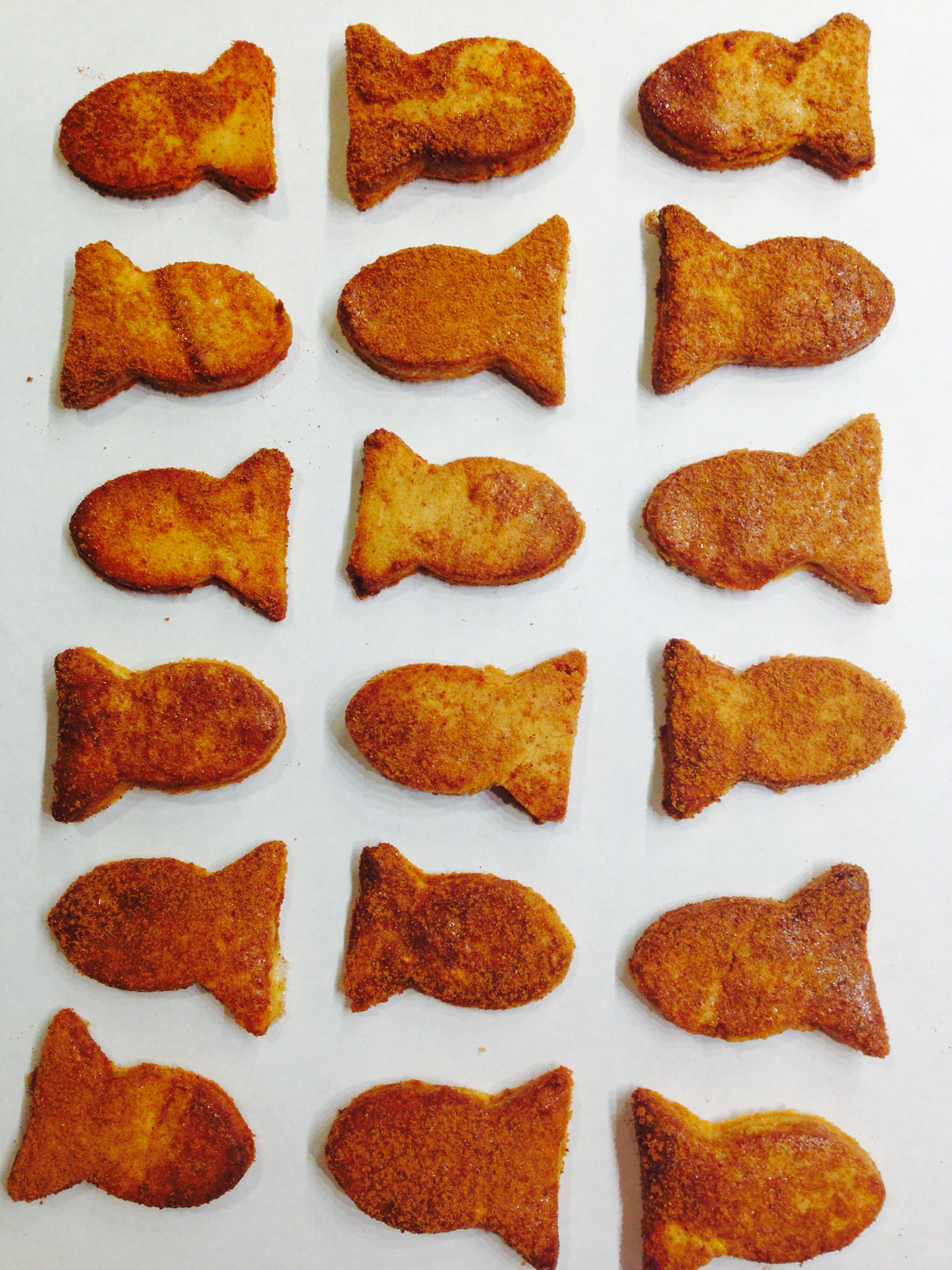
Martin in action at the trampoline gymnasium. Not lost. Just getting healthier.

So, What Happened?

What happened? How was Thanksgiving? How did my terrific organic vegetarian-, pescatarian-, and GAPS-friendly plan turn out? Did I rock the holiday table?

Here’s what happened Thanksgiving week.

Sunday afternoon, and again on Monday, my mother and I went shopping. Dried cranberries sweetened only with apple juice. Bunches of kale. Hazelnuts. Farm eggs. A bag of almost-ripe avocados. Fresh rosemary, and sage. Everything the menu required, we had. Except for the fish. The fish we were to purchase Wednesday.

Monday evening, three days before Thanksgiving, my brother Rudy and his friend arrived from California. Adrian and I stayed home while my parents retrieved the new guests at JFK. I fed and bathed Martin, got him to bed, missed the last step coming downstairs, and stubbed my big toe, hard. (That will become relevant. Really.) With Martin asleep, we adults sat down to a nice dinner.

By the time dinner ended, my toe had swollen and bruised, and I could hardly move it, so I took some ibuprofen. Other than the toe, I felt fine when I went to bed at 10:30 pm.

Around 1:00 am I woke, perceiving that something was terribly wrong but unsure what. My toe throbbed, a pain that radiated to my knee, and I felt as if my body were empty, without muscle or energy. I hobbled from bed to the bathroom and lay on the tile floor, bewildered. I didn’t need the bathroom. It just seemed like I belonged there. I don’t know whether I fell asleep, or whether minutes passed, or more. The next time I came to my senses, I was shaking. I crawled several feet and collapsed onto the shower mat, thinking it would keep me warm. When the shaking turned to convulsing, I realized I needed help.

This is a blog about Martin’s health, not mine, so I’m going to fast-forward past the dreadful rest of Monday night and Tuesday morning, and the circumstances that had me sent from a doctor’s office to the hospital Tuesday afternoon, and leave it suffice to say: Thank God my mother was visiting. Without her, Martin might’ve gone unkempt and unfed, and who knows what would’ve become of me? Some virus took hold and wrung me good: fevers, dehydration, dangerously low potassium. Doctors and nurses prodded and monitored me all night Tuesday, then released me from the hospital early Wednesday, after I had stabilized.

By Wednesday evening, the night before Thanksgiving, I was able to get out of bed. But I wasn’t going to be doing any cooking.

The elaborate menu of three breads, two entrées, four side dishes, and three desserts fell entirely upon the shoulders of my long-suffering mother, ably assisted by my stepfather. And what do you know? Despite doing her simultaneous best to take care of me, to feed my husband and stepfather and brother and friend, and to amuse Martin, she managed to prepare everything other than the pumpkin poppers and raw kale salad. To be sure, there were minor snafus. Instead of fresh fish, she prepared Vital Choice salmon from my basement freezer. The zucchini bread turned into zucchini muffins. The cauliflower, when mashed, produced about one-half the expected volume. Still! Hey! Thanksgiving dinner for everyone! (Everyone except me. I still wasn’t up to eating.) Martin particularly loved the zucchini muffins. He’s been eating them for breakfast ever since.

I am going to say that I felt pretty darn thankful. Thankful that if I had to get sick, at least I had my mother in the house. Thankful that everyone arrived safely. Thankful for a meal we all could eat together. Thankful that Martin conversed fluidly with the guests, that he’s doing so well.

Thankful that, along with the CAT scan and ultrasound, the hospital took the time to x-ray my big toe. It was bruised but not broken.

Bruised but never broken. That’s us.

10482129_997503296932826_489716492902670442_o

Let Us All Gather at the Table. How?

Sorry to be posting so much about food lately. Recipes. GAPS. Quinoa. Goldfish. Goldfish. Food and diet are what people ask me about the most. And now Thanksgiving is here, hands-down my favorite holiday. Like we did last year—since we have a house in the suburbs, we might as well use it for something—Adrian and I are hosting Thanksgiving in our home. At the table, along with me and Adrian and Martin, will be my mother, my stepfather, my brother Rudy, and a friend of Rudy.

The dietary breakdown—

Rudy’s friend: eats all foods.

Adrian and my parents: pescatarians, i.e., eat dairy, eggs, and fish, but no fowl or red meat.

Rudy and I: vegans, i.e., avoid all animal products, including eggs and dairy.

Martin: GAPS and casein-free, i.e., eats fish, meat, and eggs, but no dairy, grains (except for a smidgen of quinoa), refined sugar, or starchy foods like yams or potatoes.

Also, Rudy is allergic to most tree nuts. He can eat almonds and hazelnuts.

Try menu planning for this crowd. Go on, try! After much contemplation, I have decided that I will, for Thanksgiving, eat recipes that contain eggs. Rudy has agreed to do the same. With that, I think I have come up with a decent, if non-traditional, menu. Some of the recipes came from The Heal Your Gut Cookbook. Others I found on-line, on “paleo” or “no grain” websites, and modified the ingredients as necessary. The lentil-nut loaf calls for a special shout-out to The Simple Veganista and Oh She Glows. Finally, a couple recipes (mashed cauliflower and roast Brussels sprouts) are favorite old creations of mine.

My aim was to ensure (1) that everyone was happy and satisfied, and (2) that Martin could partake in every food on the table. Without further ado, here are the dishes I plan to serve, with ingredients:

Breads

almond flour zucchini bread

ingredients: almond flour, cinnamon, baking soda, salt, nutmeg, eggs, honey, banana, shredded zucchini.

coconut butter bread

ingredients: coconut butter, eggs, coconut oil, sea salt, baking soda.

pumpkin poppers (mini-muffins)

ingredients: coconut flour, sea salt, cinnamon, nutmeg, allspice, cloves, ginger, eggs, cooked pumpkin, cooked carrots, coconut oil, honey, vanilla.

Main Courses

fish (for the non-vegans)

ingredients: not yet known; what fish I buy, and how we prepare it, will depend on which Martin-safe(r) fish is freshest and available.

lentil-hazelnut loaf (for the vegans, and anyone else who wants some)

ingredients: brown lentils, vegetable broth (I make my own), flax meal, olive oil, fresh garlic, onion, red bell pepper, carrot, celery, gluten-free oats (not GAPS-compliant, so I may look for a substitute), hazelnut meal, thyme, cumin, garlic powder, onion powder, salt and pepper.

Side Dishes

quinoa stuffing

ingredients: quinoa, squash, onion, celery, bay leave, fresh garlic, fresh rosemary, fresh thyme, fresh sage, apple, raisins or dried cranberries, chopped toasted hazelnuts, apple cider vinegar, fresh parsley, cumin, olive oil.

garlic mashed cauliflower

ingredients: cauliflower, olive oil, salt and pepper, garlic.

raw kale salad

ingredients: curly kale, olive oil, lemon juice, apple cider vinegar, pumpkin seeds, red onion, avocado, salt and pepper.

roast Brussels sprouts

ingredients: Brussels sprouts, olive oil, lemon juice, salt and pepper, garlic.

Desserts

carrot cake with vanilla ice cream

ingredients: coconut manna, honey, carrots, cinnamon, shredded coconut, sea salt, baking soda, vanilla, eggs

ice cream: Raw Ice Cream (this has some raw agave and so does not comply entirely with GAPS; also, Rudy can’t eat it because it contains cashews).

chocolate pudding pie

crust ingredients: hazelnut meal, salt, baking soda, palm-coconut shortening, honey, vanilla

filling ingredients: avocado, honey, cocoa, apple cider vinegar.

Yes. I am going to try to prepare that menu. My mother and stepfather have already arrived from Texas, so I will get help from them. Still, if by chance I fail to blog any day next week, you will know why. When I ran the menu by Adrian, three nights ago, he said, “That sounds fantastic! You know what I think?”

“What?”

“I think if you’re going to pull that off, you’d better start cooking now.”

Journey

When we first started recovering Martin, I envisioned an end date. I’ve written on the topic, that is, “How will I know when we’re done?” Four years ago I thought we might be “there” by kindergarten or first grade; the mother who got me started on this journey pretty much recovered her son by age six. That seemed doable. (Martin is six now, in first grade, and far along but nowhere near typical.)

This year, in conversation with parents whose kids are, for all intents and purposes, recovered or very nearly indistinguishable from typically developing peers, my understanding of this path has changed. I don’t think there will be an end date.

This is not to say that I don’t think Martin will recover. I do. This year Martin’s language and social skills have come so far—almost daily, neurotypicality feels achievable.

I foresee a time when Martin will leave self-contained special education for a mainstream classroom. I foresee a time when physical therapy and occupational therapy and speech therapy will no longer be offered to him. I foresee a time when he will make friends without a parent-engineered play group. Little by little, these needs that Martin has will fall away.

Yet there will be more to do. Martin has lost a significant portion of childhood to autism, and he will always need to catch up in some regard. Moreover, the damage to Martin’s immune system is likely to affect his health even after the biggest strikes are resolved. What I do for Martin may naturally shift behind the scenes as he ages and heals. That doesn’t mean I won’t stop working.

As of today, I see recovering Martin as a permanent part of my parenting journey. It’s like dividing a number half by half by half. You never reach zero, but you get infinitesimally close. Even when Martin is 0.0000000001% away from typical (and therefore more “typical” than most any kid?), I’ll still be lurking around, trying to keep him healthy, giving him what he needs to become the man he was born to be.

Every parent’s adventure is different, and I guess this is mine.

ASD Recovery Recipe: Goldfish Crackers, Even More Complicated

When you read my exciting recipe for goldfish crackers, did you think I was crazy? Did you think, “This blogger spent two hours to make a couple trays of goldfish crackers. I’m going to do that, too. That fits right into my life.”

Guess what? I made more goldfish crackers, and I made them even more complicated still.

Nuts are GAPS-legal, provided they start raw (you can brown them yourself). The best way to eat nuts GAPS-style is to soak/sprout the nuts and then low-temperature dehydrate them, for digestibility.

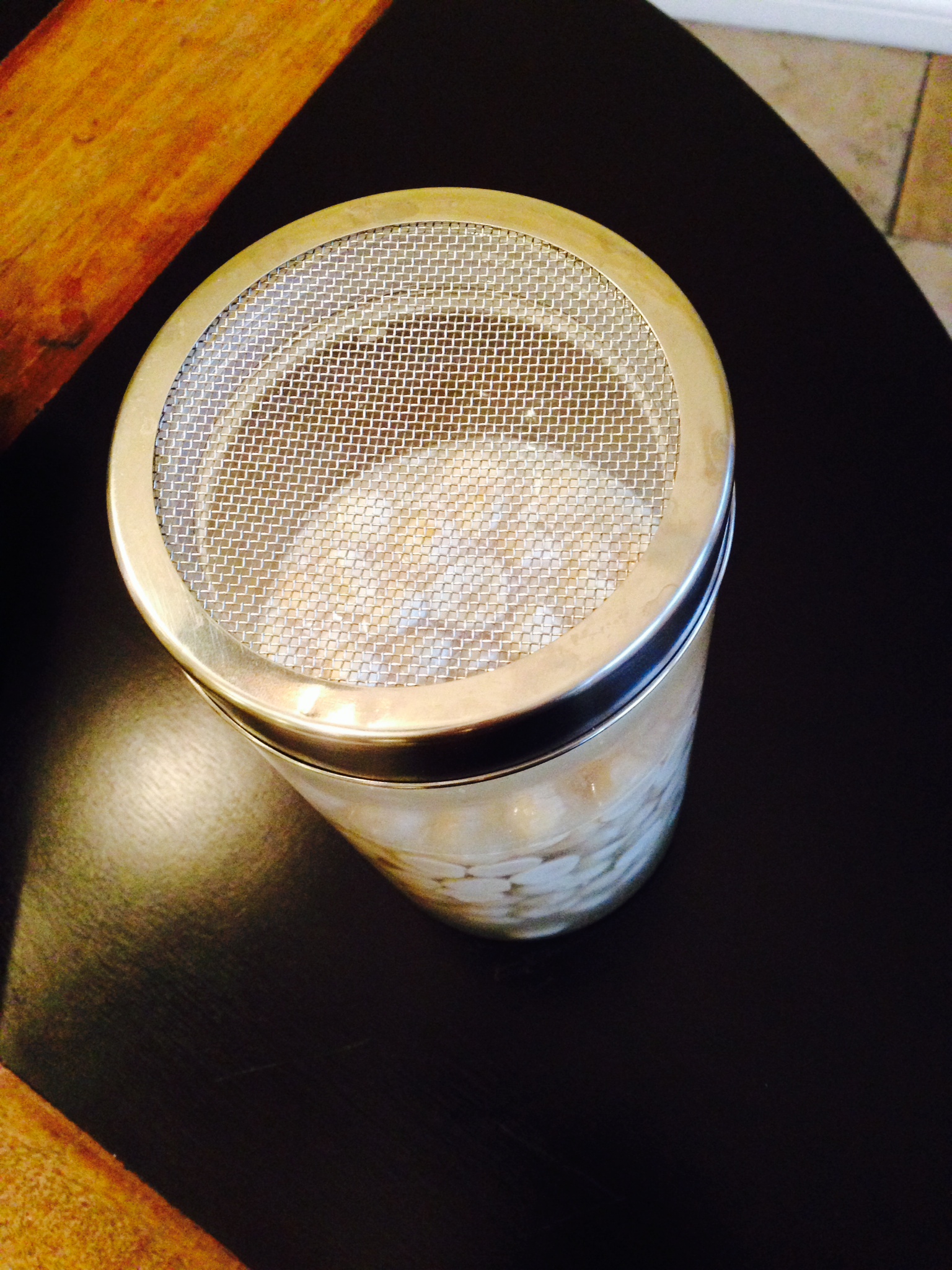
Last time I made goldfish crackers, I used store-bought almond flour. This time, I thought: I’ve got raw macadamias. I’ve got a sprouting jar. I’ve got a dehydrator. Let’s party.

I used the same recipe (doubled). Instead of using commercial almond flour, I soaked several cups of raw macadamias in Fiji water overnight.

photo 1photo 2

The next day, I drained and rinsed the nuts and transferred them to my dehydrator.

photo-13

They took forever to dry at 115 degrees. I had to leave them in the dehydrator more than 24 hours.

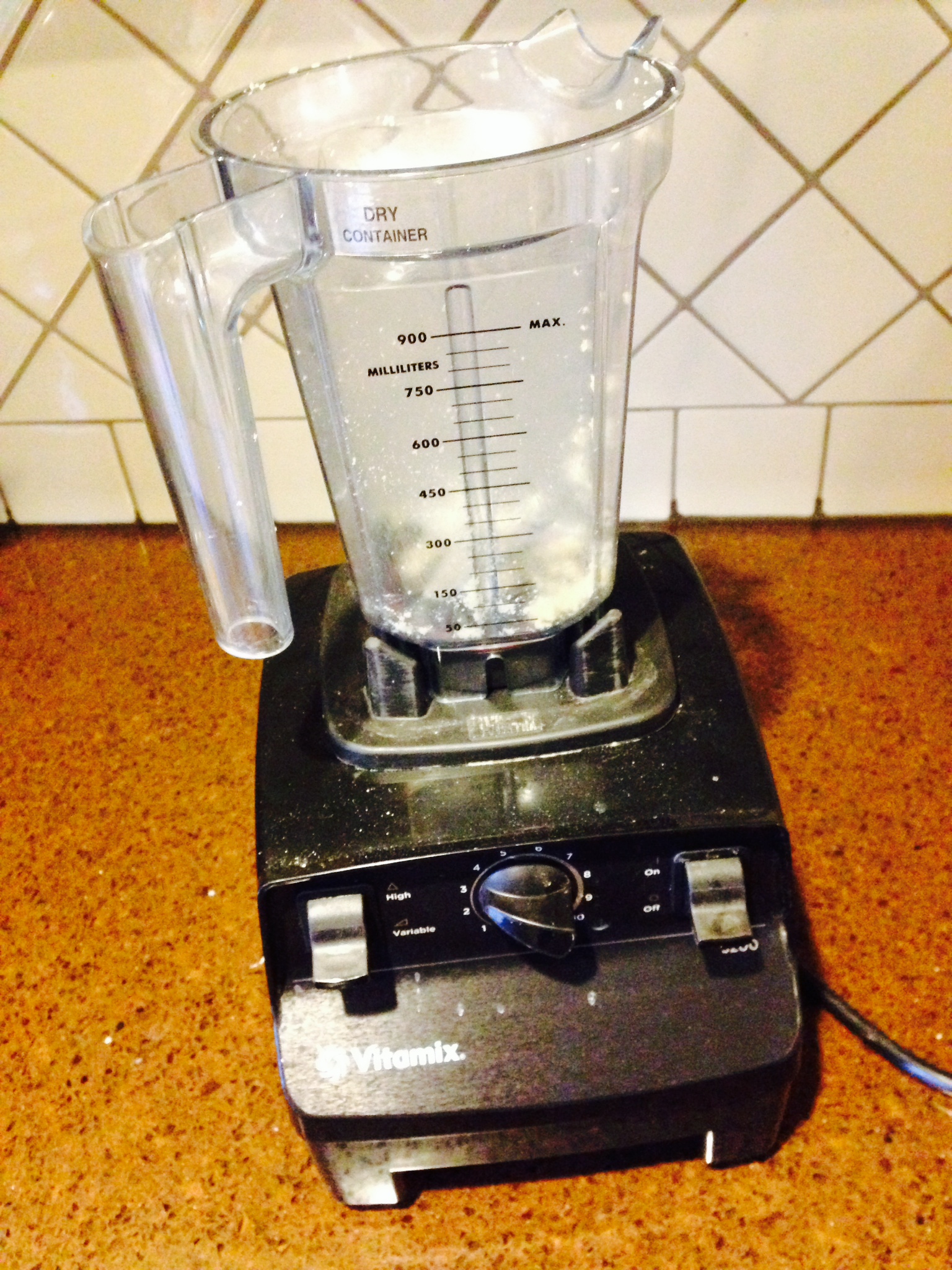
That brings us to day three. I removed the soaked and dried macadamias and started grinding them in my Vitamix . . .

photo-14

. . . which didn’t work out so well. The stuff at the bottom turned into pasty nut butter before I could pack down enough of the sides to become flour. After a quarter-hour of arguing with the Vitamix, I decided to finish the job with my trusted coffee/nut/seed grinder. I could grind only, like, ten nuts at a time, but the easier access to the blades and bowl made the job manageable.

photo 1

When the process was finished, I had about three cups of macadamia flour. It was still kind of creamy, and not powdery at all; if I hadn’t been using it immediately, I would have refrigerated the product and not kept it more than a week. In order to make a double recipe of goldfish, I needed four cups of flour, so I supplemented with Bob’s Red Mill natural almond meal, which is a good product but neither organic nor sprouted. (Hint, hint, Bob Moore.)

At last I was able to mix my goldfish dough. Then, sprinkling more almond meal to prevent sticking, I turned my counter into a goldfish factory again.

photo 2photo-12

This round, however, I did not bother making eyes and mouths on the goldfish. Etching those details with a wooden toothpick consumed so much time, and I’m pretty sure Martin, as he chewed goldfish by the handful, never noticed whether his crackers had faces.

Total prep time: two days, plus three hours grinding, mixing, rolling, and cutting.

Total time goldfish crackers lasted before Martin ate them all: one week.

Next time, if I need to supplement the flour that I make, I will try using Blue Mountain Organics sprouted almond butter instead (there are various sprouted nut butters available commercially; usually I select the one I find first), and maybe decreasing the olive oil to compensate for the oilier product. As healthy as the current batch is, I can always do better.

(Now might be when you revisit the final paragraphs of “My Beef With the GAPS Diet Author,” wherein I asserted that my mental health is strong . . . .)

Bucketful of a Good Thing

It has been 22 months since Martin constructed his first “why” question: “My daddy, why he don’t come home?”

Since then, the why question hasn’t really come up again, much. As I’ve written, Martin’s development bounces that way; a skill emerges, hides, and then—explodes.

Boom! Over the past two weeks, the sky has filled with why questions and they’re raining all over me. Martin is asking both standard, practical questions (“Why can’t I ride in the grocery cart?” “Why do I have to take a bath?”) and the maddening questions I don’t know how to answer (“Why do the months go from January to December?” “Why are the clouds made of water?”).

The ancestral question—“My daddy, why he don’t come home?”—was a “why not” question. Despite the recent onslaught of why questions, I had not heard another “why not” until this morning, when Martin asked, “Why is a softball not soft?” (Here I can’t resist a pun: That question was no softball to answer.) Now that “why not” is back, I’m already anticipating the arrival of “why can’t I…” questions.

As I understand human development, most typical kids pass through a “why” phase around age four. Martin is six. That’s not so far off.

My favorite why question so far? Sunday morning, we were driving to church when Martin asked, “Mommy, why is the man in the garbage?” I looked and saw a maintenance working standing in a trash can, a rake lying nearby. I said, “I thinking the man’s using his weight to pack fallen leaves into the garbage. Isn’t that silly? A man in the garbage!” Then Martin and I shared a good laugh, which if you have a child with autism is an achievement in itself.

Picture Shock

My laptop’s “sleep” mode is set to play a rotating photo montage. We got our first digital camera to take baby pictures (kitten pictures?) of our cat Levi, early in 2004, which was 11 years ago and, you realize, also one million years ago. That was the advent of digital photography in my and Adrian’s life. The thousands of photos stored in my laptop have been taken over the past decade or so, including during Martin’s childhood before autism.

When I take a two-minute break from working and return to find pre-autism Martin on the screen, my first feeling is usually sadness. My son at twelve months, fourteen months, sixteen months, looks directly at the camera and smiles naturally. He shows us what he’s doing. In one beautiful photo, he’s lifted high on Adrian’s right arm as both of them point toward me, the photographer. Within six months of that photo, Martin got lost in himself. His eye contact, pointing, and connectedness disappeared. He stopped meeting milestones for social development. The repetitive behaviors began.

I try to use the sadness from seeing those photos and turn it to resolve. Slowly, Martin is returning. By now he points again. His eye contact is not as sustained as it should be, but it’s there. He wants to connect, not only with me and Adrian, but with peers. We have come a long way.

Yet we still have to far to go. When I think about that, I become angry—angry at all we have to do to reclaim that easygoing little boy, anger at a toxic world that stole him.

Maybe I should change my laptop’s sleep setting. But no. There’s no use in avoiding reality.

TWIFU

TIFU. Know what it means? Click here (at your own peril) if you don’t.

Now take the T (“today”) and substitute TW (“this week”), because the events I’m about to describe happened on Monday.

In yesterday’s post I talked about starting Heilkunst. Martin’s first two clears arrived last week. I waited to start them, because I hadn’t had time to peruse the instructions for the clears, or to revise Martin’s daily supplementation sheets to include the clears and the accompanying drainage formula. Monday I had the time, got everything prepared, and decided to start Martin’s first clear.

By Monday we also had been waiting more than a week, since our visit to Dr. Zelinsky, for Martin’s new glasses to arrive. Martin, with characteristic precision and fierceness, had said he wanted his glasses to arrive “on Saturday, November 1 and no other day!” They didn’t. So when the glasses finally appeared on Monday, November 3, I was eager to present them to Martin and let him start wearing them.

Here’s what happened after the school bus dropped Martin off Monday afternoon:

3:50 pm. Martin put on glasses for the first time, agreed to wear them generally.

3:50-4:20 pm. Martin played, read, and drew pictures, wearing glasses. He took his afternoon supplements.

4:20-6:20 pm. We went to social-skills group. Martin wore glasses. On the way, he drank his camel milk. The group leader reported that Martin had a great session and participated well.

6:30 pm. Driving home from social-skills group, we pulled into Stop & Shop for Martin to pick out his own Lärabar®. Even though we have Lärabars at home, Martin takes great pleasure in going to the store and choosing one. (No doubt he also likes that Stop & Shop stocks “cherry pie” and “pecan pie” flavors, which I don’t keep at home.) Martin, glasses on, seemed energized, if not decisive. He ran back and forth between the standard Lärabar display and a temporary rack of “seasonal” flavors like “pumpkin pie” and “gingerbread.”

7:00-7:30 pm. Martin sat at the dinner table. His dinner was bone broth and pasta with squash and cauliflower. While Martin sipped his broth, I assembled and administered his evening supplements, including for the first time the Heilkunst drainage drop and a Heilkunst clear. He took them without issue.

7:30-7:45 pm. Although Martin loves pasta, after just a bite or two he pushed the pasta bowl aside and said he wanted to finish only his soup, which he did. He also requested dessert and ate a small piece of chocolate. Then he said he didn’t want to wear his glasses anymore, didn’t want to take a bath, and was going to get ready for bed.

8:00 pm. In his room, teeth brushed, pajama-clad, without glasses, Martin scrunched himself into froggy position on the floor and said his belly hurt. Did he need to return to the potty? I asked. Could I get him a drink of water? Would he like more soup? No, no, no, Martin answered. He climbed into bed and asked me to read him a story.

8:20 pm. Martin was in bed, lights out. From the kitchen, I heard him calling me. I walked down the hall to his doorway. “Mommy, my tummy hurts,” he said and smacked his lips. I realized what probably was coming and started toward his bed. Too late. Within seconds, Martin, his pillow, his sheets and blanket, several stuffed animals, and a small part of the mattress were splashed with vomit. In the mess I saw several undigested supplements, along with the few bits of pasta he’d eaten.

Martin almost never pukes. I think it’s happened maybe two or three times in his life.

And I didn’t know what caused it Monday. That was the TWIFU. I know that I should separate new supplements, treatments, therapies, and even vitamins by at least two-to-three days, in order to pinpoint the cause of any reactions. I know that. What did I do Monday? Without a second thought, I let Martin wear new glasses for several hours and started the Heilkunst. When he reacted, when he puked all over poor Curious George, I couldn’t isolate the cause. Was wearing glasses too much stimulation for Martin’s brain stem? Did he get dizzy? Or did the first Heilkunst clear cause his body to reject something? How could I tell?

I’ve been working at Martin’s recovery for four years. You’d think by now I’d have a clue.

P.S. Because of my carelessness, I had to undertake some additional investigation. By the time I finished cleaning Martin, washing linens, and doing my best with the mattress and pillow, it was late evening. (Admittedly, I would have been awake anyway. The Rangers went to a shoot-out.) I didn’t want to bother Dr. Zelinsky or Rudi Verspoor at that hour. Instead, I texted with another Dr. Z mom I know and posted an inquiry in a Heilkunst group on-line, which generated immediate responses. By the time I went to bed, I was 90% confident that the vomiting was unrelated to the new glasses and instead was a proper reaction to the first clear, which was a clear for the coxsackie virus Martin had two years ago. I was even more confident when Martin woke the next morning with a slight rash on his hands, a much lighter version of how he’d looked during the virus. Still, I can’t be 99.99% confident, and that bothers me.