Bucketful of a Good Thing

It has been 22 months since Martin constructed his first “why” question: “My daddy, why he don’t come home?”

Since then, the why question hasn’t really come up again, much. As I’ve written, Martin’s development bounces that way; a skill emerges, hides, and then—explodes.

Boom! Over the past two weeks, the sky has filled with why questions and they’re raining all over me. Martin is asking both standard, practical questions (“Why can’t I ride in the grocery cart?” “Why do I have to take a bath?”) and the maddening questions I don’t know how to answer (“Why do the months go from January to December?” “Why are the clouds made of water?”).

The ancestral question—“My daddy, why he don’t come home?”—was a “why not” question. Despite the recent onslaught of why questions, I had not heard another “why not” until this morning, when Martin asked, “Why is a softball not soft?” (Here I can’t resist a pun: That question was no softball to answer.) Now that “why not” is back, I’m already anticipating the arrival of “why can’t I…” questions.

As I understand human development, most typical kids pass through a “why” phase around age four. Martin is six. That’s not so far off.

My favorite why question so far? Sunday morning, we were driving to church when Martin asked, “Mommy, why is the man in the garbage?” I looked and saw a maintenance working standing in a trash can, a rake lying nearby. I said, “I thinking the man’s using his weight to pack fallen leaves into the garbage. Isn’t that silly? A man in the garbage!” Then Martin and I shared a good laugh, which if you have a child with autism is an achievement in itself.

Picture Shock

My laptop’s “sleep” mode is set to play a rotating photo montage. We got our first digital camera to take baby pictures (kitten pictures?) of our cat Levi, early in 2004, which was 11 years ago and, you realize, also one million years ago. That was the advent of digital photography in my and Adrian’s life. The thousands of photos stored in my laptop have been taken over the past decade or so, including during Martin’s childhood before autism.

When I take a two-minute break from working and return to find pre-autism Martin on the screen, my first feeling is usually sadness. My son at twelve months, fourteen months, sixteen months, looks directly at the camera and smiles naturally. He shows us what he’s doing. In one beautiful photo, he’s lifted high on Adrian’s right arm as both of them point toward me, the photographer. Within six months of that photo, Martin got lost in himself. His eye contact, pointing, and connectedness disappeared. He stopped meeting milestones for social development. The repetitive behaviors began.

I try to use the sadness from seeing those photos and turn it to resolve. Slowly, Martin is returning. By now he points again. His eye contact is not as sustained as it should be, but it’s there. He wants to connect, not only with me and Adrian, but with peers. We have come a long way.

Yet we still have to far to go. When I think about that, I become angry—angry at all we have to do to reclaim that easygoing little boy, anger at a toxic world that stole him.

Maybe I should change my laptop’s sleep setting. But no. There’s no use in avoiding reality.

TWIFU

TIFU. Know what it means? Click here (at your own peril) if you don’t.

Now take the T (“today”) and substitute TW (“this week”), because the events I’m about to describe happened on Monday.

In yesterday’s post I talked about starting Heilkunst. Martin’s first two clears arrived last week. I waited to start them, because I hadn’t had time to peruse the instructions for the clears, or to revise Martin’s daily supplementation sheets to include the clears and the accompanying drainage formula. Monday I had the time, got everything prepared, and decided to start Martin’s first clear.

By Monday we also had been waiting more than a week, since our visit to Dr. Zelinsky, for Martin’s new glasses to arrive. Martin, with characteristic precision and fierceness, had said he wanted his glasses to arrive “on Saturday, November 1 and no other day!” They didn’t. So when the glasses finally appeared on Monday, November 3, I was eager to present them to Martin and let him start wearing them.

Here’s what happened after the school bus dropped Martin off Monday afternoon:

3:50 pm. Martin put on glasses for the first time, agreed to wear them generally.

3:50-4:20 pm. Martin played, read, and drew pictures, wearing glasses. He took his afternoon supplements.

4:20-6:20 pm. We went to social-skills group. Martin wore glasses. On the way, he drank his camel milk. The group leader reported that Martin had a great session and participated well.

6:30 pm. Driving home from social-skills group, we pulled into Stop & Shop for Martin to pick out his own Lärabar®. Even though we have Lärabars at home, Martin takes great pleasure in going to the store and choosing one. (No doubt he also likes that Stop & Shop stocks “cherry pie” and “pecan pie” flavors, which I don’t keep at home.) Martin, glasses on, seemed energized, if not decisive. He ran back and forth between the standard Lärabar display and a temporary rack of “seasonal” flavors like “pumpkin pie” and “gingerbread.”

7:00-7:30 pm. Martin sat at the dinner table. His dinner was bone broth and pasta with squash and cauliflower. While Martin sipped his broth, I assembled and administered his evening supplements, including for the first time the Heilkunst drainage drop and a Heilkunst clear. He took them without issue.

7:30-7:45 pm. Although Martin loves pasta, after just a bite or two he pushed the pasta bowl aside and said he wanted to finish only his soup, which he did. He also requested dessert and ate a small piece of chocolate. Then he said he didn’t want to wear his glasses anymore, didn’t want to take a bath, and was going to get ready for bed.

8:00 pm. In his room, teeth brushed, pajama-clad, without glasses, Martin scrunched himself into froggy position on the floor and said his belly hurt. Did he need to return to the potty? I asked. Could I get him a drink of water? Would he like more soup? No, no, no, Martin answered. He climbed into bed and asked me to read him a story.

8:20 pm. Martin was in bed, lights out. From the kitchen, I heard him calling me. I walked down the hall to his doorway. “Mommy, my tummy hurts,” he said and smacked his lips. I realized what probably was coming and started toward his bed. Too late. Within seconds, Martin, his pillow, his sheets and blanket, several stuffed animals, and a small part of the mattress were splashed with vomit. In the mess I saw several undigested supplements, along with the few bits of pasta he’d eaten.

Martin almost never pukes. I think it’s happened maybe two or three times in his life.

And I didn’t know what caused it Monday. That was the TWIFU. I know that I should separate new supplements, treatments, therapies, and even vitamins by at least two-to-three days, in order to pinpoint the cause of any reactions. I know that. What did I do Monday? Without a second thought, I let Martin wear new glasses for several hours and started the Heilkunst. When he reacted, when he puked all over poor Curious George, I couldn’t isolate the cause. Was wearing glasses too much stimulation for Martin’s brain stem? Did he get dizzy? Or did the first Heilkunst clear cause his body to reject something? How could I tell?

I’ve been working at Martin’s recovery for four years. You’d think by now I’d have a clue.

P.S. Because of my carelessness, I had to undertake some additional investigation. By the time I finished cleaning Martin, washing linens, and doing my best with the mattress and pillow, it was late evening. (Admittedly, I would have been awake anyway. The Rangers went to a shoot-out.) I didn’t want to bother Dr. Zelinsky or Rudi Verspoor at that hour. Instead, I texted with another Dr. Z mom I know and posted an inquiry in a Heilkunst group on-line, which generated immediate responses. By the time I went to bed, I was 90% confident that the vomiting was unrelated to the new glasses and instead was a proper reaction to the first clear, which was a clear for the coxsackie virus Martin had two years ago. I was even more confident when Martin woke the next morning with a slight rash on his hands, a much lighter version of how he’d looked during the virus. Still, I can’t be 99.99% confident, and that bothers me.

So Here’s Something Else New We’re Doing

We have started Heilkunst, a form of sequential homeopathy. We’re working with Rudi Verspoor of Ottawa’s Hahnemann Center.

Four years ago, when we started the process of recovering Martin from autism (as opposed to helping him live with autism, through traditional therapies), Adrian and I resolved not to go too far “out there.” The first MAPS doctor we brought Martin to is a graduate of Harvard College and Yale School of Medicine, and completed her residency at Massachusetts General. These credentials were important to us, because we didn’t want to be dealing with, as I put it, “a graduate of the Pacific School of Holistic Touchy-Feely Medicine.” (Let me also add that Martin’s first MAPS doctor is empathetic, intuitive, and utterly knowledgeable, and that we switched doctors only because that one moved to California.)

We’ve been through a lot in the years since Adrian and I resolved not to go too far “out there.” We’ve used two homotoxicologists, one in New York City who did not work out well—part of the problem could have been me not understanding homotoxicology at the time, and her not explaining the process in a way I could grasp—and for the last two years Lauren Lee Stone in Connecticut, with more success. Martin has participated in craniosacral massage, muscle testing, naturopathic assessment of food allergies. He’s drinking camel milk daily. He’s slept on a grounding sheet, inside an RF-blocking tent.

I suppose I’ve strayed pretty far “out there” with Martin, and Adrian hasn’t stopped us. When your son stops running in circles, and starts talking, and stops thrashing around in his bed, and starts realizing when you’re in the room with him, then you pretty much go where the journey takes you, and go gratefully. I still care, a lot, about credentials and science, but you could say my horizons have expanded.

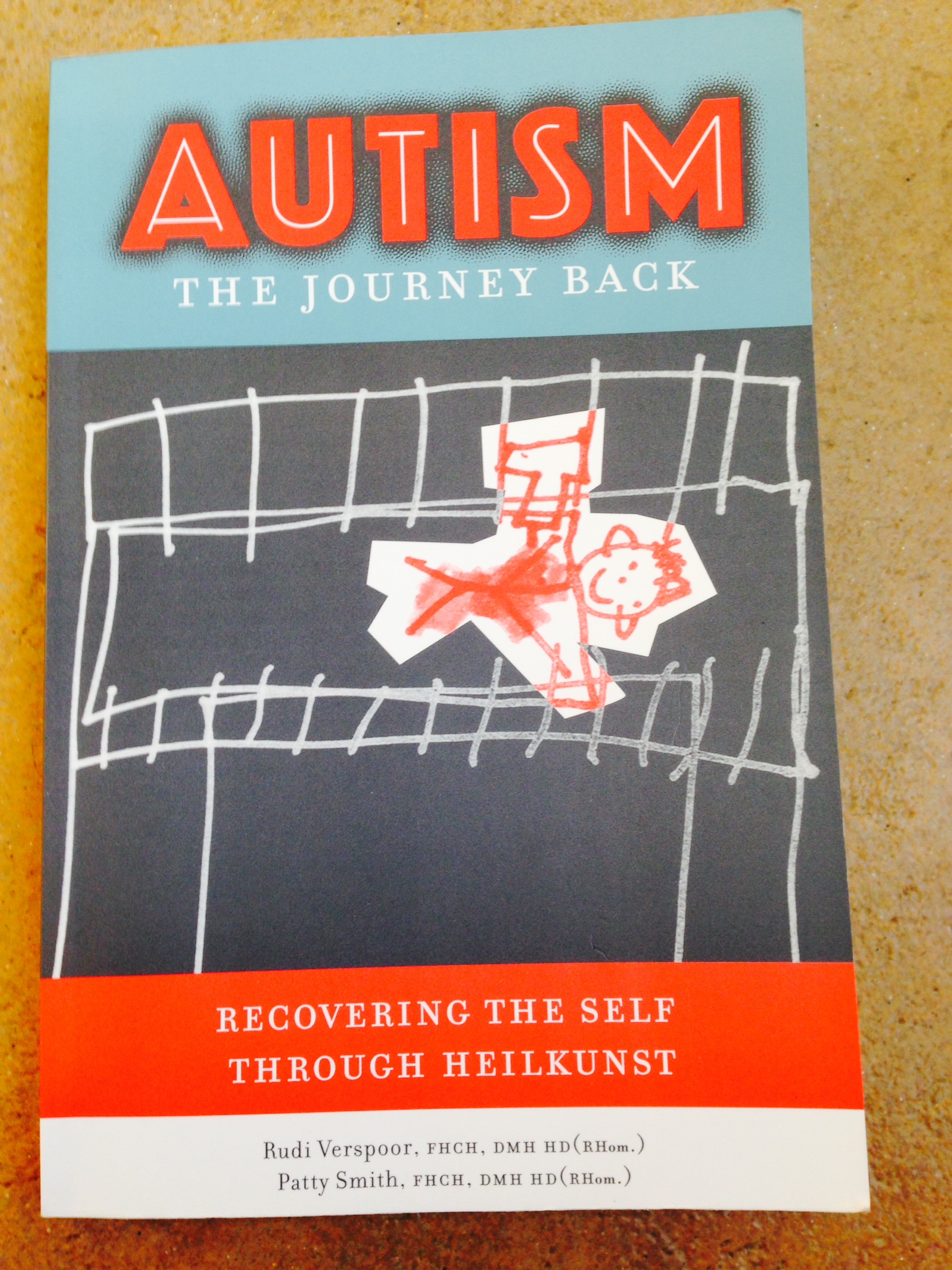
On an “out there” scale of 1 to 10, with 1 being ABA and MiraLAX® for autism, and 10 being having Reiki vibes telepathically sent from Mongolia, I would put Heilkunst at about an 7.73. In their book Autism: The Journey Back, Rudi Verspoor and Patty Smith describe Heilkunst as a “comprehensive, integrated system of Western medicine based on the principles of natural law regarding the removal of disease (cure) and the restoration of balance in our functioning (healing).” As I understand the process, Martin will progress through a series of homeopathic “clears,” one every two or three weeks, to alleviate the insults to his immune system, from pre-natal development through today. The insults to Martin’s immune system have been many, from his traumatic birth to vaccinations to living in a home under renovation. I had to list all this out in order to begin Heilkunst. It was not a fun process.

Now, let me add this: Scoring Heilkunst an 7.73 on the “out there” scale does not mean I don’t have faith in the process. To the contrary, Heilkunst is energetic healing, and I am administering it to Martin, and I think my faith therefore is necessary to its success, and I would not have proceeded if I didn’t expect results. I’ve talked to many families whose children have progressed with sequential homeopathy. I’ve witnessed their progress. Plus, sequential homeopathy makes sense to me. I know many of the factors that affected Martin’s immune functioning; I’m eager to help him work back through what happened.

I’m also glad we did not start Heilkunst sooner. We needed first to get the biggest stuff under control: his digestion, his ability to rest, his communication skills to participate in the process.

And we had some mental blocks to remove. Mine.

photo-10

Less-Meat GAPS (With Photos!)

I received this inquiry: “The GAPS diet is so meaty. If Martin is eating only one meat serving per day plus broth, what all is he eating?”

Fair question.

I’ll use today as an example, and as I’m writing this, I’m realizing that, depending on how you define “meat serving,” he might have had two.

For breakfast, Martin drank a 12-ounce glass of homemade bone broth and ate a small dish of fermented vegetables—today, eight string beans. Some weekday mornings Martin takes only broth. I prepare a full breakfast only on the weekends, when Adrian eats at home and we have more time.

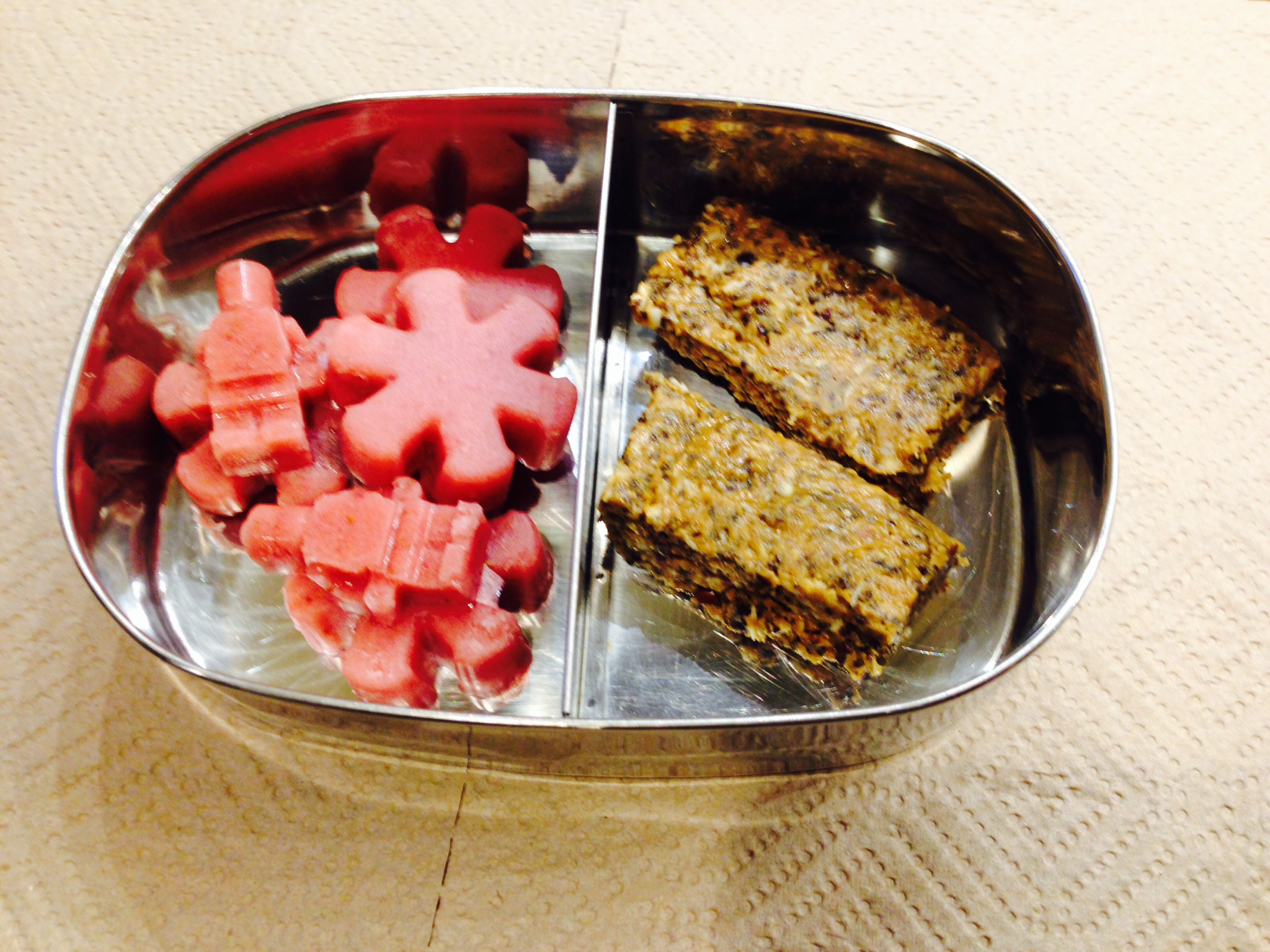
Martin’s school asks that we send two snacks each day, and a lunch. Today I packed both snacks into one container. The morning snack was homemade protein bars. That recipe varies every time; this version had organic SunButter, chia seeds, coconut flakes, cacao nibs, honey, and sea salt. For afternoon snack, he got gummy treats, which I made by heating and pureeing strawberries, then adding pure bovine gelatin and pouring the mixture into silicone candy molds.

photo 3

Did you catch that? Bovine gelatin in the afternoon snack. If you count that as meat, because it comes from a cow, then Martin had two meat servings today.

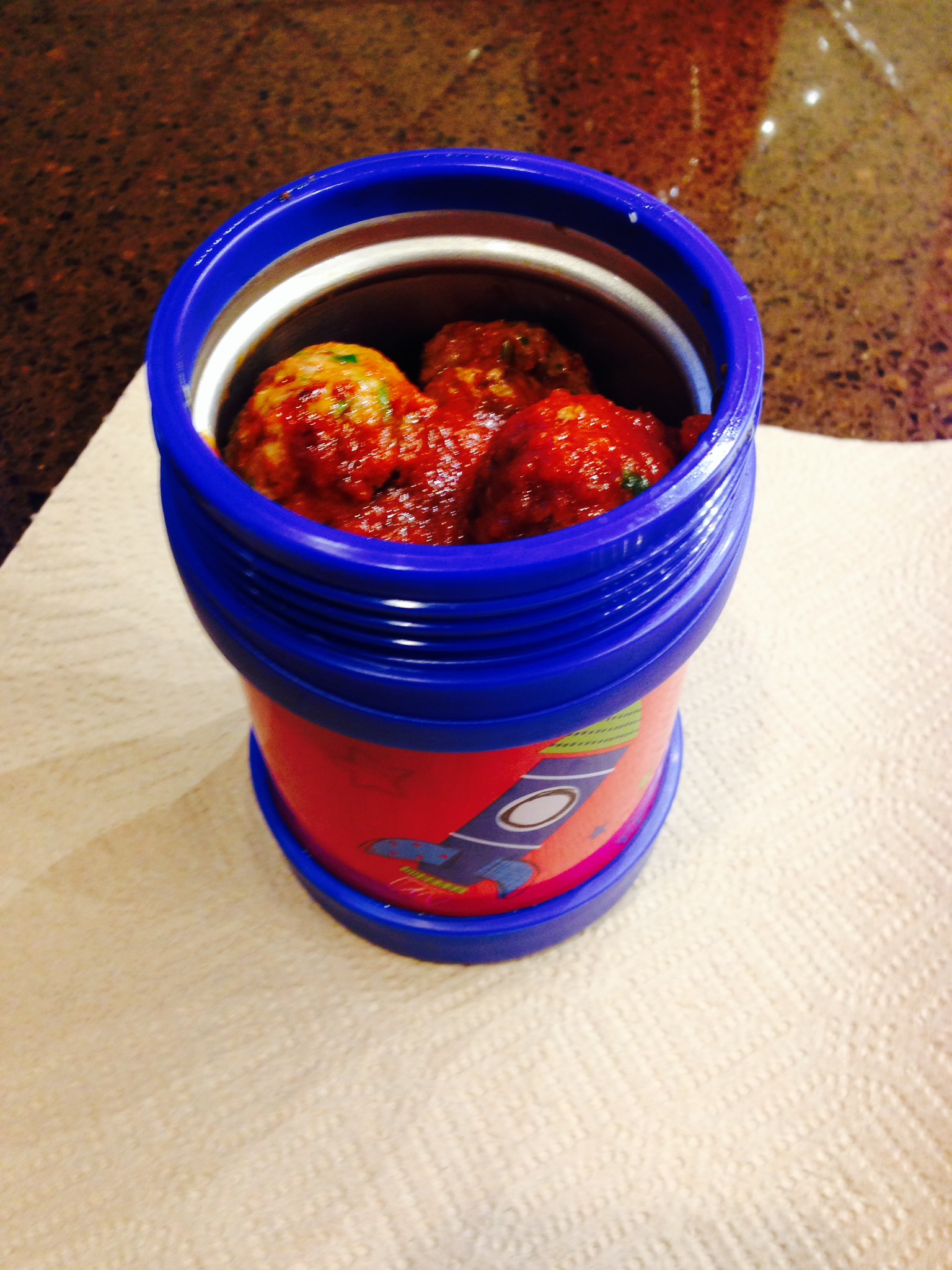
As for Martin’s lunch, if you read yesterday’s post, you already know what it was: meatballs that were actually half-vegetable.

photo 2

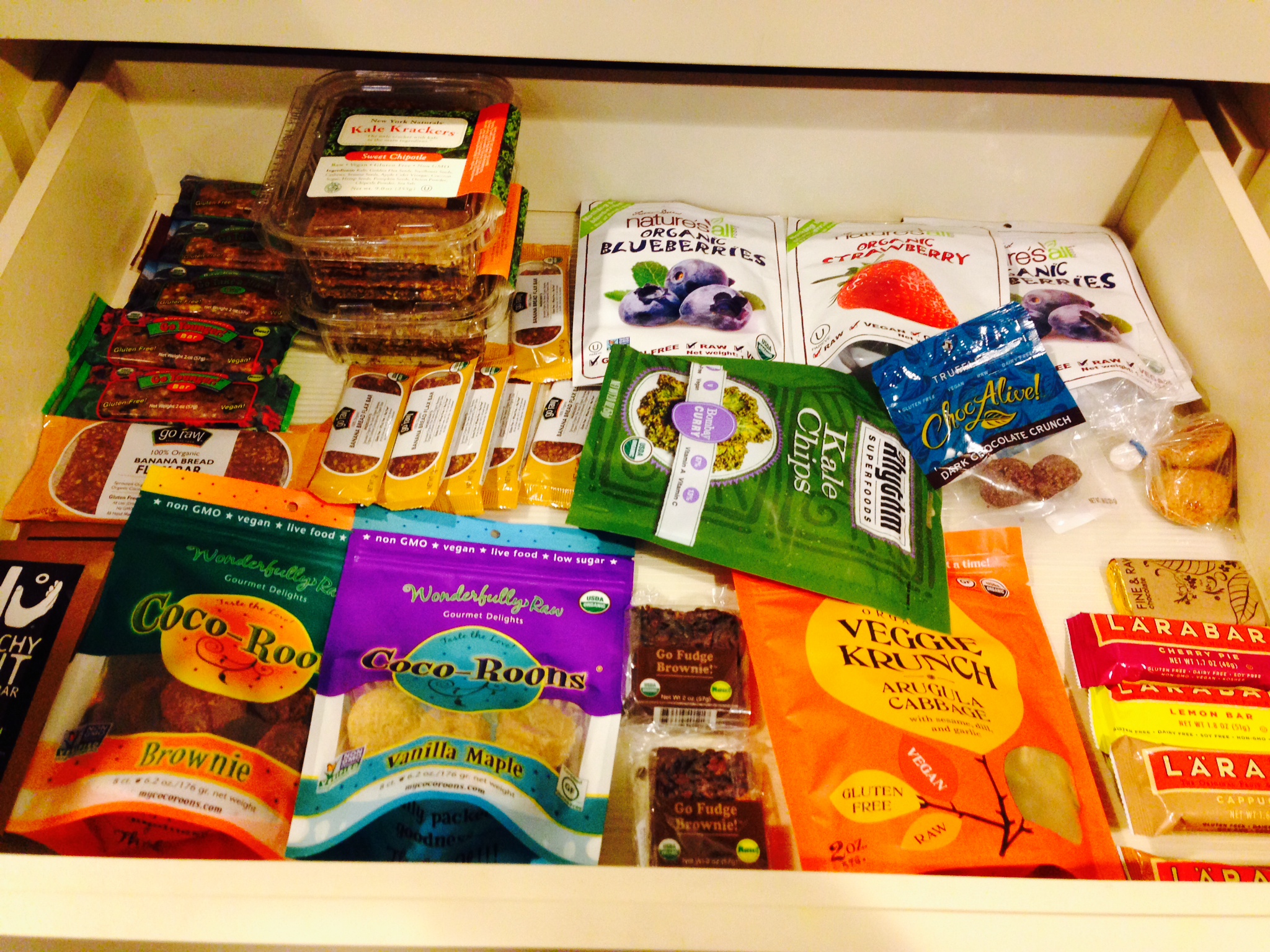
When Martin arrived home from school, per his custom he immediately wanted another snack, which he was allowed to select from his snack drawer. Today’s snack choices looked like this—

photo 1

Martin went with a cappuccino Lära Bar. (Yes, that has a small amount of coffee.) Per my custom, I asked Martin to finish his camel milk before eating the snack. I added cinnamon to the camel milk.

An hour later, when we were leaving for his piano lesson, Martin demanded yet another snack. As I rushed to get him out the door, I came up with some leftover freeze-dried blueberries. He arrived at the music school with purple hands and a purple face.

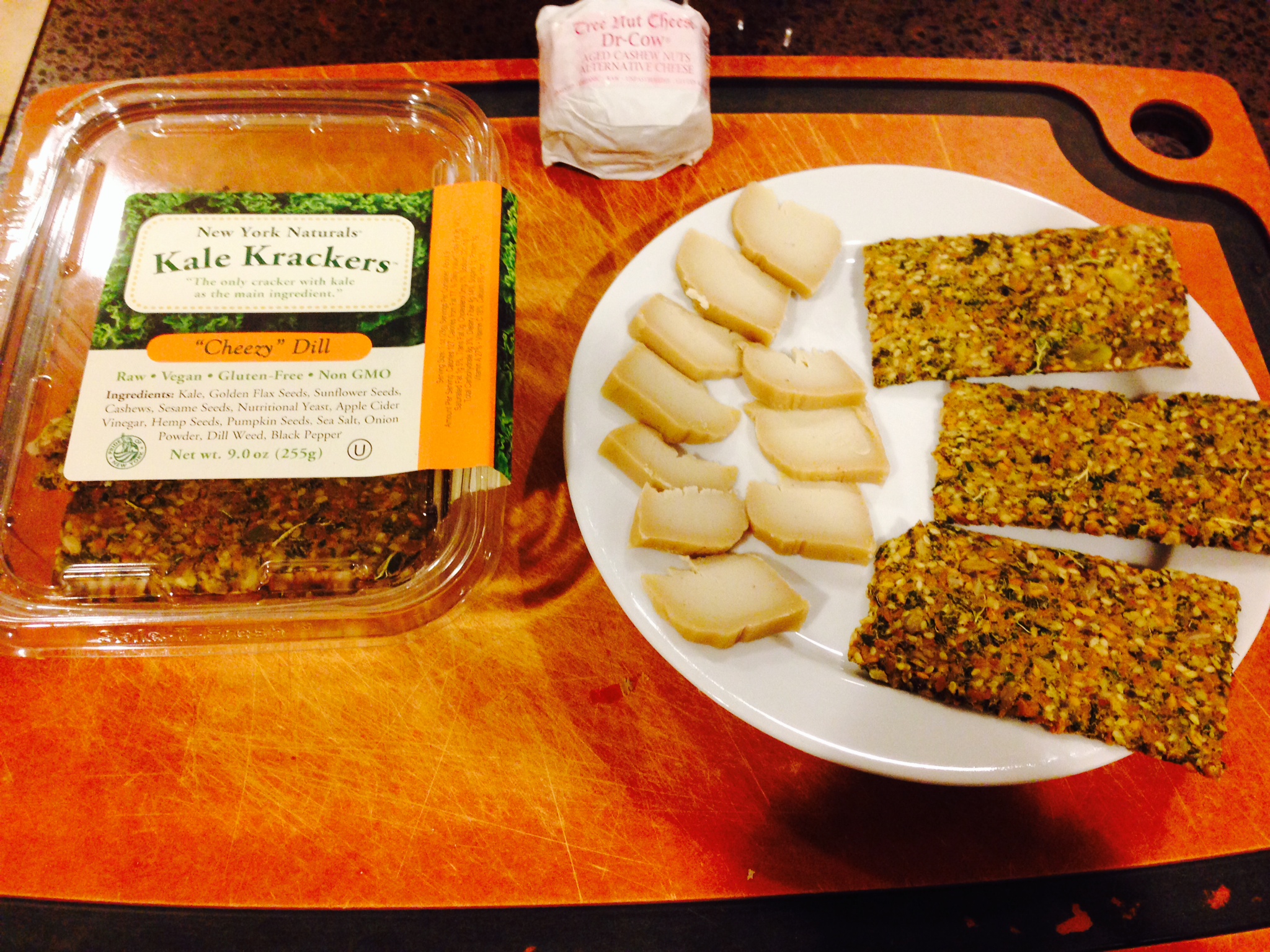
For dinner, I gave Martin the choice of pasta, which I would cook with veggies and olives, or “cheese and crackers.” He decided to have the latter, Dr. Cow fermented nut cheese paired with New York Naturals kale crackers. With dinner he had another 12 ounces of bone broth.

photo 1photo 2

Then, of course, it was time for dessert. Martin got a quarter-cup of “chocolate ice cream,” a cashew-based product sweetened with raw agave. Agave is not GAPS-legal! But there was very little agave, and I decided we would all survive the experience. While I was serving the ice cream, Martin asked, “Mommy, why don’t you put some chocolate chips on it?”, which I did, in the form of raw cacao nibs.

photo-9

Throughout the day, including at school, Martin drank Fiji water from a Lifefactory bottle, into which I mixed a splash of juice and his MitoSpectra powder.

No day is perfect. Today Martin had too much sugar (from honey, strawberries, dates in the Lärabar, blueberries, juice, and “ice cream”) and one non-GAPS ingredient (raw agave). And it’s probably apparent that I don’t have big oxalate concerns at this time; with all the nuts and cocoa, it was an oxalate-heavy menu. Still, he had his camel milk, 24 ounces of bone broth, and veggies in reasonable quantity.

Then he went to bed, and I had wine.

Sneakin’ and Foolin’

What’s this picture? Any guesses?

photo 4

It shows the makings for meatballs. More specifically, it shows tiny pieces of carrot, garlic, onion, and parsley.

I, like many parents, at least the kind of over-the-top parents I hang around, use meatballs as a vessel for veggies. Martin loves when I send meatballs to school for his lunch. He finds many ways to tell me how much he loves when I send meatballs to school for his lunch. For example, last night after his bedtime, I returned to the family room to find that he’d written “MEATBALLS FOR LUNCH?” on a balloon and left it on the toy chest.

photo 1photo 2

If nothing else, he’s subtle.

So meatballs it is. But I shall insist on concealing veggies in those meatballs. I process onions, fresh garlic, and whatever else I have on hand, then mix them with ground beef, maybe a 1:1 veggie-meat ratio, or slightly less.

photo 3

Then I form the mass into balls and store them in a glass container.

photo 2

For the next three mornings, I will cook meatballs in olive oil, add strained tomatoes (from a glass jar), and pack them, hot, in a stainless-steel container for Martin to take to school. (I also fill the container with near-boiling water for five minutes, then empty the water and add the meatballs. This helps keep them warm.) As I mentioned on October 29 (see the paragraph numbered (3.), which begins, “I’m an empiricist”), I have Martin down to one serving of meat daily, not counting bone broths. For the next three days, the meat serving will be meatballs at lunch, and I’ll be happy to think I’ve snuck in almost the equivalent of a side salad. If I could find a way to keep the veggies raw while cooking the meat, they would be more salad-like still.

Time for a confession: Martin’s not the only one getting fooled these days.

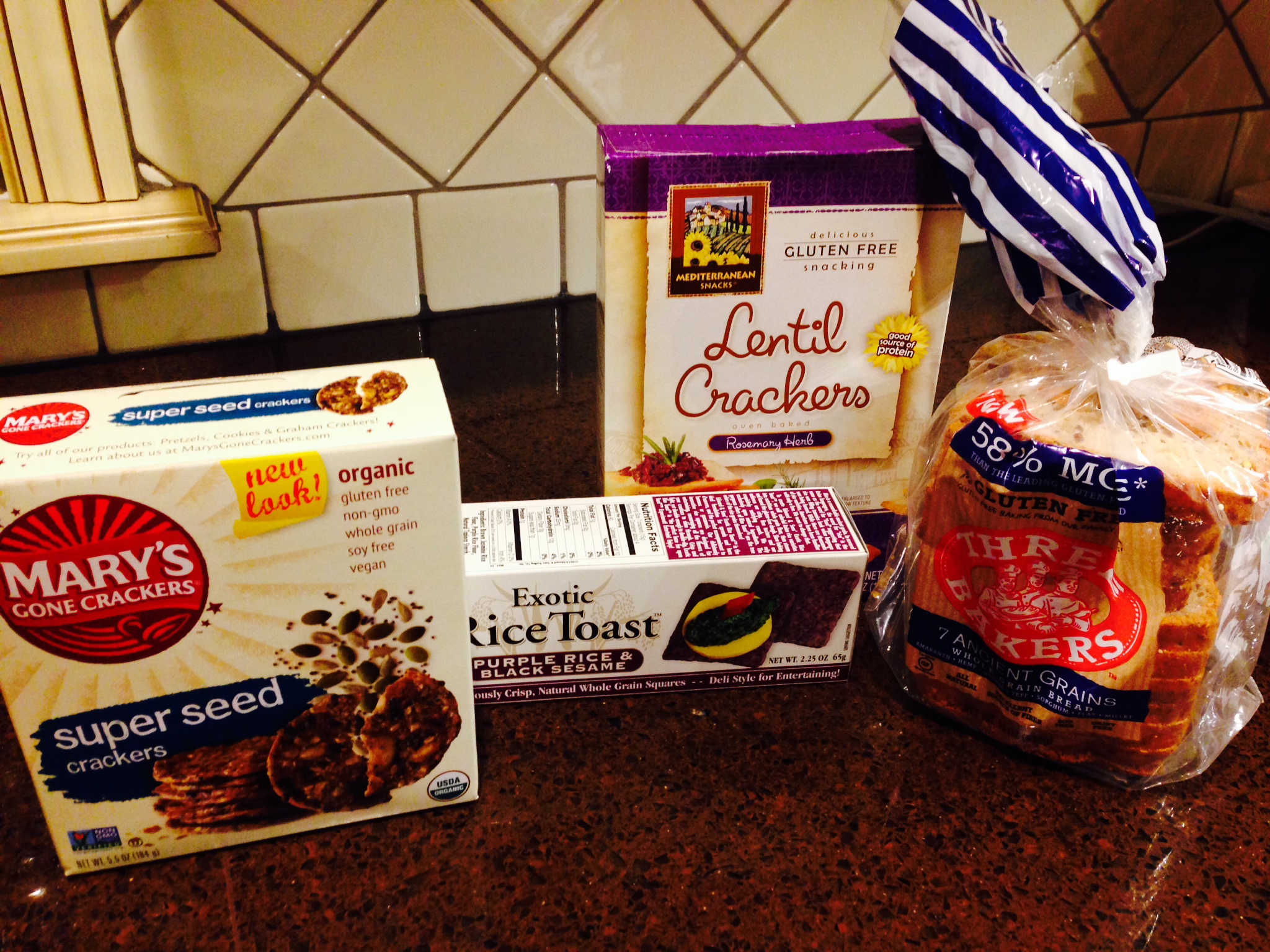
Although Martin has been gluten-free for almost four years now, I’ve never made our household gluten-free. I like bread, and occasional seitan. Adrian likes to take a sandwich to work each day, along with crackers for his hummus or raw-milk (over the top!) cheese. This summer, after reading a few opinions and reviewing my own experience, I became more concerned about cross-contamination between our gluten-containing products and Martin’s foods. Although I have separate toasters for gluten and gluten-free bread, they both leave residue in the cabinet. Although I wash the cutting boards between uses, it’s not like I never find a few bread bits clinging to the edges. Crumbs are untamable. They fly everywhere! Cheese and yogurt, the two dairy products that Adrian likes, so we have them at home, are much easier to subdue.

I knew I should make our house gluten-free. I also knew that I’d be pushing it with Adrian if I told him my plan. Adrian is super-duper supportive about what we do for Martin. That being said, Adrian works long, tough hours and hates to have his little pleasures denied. I can see his point, or the point he would have made had I told him that the house should be gluten-free: How necessary is that? Is it too much to ask that I take a sandwich to work as part of my lunch? That I have toast with weekend breakfast? Enjoy a plate of cheese and crackers and grapes when I come home late?

So I did what any sensible autism-recovery mom would do: I kept my mouth shut. Over a couple months, I searched for the best tasting gluten-free products that I could substitute without Adrian realizing. Crackers were easy; he’s always liked good-quality rice-, quinoa-, and seed-based crackers. The challenge was bread; most varieties I found were crumbly, or dry and nutty tasting, or both. (The chicken-and-egg bread I make for Martin is not an option, because Adrian doesn’t eat chicken.) Finally I found a variety at my local Stop & Shop that is almost indistinguishable from gluten bread. It is less dense and the slices are smaller. Other than that, hard to tell. It’s been more than a month since I’ve brought gluten into the house. If he’s noticed, Adrian hasn’t said anything.

Wait! you might say. This post has just gone public. Isn’t Adrian about to discover his unwitting gluten-free lifestyle?

He doesn’t read my blog every day.

Maybe I’ll get lucky.

photo 1

Two of these products (I won’t say which two) are more processed and full of ingredients that would never be in my kitchen if I were baking. The other two are pretty good, and products that I would consider for Martin if he weren’t on the GAPS diet. Adrian is getting all of these. He can take it.

Snack Drawer

For the past six months or so, I’ve kept Lärabars and other snacks for Martin in the second drawer of our pantry. That drawer contains other foods, too: nut butters (including peanut butter), non-gluten flours, cacao nibs, hemp seeds, Adrian’s chocolate stash, stuff like that. A variety, only some of which Martin can eat.

I never thought Martin paid much attention to where I keep his snacks, until one afternoon two weeks ago. That day, Martin came home from his school, took off his shoes, opened the pantry, and started rummaging through the second drawer in search of a snack.

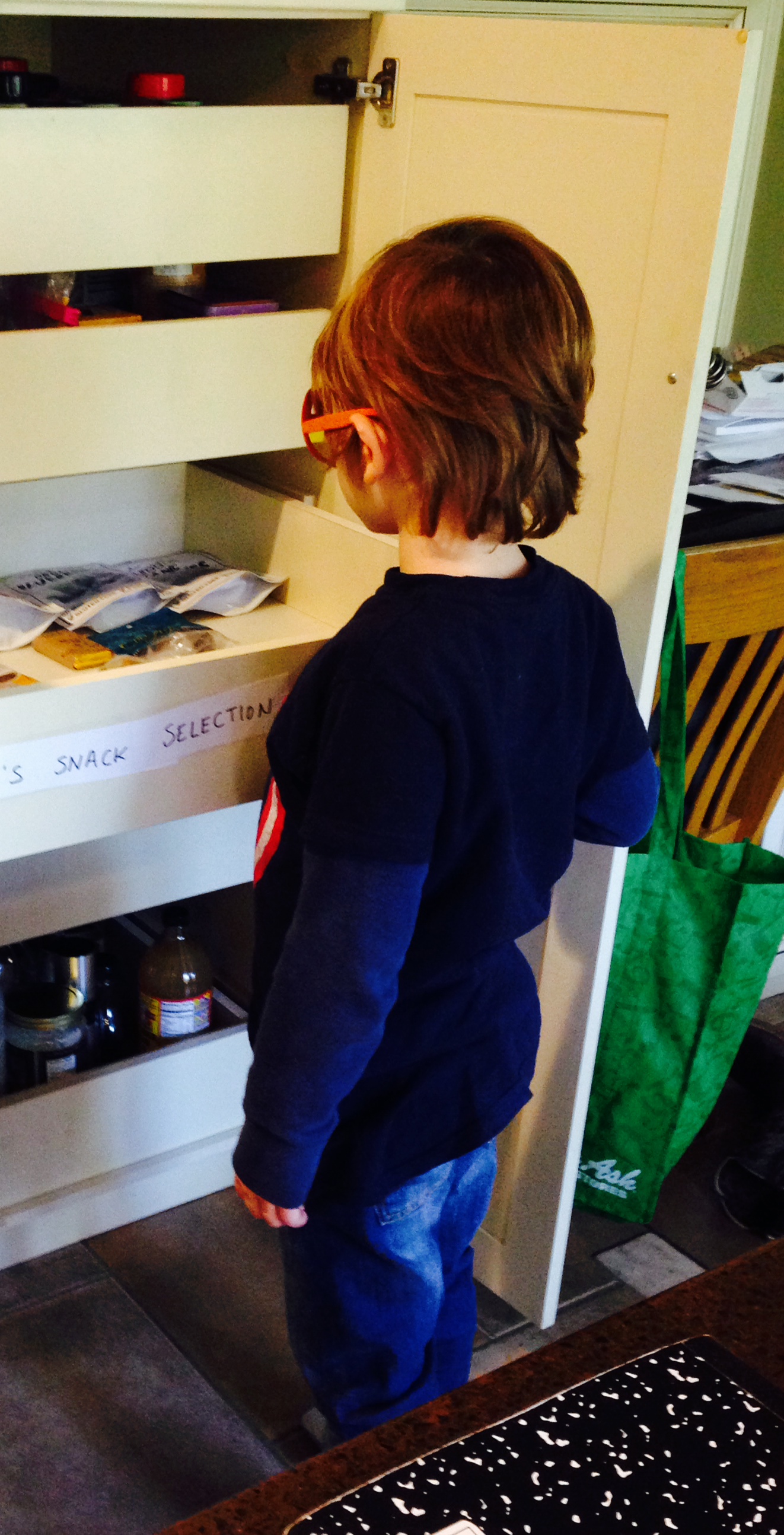
To me, that seemed like reasonably typical kid behavior and, for Martin, a new independence that I should foster. The second pantry drawer is somewhat too high for Martin to access comfortably (though with the way he’s growing taller, next week that might not be the case). Also, it seemed unfair that he should have to push aside stuff he cannot eat—e.g., peanut butter, or Adrian’s chocolate—to reach his own treats. Therefore, I emptied the third drawer of the pantry and redistributed those items in other drawers (a challenge in my snugly packed pantry!). Then I filled the third drawer with after-school snacks and taped labels on the front: “Martin’s snack selection” and “one snack per day!”

photo 2

The contents of the drawer reflect a preference Martin has (again, typical, I think) for store-bought, packaged goodies over what I prepare at home. I make protein bars, truffles, and macaroons similar to what’s pictured here; Martin wants the colorful, the prettily wrapped, “what you buy at the store!” (The homemade items I send to school.) Note also that not every product in the drawer is 100% GAPS-compatible. A few contain agave and, for whatever reason, have slipped through my control.

The snack drawer has been a big success. Martin loves to pore over its contents and select the perfect “snack of the day.” This weekend, when he was allowed to pick a snack to take to his activity program, he removed five different snacks, lined them up on the kitchen table, took a few minutes to decide which he wanted, then returned the other four to his drawer. When he wasn’t looking, I snuck in and rearranged the returned snacks into the appealing, every-snack-visual format. That’s me.

photo 1

I’m inspired now, to try to display Martin’s clothes in a way that makes him want to pick his own outfits. I like to dress him in the sports jersey of my choice, but I suppose I need to focus on his autonomy, too. The pumpkin glasses he’s wearing in that photo count as autonomy, I guess.

Pill Pushers

I just spoke with another autism mom. She was distraught because the neurologist who performed her son’s MRI had called to say he found evidence of possible/potential seizure activity. She was confused because the neurologist told her to give her son anti-seizure medication, regardless of the side effects and the uncertainty whether seizure activity is even occurring. She was angry because she felt like the neurologist just wanted to get off the phone and had no interest in addressing her questions.

Why are doctors pushing so much medication?

On his latest neurodevelopmental psychological exam, Martin tested strong, academically. Although he has just started first grade, he is functioning at a second-grade level. But, the mainstream doctor who oversaw the exam stressed, when Martin gets to third grade, where the curriculum requires inferential reasoning, he might fall behind; because he can’t attend well, he can’t form inferences, either.

We know attention remains a problem for Martin, Adrian and I assured the doctor. What can we do to address it?

“Medicate him,” the doctor replied.

Medicate him?

“Medication might really get him over the hump when it comes to attention,” the doctor said.

We’re trying some other approaches right now, I said. We’re excited to be starting treatment with Dr. Zelinsky, using a sensory approach to retraining the brainstem. And Martin’s autism symptoms, including attention, tend to get better in spurts, as his body heals. Maybe by third grade we’ll have attention up to par.

“Sometimes those types of treatments can help,” the doctor said. “Still, we should start medicating sooner, rather than later. Martin’s a tricky case. It’s not clear whether he will respond better to a stimulant, a depressant, or some combination of both. We’ll have to fiddle with dosages and drug types to see what works best. If we start right now, then by third grade we’ll have it figured out.”

Adrian and I told the doctor we would like to hold off and give ourselves time to think about the medication option. Then we thanked the doctor for his time and promised to keep him updated.

This particular doctor expressed surprise at Martin’s progress since he was last evaluated, two years ago. I explained what we had done to provoke the progress, including biomed, homotoxicology, and HANDLE therapy. The fact that Martin has come so far using those approaches did not seem to affect, at all, the doctor’s opinion that we should medicate. I am not necessarily against the medication option forever, and I certainly don’t judge parents who decide to medicate their children before trying what I consider more natural treatments. That being said, I am sick of mainstream doctors trying to push medication on us at every turn. Medicate, medicate, medicate.

To the fellow autism mom who called me this afternoon, I said:

“Make a list of your questions. Demand an appointment. Bring your husband. Request copies of the MRI results. Send them to your biomed doctor, your ophthalmologist, any of your specialists who know how to read MRI’s. Get all your questions answered. Then decide if medication is the right choice.”

Because sometimes medication is the right choice. And often it isn’t.

Conformity

When this blog picks up a new follower, I receive an email informing me, and a link to the person’s profile, or own blog. Usually, I take a look. I’m interested to see who’s interested in Martin. Among the followers are fellow special-needs parents, foodies or Paleo-types who I assume like the recipes, “inspirational” folks, and generic bloggers who (I think) follow bajillions of blogs, hoping to procure reciprocal followers.

I also find that this blog is being followed, increasingly, by readers who self-identify as persons on the autism spectrum. I feel honored to have these followers, and I want to find a way to explain that, although my family is working hard to recover Martin from autism, it is not because anything is “wrong” with Martin, or wrong with living with autism. Unfortunately, I’m not talented enough to do that explanation justice; the issue is so delicate, and complex. So instead, I wrote this post—

Last week I encountered a new member at my CrossFit box, in the 8:30 am WOD frequented by parents who have put their children on school buses and are fitting in a workout before heading to employment. The new member was about my age and dressed in exercise leggings, a sport bra, and a tank top. The same way I was dressed. The same way at least two other women were dressed. The new member and I chatted and ended up walking together to the parking lot, where we discovered that our cars were parked next to each other. The same car, except hers is white and mine is gray. We both drive the European SUV model owned by, as far as I can tell, about 10% of the families in our suburban enclave.

Gosh, I thought as I climbed into my standard-issue vehicle, just how much of a conformist have I become? Here we live in a pleasant suburban area, where I stay at home (working some, though!) while my husband commutes to Manhattan. Our yard and garden are landscaped just like all the other houses, with similar plants in a similarly lush but uncluttered configuration. Like our neighbors, we change our front-door wreath by season: We display cranberries for winter, white flowers in summer, orange berries for “harvest season,” pinecones at Christmas. We fly our flag on the Fourth of July, have jack-o’-lanterns on the stoop right now, and will set out a ceramic snow elf after Thanksgiving. Martin and I attend one of the five local churches. Our family shops at the nearest Whole Foods Market, shows up for fairs and events, runs into neighbors at the pubs and restaurants. Through our actions, we have proclaimed ourselves just like everyone else.

The autism universe includes many people who argue against “changing” an ASD child and instead support some form of “neurodiversity,” in which relating to the world in an autistic way is accepted equally with relating to the world in a more neurotypical way. For example, a group called Aspies for Freedom advocates against most behavioral treatments, and all biomedical interventions, for children on the spectrum. The group, according to a blog post in its name, states, “Autism isn’t a tragedy, or a side-effect of genius—it’s a difference to be valued,” and stands against the “idea that being neorotypical (i.e. not autistic, or another psychological neurotype) is ‘better’ than being autistic.”

As I’ve written, I don’t share the view that encouraging acceptance of all persons means we shouldn’t try to heal the autistic child. The best way I’ve got to explain it is this: There are many ways in which I conform to a suburban-mom lifestyle. There are also ways in which I choose not to conform. I’m vegan. I don’t drive that European SUV around town if I can walk or bike instead. The landscaped lawn and plant beds around our house? Maintained by an organic gardener; we pay a premium to avoid the chemicals our neighbors use. When Adrian and I were buying a house, we chose our town, and not the neighboring village, because we value socioeconomic diversity more than having neighbors like our family. In these ways, I allow myself to be an exception.

And then there is at least one way in which, apart from any choice I make, I cannot conform. That’s autism. Because of autism, my son does not attend the local elementary school, does not play in the Saturday morning soccer league, and spends his free time in therapeutic settings.

So there are choices about conforming that are within my control, and choices about conforming that are outside of my control. I am happier when I can choose whether to conform, when it is up to me whether to fit in or to stand out.

That’s what I want for Martin. I want Martin to be able to choose whether he conforms, or whether he rejects expectations. When he enters a party, I want him to think, “Do I feel like working the room, or do I just want to grab food and skulk off to a sofa?” (I, Martin’s mom, usually grab food and skulk off. Any Myers & Briggs devotees out there? I’m INFJ, strong I.) What I don’t want is for Martin to feel like working the room is not an option for him. When it comes time for Martin to choose a job, I want him to think, “What do I like to do?” I don’t want him to think, “Does that job require interpersonal skills? Dynamic thinking? Will enough support be available for me?”

If Martin wants to act quirky, so be it. If he doesn’t want to make eye contact, so be it. If he doesn’t want to play sports, so be it. If he prefers to be alone, so be it. But these should be Martin’s choices, not choices that are made for him because an immune disorder, a medical condition, leaves him clumsy and makes it difficult to relate to others.

Our school district sends a behaviorist to our home each week. Recently I addressed Martin’s social progress by explaining that Martin has reached a point where he asks about other kids and wants to engage them but doesn’t seem to know how. The behaviorist said that wanting to engage is an important step. She advised that I might foster further development by observing other children with Martin and discussing strategies for approaching the children. Martin might find common ground, she suggested, by asking if the other kids like the same things as he does. What does Martin like? she asked. Does he like Yankees baseball, or Mets? Giants or Jets? Superheroes, like Iron Man or Captain America, that sort of stuff? SpongeBob? Pokémon? Disney? Frozen? Bike riding? Karate?

No, I replied. No, no, no, no, no, no, no, no, and no. Martin likes classical music and drawing pictures. He doesn’t watch television or children’s movies.

You’ve got to get on that, the behaviorist advised. Have him do the same things as other kids. Give him some common ground.

That weekend Adrian and I took Martin, wearing a sports jersey, with his feet in brand-new Spider-Man sneakers, to see Alexander and the Terrible, Horrible, No-Good, Very Bad Day, his first children’s movie outing with us. We are helping him conform now, so that later he can choose for himself.

To my readers with autism, thank you for coming to this space. I hope you feel safe here.

My Beef With the GAPS Diet Author—a Post So Major That It Probably Should Have Subheadings

When I blogged about Martin doing well on the GAPS diet, the brainchild of Dr. Natasha Campbell-McBride, I wrote: “I’ve written a lot about GAPS recently, and I’m also working on a post about how I don’t buy into everything that Dr. Campbell-McBride says.”

All this time, you’ve been wondering, What is it? What does Dr. Campbell-McBride say that my blogger doesn’t buy into?

(You’ve been wondering, right?)

Well, it’s time for that post I’ve been working on.

I’m vegan. I went vegetarian when I was 16 years old, and vegan just after I turned 22. I did it out of concern for animals and the environment, and I stuck with it for the health benefits. I’m 42 now, so that makes me vegan more than two decades. All in all, I feel . . . fit. I am 5’6”, I fluctuate from 125 to 137 pounds. I exercise. I have strength and endurance levels at least commensurate with my age. The two major illnesses I’ve suffered, measles at age 12 and dysentery at age 21, both occurred before I became vegan (and were unrelated to nutrition, as far as I can tell).

I was surprised to discover that Dr. Campbell-McBride, in her book Gut and Psychology Syndrome: Natural Treatment for Autism, ADHD/ADD, Dyslexia, Dyspraxia, Depression and Schizophrenia, writes off veganism as incompatible with long-term health, without explanation. She says that veganism is unhealthy and moves on. I figured that Dr. Campbell-McBride must have more than nothing to back up her opinion of veganism, so I headed for her website and blog. I found a post titled “Feeding Versus Cleansing,” dated 27 March 2012, in which she states, “Purely plant-based diets (vegan diets) are inappropriate for human physiology long-term; they can only be used as a temporary cleansing procedure.” (Disclaimer: I started writing this post in July. I know, I know—it took me a while. Life gets in the way. When I finally got around to publishing my post, I discovered that Dr. Campbell-McBride’s 27 March 2012 post had been removed and replaced with a recycled version, by the same title, dated 15 August 2014. The two posts make the same points; for wording and quotes, I am relying on the 27 March 2012 version. I have it printed out and can post it if anyone is interested in the original.) According to Dr. Campbell-McBride, plant foods cleanse, but by and large, they do not feed/nourish humans. A vegan diet benefits, say, a cancer patient whose body needs cleansing and resetting. Ultimately, the patient, like all humans, must return to eating animal products in order to be fed properly.

Okay.

As I see the issue, Dr. Campbell-McBride makes statements about veganism that sound good in theory but seem unsupportable in evidence. I have read multiple studies concluding, based on evidence, that long-term veganism—lifelong veganism, not a temporary or “cleansing” procedure—when done properly (not, for example, cola and potato chips) makes a person healthier, blocks disease, and adds years to life. The China Study is perhaps the best-known assessment of why veganism works. Dr. Campbell-McBride does not offer any study to counter those empirical conclusions. Indeed, other than one bizarre example asserting that a young woman ate a healthy vegan diet but nonetheless stopped menstruating and wasted away, Dr. Campbell-McBride doesn’t provide even specific examples. She writes assertively about body processes. She doesn’t back her assertions up with evidence.

(Here, I can even provide Dr. Campbell-McBride with a counter-argument: Do the studies on which I rely compare vegans, who tend to be health-conscious and food-aware, with meat eaters in general? Because “meat eater” is the default position in most Western societies, and the average Western eater tends to rely on processed junk instead of real, fresh food. So maybe the key difference in studies of veganism is between “conscientious” eaters and “if it tastes okay, it’s going in” eaters? I would appreciate a study comparing conscientious vegans with conscientious meat eaters. Scientists, have at it!)

I try to be open-minded. If I were to ignore the studies evincing that long-term veganism is the healthiest choice, I could accept Dr. Campbell-McBride’s claims about animal flesh feeding and building humans. Like I said, her statements sound good in theory. But even if I give her credit for the meat argument, she parts even from common sense with this argument: “Mother Nature took billions of years to design the human body; it is an incredibly intelligent creation! As the natural foods on this planet have been designed during the same time, your inner body intelligence knows their composition, and knows what foods to choose for particular needs.” These natural foods that the body requires include “dairy on a daily basis.”

How could it be that a human’s inner body intelligence knows to choose dairy? Milk is indeed a natural food designed by nature over billions of years—designed for a growing calf. That’s right. Cow’s milk has the exact balance of nutrients and proteins that a baby cow needs to grow big. Human milk, what we call breast milk, has the exact balance of nutrients and proteins that a baby human needs to grow big. Cow milk is for baby cows, not grown cows. Human milk is for baby humans, not grown humans. Humans are the only mammals forcing milk into themselves beyond infancy, and to add to this unnatural state they are using the milk of another species. What has that to do with nature? If I were ever to buy into more of the Campbell-McBride theories and start eating animal products (I have no plans to do this), I certainly would not include nature’s baby cow manna.

In addition to asserting that nature has made animals into the perfect food for humans, and apparently that cow milk does double duty as perfect for both calves and for humans of any age, Dr. Campbell-McBride appeals to the senses:

Mother Nature . . . gives us senses of SMELL, TASTE, DESIRE for a particular food and a sense of SATISFACTION after eating it. So, when your body needs a particular mix of nutrients, it will give you a desire for a particular food, which contains just that right mix; this particular food will smell divine to you, and you will feel satisfied after eating it.

And she writes:

[B]efore putting anything in your mouth smell it: [I]f it is the right food for you at the moment, it will smell very appealing. If it is not the right food, it will smell repulsive.

I feel fine now. So after reading Dr. Campbell-McBride’s work, I ask myself: If I eat animal products, could I revolutionize my life? Could I go from “fine” to “friggin’ awesome,” from “fit” to “Wonder Woman”? Could I break 200 pounds in my CrossFit deadlift? Out of curiosity, I’ve put Dr. Campbell-McBride’s “senses” and “body needs” theory to the test repeatedly. When I prepare meat for Martin, I stare at it. I take a deep whiff. I ask my body, “Do you need this? What is your desire?”

Then my body says, “Eeew, no.” Every time. Except when my body says, “What is that? Dead chicken? Back away, quick.”

My body doesn’t seem to be telling me to eat meat.

My own health notwithstanding, what about the fact that I bore a child who developed autism? Could my diet have contributed to Martin’s immune deficiencies?

I am willing, maybe too willing, to blame myself for my own missteps that I believe contributed to Martin’s autism. I’ve owned many of them, right here in this blog: Allowing Pitocin at Martin’s birth, which snowballed to an epidural and unplanned C-section. Not fighting hard enough when newborn Martin, despite an APGAR of 9/9, was whipped off to the NICU for antibiotics. Vaccinations. Living during pregnancy in a home under renovation. Et cetera. But try as I might, I have been unable to find any credible evidence, clinical or anecdotal, linking maternal veganism to autism. If any reader has evidence of such a link, don’t be afraid to forward it to me. I can take it.

I hope by now you’re asking yourself: If this blogger has concluded that some of Dr. Campbell-McBride’s assertions are unsupported, and even contrary to logic, why is the blogger’s son following Dr. Campbell-McBride’s signature GAPS diet? Here are my top three reasons:

  1. In my reading—and I’m no scientist—Dr. Campbell-McBride seems to have a better grasp on restoring a gut than on maintaining a body with a healthy, well-functioning gut. Her mistaken exuberance in carrying her “healing” theories to the “already healthy” realm doesn’t mean I have to assume that the “healing” theories are wrong.
  2. The GAPS diet is in line (not exactly, but some similar properties) with other restricted diets, such as the Specific Carbohydrate Diet or the Feingold diet, that help with gut-related auto-immune issues. I can’t find any widespread studies, i.e., real science, so I troll parent groups on-line for other parents’ experience. Most report improvement on these diets.
  3. I’m an empiricist. I’m giving the GAPS diet a try with Martin, and it seems to be helping his gut and overall functioning. Several years ago, when we cut gluten, soy, corn, and most starch from Martin’s diet (he already was dairy-free), I consulted a mainstream nutritionist and provided her with a week’s worth of menus. She confirmed that even on a very restricted diet we could meet Martin’s nutritional needs. I have some worry about long-term use of the GAPS diet—ammonia build-up, carnitine’s effects on the arteries, that sort of thing—but Martin will not be on the GAPS diet forever. When his gut is sealed up and in good working order, I will experiment with taking animal products back out of his diet. Already I have him down to one serving of meat per day, excluding broth.

In sum, although I plan to have Martin on the GAPS diet, or some modified version thereof, for the foreseeable future, I think Dr. Campbell-McBride is wrong about veganism. (As an aside, I also think that if the whole world started eating GAPS, the environmental consequences would drive us to extinction quicker than we’d like.) My argument having been made, allow me to end with perhaps my favorite statement from Dr. Campbell-McBride’s blog post, at least as pertains to me:

In the clinical practice we see the degeneration of the brain function in people on purely vegan diets and other poor diets: first the sense of humour goes, the person becomes ‘black-and-white’ in [his or her] thinking and behaviours, the sharpness of the mind goes, memory suffers, depression sets in and other mental problems follow. These are all the signs of a starving brain.

Oh, dear. You know now that I’ve been vegan more than 20 years. Is Dr. Campbell-McBride’s parade of degenerative conditions knocking at my door? Adrian, my husband, does complain that my sense of humor tends toward the “Teutonic.” That, however, is not my diet’s fault. Blame the genes: I actually am German. I’m rarely accused of black-and-white thinking; it’s hard to believe that a black-and-white vegan could support a son on the GAPS diet. As for sharpness of the mind, you readers are inside my head, almost daily at this point. How do things look in there? Dull, or sharp? Memory—meh, it’s not fabulous. But I am in my 40s and, more often than not, sleep-deprived.

That brings us to depression and “other mental problems.” Maybe the greatest testament to my brain’s fitness is that—despite having a child with autism, and the daily grind to recover him, and all that we’ve given up to make recovery possible—I am not depressed. I am optimistic and hopeful. Heck, isn’t that a bitty miracle? And if you’re wondering if I have other mental problems, go ahead and ask Adrian. He probably knows me best at this point.

No, wait. Do not ask Adrian about my mental problems. I have a feeling that is not a good exercise within any marriage. Just trust me instead. I promise, I’m reasonably sound.

Reasonably.

I promise.

The kid eats meat. Me? Not so much.

The kid eats meat. Me? Not so much.