Why, Hello Again

How does one restart blogging?

I’ve been thinking about that. Mostly while lying awake at night and also wondering why the [redacted] I’m not blogging. But still.

And ta-da!: The plan I’ve conjured, the blogging redux after seasons of silence:

An update.

I’ll offer my readers—in the event I retain any—tidbits about where we stand now, and then, my blog restarted, I’ll pretend like I never was away.

1. We’ve left the City for the suburbs. New York, New York, no more. We moved June 4 to a ranch house, situated on 1.15 acres in a town where many of our neighbors prefer another NHL team to the New York Rangers. An autism diagnosis was one thing. This kind of upheaval—it’s disconcerting, to say the least.

2. Martin attends kindergarten at a private school for children with learning differences. His class has twelve pupils and multiple instructors. Adrian and I feel extremely lucky that Martin has the chance to attend such a school, never more so than this past weekend, when we attended one classmate’s birthday party and watched Martin frolic with his new best friends.

3. Martin receives traditional occupational, physical, and speech therapy at his school. Saturday mornings I drive him into the City for two sessions of Anat Baniel Method (ABM) therapy. We continue working with a HANDLE therapist, and doing home-based exercises activities on the RDI approach. One evening per week Martin takes piano and drum lessons (the latter by his own initiative) with a certified music therapist.

4. We have not yet recovered Martin. We have, however, made progress, and a good deal of it:

•            Though he retains some patterns, Martin’s speech is rarely rote anymore. He has some quirks, such as substituting “but because” for “because” and adding “for” where it doesn’t belong, as in, “Can I have a piece of paper for to draw a picture on it?” Nonetheless, he can express his wishes, wants, and needs verbally, and well.

•            Martin can engage in conversation of six or more exchanges, so long as he is answering the questions (not asking them, which is a level higher). Here is an exemplar talk, which we had when he arrived home one day last week:

“How was school today?”

“It was good.”

“Did anything special happen?”

“We had a surprise reader!”

“Oh, yeah! Who was the surprise reader?”

“It was Quinn’s family.”

“Quinn’s family? His whole family came, not just his mommy or daddy?”

“His whole family came.”

“Wow! What was the book about?”

“It was about snowmen.”

“Did you like it?”

“Yes. I liked it. We made snowmen!”

Note that Martin, who once just “said things,” was speaking accurately. I confirmed later that Quinn’s mother, father, and older sister had all come to do the surprise reading, that they’d read a book about snowmen, and that they’d helped the class with a snowman-making craft project.

•            Lethargy is a thing of the past, and Martin’s “floppiness”—his tendency to fall onto anything within reach—diminishes every day. His core strength has improved, insofar as he is as likely to sit up as to slouch. His manual dexterity is such that he grips a pen appropriately for writing and drawing, he can manipulate small items like pills, and he uses his hands independently for drumming. (That last achievement might not pertain to dexterity per se.)

•            Martin takes a keen interest in his peers: what they eat, how they play, the structure of their families, where they live. He requests play dates. What he still lacks is a solid understanding of how to interact with friends. We’re working on that.

We vacationed recently at a resort area. When Martin was having trouble engaging any other child there, I would approach the child’s parent and say something like, “I think my son would like to play with yours. My son has Asperger’s, and he’s never quite sure how to go about making new friends.” “Aperger’s” sounds much less scary than that other A word, I think it’s pretty accurate for where Martin is now, and the parents I approached responded uniformly positively. Martin made a couple of “vacation friends” that way.

5. Martin still exhibits “autism” behaviors. He perseverates. A lot. This has been an issue forever. Right now he prattles endlessly about traffic lights, hair length, the time, and the moon. He also has three prominent stims (self-stimulatory behaviors), which become more pronounced when he’s tired or detoxing. The stims are running back and forth, making a slurp! sound by sucking air through his lips, and carrying or playing musical instruments. And of course, Martin can be rigid. He wants to wear his blue vest every day, drive one particular route home, read Pete the Cat or Knuffle Bunny books every night.

6. I now understand “the long haul.” I think that, when I started the process of recovering my son, I didn’t really comprehend what how long one might need to haul. The mother who introduced me to biomedical intervention had largely recovered her son within two years, and was done with the process entirely within three years. I failed to grasp that her family’s timing was exceptional. I thought that by kindergarten we’d be done.

My family has been at this three years now, chipping away at the underlying health issues that exhibit themselves as “autism” in Martin. My son has made staggering process. If we never achieve anything more, I will know that our time and money have been well spent. Still, he is not recovered, and much work remains. Fortunately, I no longer fear that some mythical window will close while Martin is five (he’s five now), or seven, or any age. A mother of a recovered 14-year-old told me recently, “Our best year was when he was 12. Twelve years old is when he made the most progress.” Twelve years old is a long, long way off for Martin. If that turns out to be our best year, so be it. We’ll get there.

7. This year, 2014, is going to be extraordinary. Don’t ask me how I know. I can say this: I woke on January 1 with that feeling, and it has not left me. Martin will hit new milestones, and so will I. This past weekend I met with an old friend from law school. My friend used to work in venture capital but for the last year or two has been searching for a new path, something more creative. I told him that I haven’t been doing much writing, or much of anything else, because I’ve been so focused on Martin’s needs. Without warning, he turned to me and vocalized something I already knew: “2014 is going to be a banner year. For you, for your son, for me. I think this is our year.”

See you soon.

Madison Square [Expletive] Garden

When I found out I was pregnant, I began to dream about what my child and I would share.

Maybe he would be a vegan. Maybe he would attend my alma mater. Maybe he would learn German. Maybe he would suck at all things involving music.

Maybe he would learn to love what I love, and want to do what I do.

What I love is ice hockey, and what I do is watch the New York Rangers. I have a season subscription “mini-plan,” which entitles me and a companion to show up to approximately one-quarter of the Rangers’ home games, occupy two seats very near Henrik Lundqvist (first and third period), and whoop like a drunken sailor.

Martin has been doing so well lately that I decided that the time has arrived. On April 27, a Saturday, I brought Martin to Madison Square Garden to watch the Rangers play the New Jersey Devils. It seemed like the perfect starter experience: It was the last game of the regular season, it was a 3:00 pm matinee, and although the Rangers and Devils are usually a good rivalry, the Rangers had already made the play-offs and the Devils were already ruled out, leaving little at stake and perhaps a less-rowdy crowd.

Martin and I arrived by 2:00. I wanted to bring him in before the big crush of fans, and to acclimate him before the cheering.

The first thing he asked for was a bottle of water, which I bought him, totally forgetting that the Garden vendors take the bottle cap away and make the bottle a giant pain in the neck to carry without spilling.

Next we headed to a fan shop to buy Martin a new Rangers jersey. Martin was already wearing a blue toddler-sized #30 Henrik Lundqvist jersey, but that was too small because he’d owned it since—well, in any event, since he became old enough for me to swaddle him in a Henrik Lundqvist jersey, sometime around his birth. At the shop I displayed the available boy-sized jerseys. Martin’s choices were a classic navy-blue #61 Rick Nash (master of the goal-scoring universe), an away-game white #24 Ryan Callahan (Cap’n Cally! upstate power!), or a home-ice blue #30 Henrik Lundqvist (yes, Henrik Lundqvist). Martin waffled for ten minutes before settling on the #30 Lundqvist: a larger version of what he already was wearing. Outside the store, he refused to wear the new, larger jersey like I asked. Instead, he spilled half the capless bottle of water and cried because it made his pants wet.

Five minutes later we were in our seats. Both teams were skating around the rink, pre-game practicing. Immediately I realized that, when I attend games with other adults, I do not accurately perceive the level of noise and other stimulation inside the Garden. It is like a rock concert in there. Music blares, the announcer yells, fans scream, lights flash, sometimes the entire inner arena goes dark.

With Martin by my side, these usually exciting aspects became threatening. He sat cross-legged in his seat, motionless except for intermittently covering his ears. I lifted him to see over the fans standing in front of us. I showed him Rangers in their blue jerseys and Devils in their red jerseys, each team skating around its own half. I pointed out Lundqvist in goal, wearing #30 just like Martin.

Martin continued covering his ears, then wrapped his arms around my neck and squeezed.

We retreated to the concessions level. I purchased a Brooklyn Lager in a cup, with a straw, because I am cool, and sipped some while Martin gazed through floor-to-ceiling external windows. I suggested returning to our seats. He replied, “I don’t want to go back to our seats.” We waited a while longer.

Once the first puck had dropped and play was underway, I insisted on a second try at the inner arena. Martin came along, glumly. He sat cross-legged again, and sometimes slouched down or flopped onto me. I followed the game as best I could. Ryan Callahan, the Rangers’ captain, flipped the puck into the Devils’ net for the game’s first score. The noise level rose even higher. I picked Martin up and bounced him along to the Rangers fans’ chant: “Goooo-o-o-o-o-al! Goooo-o-o-o-o-al! Hey, HEY, hey hey hey hey! Hey, HEY, hey hey hey hey! Hey, HEY, hey hey hey hey!” He covered his ears.

I can’t say that Martin was enjoying himself. But he kept it together.

Near the end of the first period, Martin reached forward and took a water bottle from a drink holder, thinking it was his own. Instead, Martin’s bottle was one drink holder to the left, and the bottle he grabbed belonged to a boy about ten years old, in the seat next to Martin. That boy seized the bottle from Martin’s hands, forcefully. (I think he might have been wary of Martin because of the slouching and flopping.) I apologized to the boy and handed Martin the correct bottle, and I could see that being startled that way had pushed Martin toward his breaking point.

During first intermission I escorted Martin to the quietest area I could find and asked if he would like to go home. He said yes. I explained that if we left we would not be able to come back into the arena and asked whether, knowing that, he still wanted to go home. He said yes. And so we headed for the ground-floor exits, where I told a security guard, “My kid isn’t feeling well. We’re going to watch the rest of the game from home.”

In the subway, Martin had what I think was a delayed-reaction meltdown. He became fixated on dictating which passengers could get off at which stations, and threw a tantrum when, inevitably, the passengers got off at the stations of their own choosing. I took Martin on my lap, let him cry, and then successfully distracted him by asking him to name the stops between Madison Square Garden and our home.

If you are the parent of a neurotypical child, the afternoon I’ve just described might sound like a disaster. We saw only one period of hockey, and I had to abandon more than half a beer, its forlorn straw sprouting toward nowhere.

To me, it was no disaster. It was a darn good start:

•      Martin must have been overwhelmed by the noise, lights, and crowds. I can hardly imagine an environment with more external stimuli. Nevertheless, he held it together. He did not freak out.

•      Martin returned with me to the seats even when he didn’t want to. I didn’t have to force him or bargain. He acceded to my wishes.

•      With all that was going on, I wasn’t sure Martin would really comprehend what was happening around him. But he did. Ten minutes into the game, he had turned to me, in all the hubbub, and said, “Mommy, it’s just like when we watch hockey on television.” Ah-ha! We were experiencing hockey together!

This season, one period. Next season, two?

As Martin continues to recover, we will encounter more that he can share. Actually share, as in emotions exchanged. Adrian will take him to the opera. My brother Eddie will teach him to play backgammon. My stepfather will show him how to swing a golf club. My mother-in-law will make him sweat through Bikram Yoga.

The Rangers game was no unmitigated success.

Still, there was a time, not long after Martin’s diagnosis, when I wondered whether I would ever be able to take him to a restaurant in peace again.

I just took him to Madison Square Garden. Unassisted. If I were given to writing profanity, I would drop an F-bomb between Square and Garden, for emphasis, because that’s the kind of big deal I’m talking about.

Madison Square [Expletive] Garden.

OMG! Is that Henrik Lundqvist? No, wait. It's my Martin, checking out the Garden.

OMGosh! Is that Henrik Lundqvist? No, wait. It’s my Martin, checking out the Garden.

Support. The Supportive Kind

Friends who know I have a son with autism mean well, but sometimes, even in their effort to be supportive, they say the wrong thing.

Here is the statement I hate most:

“All kids do that.”

Now, if you’re a friend of mine, and you’ve ever said about Martin, “All kids do that,” please do not worry. I know your heart is in the right place. I know you want to help. And this post is not directed at you, or at anyone in particular. Believe me, I’ve heard, “All kids do that,” from almost everyone within the limited circle that knows about Martin’s diagnosis.

I know from reading other blogs that I’m not the only parent who detests “All kids do that.” When someone says, “All kids do that,” then regardless of what that person means to convey, I hear one of two things:

1.      “I know Martin has autism and all, but don’t you think you’re going overboard? Maybe you’re a little hysterical about the whole thing, or you like to complain?”

2.      “I have absolutely no inkling about the realities of your daily life with Martin.”

Yes, I know that even neurotypical kids “have a favorite color.” On the other hand, if you board a subway and find that all the yellow seats are taken, can you expect your neurotypical kid to panic and run out the closing subway doors, without a care whether you are following? If your kid says the moon on his pajama top is yellow, and you suggest it might look more blue, do you assume bedtime will be delayed an hour while he howls inconsolably? Have you ever had to purchase napkins in different colors so that your family could practice sharing the yellows without a meltdown?

And I know that even neurotypical kids “tend to repeat themselves.” On the other hand, unless you live with autism, I am guessing that your kid has never lost awareness and stared into the distance, uttering some combination of words scores of times. I am guessing that your kid does not continue repeating even when he’s alone in a room, his words like a proverbial tree falling in the woods, and then falling again, and then again, and again. I am guessing that your kid’s brain does not get stuck in a groove so deep that he becomes physically unable to cease perseverating. There are times when Martin’s need to repeat himself—“Our President’s name is Obama. O-B-A-M-A. The last letter is A. Obama is the President. Do you know how to spell that? The last letter is A. Our President’s name is Obama. Do you know what our President’s name is? It’s Obama.”—reaches such intensity that, if I were to duct-tape shut his mouth, his arm or leg would have to flail in compensation until he could speak again.

(Don’t panic, dear readers. I’ve never tried any such thing. I just know it’s true.)

“All kids” do a lot of things. But they don’t do them like a kid on the spectrum does.

So what does help? What should someone say, if not “All kids do that”?

A friend of mine (let’s call him Ted) once lost several family members in a house fire. Ted and I lived more than a thousand miles apart at the time, so I wasn’t present for the immediate aftermath or the funeral. A few weeks later, when it was time for me to call, I asked another friend, Deb, what I should say to Ted. Deb is a minister, she’s wise, and her own father had died recently. She counseled (I’m paraphrasing):

“Say you’re sorry about the loss, and then talk about anything else. Follow his lead. When you’re grieving, distraction is a blessing.”

I called Ted and said I was so sorry for his loss and wished we lived closer together. He responded by asking how I was doing, and the conversation moved naturally to catching up on each other’s latest activities. We talked jobs, law (two attorneys, boring!), mutual acquaintances. Once, after a pause in the conversation, Ted said, “You know, they were so close to the door when they collapsed. It was the smoke. They almost made it out,” and I knew that Deb had been right. Ted’s mind was so consumed with loss that the twenty minutes we’d just spent talking about other topics were like a vacation for him. And immediately after saying, “They almost made it out,” Ted asked if I’d seen some movie over the summer. The house fire did not come up again.

When you encounter me, know that for at least 23 of the preceding 24 hours, I have had almost nothing on my mind except autism and recovery. I’ve been giving pills, cooking special foods, corresponding with parents on-line, reading about the latest treatments, cleaning air purifiers, mixing clay baths, filtering water, completing HANDLE exercises and concocting RDI games, fighting for a special-education placement, juggling therapy appointments, navigating social-work bureaucracy, keeping Martin’s doctor up to date, and worrying about what vaccinations are doing to our children.

You can ask me how Martin is doing. I will respond, “We have our ups and downs,” maybe add one or two recent achievements, and then move on. Here are suggested topics I would probably rather discuss than Martin’s autism:

•            How are the Rangers play-off chances looking? Will Lundqvist win the Vezina a second time?

•            Why is it still winter at the end of April?

•            Is the new Jackie Robinson movie melodramatic? Does melodrama ruin a good story? Did it ruin Argo?

•            Who is going to be the next mayor of New York City?

•            WNYC reported that 70% of home sales in Brownstone Brooklyn are all-cash deals right now. Seriously, 70%?

•            Is it okay to put a cat on Prozac?

You get the idea. There are a million things to talk about that are not autism.

And if you really, really want to talk about autism, say you support us. Adrian’s mother once set the gold standard in that regard. Adrian was visiting his country of origin and staying in the family home. One evening he and his parents and siblings crowded around a computer to Skype with me and Martin back here in the States. As it happened, that day Martin was at his worst. He would not sit with me or look at the computer. He failed to respond to any questions, or even acknowledge his father and grandparents and aunts and uncle on the screen. After 30 seconds I gave up and released Martin, who jogged around the room, yelling gibberish.

It was a painful moment for me, and though he didn’t say anything, I could tell it was painful for Adrian, too.

Evidently, so could Adrian’s mother.

After we finished with Skype, Adrian went out to dinner with friends. When he returned to the family home that evening, everyone else was in bed. On the kitchen counter was a note from his mother. Loosely translated:

“Martin will get better. I believe in what you’re doing. Love from Mamá.”

Next to the note was a plate with a cookie.

That’s all we really want, any of us, right?

A little faith, and a cookie.

Disney

Two families we know with boys on the spectrum have made repeated trips to Disney World in Orlando. All four parents report hassle-free, autism-friendly vacations: luggage and organic groceries delivered directly to your villa (“Check a suitcase at LaGuardia. It shows up in your room!”); passes to skip the long lines for attractions; and a mix of exciting activities and, outside the main park, calmer spaces.

Adrian and I are considering taking Martin to Disneyworld. For me at least, I don’t want to go because I love Snow White or think Martin will be psyched for a magical castle. I want to do a Disney vacation with Martin because a Disney vacation is what American kids do. Right? Martin’s childhood, so far, has bypassed the standard markers. He attends a special school, he swallows a million pills and oils, he spends his afternoons in therapy, his friends have diagnoses, and he can’t eat—well, he’s not allowed to eat candy, or refined sugar, or McDonald’s, or processed food, or pizza, or anything much else I see in the hands of kids.

But he can go to Disney.

Despite the endorsement of other ASD families, we’ve been worried about whether Disneyworld really makes sense. It’s crowded. Noisy. Flashy. Crushing. Maybe the theme park would just overwhelm Martin.

Back in November, Superstorm Sandy led to an unplanned week without school here in New York City. In compensation, Martin’s school lost the scheduled February break but tacked two extra days onto the Easter break, and Martin ended up with eleven consecutive days without class. Martin and I utilized this vacation bonanza for his first-ever West Coast visit, to my brother Rudy and his wife in Laguna Beach.

Rudy came up with a great idea: As we were in Southern California anyway, why not take Martin to Disneyland? It could be like a trial run, a few hours at the original theme park that now seems like a junior version of the Orlando behemoth.

I jumped at the suggestion. On a Thursday morning Rudy and I collected Martin, his stuffed elephant, his afternoon supplements, and his special food and drove to Anaheim. We were headed, as we put it for Martin, to Mickey’s house.

I am pleased to report success.

The ticket agent gave me and Rudy and Martin big “I’m celebrating!” buttons; Martin insisted on pinning two buttons to his loose T-shirt, where they dangled all day. Inside the park he selected a fuzzy blue Sorcerer’s Apprentice hat (with mouse ears) to buy, and although it was 80 degrees and the thing was like a quilt wrapped around his head, he wore that all day, too. We stopped by guest relations. I explained that my son has autism and gave a little report on his strengths and weaknesses. The representative gave us an “accommodations” ticket allowing all three of us to use the special-entry lines, which are much shorter than the regular lines. And from there, we hit the rides.

With all the bustle, Martin was more distracted than usual as he wandered through the crowds. Nevertheless, he beamed. He rode “it’s a small world,” where he was scared to be in a boat but liked the children singing and the floating moon; flying Dumbo elephants, where Rudy showed him how to use the altitude lever; the Jungle Cruise, where the boat operator warned me before he fired a fake gun; and the carousel, which he handled like a professional based on weekends of carousel riding in Brooklyn. His favorite attractions were musical performances and the thrice-climbed Tarzan’s Treehouse.

Martin even survived the Roger Rabbit ride. Rudy and I assumed that because the Roger Rabbit thing was in Toontown, it would be mild. Holy cow, was that a mistake. It turned out to be a spinning car whipping us in circles through strobe lights, screaming, and demonic-looking animated characters. I was scared. Martin clung to me but didn’t cry.

We stayed in the park for seven hours. Seven hours! Martin got to bed late that night and slept well.

Two days later, on Saturday, Adrian surprised us all by flying into LAX. He’d ended up in Northern California on business and was able to sneak away for the weekend. Martin and I picked him up at the airport and then headed directly back to Disneyland for another seven-hour visit.

“Did you like Mickey’s house?” Adrian asked Saturday evening, back at my brother and sister-in-law’s house. “Was it fun?”

“Yes!” Martin said. He smiled.

“Would you like to go back to Mickey’s house again tomorrow?”

“No!” Martin said. He still smiled.

I think he was exhausted.

Everything in moderation. I’m sure that, by the time I manage to put together a family trip to Orlando, he’ll be ready again.

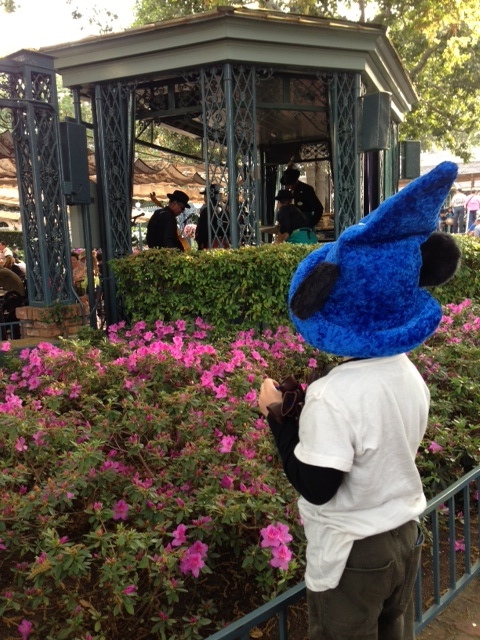
In his Sorcerer's Apprentice hat, Martin enjoys music from the "New Orleans" bandshell. The drummer threw Martin some beads.

In his Sorcerer’s Apprentice hat, Martin enjoys music from the “New Orleans” bandshell. The drummer threw Martin some beads.

During the Saturday (second) visit to Disneyland, Martin and I headed once again into Tarzan's Treehouse.

During the Saturday (second) visit to Disneyland, Martin and I headed once again into Tarzan’s Treehouse.

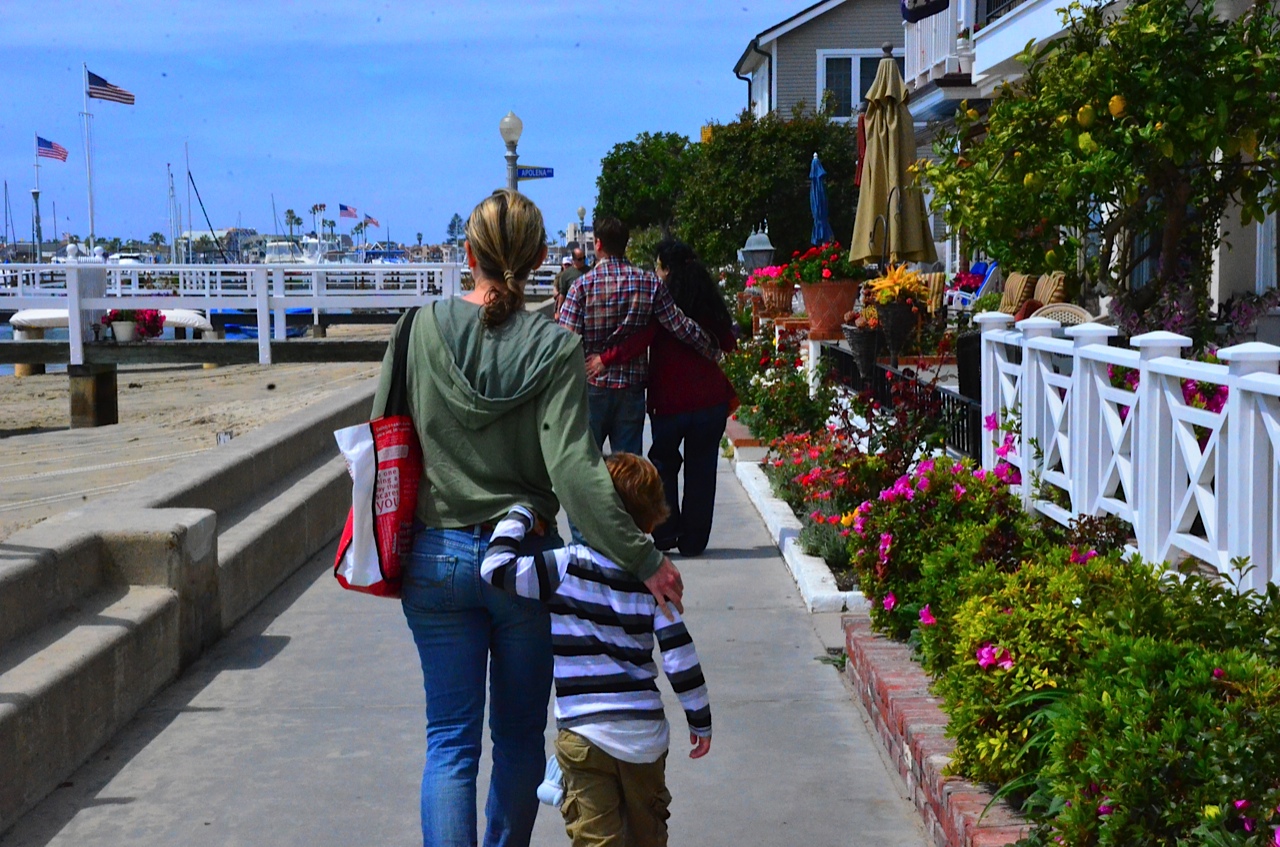
Back outside Disneyland, Martin and I strolled Balboa Island with Rudy and his wife (in front of us). I think we're imitating them.

Back outside Disneyland, Martin and I strolled Balboa Island with Rudy and his wife (in front of us). I think we’re imitating them.

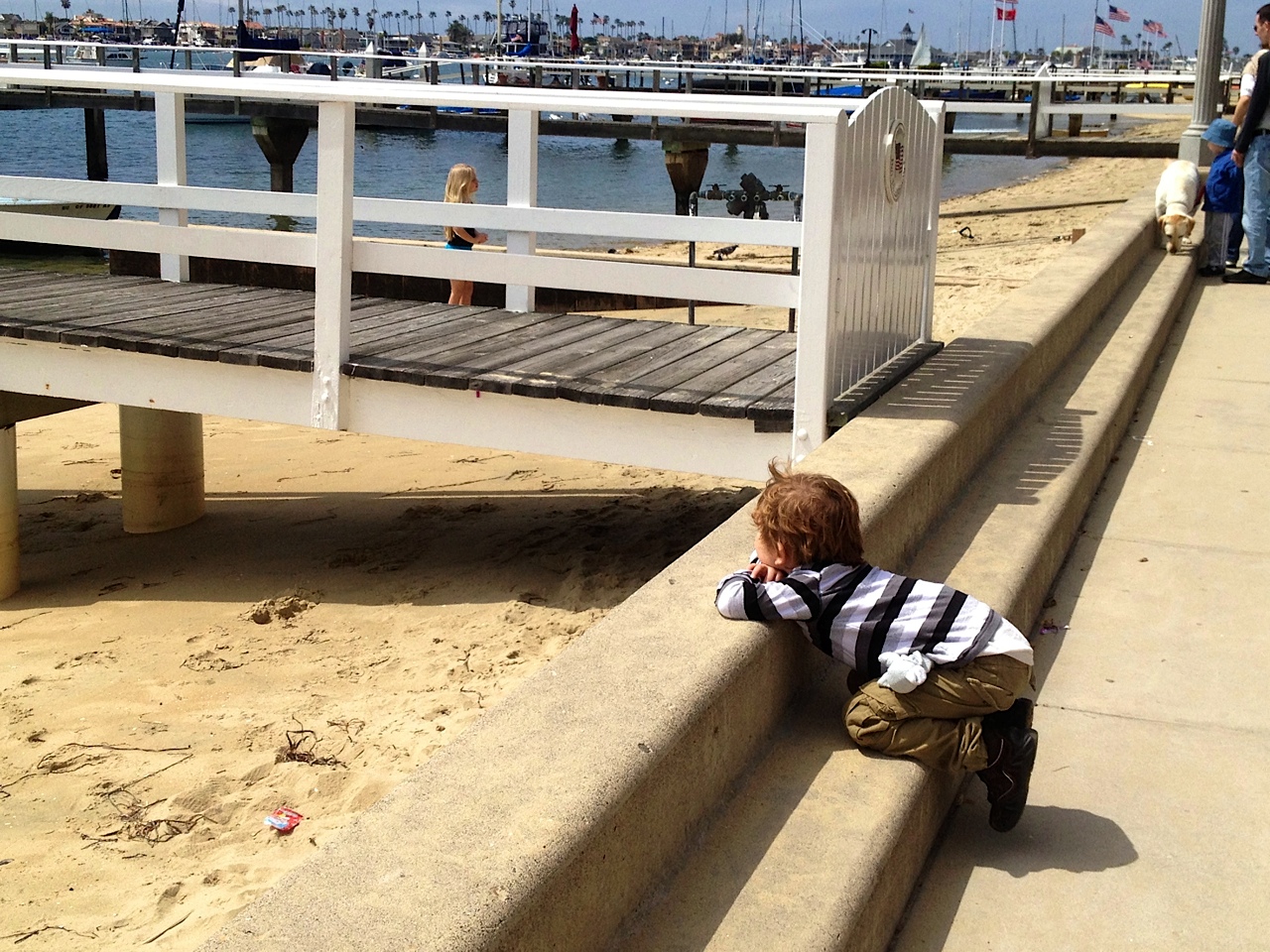
Martin enjoyed the views of Southern California. This shot was taken on Balboa Island also.

Martin enjoyed the views of Southern California. This shot was taken on Balboa Island also.

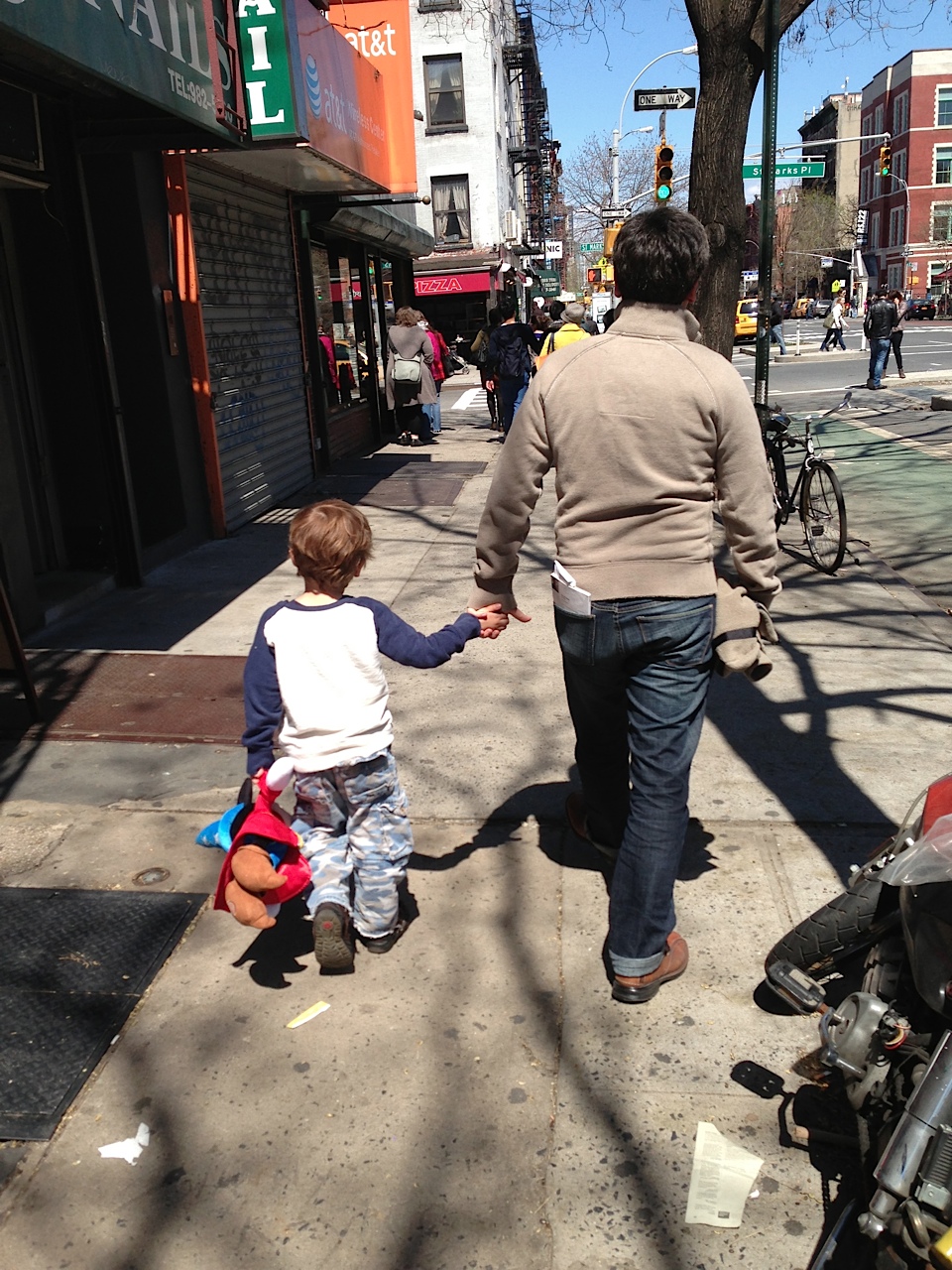
After we returned to New York, Martin enjoyed carrying his Mickey Mouse doll, as here on the Lower East Side with Adrian.

After we returned to New York, Martin enjoyed carrying his Mickey Mouse doll, as here on the Lower East Side with Adrian.


Gatekeeping

Because the New York City Department of Education classifies Martin as a “preschooler with a disability,” he receives yellow-bus transportation to his special-needs preschool, at no cost to us.

(I expect at least one email reminding me that Martin’s services are not “at no cost to us,” because those services are covered by taxes, which we pay. Okay.)

The school bus—it’s a “short bus,” and now I resent the “short bus” jokes I made as a child—stops between 8:15 and 8:30 a.m. Our apartment is a fourth-floor walk-up. It can take some time to get distracted Martin down those stairs, so instead of waiting in the apartment, we try to have him outside by 8:12. Or so. You know how it is. Most mornings Adrian brings Martin down and departs for his office after the bus comes. If Adrian is traveling or has to leave earlier, I bring Martin down.

There is a public elementary school on our block. It has two special-education classrooms but serves predominantly typically developing children. Between 8:00 and 9:00 a.m. those backpack-burdened pupils (who are not entitled to bus transportation; that’s different in New York City than elsewhere) walk past our building, alone or with their parents or guardians.

Picture the scene: Martin and I wait within the small fenced area in front of our vestibule, while typically developing kids stream down the sidewalk, just outside the fence. They are a few feet away from us, but separated.

Occasionally the metaphor overpowers me. I feel bad, with a physical symbol—a black wrought-iron fence, for crying out loud—demarcating our space from the path for typically developing kids and their parents.

My solution is to open the gate and stand or sit, with Martin, on the curb where the gate would be if closed.

The gate itself opens outward and therefore becomes an obstacle for the school children to circumvent. Tough. It’s hard enough to have a kid whose autism separates him from other kids. I don’t need an actual fence doing the same.

I wonder: Does this seem strange, that I have to open a fence gate to feel better about our situation?

It’s the little things, right?

Martin and I head out into the open, looking for some fun as winter fades.

Martin and I head out into the open, looking for some fun as winter fades.

Martin shows Adrian how he can write letters in the sand.

Martin shows Adrian how he can write letters in the sand.

Joyriding

A few weeks ago we enjoyed a vacation on Kiawah Island, and I spent three hours bicycling the streets with Martin and his stuffed panda bear in a cart attached to my bicycle.

Every fellow cyclist and pedestrian greeted us. “Good morning!” “Why, hello!” “Happy New Year!” “Some kind of fine weather today, isn’t it?” Even the drivers waved from the luxury cars that drifted by, obedient to the posted speed limits. I hardly bothered removing my smile between encounters.

This is the good life, I thought. The whole scene—planned community, bicycle paths, golf courses, herons, salt marshes, palmettos, beach, fine houses neatly kept—felt Disney, if not Stepford, and I devoured the insouciance. It’s invigorating, to be carefree once in a while.

“Well, look at this guy,” an older woman said, fawning over Martin when I stopped to check my map. “He’s got the best seat in the house.”

“He does,” I said. “He’s just zooming along while I do all the work.”

I mounted the bicycle again and pedaled away. I was happy that the woman had admired Martin.

In a moment, I wondered, Would she have acted the same if she knew the kid in my cart has autism?

And, Would any of this be different if the kid in my cart didn’t have autism? Does it always have to matter?

In 2008 I attended a fundraiser for Extraordinary Lutheran Ministries, a group that facilitates ministry calls for openly gay (including non-celibate) clergy. Under the ELCA’s policy at that time, gay and lesbian clergy could serve only if they practiced celibacy; like everyone else at the fundraiser, I opposed that policy and favored allowing non-celibate homosexual clergy to serve just like non-celibate heterosexual clergy.

The ELM representative who attended, I remember, said something like this (I’m paraphrasing wildly, on several years’ sketchy memory): “The church policy might seem like the biggest obstacle in the world, right now. But it isn’t. The policy is like this cell phone.” Here she held up her mobile phone, then balanced it unsteadily on its side atop an end-table. “We can just knock it down.” She tipped over the phone. “We can just knock over that policy and move on.”

That’s the way autism recovery feels. Some days, ASD is the biggest obstacle in the world, this lurking beast that colors even a halcyon Kiawah bike ride. Other days, especially when Martin is showing growth, ASD is that mobile phone teetering on an end-table. It’s changeable.

In 2009, the year after that fundraiser, a Churchwide Assembly amended the ELCA’s clergy guidelines to remove the requirement of homosexual celibacy. ELCA churches now can issue calls to gay and lesbian clergy in committed same-sex relationships.

Which is to say, we knocked it over and moved on. And maybe it really doesn’t matter if the kid in my bicycle cart has autism.

Newtown

Here are some things I’ve heard about Newtown—I guess we just say Newtown now—that may or may not be true. I heard that the shooter had autism, or some form of ASD. I heard that his mother tussled with the school district about his special education. I heard that she encouraged her son to “fit in.”

I thought, How terrible. How could the mother of a child with special needs tell him to do precisely that of which he is incapable—to fit in?

I thought, I would never do that to Martin. He is who he is. I will not chisel away his self-esteem by telling him to be like other kids, when he can’t.

As a child, I was boyish. There was no dress-up or experimentation with make-up for me. I had short hair; I preferred jeans to skirts or dresses or even slacks; I played sports and climbed trees; I didn’t mind when strangers mistook me for a boy, which they often did. Like other boyish girls, I faced persistent pressure to change, mostly from adult females, well meaning or otherwise. (“I can’t believe you’re not getting this right,” the art teacher chided, when used too little adhesive on my papier-mâché project. “You’re just always so messy.”) The effect was that I didn’t like myself. I believed that I should be girlish, but I wasn’t. That just wasn’t me. And so who I was—wasn’t right.

I’ve been determined not to tell Martin that he isn’t right. Martin should fit in with other kids only as much as he wants to or is ready for. That’s an easy call.

Still, Newtown and the rumors surrounding it got me thinking: Are there other instances when I tell Martin to do what he’s not (yet?) capable of?

There are. About fifty million per day.

“Martin, pay attention.”

“Martin, stop dawdling.”

“Martin, look at me.”

“Martin, no repeating. Say it only once.”

“Martin, eat.”

“Martin, hurry up.”

“Martin, walk like a big boy.”

“Martin, just go to the front hall and put the shoes on.”

The hard part is figuring out when Martin is just playing me. Example: Bedtime. Martin insists that I do his bedtime routine: potty, supplements, teeth brushing, reading, tuck-in. He’ll agree to take his bath for someone else (say, Adrian or Samara), but bedtime is all Mommy. In fact, Martin is so fixated on bedtime with me that perseverates on continual reassurance. Within five minutes of waking each morning, he has said, “Sleepy-time with Mommy!” at least once. He says it throughout breakfast and while he gets ready for school. It’s one of the first statements I hear when I pick him up from school: “Sleepy-time with you, Mommy!” Anytime that he senses I am about to leave, even if only to go to the bathroom, he becomes agitated and says, “Sleepy-time with you! Sleepy-time with you!”

On vacation last week, Adrian and I went out to dinner and left Martin with my parents. As soon as Martin realized that Adrian and I were leaving, he began to scream and cry. “I want to go to dinner, too. Sleepy-time with you, Mommy! Sleepy-time with Mommy!” He threw himself dramatically to the floor, grabbed Adrian’s foot with his right hand and my foot with his left hand. “You’re not going to go out! You’re going to stay here!”

We left.

Within five minutes I received a text message from my mother: “Everything fine here. Martin calm.” When we returned home later, I learned that Martin had done his entire bedtime routine and gone to sleep without complaint.

On the one hand, I know that Martin’s ASD and accompanying fixations make him cling to routines, and I need to indulge that. On the other hand, Martin wants me to indulge him, and he exploits my willingness to do so. When it comes to keeping pace and hurrying up, Martin is a heckuva lot more cooperative if he’s excited about where we’re going. Getting from our apartment to the school bus? It’s a ten-minute process. Getting from our apartment to the playground? He’s moving faster than I am. Am I wrong to tell him to hurry up and focus for the school bus? Same with meals. If the plate is beef bites with fermented cauliflower, I have to repeat some variation of, “Maybe you could take a bite?” at least two dozen times, or even just spoon it into him myself. A bowl of gluten-free oats with butternut squash and coconut oil goes down his throat like bathwater through the drain. Am I wrong to tell him to hurry up and focus on eating the beef?

One of my first reactions to Newtown was, “Thank God the shooter killed his mother first. It was an act of mercy; how could she have gone on?”

Looking back, I think that reaction—it was a gut reaction, and I am not saying that the Newtown shooter’s mother had anything to do with what happened on December 14; I know almost nothing about the circumstances—was my conscience expressing the responsibility I feel for Martin’s future. However far biomedical recovery takes us, I am the one who has to help Martin learn to live in the world and still love himself.

Holy crap.

Martin checking out a holiday train display.

Martin checking out a holiday train display.

securedownload

Because They Know

If you’ve been reading this blog for a while, you know about my love-hate relationship with social media. Something about operating on-line makes people thoughtless. Combine that with my hyper-sensitivity on autism and child issues—the result is potential meltdown every time I log on.

One particularly problematic area for me is constant Facebook updates about amazing children, written in some superficially deprecating fashion. “No other kid in Caleb’s figure-skating lessons can even axel. Can’t believe I can’t afford anything better for a kid who already lands a lutz!” Or: “I really love Woody’s new teacher. Look at this certificate she made him for getting the highest reading scores in the class.” Or: “Clementine is district chess champion. I feel a little less like I’m depriving her by not being a soccer mom.”

I get bitter.

Strangely, it is only the amazing-kid updates of distant friends that bother me. I like reading when my close friends—the kind of friends I visit, and telephone—post about their children.

I’ve come up with two reasons for the difference.

First: My close friends don’t do the superficially self-deprecating thing. They just brag. I’m not sure why that’s less offensive, but it is.

Second: They know about Martin.

When it comes to social media, I’m constrained, because we’ve chosen to keep Martin’s autism confidential. Adrian and I are careful not to post anything that makes our son appear atypically developing. We share the one picture in ten in which Martin actually looks at the camera. We write the cute things he says only when they sound like what any four-year-old might say, or else we edit to keep the gist while fixing the words. Of Martin’s true successes, I cannot boast on-line. “Martin chased a boy at the playground for, like, at least five seconds before he lost interest!” “Martin had a four-exchange conversation with his babysitter!” “In the midst of bolting down the sidewalk this afternoon, Martin turned around to see if I was following him!”

My close friends know about these successes, even if I can’t share them publicly, because they know about Martin. Last Memorial Day, as we do annually, Adrian and Martin and I got together with some of my closest girlfriends from high school. This year six families attended the gathering. The other children, all older than Martin and all typically developing, played with him as if he were their own little brother; they were patient, occasionally teasing, responsibly keeping him from trouble. From the parents I heard nothing but swooning. Martin was talking so much more than the previous year. Martin’s eye contact had improved. Martin had better command of his movement.

No strange looks to endure. Nothing to cover. Only compliments.

I felt like a million bucks.

When Martin and I visit his doctor in Chicago, we follow a two-day pattern. On day one, we fly from LaGuardia to O’Hare, rent a car, see the doctor, buy groceries at a Whole Foods Market, and check into a hotel “suite” with kitchenette, where I prepare Martin’s dinner. On day two, Martin and I eat breakfast at the hotel, return to the doctor’s office if any follow-up is necessary, then spend the afternoon at a friend’s home in Elmhurst, not far from the airport, and finally catch an evening flight back to LaGuardia. The Elmhurst friend is a high-school classmate, with a toddler of her own, and a most considerate hostess who prepares some fantastic vegan lunch for me while I co-opt half her kitchen to cook for Martin.

Several months ago, I awoke sick on day two of a Chicago trip. My head was pounding, and I was nauseated. A hot shower didn’t help. Nor coffee. Nor dry toast that I ate with my head resting in my palm. And poor Martin—I had no one to help out, and with no energy or patience, I was content just to get him and our things moved somehow to the rental car.

Almost the moment that I settled onto my friend’s sofa in Elmhurst, my situation began to change. My shoulders relaxed. The headache evaporated. It had been tension, of course. I’d gone to bed with a slight cramp in my neck, and made myself sick by worrying all night about what I would do if I got sick and had no one to help with Martin. Once we arrived in Elmhurst, I knew that if necessary I could say, “I need to crash in your bed for the rest of the day. Here are Martin’s pills and food. Good luck.” And my friend would have replied, “See you tonight. Yell if you need anything.” There was no longer any need to worry, and I felt better.

That’s the way it works, with friends who know about Martin’s autism. They’ve got my back. They procure food for Martin, cook for him, ask about his needs, encourage his friendships, celebrate his successes. And so I do the same for them. It’s like we’re one big family, sharing kids. I want to hear about their amazing kids, because those kids are mine, too.

I can’t take that feeling to social networking in general.

I suppose this blog is my brag book, instead. My anonymous brag book.

Sorry about that, readers.

Not the best-quality picture! Martin was so determined to flush this airport toilet with his foot that he climbed onto the fixture to manage it. I hardly had time to whip out my smart phone and capture the moment.

Not the best-quality picture! Martin was so determined to flush this airport toilet with his foot that he climbed onto the fixture to manage it. I hardly had time to whip out my smart phone and capture the moment.

Suspension

We’re in the process of finding a kindergarten for Martin. I’m touring schools, asking questions, completing neuropsychological examinations, filling out applications.

It’s an awkward process, for two reasons.

First, we can’t predict where Martin will be in a year. He’s made so many advances recently, accelerating over the last two months since we began Anat Baniel Method therapy. Right now we’re searching private, special-education schools, either specifically for children on the autism spectrum or for children with various special educational needs. I’m having trouble discerning what support Martin will need ten months from now—what size his class should be, with how many teachers, and what type of peers. Adrian and I want Martin to receive as much help as necessary, for as long as necessary. On the other hand, we want him to have the benefit of peers functioning about where he is, linguistically and socially. Hello, moving target.

Second, Adrian and I aren’t sure where our family will be in a year, geographically speaking. The suburbs have moved from a knee-jerk no to a real possibility, for reasons I’ll explain in a later post. At the same time, we feel that the very best schools for kids on the spectrum are in the City. The whole situation is a chicken-egg dilemma: Where he gets into school influences where we want to live, and where we want to live influences where we want him to get into school. What a mess.

We’re in suspension. Our life is in suspension.

The kindergarten-admissions process is a microcosm of our lives. We have no idea where Martin is headed, long-term. We believe he will recover from autism. We don’t know when, and there are no guarantees.

We’re trying to plan a future like driving through a foggy valley, with no idea what we’ll find when the fog lifts.

Der Process

I’ve written before about my scrapes with the Transportation Security Administration.

I travel with Martin, a lot. When we fly, I carry his myriad pills and drops and liquids and compounded formulations in a heavy-duty black shoulder bag. (It’s repurposed. Once upon a time the bag held my breast pump.) Many of the supplements that aid Martin’s recovery are homeopathic and otherwise imprinted or finely calculated. I will not allow the supplements to pass through the security x-ray, because it can scramble their delicate properties.

Because of Martin’s special diet, I also have to carry food in my knapsack. In the past, my go-to has been nut butter with rice crackers. Now I like coconut butter with crackers. The TSA doesn’t like either.

The scene changes each time we pass security.

Regarding food, I’ve been told, at various times:

(1) nut butter is no problem and can come on the plane;

(2) nut butter is a problem unless it is in a sealed, unopened container;

(3) nut butter cannot be in a sealed, unopened container because all those containers are too big;

(4) nut butter is exempt from security if I’m carrying a doctor’s prescription for Martin’s restricted diet (I always am);

(5) our doctor’s prescription for Martin’s restricted diet makes no difference to what we can carry on the plane; and

(6) we can bring nut butter on the plane only if I leave the security line, take all of my belongings and Martin to the food court, request to-go containers from some restaurant, divide the nut butter into three-ounce portions among those allegedly available to-go containers, and return to security with the newly packaged servings. On the day that this food-court option was given, the TSA agent insisted that the repackaging could be accomplished in the ten minutes before our flight was to board. It became one of many flights on which Martin ended up without nut butter.

I never know which story we’ll get about the nut butter, or coconut butter, when we reach the front of the security line. And yet, traveling with Martin’s food is a piece of cake—sorry—compared to carrying supplements that should not be scanned.

We’ve been in Texas, on Thanksgiving vacation. Last week, when Martin and I flew from New York to Texas, we encountered a sympathetic TSA agent. I unloaded everything from the black bag into a gray security bin. The agent took the bin immediately, asked what it contained (“My son’s medications”), used one swab to check all bottles quickly, and called Martin a beautiful boy. I repacked the black bag, and we were on our way in less than five minutes.

This morning, preparing for our flight home from Texas, I requested a hand-search of the supplements. I unloaded the several dozen bottles from the black bag into a gray security bin. No one came to take the bin. A TSA agent had me stand in front of the metal detector holding it, as passenger after passenger walked by, each (it seemed) examining the contents of my bin as s/he entered the metal detector. I heard, “Hand-check on one!” called several times, but the agent in charge of hand-checking decided to restock the gray bins of three lines before showing up, so I stood in front of the metal detector a full five minutes with my bin. At length a female TSA agent approached and offered to set my bin aside while we waited for the elusive agent in charge of hand checking. Then I stood, bin-less, another two or three minutes until I was invited to pass, not through the metal detector, but through a full-body scanner, the next line over.

Adrian traveled with me and Martin today, thank goodness. While I stood there waiting, Adrian accompanied Martin through the regular metal detector (long-time readers of this blog know my misgivings about the metal detector) and collected my laptop, knapsack, boots, and jacket from the conveyor belt. On the other side of the full-body scanner, I was informed that, because I had requested a hand-search of Martin’s supplements, I would be subject to a full-body pat-down. I’ve received the pat-down treatment maybe twice before; its necessity appears randomized. A male agent ushered me into a glass-wall-demarcated waiting area and told me to await a female agent. I stood, on display in my glass-walled enclosure, until yet another agent moved me to a chair. Some twelve minutes had elapsed since I took off my boots for security.

The female agent materialized, donned latex gloves, and told me to stand with arms outstretched while she ran her hands over my body. Meanwhile, a male agent began swabbing each individual bottle of Martin’s supplements. He swished the swab cloths through a machine, which at one point sounded an alarm. He relayed the alarm news to the TSA supervisor, who alit from his perch behind us and asked which bottles were in the alarm group. Apparently 18 bottles were in the alarm group. The TSA supervisor instructed the agents to open each of those 18 bottles and retest with a sample stick.

Next the supervisor asked, “Are these all your belongings?”, indicating the black bag and assorted supplements.

I should have said yes. Instead, I answered honestly: My husband had the rest of my belongings.

And where was my husband?

Over there. I indicated where Adrian had taken Martin to sit on a bench.

The supervisor demanded Adrian’s return. Adrian complied, carrying his briefcase and my knapsack.

The supervisor ordered a hand search of my knapsack, which had already cleared the x-ray machine. Then, for reasons unclear to me, he told the agents to seize Adrian’s briefcase and search that, too. Adrian surrendered the briefcase and returned to the bench to occupy Martin. By now 20 minutes had elapsed since I removed my boots.

The female agent sat me in the chair again, to run her hands over the soles of my feet. With the pat-down thus concluded, she began opening bottles of supplements to sample.

“You can’t do that,” the male agent admonished. “Make her open each bottle.”

He meant me. I rose from my chair and picked up a bottle.

“You can’t do that,” the male agent admonished again, this time directed at me. “She has to hold the bottle while you open it.”

I gave the bottle to the female agent, who grasped it in a latexed hand while I unscrewed the top. Then she dangled a paper sample stick over the top of the bottle, dropped the paper stick into a magic container, and asked me to recap the bottle.

Then she picked up the next bottle. The next of 18 alarm-group bottles.

The male agent opened a small cooler containing Martin’s refrigerated supplements and an ice pack. He told the female agent she should sample the refrigerated items, too.

Bottle open, paper stick, magic container, bottle closed. Bottle open, paper stick, magic container, bottle closed. Bottle open, paper stick, magic container, bottle closed.

Beside us, the male agent emptied Adrian’s briefcase. Bond indentures, credit agreements, and a Longhorns t-shirt spread across the table. More than 30 minutes had elapsed since I removed my boots.

The female agent glanced at the supervisor, now atop his podium again, and whispered, “I’m sorry about all this.”

I have a son with autism who takes a million pills and drops a day. Everyone here is staring at us. I am all for airline security, but why do some TSA agents have to make this an extended production while others let us through with hardly a pause?

I said, “These are my son’s medications. I really don’t like them handled.”

She shook her head. “I know. I’m sorry.”

Bottle open, paper stick, magic container, bottle closed.

The male agent announced that he couldn’t fit Adrian’s laptop back in the briefcase. Adrian left Martin sitting on the bench and came to gather his documents and other belongings.

Bottle open, paper stick, magic container, bottle closed. Finally the agent finished, leaving me with an empty black bag and a table covered with bottles. I started returning everything to the bag, embarrassed by a few tears of frustration.

Some 40 minutes after removing my boots, I carried the black bag and my knapsack to the bench where Adrian had the boots waiting for me.

“Is it always this bad?” he asked.

“No,” I said. “Sometimes it’s better.”

We started walking toward our gate.

“And sometimes they do all that while I also have to keep track of Martin. And then it’s even worse.”