Pill Pushers

I just spoke with another autism mom. She was distraught because the neurologist who performed her son’s MRI had called to say he found evidence of possible/potential seizure activity. She was confused because the neurologist told her to give her son anti-seizure medication, regardless of the side effects and the uncertainty whether seizure activity is even occurring. She was angry because she felt like the neurologist just wanted to get off the phone and had no interest in addressing her questions.

Why are doctors pushing so much medication?

On his latest neurodevelopmental psychological exam, Martin tested strong, academically. Although he has just started first grade, he is functioning at a second-grade level. But, the mainstream doctor who oversaw the exam stressed, when Martin gets to third grade, where the curriculum requires inferential reasoning, he might fall behind; because he can’t attend well, he can’t form inferences, either.

We know attention remains a problem for Martin, Adrian and I assured the doctor. What can we do to address it?

“Medicate him,” the doctor replied.

Medicate him?

“Medication might really get him over the hump when it comes to attention,” the doctor said.

We’re trying some other approaches right now, I said. We’re excited to be starting treatment with Dr. Zelinsky, using a sensory approach to retraining the brainstem. And Martin’s autism symptoms, including attention, tend to get better in spurts, as his body heals. Maybe by third grade we’ll have attention up to par.

“Sometimes those types of treatments can help,” the doctor said. “Still, we should start medicating sooner, rather than later. Martin’s a tricky case. It’s not clear whether he will respond better to a stimulant, a depressant, or some combination of both. We’ll have to fiddle with dosages and drug types to see what works best. If we start right now, then by third grade we’ll have it figured out.”

Adrian and I told the doctor we would like to hold off and give ourselves time to think about the medication option. Then we thanked the doctor for his time and promised to keep him updated.

This particular doctor expressed surprise at Martin’s progress since he was last evaluated, two years ago. I explained what we had done to provoke the progress, including biomed, homotoxicology, and HANDLE therapy. The fact that Martin has come so far using those approaches did not seem to affect, at all, the doctor’s opinion that we should medicate. I am not necessarily against the medication option forever, and I certainly don’t judge parents who decide to medicate their children before trying what I consider more natural treatments. That being said, I am sick of mainstream doctors trying to push medication on us at every turn. Medicate, medicate, medicate.

To the fellow autism mom who called me this afternoon, I said:

“Make a list of your questions. Demand an appointment. Bring your husband. Request copies of the MRI results. Send them to your biomed doctor, your ophthalmologist, any of your specialists who know how to read MRI’s. Get all your questions answered. Then decide if medication is the right choice.”

Because sometimes medication is the right choice. And often it isn’t.

All of a Sudden, a Whole Bunch More Happens

I have a lengthy post prepared on “my beef with the GAPS Diet author.” It’s all ready to go. But—

Shelving that post! At least for today. Because I must, must, must tell you about what else Martin did this weekend.

  • Saturday evening, back at O’Hare to fly home, we saw another family, with a boy about Martin’s age, boarding our flight. The boy was pulling a Cars-themed roller-board. Unprompted, Martin strolled up to the boy and asked, “Did you bring your own suitcase?”
  • Martin didn’t get to bed until almost midnight Saturday night, so I thought that getting up Sunday morning would be a real problem. It was not. When I entered his bedroom to wake him, I reminded him that it was Sunday and he was going to sing with the kids’ chorus at church. He came to life with excitement. “I’m going to sing with the kids’ chorus!” Then he did it. He sang with the kids’ chorus, three songs. He was too excited and bounced around a little. But he sang and clapped and stayed in more or less one spot, without so much as a point or prod from me. I sat in the front pew and recorded the event.
  • Also at church, during kids’ time, Martin sat on my lap in the circle with the other kids. When he got fidgety, I asked, “Would you like to go sit with Vincent?”, meaning another boy across the circle. Martin nodded yes (nodded!) and scooted to Vincent. Then, instead of just sidling up, Martin asked, “Vincent, may I sit next to you?” Vincent paused for a second—a very long second, for me—then he smiled and nodded. They sat together the rest of circle time.
  • Sunday afternoon, we went to visit friends in another town who have a three-year-old, Sebastian. After some initial shyness, and then goofiness, Martin trotted off to Sebastian’s room, and the two boys played together, interactively, for two hours. They sat at a little table and took turns with different objects, and took turns complaining when each thought the other wasn’t sharing. When I called from the kitchen, “Martin, what are you doing in there?”, he answered, “Me and Sebastian are making apple pie,” and then added, “Well, we’re pretending to make apple pie.” Sebastian is, granted, only three. Nevertheless, the interaction was so significant that Adrian said, “What is this? What’s going on? I’ve never seen this before.”
  • Sunday evening we accompanied the same friends to a jack-o’-lantern display. Martin and Sebastian wore their Halloween costumes (an astronaut and a dinosaur, respectively) and chose to hold hands as they walked.

This evening, Tuesday, I had dinner with the parents of another special-needs child. I told them excitedly about the events described above. One of these parents said, “That’s the thing about special needs. What might sound like nothing to another parent is amazing to us.”

Nailed it.

All of a Sudden, It Happens

Martin and I are on a flight to Chicago, to see Dr. Zelinsky. Two things happened in the airport:

First, the metal detector. I have my qualms about the effects of metal detectors, but I let Martin pass through them. It’s a nod to convenience, I suppose. Plus, at least it’s not one of those x-ray body-scan machines. I have even more qualms about them. Passing through the metal detector used to be a challenge for Martin. He might be scared, or refuse. When he agreed to pass through, he rarely succeeded without setting the machine off by touching its sides—either he clumsily bumped them, or his hands naturally flew apart for sensory input and balance. After one or two tries, the TSA agent would let me walk though with Martin, picking him up or holding his arms down and his body steady.

Today as we approached the metal detector, I lined Martin up and said, “Walk though carefully! Don’t touch the sides!” To my surprise, Martin stood ramrod straight, pasted his arms to his hips, and walked directly though the machine. Then he iced the cake: On the other side, instead of wandering away, he stopped and waited for me.

Second, the Windy City. As we sat at our gate, Martin watched the information screen and asked questions. “What does that number mean?” “Is that a picture of our airplane?” At some point, he looked at the destination name and said, “Chicago is the Windy City.” I couldn’t remember ever having told Martin that Chicago is called the Windy City, so I asked, “How do you know that?” Martin replied, “Because my daddy told me.”

What’s the breakdown? On and off for months, I have tried to get Martin to understand the question, “How do you know that?” If we are driving and he says, “That’s a hotel,” I ask, “How do you know that?”, trying to prompt him to say that he saw the sign or read H-O-T-E-L. Instead, he responds, “But-because it is.” If he makes an assertion beyond his experience, like, “All kids except me eat popcorn!”, I say, “How could you know that?” He responds, “But-because they do.”

This morning was no such exercise. I wondered how Martin knew Chicago’s nickname, and I asked without thinking about whether he could answer. His perfect response, missing even his trademark “but-because,” surprised me a second time.

Two big successes inside ten minutes! Still, you know me: I must always temper my enthusiasm. While we were waiting in the jet bridge, another passenger saw our seat numbers and remarked kindly, to Martin, that we were all sitting in the same row. This prompted Martin to ask me whether our row had three seats together, or two. When I told him that our row had three seats together, and that someone would sit next to us, he had a little meltdown and yelled, “I’m not ever going to sit in two seats again! Not ever!” He was crying as we entered the plane.

Did I mention the two successes?

Yeah, That’ll Give Me a Good Night’s Sleep

Yesterday evening, Martin had another real phone conversation with Adrian. “Are you still at the office, Daddy? Are you coming home? When do you think you’ll come? I’m good. I’m drawing pictures with Mommy. Okay. ’Bye.”

Last night, as he was floating to Sleepyville, Adrian mumbled, “These last sixty days or so, it’s so different. He’s like a new kid.”

I’ll take it.

Good Medical Care

Without any real statistics to show, I am going to assert that most of us in the biomed community have MAPS doctors for our kids. “MAPS” stands for Medical Academy of Pediatric Special Needs and is the successor term to DAN!, or Defeat Autism Now! MAPS doctors are trained and certified in the treatment of chronic conditions like autism. They help our children with the process of recovering from autism/autoimmune disorder, and with associated issues like epilepsy or food allergies. They’re kind of like general practitioners for children affected by autism.

Then we have other doctors, the host of professionals who accompany childhood, plus (because autism is the symptoms of sickness) assorted specialists. Neurologists, geneticists, ophthalmologists, audiologists, endocrinologists, allergists.

One challenge prevalent for biomed families is finding “other doctors” who respect their MAPS doctors’ efforts. You can imagine the potential conflicts. When we first started biomed, for example, Martin had constant skin rashes, so itchy that he would scratch his legs bloody. We took him to a dermatologist, who diagnosed “sensitive skin” and suggested using Cetaphil “gentle” cleansing and moisturizing products. Our MAPS doctor, recognizing candida overgrowth, asked us to substitute natural products for Cetaphil and work on balancing gut flora to bring yeast under control. (We went with the MAPS suggestion, healing Martin from inside.)

The elephant in a room occupied by both MAPS and non-MAPS physicians is vaccines. MAPS doctors may urge caution when it comes to vaccinating, especially for kids with a history of reactions to vaccines, while non-MAPS doctors may push vaccinations “on schedule” for all kids. Some pediatricians won’t even accept patients whose families feel they cannot vaccinate.

So there are challenges, navigating the biomed path accompanied by non-MAPS healthcare professionals.

When we moved to the suburbs last year, I took the opportunity to find a Martin new pediatrician and dentist. Our practitioners in the City were adequate but traditional. The dentist made me sign forms stating that I had “refused” routine X-rays against her recommendations, and once she applied fluoride to Martin’s teeth even though I had stated at the beginning of our relationship that I didn’t want any fluoride, ever. Our pediatrician was perhaps more conscientious; I had a positive experience when one of her partners took an interest in our biomed approach, and the practice gave us a vaccination exemption of indefinite duration after Martin reacted poorly to the H1N1 shot. Despite those perks, however, the doctors weren’t worth venturing back to the City.

I found a new pediatrician through conversations with other biomed moms. This doctor, though not a MAPS doctor, is knowledgeable about autism recovery. She stocks her office with papers like “The Autism-Gut Connection” and “SIBO Symptoms and Treatments.” I believe she can be a second set of eyes on our biomed protocol, which is a good thing.

The dentist I found on-line. I searched for dentists who have experience working with special-needs kids, and then I followed up with phone calls about whether the doctor minds if we opt out of fluoride treatments. Martin’s first check-up there, six months ago, took place on a weekday morning, when few kids were present. The hygienist wasn’t great with him. When Martin became upset, she tried being noisy and distracting. I had to stop her and explain that, with Martin, the best approach is quiet explanation of what is happening. We were more successful with the rest of the visit. The dentist was able to get a good look at Martin’s teeth despite his protests, and no one gave me any trouble about fluoride.

Unfortunately, both the new pediatrician and the new dentist are far from our home. Last week, as I drove more than 45 minutes for Martin’s next check-up, I questioned whether the dentist was worth the fuss. As Martin’s appointment time passed, and we were still stuck in morning traffic, I thought, No more. This is the last visit to this dentist. Surely I can find someone in our own town who doesn’t push fluoride and is good with special needs.

When we finally arrived, the office was sleepy, with only one other patient waiting. This time I told the hygienist (a different one than last time) up front that Martin responds best to calm words. She understood immediately. When Martin declared that we would get a check-up but would not lie down, the hygienist responded, “Of course not. Here, I will just recline the chair a little bit so you can see the television on the ceiling, if you want.” Martin went for that.

We had a different dentist, too, a man. He began by remarking that he saw on our information card that Martin follows the GAPS diet, and asking how that was working for us. (A dentist! Asking how GAPS is working for us!) I told him, in general terms because Martin was in earshot, about our experience. The dentist responded, “It’s remarkable, isn’t it? My friend with MS made similar dietary changes, and his symptoms have really responded.” Then the hygienist said, “I know someone who has been able to stop taking fibromyalgia medication since she went on a diet like that.” Then both the dentist and the hygienist started discussing their own emphasis on fresh, whole, organic foods.

Martin, meanwhile, behaved like a champion. He let the dentist recline his chair a little more and complete a full examination plus cleaning. He interrupted the procedure only to point to the ceiling television and say, “That’s Nick Jr.!”

When the dentist was finished with Martin, he said, “Martin’s teeth look great. Not having refined sugar is obviously helpful, and you’re doing a solid job with brushing and flossing. As to the fluoride, substituting xylitol is a good choice. More and more of our parents are moving that direction.”

This dentist gives out balloons. Martin requested a yellow balloon.

I, now oblivious to the nearly hour-long drive that had aggravated me, reported to the front desk to schedule our next appointment.

I don’t mind questioning or challenges regarding Martin’s care, as long as the questioner/challenger acts with an open mind, has a stake in Martin’s well-being, and isn’t just playing Devil’s advocate.

But at the same time, it is hard to overstate the relief I feel when everyone is on the same page.

[Note: I know biomed families have mixed feelings about xylitol. I will blog about that at a later date.]

So Here’s Something New We’re Going to Try

Martin retains significant sensory processing issues. Distant background noises distract him; several times a day, he asks, “Mommy, do you hear a helicopter?” or “Mommy, do you hear that airplane?”, and I do hear the aircraft, but only after I stop my other activities and listen carefully. His eyes, on the other hand, never seem to chase sounds; he hears but doesn’t look. Nor do his eyes guide his hands, at least not well. If I lob a ball to him, the ball bounces off his chest before he brings his arms together to catch, even when his eyes appear to be focused on me or to track the ball. And he’s clumsy. Very clumsy, which I think results from the double-whammy of mitochondrial disorder and sensory processing challenges.

I believe Martin would benefit from audio and/or vision therapy. His HANDLE therapist has been recommending for more than a year that I pursue these therapies, and although I trust her intuition, the time has never seemed quite right until this summer. This summer, after Martin’s language made some real progress, I thought: Well, language is finally getting close, and yet he still has the attention span of a fruit fly. If Martin is going to make significant progress in socializing, or moving toward mainstream school, we’ve got to find a way to make him attend. Getting his senses to cooperate could be a key component. I mean, how can he concentrate if any random stimulus distracts him, or if messages get lost between his eyes and his hands?

I started searching for the right therapist. I did not find him/her. The problem, from my point of view, was that the service providers offered either vision therapy (addressing issues like tracking or overreliance on peripheral vision) or audio therapy (addressing issues like sound distortion and sensitivity). Martin, on the other hand, seems to need help connecting his vision, hearing, and fine motor skills. Integrating.

Six weeks ago I paid a visit to a Central New Jersey mom-friend, whom I’ll call Lakshmi. Lakshmi’s son, Partha, is six years old like Martin, and I’ve known him since he was three, not long after he suffered a regression and lost all language following a vaccination. Partha, I would say, is 90% recovered. Strangers who meet him don’t realize he used to have autism, and he is completing first grade at a mainstream private school with no accommodation other than extra help in handwriting and the speed of his work. Lakshmi has worked miracles repairing the damage Partha suffered.

I was lamenting my fruitless attempts to find a therapy that I believed would address Martin’s integration as much as his vision or hearing. Lakshmi knew just the thing, she said, and described excitedly the improvements in Partha’s attention once they started working with Dr. Deborah Zelinsky, an optometrist who specializes in neural aspects of visual processing. As Lakshmi described the exercises Dr. Zelinsky had done with Partha, and what she had prescribed, I realized I might finally have found the “vision+” therapy I was hunting.

The next day or two I read more about Dr. Zelinsky’s work, including her development of the “Z-Bell test” to measure mismatches between visual and auditory processing, i.e., to figure out why a child might be seeing well and hearing well, but not seeing and hearing well together. Then I phoned and made an initial appointment for Martin. We had to wait a while. Now the appointment is getting close. In less than two weeks, Martin and I will travel to Chicago to meet with Dr. Zelinsky.

I am guardedly optimistic. At some point, once the diet is what it should be and an appropriate educational setting is found and the caregiver takes a few deep breaths, the process of autism recovery becomes a slow assembly line of trying this and trying that to see what sticks.

Soon I’ll find out whether Dr. Zelinsky’s visual processing therapy sticks.

Autism Steals From Everyone

When I was pregnant with Martin, I was in the middle of completing my MFA in writing, and one of my instructors, himself a father, told me this: “You’ll see. When your kid is born, you cats will be just cats. You won’t adore them anymore.”

I’d heard stories of this phenomenon, of the mom who has a baby and then wants to chain the faithful dog outside, or decides that the chattering bird who kept her company all those years wasn’t actually talking. Parents who start a “real” family, only to reject the companions who were family. That wouldn’t be me. My cats had seen me though some tough times, and I intended to return the favor.

“You’re wrong,” I told the writing instructor, and proceeded to bet him a dinner that, six months after Martin was born, I would still be doting on the felines.

I won that bet. When Martin was born, as he grew, when we got the autism diagnosis, and even after we started the all-consuming process of biomed, our cats retained their stature. We have four of them—Levi, Freddie, Edith, and George—all rescued from the street or the pound. Under our protection, they’ve lived luxuriant lives, indoor-only, replete with toys and top-quality food, scratching posts and climbing furniture, cuddling on our bed at night.

Until this summer.

What happened, I still can’t figure out. At the time, I thought it started with Freddie. When we lived in the City, we had some problems with Freddie peeing outside his box. Freddie is a small cat, and nervous. Anything can set him off. We hadn’t had any issues with Freddie in the year since we moved to the suburbs. Then a few months ago, Freddie started peeing outside his box again. And not just a little bit. And not in only one spot, as when we lived in the City. Freddie decided to treat our whole house like a toilet: the bathrooms, the family room and dining room, the throw rugs, Martin’s bed.

Something had to be done. In consultation with the cats’ veterinarian, I experimented. Different kinds of litter. Moving the litter boxes around. Strategically positioning puppy-training pads in areas Freddie hit repeatedly. We made some progress. At least, more often than not Freddie hit a box or a pad, and clean-up was efficient.

Then Levi joined the party. His timing was a wonder. It was a weekday evening, Martin was sleeping, and I had just climbed into bed with Adrian to begin a conversation titled (in my head), “We’ve got to do more to get this Freddie problem under control,” when I heard liquid splashing in our bathroom. I cut the nascent conversation and sprinted to the bathroom to find Levi urinating all over a chair. Levi! Levi, who never in his eleven years had peed anywhere but a litter box! Levi, producing the most dastardly mess.

I swore. I dropped an F-bomb and chased Levi from the bathroom. By the time I had the mess cleaned up—originally, more than a decade ago, I brought the cats to my and Adrian’s relationship, so dealing with their, ahem, issues always seems to fall on my shoulders—Adrian was snoring. Our conversation was postposed until date-night dinner that weekend, by which time Levi had become Troublemaker No. 1. Unlike Freddie, Levi wasn’t just peeing. He was spraying, marking his territory by firing urine directly at walls, doors, furniture, and heating vents. You can clean from dawn till dusk. That smell sticks around.

“I have no idea what’s happened,” I said to Adrian at dinner that weekend. “I don’t know why they’re doing this to us. I think we’ve got to consider the vet’s suggestion, and let them go outside.”

Adrian looked like he couldn’t believe what I was saying. To some extent, neither could I. In the 20 years I’ve hosted cats in my home, I’ve been steadfastly against letting them go outside. To some extent, I was being pragmatic; I’ve lived inside Chicago, New Haven, Dallas, New York City, urban centers inhospitable to feline wandering. But my objection extended beyond simple pragmatism, to generalized affinity for animals. Because of cars, predators, and other dangers, cats allowed to wander have shorter lifespans. Plus, they kill. Inside, my cats kill moths, crickets, flies. Outside, songbirds and mice and squirrels and all sorts of higher orders come into the picture.

As I sat there talking to Adrian, in a restaurant, away (thank goodness) from the cats, I realized something: There is only so much pee I can tolerate. Martin still has trouble at night, and occasional daytime accidents. So I’ve dealt with six years of pee from him already. And there are litter boxes. With four cats, I’m cleaning litter boxes all the time. Now I had pee all over my house. Pee, pee, pee. I was done.

Ever since the Cats Gone Wild! show began, our veterinarian had been advising me to let the cats roam freely. “You don’t live in the city anymore,” she coaxed. “You have more than an acre of property. You live on a dead end with hardly any traffic. Cats allowed outdoors don’t mark inside. They just don’t.”

Adrian and I reached agreement quickly. For the first time since they came to our home, the cats would be allowed outside. I set about taking all responsible precautions, including rabies vaccinations (ugh, let’s not get into vaccinations again!) and flea pills. I asked friends who have outdoor cats, “How do you make sure they come back?” (“They know where the food is,” I was assured.) One Saturday, when we were hanging out on the back deck with friends, we opened the sliding glass doors and left them open. And that was that!

Or so I’d like so say. The truth is that nothing was solved. I came to realize that the originator of the pee problem was neither Freddie nor Levi, but our youngest cat, George. George woke up one morning and inexplicably decided he hated Levi and Freddie. I suppose I saw hints: Instead of four cats sleeping on our bed, there were three, with Georgie elsewhere, and there were hisses and swipes, scratches on Freddie’s nose.

In the face of George’s wrath, Freddie cracked. He started peeing, I think, out of sheer nervousness. Levi started marking in order to warn George off further aggression. Once the cats were outdoors, their true colors became increasingly evident. George strutted around the yard, chasing Levi clear off the property. Freddie kept peeing, too scared to set paw out the door. Levi increased his marking, spraying every ingress Georgie might access, spraying the back patio when he had the chance. When they were all inside, fights broke out.

It was chaos. It was a disaster. I was losing sleep. Imagine this: I have a child with autism, yet what kept me up at night was the fear of who might be peeing where. I woke repeatedly, roaming the house in darkness, looking for signs of trouble.

I’ll skip to where we stand now. As of this writing, Levi and Freddie are living in the basement, and have been for more than a month. Tellingly, they both stopped urinating outside the little box almost as soon as it became clear that they were away from George. And don’t worry too much for them. We have a gigantic unfinished basement. I’ve hauled towels, pillows, and boxes down there to create soft and safe spaces. There are crickets to kill, and—ugh—last week I cleaned up a decapitated mouse. There are ceiling-level windows, under which I’ve placed “cat furniture” so the boys can climb and look out. I moved a chair and table into a quasi-office configuration so that I can spend and hour or two with them each day, working. I’m sitting there right now.

Upstairs, George and Edith are residing, without incident, allowed outside as they want. (I can’t let Levi go outside, because he and George fight. Freddie still lacks wanderlust entirely.)

For now, the problem is solved. The house is clean and fresh. I’m sleeping. Nevertheless, I don’t want Levi and Freddie to live in the basement forever. They don’t deserve it. George started the whole thing. So we’ve come down to this: I’m hiring a cat behaviorist to try to get to the bottom of George’s attitude, of why he started hating Levi and Freddie after years of peaceful coexistence. If the behaviorist can’t help, we will begin trying to re-home Georgie. I will be heartbroken, and I still don’t know if I can do it, but that is the direction we will move.

Why, you might be ask, are you reading all this on an autism recovery blog? What does this have to do with Martin’s journey?

With Martin’s journey, maybe not that much. But it has a lot to do with my journey as I shepherd Martin. There has been too much on my shoulders. I’ve been cleaning and cooking and researching and conducting therapies and finding schools and trying to keep a household together for too long. Too long. These past few months, including two vacations when I took some break from the madness, have prompted reevaluation, as I wrote last week. If in past years I would have indulged the cats their little spats, if I would have lost the sleep to hose down throw rugs at 2:00 a.m., no more. I have autism to deal with, and somewhere under that burden, I have my own life to forge. My cats will always have access to safe and warm spaces, to healthcare, to food, and to company.

Monopolization of my time, or the privilege of ruining my home—those they may have lost. Because autism steals from everyone.

One more thing—I know that, with what I write in this blog, I open myself to ridicule. Deservedly so. As I’ve said before: Homemade probiotic catsup? Camel milk? Spending hours in airport security so supplements don’t get X-rayed? Who does that? And right now you’re probably thinking: A cat behaviorist? Seriously? Who does that?

Think about this: Eleven years ago, when Adrian and I adopted Levi as a kitten, he came with a case of ringworm so pernicious that, after months of unsuccessful treatment, we were forced to take him to a feline dermatologist. Honestly. A feline dermatologist.

So all things considered, Adrian and I might just be getting slightly less crazy.

Yesterday Morning Totally Eclipsed by This Morning

I’m exhausted today. I went to bed at 11:00 last night, waiting up for Adrian, who had a business dinner. I set my alarm for 4:45 this morning and didn’t make it that long. As often happens when I’m waiting for an early alarm, I slept fitfully and woke throughout the night. Around 4:25 am I gave up, rose, and looked out the window.

Bingo! There it was, through a part in the clouds: the massive full moon, just waiting to be eclipsed.

Martin is a moon fanatic. He refers to his children’s books about the moon as his “research” and studies them thoroughly. He tracks the phases of the moon daily. Through his updates, I always know whether the gibbous moon is waxing, or waning. For week’s he’s been looking forward to this morning’s eclipse.

Because Martin was excited, I was excited. I did some research of my own and discovered that this morning was truly special. The total eclipse of the moon occurred simultaneously with the rising sun, an event called a “selenelion.” During a total lunar eclipse, the sun and earth and moon form a straight line. During this perfect alignment, it should be impossible to observe the rising sun. What we see from earth, however, is refracted by our own atmosphere. We begin to see the sun before it actually clears the horizon, and we continue seeing the moon, in all its eclipsed glory, after it has sunk.

From 4:30 until 5:30 am, while I prepared lunches and set bone broth to simmer, I monitored the moon every 15 minutes, waiting for the best opportunity to wake Martin. Unfortunately, the break in cloud cover was short-lived, and soon I tracked the moon only by the brightest spot amidst the clouds. Around 5:40 am that bright spot began to dip below the tree line surrounding our house, and I decided I’d have to wake Martin.

I expected him to be drowsy, maybe to take a look outside and fall back to sleep. That didn’t happen. As soon as I picked him up and whispered, “I’m going to show you the moon,” he woke fully and exclaimed, “We’re going to see the lunar eclipse!”

Thus commenced perhaps the most connected morning I’ve had with Martin in four years. Martin and I stood on the dark patio and peered through the trees, trying to catch the glow’s shift from white to reddish. Martin did not fret that we could hardly see the show. I Googled photos that others were taking of the moon, and he drew eclipse pictures on his whiteboard. We waited for the moment when the sun would appear to rise before the moon had set. When kept the inside lights dim in order to watch the sky brighten.

At 6:20 I asked Martin to wake Adrian. Martin scampered down the hall, yelling, “Daddy! Daddy! It’s time to get up,” Adrian asked what Martin had been doing so early, and then the two of them started discussing the eclipse. Then Martin ate breakfast in semi-darkness as he watched the sky slowly come to day.

Writing this, I realize that what made the eclipse special was not just the connection to Martin this morning. It was that I, who care nothing for the moon, had figured out how the eclipse would work and had taken the time to prepare our viewing. Through my child, I had become interested in something (besides autism!). Following my child, I had learned something.

Which is part of what parenting is about, right?

Understanding

“Martin’s progress has slipped a little.”

That’s a euphemism for reality. It means Martin is having a crap week.

I write a lot about this topic, I know. When Martin suddenly looks less like a kid on the path to recovery, and more like a kid with autism, when he tanks, when it all goes to pot, when dinner and bedtime just are not going to happen without a glass of wine (for me, not for Martin), I blog. I blog because I owe you the whole story, because it’s cathartic, and because misery loves company. (These posts tend to generate more messages than any others. Need to talk? Have at it: findingmykid@yahoo.com. Or use the comments section.)

Martin had been doing so well lately, right up till this weekend. Saturday we invited a local family over to swim. They have two kids, age four and almost-six. I’ve known this family for about a year, from church. I know the mother better than the father. Halfway through the afternoon, the father apologized to me for not realizing that Martin has autism. He was surprised when his wife mentioned, on their way to our house, that Martin follows a special diet to alleviate autism. He’s seen me helping Martin around the other kids at church. He always just assumed that my son was shy, or nervous because he doesn’t know the other kids well.

Apologizing? Because you see Martin every week and didn’t realize he has autism? Thank you, but really, no apology necessary.

Sunday afternoon we went to a birthday party. Martin willingly joined a game of tag with the birthday boy and a few other friends. Sunday evening Martin was disappointed that Adrian couldn’t come out to dinner with us because he had a conference call. The call finished earlier than expected, and Adrian surprised us by showing up during the entrée course. Martin, visibly excited, exclaimed, “Oh, you came! I’m so happy!” A friend, visiting for the weekend, who hasn’t seen us in several months, remarked on Martin’s uptick in verbal skills.

We rocked the weekend. Then all hell broke loose.

Sunday night Martin had trouble getting to sleep. Monday morning he slipped into unfocussed silliness. Monday afternoon, at a playdate, he cried and stomped for 20 minutes when I refused to say we could get a chalkboard at home. (I’m scared of chalkboards. Better just to leave that one alone.) Tuesday we received a note from school that Martin was acting defiant and attention-seeking, and that he had hit a teacher. (We jumped all over that one. Martin spent Tuesday evening writing an apology to his teachers.) The highlight of my Wednesday was Martin throwing himself onto the Stop-N-Shop floor and screaming, “I don’t want to buy any fooooooooood!” (As a sign of how far I’ve come regarding public embarrassment: I spent that minute or so, while he was screaming on the floor, searching my purse for my grocery list. Where is that list? How could I have misplaced it so quickly? Wait, is that my kid terrorizing aisle 24?) Through all these incidents, Martin’s language skills, so strong this summer, failed him. He repeated himself, went rote, even babbled. And yet, except for sleeping, he hasn’t stop talking since Monday morning. Just talking and talking and talking and talking. Point, or no point. Accentuated here and there with loud, forced laughing.

Why? What transforms a close-to-typical-child weekend into a thought-we-were-past-these-symptoms week?

After three-and-a-half years of biomed, I’m finally getting the hang of recognizing the likely causes of backsliding. This week, it seems, we’re dealing with yeast die-off. Several weeks ago I began seeing the harbinger of yet another yeast flare. I’ll spare you the details of that harbinger; suffice to say, it’s poop-related. Candex, an enzymatic formulation, has been controlling Martin’s yeast. Last week, Martin’s biomed doctor and I decided to increase the daily Candex dose, and I started that process Thursday evening.

Increased Candex leads to decreased yeast. Decreased yeast means yeast die-off. That’s a toxin in the system, almost like alcohol. It can make a kid silly, or angry, or irritable. That’s happening to Martin now. In tandem with these behaviors, the aforementioned yeast-flare harbinger (okay, fine: the unusual poop) is fading.

Yesterday morning I signed on to one of my autism-recovery groups and saw this post from a fellow mom:

We’re on week three of nystatin for yeast. These past five days I’m pretty sure we’ve been dealing with die-off. Behavior has been super hyper, nonstop talking/making noise, fake laughing a lot, not listening at all, emotional outbursts, no attention to tasks AT ALL, itching??

Yes. Yes! I cyber-shouted. That’s yeast die-off. I’m right there with you, sister.

Understanding the physical cause of Martin’s, ahem, “slip in progress” helps me see that the behaviors are not within his control, and indeed that my little boy probably feels as agitated, flummoxed, and eager to alleviate this situation as I do. Understanding the physical cause also helps me see that darling, recovering Martin will return.

Soon.

On Monday's playdate, Martin behaving. Didn't last long.

On Monday’s playdate, Martin behaving. Didn’t last long.

What’s Working Now

Are you familiar with miracle products?

I participate in various social media groups for parents with recovering children. Often, I see posts like this:

“We just started this [miracle enzyme, supplement, probiotic, oil, &c.] ten days ago, and I can’t believe the progress! My son is making consistent eye contact, he’s increased his vocabulary, and he finally potty trained! Today I got a note from his preschool teacher saying he is more ‘with it’ and making cognitive leaps. I’m kicking myself that we didn’t try this before now. Anyone having similar results?”

And then, comments like these:

Commenter 1: “Yes, yes, yes! [Miracle product] moved my son from babbling to words!”

Commenter 2: “We added [secondary product] to [miracle product], and the gains were even greater. We’ve been on them both for a month and will be continuing.”

Commenter 3: “This is all amazing! Where can I buy [miracle product]?”

Commenter 4: “[Miracle product] got my daughter into Princeton!”

Posts, and comments, touting a miracle product frustrate me.

Miracle-product proclamations frustrate me because autism varies from kid to kid. The health and immune challenges underlying autistic symptoms include, and exceed, neuroinflammation and other chronic swelling, mitochondrial disorder, genetic mutations, leaky gut, yeast overgrowth, oxidative stress, excess propionic acid. Autism exhibits disparate effects on cerebral function in girls versus boys. “Autism” is not a single malady and is never identical. That miracle product? Shoot a paint ball into a crowd. You’re bound to hit someone and splatter a few others. The rest will probably be left wondering what the fuss is.

I can understand that, if you’re thinking about trying a new product, you may want to post an inquiry about others’ experiences with the product. But given that the underlying disorders are child-specific, and that recovery means finding the right combination of many factors over time, why tout miracles? We parents of children with autism, we tread on hope. We’re easily led. When ten marvels in a row fail to help our kid, we end up embittered and broke.

Recovery from autoimmune disorder is a long, tedious slog without shortcuts. Sure, some families recover their children within a year, those lucky dogs. Most take much longer. Many children never get significantly better. The only miracle in autism is that, given our increasingly toxic world, we’re able to fight the spectrum at all. The amazing supplement, probiotic, or whatever, might indeed have given your kid the week of his life. That’s not a wonder. If you must tout a miracle product, don’t do it after a week, or a month. At least wait a year, then let us know if the developments continued, and speak in measured, child-specific terms.

Dear readers, are you wondering why I’m ranting? That was all an introduction to today’s post, which in comparison to its introduction, may seem brief. The topic is what interventions are working, right now, in combination, for my one kid, with his own particular combination of health challenges.

Following “Hard to Blog an Avalanche,” I received several inquiries about what I think has instigated Martin’s recent growth. Usually, when Martin improves and I’m asked why, I answer, “Don’t know. Obviously, something in the millions of things we’re doing is helping.” This year, I have a better inkling. I have seen five interventions correlate, almost certainly, with better health and/or increased speech:

1. Camel milk. Martin started drinking it this spring, and his language took off. Why? Too long for this post. Check back in a day or so to read “What’s the Deal with Camel Milk?”

2. The GAPS diet. I’ve written a lot about GAPS recently, and I’m also working on a post about how I don’t buy into everything that Dr. Campbell-McBride says. For now, it suffices to say that Martin’s digestion has improved.

3. Candex. We have battled yeast overgrowth, in one form or another, repeatedly since we began this journey. Going off just about every form of sugar helped, but only for a while. Nystatin did nothing positive. Earlier this year, poor Martin’s yeast was so bad that he clawed his skin raw. Finally, his biomed doctor said to try Candex, an enzymatic product. The same night he started Candex, Martin had a foul-smelling BM—yeast, I think, leaving his system. The next day, the skin rash began to clear. Since then, the candida has been under control, so much so that I’ve been able to add a little more fruit into Martin’s diet without worrying about the fructose feeding yeast.

4. Enhansa. Lee Silsby Compounding Pharmacy makes Enhansa, or curcumin, a derivative of turmeric. Martin suffers from chronic inflammation, which places undue pressure on his compromised immune system. Turmeric’s anti-inflammatory properties seem to be relieving that inflammation, even to the point that his face has lost its “puffy” appearance. (The puffiness was visible only to me and others to whom I pointed it out in photographs. Still, it was there, and a symptom of his systemic inflammation.)

5. MitoSpectra. This is a proprietary mitochondrial supplement blend of vitamin C (as ascorbic acid), vitamin E (as d-alpha tocopherol succinate), vitamin B5 (panthothenic acid), L-carnitine, and coenzyme Q10. We have used each of the component supplements before, alone and in combination, and indeed Martin still adds separate sources of vitamin C and L-carnatine. MitoSpectra, however, seems to combine the five supplements in a form and proportions that do well for him: He shows more coordination and energy, and less “floppiness.” At times I wonder whether those improvements are dependent on continued use of MitoSpectra; my hope is that, as his immune system overall continues to heal, his own mitochondria will be able to assume the work MitoSpectra is now doing.

Camel milk, GAPS, Candex, Curcuma, and MitoSpectra. Not a miracle, not any one of them.

Each a step in this tortuous recovery path.

Just maybe a longer stride than I’m used to.

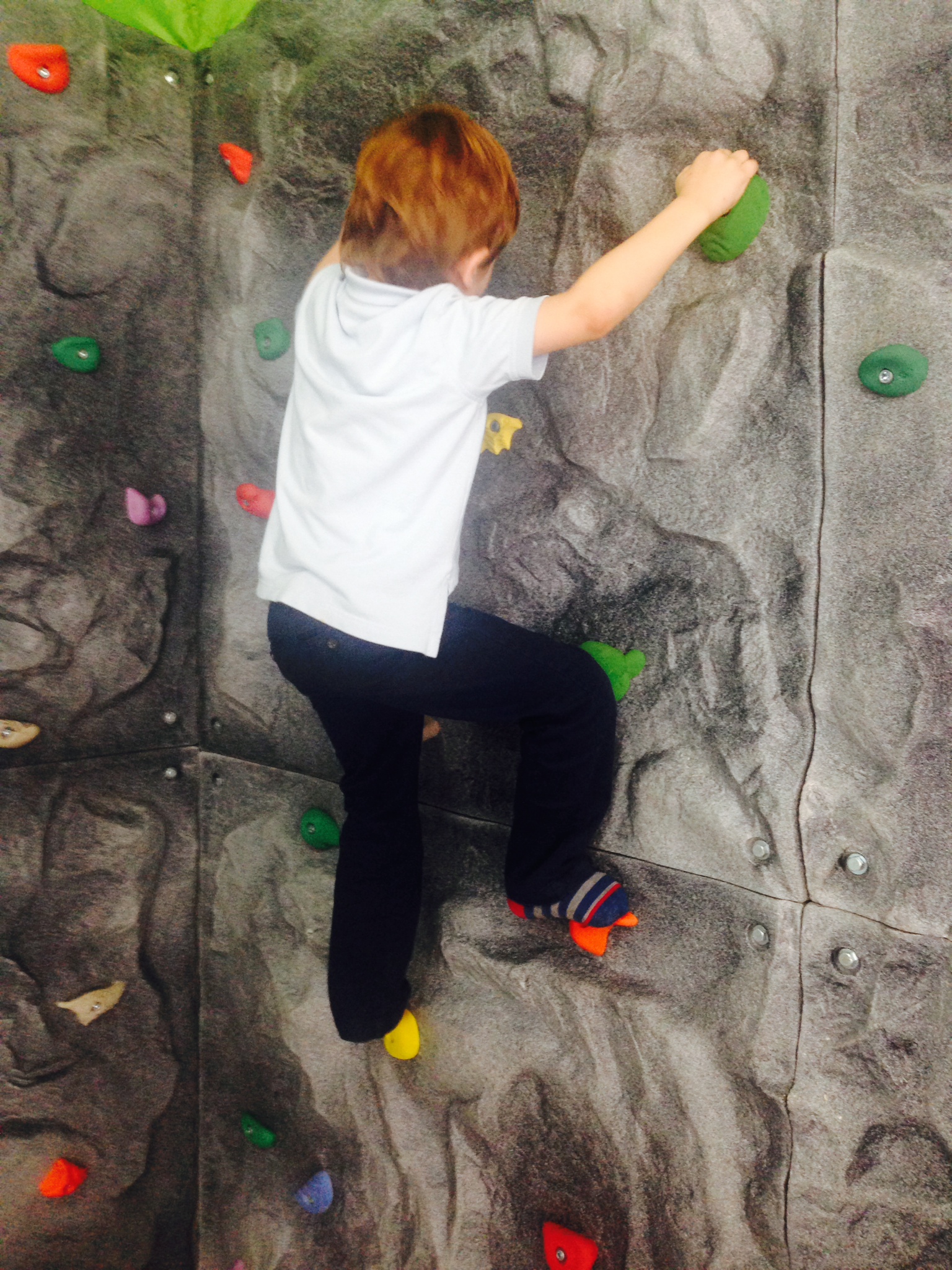
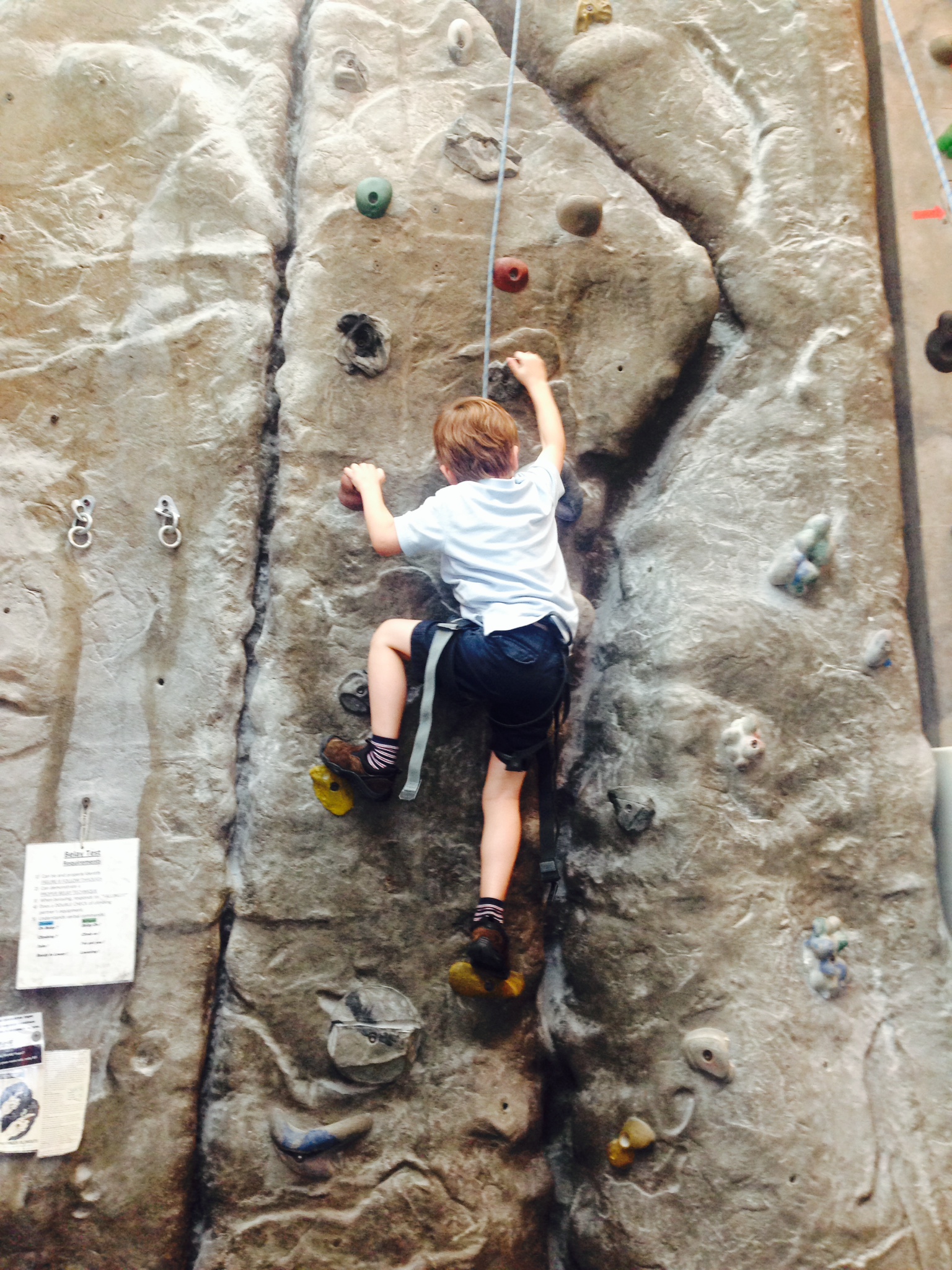
Increased energy, coordination, and willingness to try new things. I'm so into these changes.

Increased energy, coordination, and willingness to try new things. I’m so into these changes.