Not a Special Moment

This morning I had one of those disappointments to remind me that, no matter how far we’ve come, I still have a son with autism.

Adrian had already left for work, Martin was eating breakfast, and I’d finished giving his supplements early, so I had five minutes to spare. Bouncing around my Facebook feed I saw several references to Alfonso Ribeiro doing “The Carlton” on Dancing the the Stars last night. I’m not a big DWTS watcher, but who could resist traveling back 20 years and watching The Carlton again? Hastily, I used my iPhone to Google.

The dance was as delightful as I’d imagined, and I thought, “I want to share this with Martin.” I brought my iPhone to the breakfast table and restarted the video for him. I said, “This funny dance made me happy.”

What did I expect in return? I don’t know. Maybe a laugh. Maybe a question like, “Who is that man?” so that I could talk about The Fresh Prince. Maybe just a moment, together, when we would share a kibble of amusement. Just a moment.

Instead, Martin retreated to his comfort questions, the topics on which he fixates these days:

– “Are there children in that audience?”

– “Can we go there?”

Ÿ- “Do you have to practice to be in that audience?”

Each of these questions has, somewhere in the past, an origin. For months now, Martin has wanted to attend anything that resembles a concert, however remotely. When a group comes on the car radio, he says, “Mommy, does this group play shows still?” And then, “I want to go there.” He often melts down if we cannot proceed directly to a Crosby, Stills & Nash concert, or if informed that Adele is not currently appearing in our suburb. When Nick Jonas sang God Bless America before the U.S. Open women’s final, which I was watching on television, Martin deemed the event a concert and lost his cool because I didn’t have tickets. As to whether one has to “practice to go there,” last fall Martin and I attended a community event in which a children’s band and chorus performed. Martin became distressed that he could not climb up on stage and perform too. My attempt to explain that concerts are a culmination of much practice became a fixation for Martin. Now, no matter what is denied to him, he blames “practice.” “Mommy, do you have to practice to be a pirate?” “Do you have to practice to eat food that makes your belly hurt?” “Do you have to practice to go to Arkansas and meet the Duggars?”

There was no sweet moment this morning, watching Alfonso Ribeiro dance The Carlton. As soon as the video started, so did Martin:

“Are there children in that audience?”

“Yes, Martin, I assume so. This is taken from a television program that—”

“Can we go there?”

“No. See, this is taped from a televi—”

“I want to go there.” [He was growing distressed.]

“It does look like fun! But it’s not something we can—”

“Mommy, do you have to practice to be in that audience?” [He was beginning to cry.]

“No! You don’t have to practice to be in an audience. You—”

“I’m never going to go there! Never!” [Here ensued a meltdown.]

“Martin, I was hoping to share this with you, but it’s just making you cry.” [I turned off the video. We made it less than 30 seconds.]

I shouldn’t have said that last comment; Martin is sensitive, and I don’t want to induce guilt for behavior he cannot control. But I was frustrated.

We all have our shortcomings.

Terrified at the Philharmonic

In August, when we were vacationing in Austria and Germany, we took Martin to the Vienna Philharmonic. The Philharmonic was playing at the Salzburg Festival. We made a (loooong) day trip from Munich, where we were staying. The Venezuelan Gustavo Dudamel was conducting a program of Richard Strauss and René Staar, and Staar was even in attendance. Adrian, who is crazy about Dudamel, got himself into concert mood by looping Strauss’s “Also Sprach Zarathustra” endlessly in our vacation rental car. The Philharmonic adventure was the splurge of our vacation, a really big deal for us, and it meant the world to Adrian that he could bring Martin along.

We prepped Martin for days. In Martin’s presence I would say casually, “Hey, Daddy [Adrian], when we go to the symphony, can we talk during the music?” Adrian would answer, “Oh, no. Definitely not. During the music we have to be quiet.” Or Adrian would remark, “Hey, Mommy, did you know it is fine to clap at the symphony, but only when everyone else is clapping?” I would return, “I do know that! When Mr. Dudamel comes on stage, I will clap and then be completely quiet until the end of the music, when everyone claps.”

The morning of the performance, I helped Martin dress in a shirt, tie, and sweater vest packed especially for the occasion, and off we sped to Salzburg.

To be honest, I was terrified. We couldn’t have been the only ones who considered the day a splurge (the Salzburg Festival is expensive!), and judging from the number of fuddy-duddies in attendance, a Martin outburst would have made our family very unpopular in the Great Festival Hall. To boot, the performance was being recorded. I assume the sound engineers can edit out something like an autistic six-year-old blurting, “Can a viola play in a reggae band?” I mean, if you buy a live taping, you don’t hear the audience’s coughing or candy wrappers. Then again, we were seated in the second orchestra row, nearly under the tiny microphones suspended from the ceiling. Each time the music fell soft or paused, I tensed. Martin is not good at silence.

Thank goodness we were near the side aisle. In case of emergency, I was poised to scoop Martin into my arms, make for the exit, and keep his mouth covered until we reached the safety of the ladies’ restroom. I would grab my purse on the run, so that I could use my iPhone to keep him busy until the final applause. That was my fallback plan.

I didn’t need it. Martin did swell. Sure, he had trouble sitting still. He sat in his seat, then flopped to the side, then climbed onto Adrian’s lap, fussed, transferred to my lap, stood and bounced, ended the first half reclined with his feet on Adrian and head against my arm. During intermission we snapped photos and discussed the performance so far. Martin said, “When Mr. Dudamel came on the stage, I clapped!”

Minutes after Dudamel’s baton rose on the second half came Martin’s lone outburst. Throughout the concert, when Martin seemed like he might chatter, I’d been covering his mouth lightly with my palm. At once, he blurted, not too loud: “Mommy, if I talk, put your hand over my mouth!” (Which I did.) That was it. That was the worst.

I did not enjoy the concert as much as I would have if Martin had not been present. At no point did I close my eyes and relax into the music. Martin being next to me, on top of me, on top of Adrian, was Damocles’s sword; under those circumstances, how could I find Zarathustra’s wisdom in music? Nevertheless, I’m glad we brought Martin. What an experience! How joyous was I when, as we exited our seats, a older woman some rows behind us spotted Martin and said, “Oh my! Is the little boy still here? He was so quiet, I assumed maybe he’d left at intermission.”

No way! The concert was magnificent, and Martin deserved to hear it live.

The day we saw the Philharmonic was rainy. Martin got a new umbrella!

The day we saw the Philharmonic was rainy. Martin got a new umbrella!

Recovery To Go

We’re on an airplane. I’ve drafted blog posts on airplanes before. Since his autism diagnosis four years ago, I’ve traveled with Martin from New York to South America (usually to Adrian’s country of origin), California (where my brother lives), Texas (where my parents live), Illinois (often, for doctors). Now we’re on our way to Germany, where I have family, and starting with a side trip to Austria and Slovakia.

“That seems like more trouble than it’s worth,” said a German friend when I told her our plans. “You’ll have to haul his pills everywhere and spend your time finding his special food. Who knows how much he’ll even understand, or remember?”

My friend is right, partly. Everywhere we travel, I tote a massive shoulder bag of supplements, prescriptions, and homeopathic drops. I won’t let the bag be x-rayed, so crossing airport security can be an hour-long exercise. (This trip, it wasn’t. The TSA agent at JFK left all the bottles in the bag, ran a swab or two, asked a few questions, and let me through in less than five minutes. I suspected she must be a mom.) As soon as we arrive in Vienna I will search for organic groceries. We stay in hotels with kitchenettes so that I can cook Martin’s meals and broth. I have organic chicken sausages nestled with an ice block in a cooler-lunchbox that I’ve tucked into Martin’s pajama supply.

Despite my best efforts, Martin will go without some of what he gets in the States. Ashwaganda, for example. The new supply didn’t arrive in time. Or camel milk. I couldn’t find a reliable source for raw camel milk on the go. I didn’t even search that hard. It felt futile. Plus, Martin will have to deal with jet lag, uneven sleep times, unfamiliarity. No way he’s going to be at his best. We’ll lose some recovery ground.

So—why? Why drag Martin across Europe? Why not take an easier vacation, or do a staycation, where I can control Martin’s environment?

I guess it comes down to me and Adrian surviving this autism thing, however long it lasts.

To be sure, there are more kid-friendly vacations. We have lovely beaches and camping venues within driving distance. But I don’t like the beach, and neither does Adrian, although we enjoy hiking, neither of us knows how to camp. For better or worse, we travel more on the “seeing culture” model than on the “relaxing with nature” model. And for better or worse, Martin is our son. Until his independence, the family model is his model.

We could leave Martin home. We’ve done that. Adrian and I went to Israel without him, and to Montreal. On the other hand, we’re a family. I want to share with Martin what I love (hockey!), even if he doesn’t get it yet. Adrian wants to share with Martin what he loves (um… the Vienna Philharmonic, dead composers’ birthplaces, and tragic battlefields, I guess), even if Martin doesn’t get it yet.

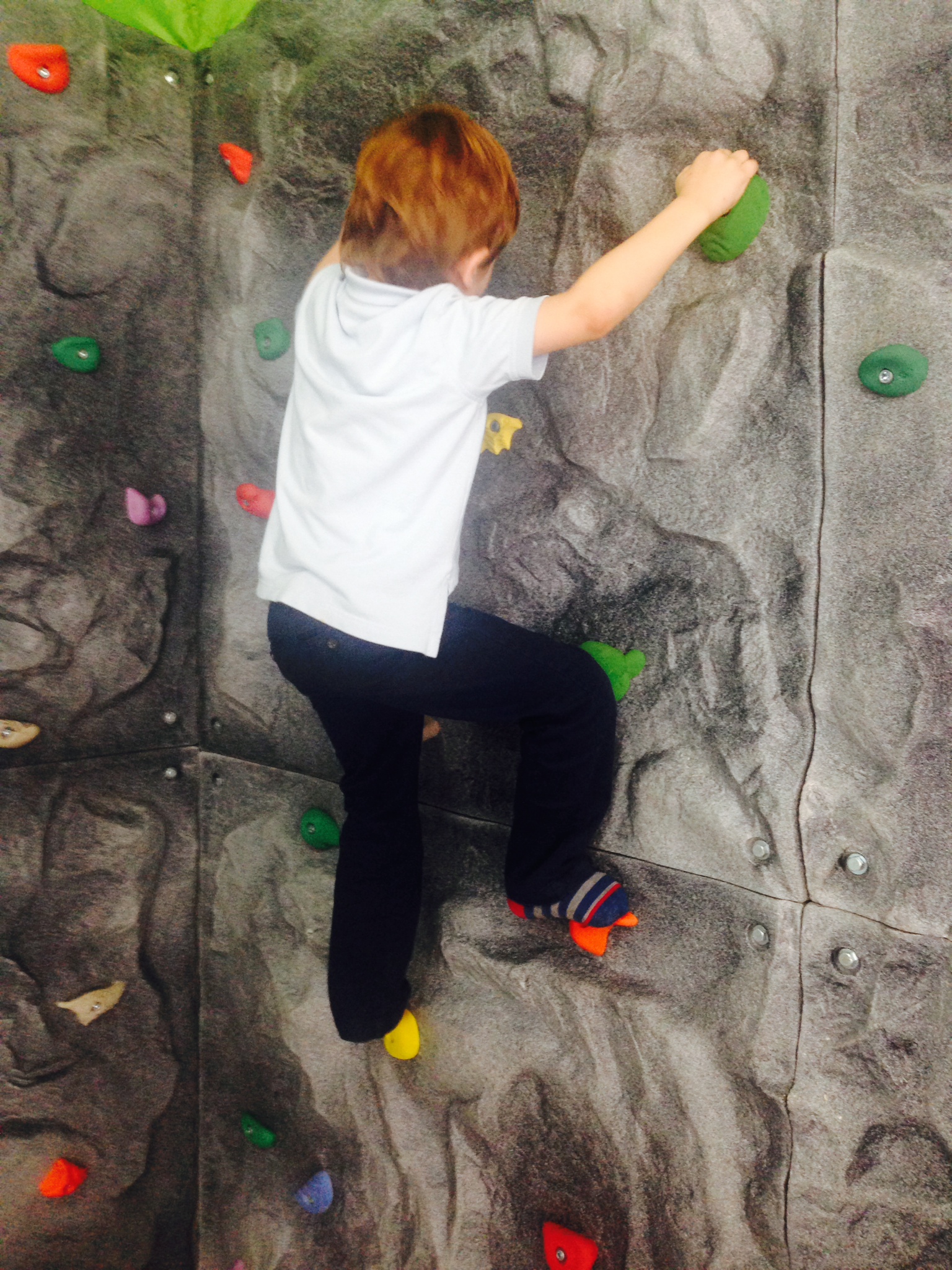
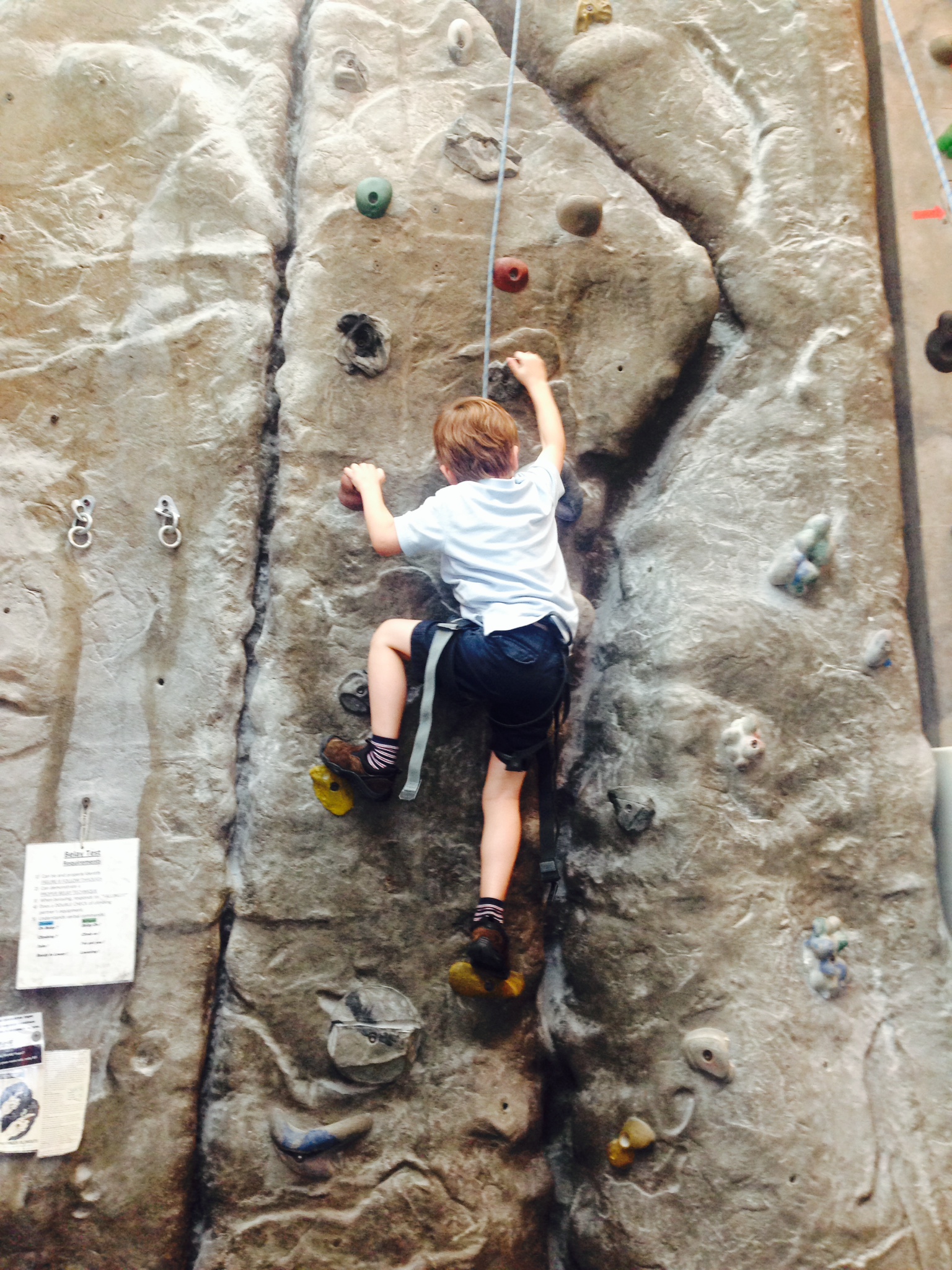
We’re parents, after all, and as parents we want Martin to have the experiences that might stick with any kid. Some, he obviously enjoys. Rock climbing. Concerts. The Lion King. Disneyland. Others, we push the envelope more, like when Adrian and I wedged Martin between us on a jet-ski and gunned it to max speeds. Or roller skating. What a disaster! Martin looked like a Looney Tunes character running. Finding fun is trial-and-error for any family. Autism takes so much from us already. Why should we have to be the only family that doesn’t distress the kid once in a while?

Now we’re on a train, from Vienna to Munich. I wish I could write that Martin is observing the placid Austrian countryside, remarking on the farmhouses and windmills. Alas, he isn’t. He’s wearing earphones and playing Garage Band on his iPad. More honestly still, he’s stimming by playing single notes repeatedly. He had a rough few days in Vienna and Bratislava. He is tired, floppy, whiny, unfocussed, and doing his best to make our lives miserable.

Nice try, Martin! Our lives are not miserable. We had a lovely time sightseeing yesterday in Slovakia, where I learned, from T-shirts, that Slovaks are living under a delusion. Apparently they think Marián Gáborík (I just learned that his name has accents!) is “the King.” I always liked Gáborík, and to be sure, he is “a King,” in the sense that he plays now for the Kings. But he isn’t the King. That’s Henrik Lundqvist. Silly Slovaks. Then we returned to Vienna and had dinner at the Palmenhaus. Without us realizing it, Martin ate a sugary sauce on his fresh-fruit dessert. Ooops! Hyperactivity and stomach distress! Then dinner was so relaxed that Martin didn’t get to bed until 10:30 pm. No wonder he’s a mess today.

Adrian and I liked to travel before Martin was born, we liked to travel before Martin was diagnosed, and we like to travel now. Life goes on, even in autism recovery. ¡Vivan las vacaciones!

Postscript: When we return from Europe, Martin and I are ditching Adrian and heading to the Adirondacks for a week, to share a lake house with my sister and niece. “We’re taking two vacations!” Martin declares; I like him to have time with his cousin, and since he attends year-round school, we have to pack travel into the few weeks he has off. Martin is so much better, these days, at expressing preferences. “What was your favorite part of today?” Adrian asked him after we visited Vienna’s Schönbrunn Palace and its extensive gardens, including a playground. “My favorite part of today was when I played in the sand at the castle playground,” Martin answered. After we leave the Adirondacks, I’ll seek Martin’s opinion on which vacation was better, Europe or the lake. I’ll post the results here.

When in doubt, find a playground. This is Martin just hours after we arrived in Vienna. He doesn't speak German, but it took him no time at all to learn the word

When in doubt, find a playground. This is Martin just hours after we arrived in Vienna. He doesn’t speak German, but it took him no time at all to learn the word “Spielplatz,” which means playground.

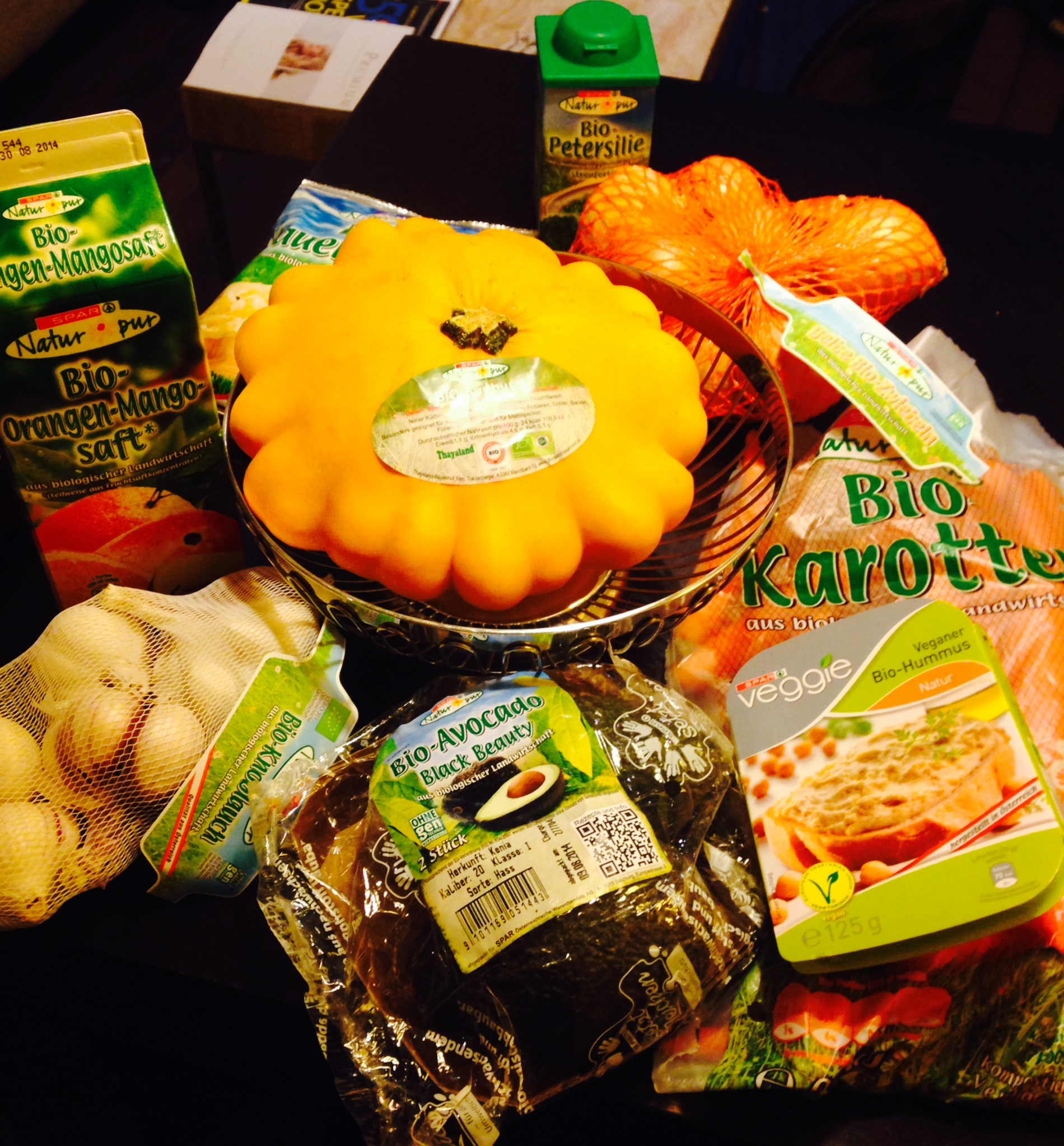
Take that, doubters! I snagged all this organic swag, plus some organic chicken, at a Spar grocery store right next to our hotel in Vienna.

Take that, doubters! I snagged all this organic swag, plus some organic chicken, at a Spar grocery store right next to our hotel in Vienna.

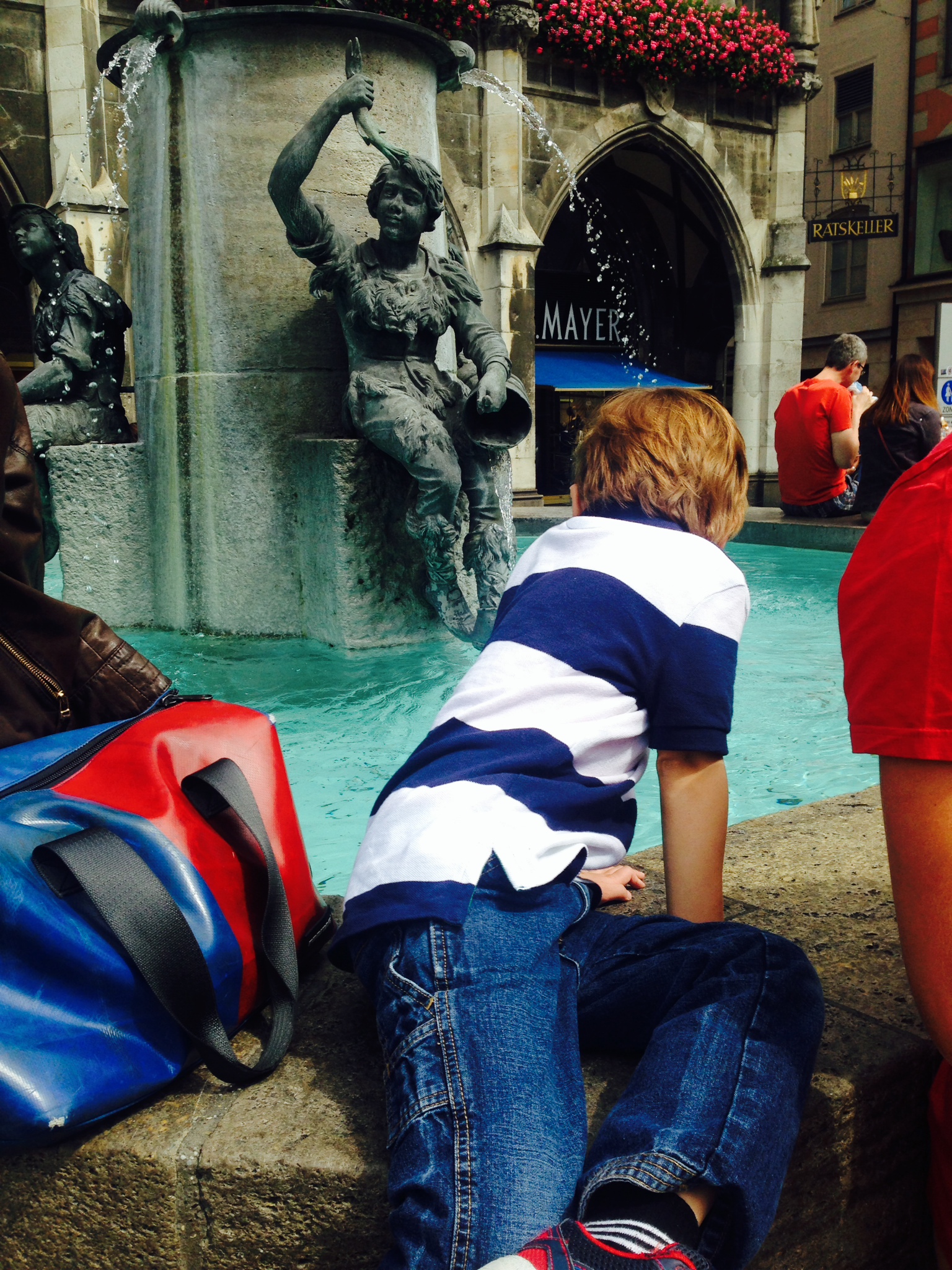
Martin has been feeling better since we arrived in Munich. In this photo, he is checking out a fountain in Marianplatz, in the city center. He just tossed in some Euro coins.

Martin has been feeling better since we arrived in Munich. In this photo, he is checking out a fountain in Marianplatz, in the city center. He just tossed in some Euro coins.

Martin, checking out the English Gardens in Munich. The setting was so photogenic that, a second after this, I handed the camera to a companion and jumped into the picture.

Martin, checking out the English Gardens in Munich. The setting was so photogenic that, a second after this, I handed the camera to a companion and jumped into the picture.

Understanding

“Martin’s progress has slipped a little.”

That’s a euphemism for reality. It means Martin is having a crap week.

I write a lot about this topic, I know. When Martin suddenly looks less like a kid on the path to recovery, and more like a kid with autism, when he tanks, when it all goes to pot, when dinner and bedtime just are not going to happen without a glass of wine (for me, not for Martin), I blog. I blog because I owe you the whole story, because it’s cathartic, and because misery loves company. (These posts tend to generate more messages than any others. Need to talk? Have at it: findingmykid@yahoo.com. Or use the comments section.)

Martin had been doing so well lately, right up till this weekend. Saturday we invited a local family over to swim. They have two kids, age four and almost-six. I’ve known this family for about a year, from church. I know the mother better than the father. Halfway through the afternoon, the father apologized to me for not realizing that Martin has autism. He was surprised when his wife mentioned, on their way to our house, that Martin follows a special diet to alleviate autism. He’s seen me helping Martin around the other kids at church. He always just assumed that my son was shy, or nervous because he doesn’t know the other kids well.

Apologizing? Because you see Martin every week and didn’t realize he has autism? Thank you, but really, no apology necessary.

Sunday afternoon we went to a birthday party. Martin willingly joined a game of tag with the birthday boy and a few other friends. Sunday evening Martin was disappointed that Adrian couldn’t come out to dinner with us because he had a conference call. The call finished earlier than expected, and Adrian surprised us by showing up during the entrée course. Martin, visibly excited, exclaimed, “Oh, you came! I’m so happy!” A friend, visiting for the weekend, who hasn’t seen us in several months, remarked on Martin’s uptick in verbal skills.

We rocked the weekend. Then all hell broke loose.

Sunday night Martin had trouble getting to sleep. Monday morning he slipped into unfocussed silliness. Monday afternoon, at a playdate, he cried and stomped for 20 minutes when I refused to say we could get a chalkboard at home. (I’m scared of chalkboards. Better just to leave that one alone.) Tuesday we received a note from school that Martin was acting defiant and attention-seeking, and that he had hit a teacher. (We jumped all over that one. Martin spent Tuesday evening writing an apology to his teachers.) The highlight of my Wednesday was Martin throwing himself onto the Stop-N-Shop floor and screaming, “I don’t want to buy any fooooooooood!” (As a sign of how far I’ve come regarding public embarrassment: I spent that minute or so, while he was screaming on the floor, searching my purse for my grocery list. Where is that list? How could I have misplaced it so quickly? Wait, is that my kid terrorizing aisle 24?) Through all these incidents, Martin’s language skills, so strong this summer, failed him. He repeated himself, went rote, even babbled. And yet, except for sleeping, he hasn’t stop talking since Monday morning. Just talking and talking and talking and talking. Point, or no point. Accentuated here and there with loud, forced laughing.

Why? What transforms a close-to-typical-child weekend into a thought-we-were-past-these-symptoms week?

After three-and-a-half years of biomed, I’m finally getting the hang of recognizing the likely causes of backsliding. This week, it seems, we’re dealing with yeast die-off. Several weeks ago I began seeing the harbinger of yet another yeast flare. I’ll spare you the details of that harbinger; suffice to say, it’s poop-related. Candex, an enzymatic formulation, has been controlling Martin’s yeast. Last week, Martin’s biomed doctor and I decided to increase the daily Candex dose, and I started that process Thursday evening.

Increased Candex leads to decreased yeast. Decreased yeast means yeast die-off. That’s a toxin in the system, almost like alcohol. It can make a kid silly, or angry, or irritable. That’s happening to Martin now. In tandem with these behaviors, the aforementioned yeast-flare harbinger (okay, fine: the unusual poop) is fading.

Yesterday morning I signed on to one of my autism-recovery groups and saw this post from a fellow mom:

We’re on week three of nystatin for yeast. These past five days I’m pretty sure we’ve been dealing with die-off. Behavior has been super hyper, nonstop talking/making noise, fake laughing a lot, not listening at all, emotional outbursts, no attention to tasks AT ALL, itching??

Yes. Yes! I cyber-shouted. That’s yeast die-off. I’m right there with you, sister.

Understanding the physical cause of Martin’s, ahem, “slip in progress” helps me see that the behaviors are not within his control, and indeed that my little boy probably feels as agitated, flummoxed, and eager to alleviate this situation as I do. Understanding the physical cause also helps me see that darling, recovering Martin will return.

Soon.

On Monday's playdate, Martin behaving. Didn't last long.

On Monday’s playdate, Martin behaving. Didn’t last long.

What’s Working Now

Are you familiar with miracle products?

I participate in various social media groups for parents with recovering children. Often, I see posts like this:

“We just started this [miracle enzyme, supplement, probiotic, oil, &c.] ten days ago, and I can’t believe the progress! My son is making consistent eye contact, he’s increased his vocabulary, and he finally potty trained! Today I got a note from his preschool teacher saying he is more ‘with it’ and making cognitive leaps. I’m kicking myself that we didn’t try this before now. Anyone having similar results?”

And then, comments like these:

Commenter 1: “Yes, yes, yes! [Miracle product] moved my son from babbling to words!”

Commenter 2: “We added [secondary product] to [miracle product], and the gains were even greater. We’ve been on them both for a month and will be continuing.”

Commenter 3: “This is all amazing! Where can I buy [miracle product]?”

Commenter 4: “[Miracle product] got my daughter into Princeton!”

Posts, and comments, touting a miracle product frustrate me.

Miracle-product proclamations frustrate me because autism varies from kid to kid. The health and immune challenges underlying autistic symptoms include, and exceed, neuroinflammation and other chronic swelling, mitochondrial disorder, genetic mutations, leaky gut, yeast overgrowth, oxidative stress, excess propionic acid. Autism exhibits disparate effects on cerebral function in girls versus boys. “Autism” is not a single malady and is never identical. That miracle product? Shoot a paint ball into a crowd. You’re bound to hit someone and splatter a few others. The rest will probably be left wondering what the fuss is.

I can understand that, if you’re thinking about trying a new product, you may want to post an inquiry about others’ experiences with the product. But given that the underlying disorders are child-specific, and that recovery means finding the right combination of many factors over time, why tout miracles? We parents of children with autism, we tread on hope. We’re easily led. When ten marvels in a row fail to help our kid, we end up embittered and broke.

Recovery from autoimmune disorder is a long, tedious slog without shortcuts. Sure, some families recover their children within a year, those lucky dogs. Most take much longer. Many children never get significantly better. The only miracle in autism is that, given our increasingly toxic world, we’re able to fight the spectrum at all. The amazing supplement, probiotic, or whatever, might indeed have given your kid the week of his life. That’s not a wonder. If you must tout a miracle product, don’t do it after a week, or a month. At least wait a year, then let us know if the developments continued, and speak in measured, child-specific terms.

Dear readers, are you wondering why I’m ranting? That was all an introduction to today’s post, which in comparison to its introduction, may seem brief. The topic is what interventions are working, right now, in combination, for my one kid, with his own particular combination of health challenges.

Following “Hard to Blog an Avalanche,” I received several inquiries about what I think has instigated Martin’s recent growth. Usually, when Martin improves and I’m asked why, I answer, “Don’t know. Obviously, something in the millions of things we’re doing is helping.” This year, I have a better inkling. I have seen five interventions correlate, almost certainly, with better health and/or increased speech:

1. Camel milk. Martin started drinking it this spring, and his language took off. Why? Too long for this post. Check back in a day or so to read “What’s the Deal with Camel Milk?”

2. The GAPS diet. I’ve written a lot about GAPS recently, and I’m also working on a post about how I don’t buy into everything that Dr. Campbell-McBride says. For now, it suffices to say that Martin’s digestion has improved.

3. Candex. We have battled yeast overgrowth, in one form or another, repeatedly since we began this journey. Going off just about every form of sugar helped, but only for a while. Nystatin did nothing positive. Earlier this year, poor Martin’s yeast was so bad that he clawed his skin raw. Finally, his biomed doctor said to try Candex, an enzymatic product. The same night he started Candex, Martin had a foul-smelling BM—yeast, I think, leaving his system. The next day, the skin rash began to clear. Since then, the candida has been under control, so much so that I’ve been able to add a little more fruit into Martin’s diet without worrying about the fructose feeding yeast.

4. Enhansa. Lee Silsby Compounding Pharmacy makes Enhansa, or curcumin, a derivative of turmeric. Martin suffers from chronic inflammation, which places undue pressure on his compromised immune system. Turmeric’s anti-inflammatory properties seem to be relieving that inflammation, even to the point that his face has lost its “puffy” appearance. (The puffiness was visible only to me and others to whom I pointed it out in photographs. Still, it was there, and a symptom of his systemic inflammation.)

5. MitoSpectra. This is a proprietary mitochondrial supplement blend of vitamin C (as ascorbic acid), vitamin E (as d-alpha tocopherol succinate), vitamin B5 (panthothenic acid), L-carnitine, and coenzyme Q10. We have used each of the component supplements before, alone and in combination, and indeed Martin still adds separate sources of vitamin C and L-carnatine. MitoSpectra, however, seems to combine the five supplements in a form and proportions that do well for him: He shows more coordination and energy, and less “floppiness.” At times I wonder whether those improvements are dependent on continued use of MitoSpectra; my hope is that, as his immune system overall continues to heal, his own mitochondria will be able to assume the work MitoSpectra is now doing.

Camel milk, GAPS, Candex, Curcuma, and MitoSpectra. Not a miracle, not any one of them.

Each a step in this tortuous recovery path.

Just maybe a longer stride than I’m used to.

Increased energy, coordination, and willingness to try new things. I'm so into these changes.

Increased energy, coordination, and willingness to try new things. I’m so into these changes.

It’s Hard to Blog an Avalanche

Monday evening Martin and I filling our birdfeeders, in front of the house, when the UPS truck pulled up. My UPS guy and I share a special bond: We’re both New York Rangers fans. We hadn’t talked since June 13, when the Rangers dropped the Stanley Cup finals to the Los Angeles Kings, so we started to chat hockey emotions. Were we heartbroken? Proud? Was this transition season—the Rangers have a new coach—the start of a dynasty? Would we miss Brad Richards?

Martin approached, listened for a second, looked at the UPS guy, and said, “Oh, hi!”

Goodness, I thought. Martin just addressed a stranger, without being prompted. That’s new.

“Hey, little man,” the UPS guy said and patted Martin’s head.

Martin remained while the UPS guy and I finished our conversation. (We will miss Richards! But his time has come!) Then I said to the UPS guy, “All right. Have a good week.”

And Martin said to the UPS guy, “Well, okay, ’bye. See you later.”

Goodness, I thought. Martin just interpreted my social cue and said goodbye, without being prompted. That’s new.

When Martin does something new, and appropriate, and typical, I remind myself to blog. Often I make a note so I’ll remember to write the event. If you’ve been reading this blog a long time, you know about the first time Martin said, “I don’t know,” and the first time Martin interactively shared a toy, and even the first time he understood that my outstretched hand meant I wanted a napkin from him.

The past few weeks have brought so many firsts that blogging them all would be a heavy burden. The firsts are tumbling one atop the other. Thus—

When I brought Martin to playgroup in the City last week, we were late, and his friends were already downstairs. Martin proceeded directly downstairs.

No distraction from the upstairs toys? No direction needed? No dawdling on the steps? That’s a first.

Thursday morning Adrian, fresh from the shower, in a t-shirt and black boxer-briefs, was helping Martin get dressed for school. I overheard this:

“No, Daddy. I don’t want white underwear!”

“What’s wrong with white underwear?”

“I want to wear black underwear, like you. And black socks, too.”

Noticing what Daddy is wearing? Wanting the same for himself? First.

This weekend Martin was in our pool when I asked if he wanted some water. He replied, “No, I’ll have a drink when I’m done swimming.”

Providing more information than I asked for? Thinking ahead? First.

Sunday my brother Eddie was visiting to watch the USAPortugal World Cup match. When Jermaine Jones scored in the 64th minute, tying the game 1-1, Eddie leapt to his feet and whooped. Martin, startled, covered his ears with a pained expression. Then he looked at me, lowered his hands, giggled, and said, “Oh, that scared me!”

Checking my face for reassurance? Immediately recovering from a sensory overload? Laughing at himself? Unsolicited emotion sharing? First, first, first, first.

Seventeen minutes later, Clint Dempsey scored, giving USA a 2-1 lead. Eddie whooped again. Adrian jumped in happiness. I lifted Martin, used my right arm to hold him on my hip, and ran around the family room thrusting my left fist in the air as I shouted, “Yes! Yes! Yes! Yes!”

As I recovered, I realized that Martin, still on my hip, was thrusting his itty fist into the air and shouting, “Yes! Yes! Yes! Yes!”

Independent participation? Imitation just for the heck of it? Not quite a first, but close enough—never before so vivid, or so immediate.

(Better not to ask what happened when Portugal’s Verela scored in the final minute of stoppage, preventing USA from clinching an early second-round berth.)

Monday afternoon Martin and his friend Christopher were in a children’s waiting room, ostensibly overseen by Christopher’s older brother, Benjamin, while I met with Christopher’s mother. When I entered the waiting room, Martin and Christopher were wrestling, gleefully, amidst a pile of toys as Benjamin laughed.

“What on earth are you two doing?” I asked.

Martin looked up from under Christopher and replied, “We’re banging and yelling!”

I assumed Benjamin had accused the younger boys of this. I asked, “Who is banging, and who is yelling?”

Martin said, “I’m banging, and he’s yelling.” Then he returned to struggling with Christopher.

Fully interactive play? Answering questions even while epically distracted? Pretty darn new.

Fifteen minutes later, Martin and I were driving home when he read aloud the name of Steely Dan’s “My Old School” from the radio screen. I took the opportunity for conversation and asked Martin the name of his old school, his preschool. He responded correctly. I followed up by asking which he prefers, his old school or his new school (his kindergarten).

“My new school.”

“Why do you prefer your new school?”

“But because I learn better there.”

Expressing a legitimate preference, and backing it up with a reason? First. Not to mention—I do think he’s learning better in kindergarten. His kindergarten really targets his needs in a way that preschool did not.

On New Year’s Day, I sensed that 2014 would be extraordinary. The banner year may indeed have arrived:

This past month has comprised an avalanche of firsts. I could go on and on. But I will address just one more, the evolution getting on the school bus. In just two weeks, we’ve progressed from me carrying Martin’s backpack and leading him by the hand down the driveway to the bus; to me carrying Martin’s backpack and coaxing him to follow me down the driveway; to me carrying Martin’s backpack and accompanying him as he walks without protest to the school bus; to Martin carrying his own backpack while I follow him; and finally to Martin walking down the driveway, alone, backpack on, and boarding the school bus while I wave from the front step. If I even try to follow Martin, I get a swift, “No, Mommy. You wait here!”

Am I proud? I’m darned proud.

And sorry.

I mean, Martin’s bus driver is also a Rangers fan.

I miss the morning hockey chit-chat.

On another occasion, Martin (right) with Christopher's big brother, Benjamin.

On another occasion, Martin (right) with Christopher’s big brother, Benjamin.

Preferences

Martin has three rain jackets. The first raincoat he acquired when he was two years old. It is a yellow hand-me-down, big enough for a nine- or ten-year-old, from our then-neighbors. The second and third rain jackets are blue and red, and sized much more appropriately for a kindergartner. Samara bought them for Martin a couple years ago.

For a long time, Martin preferred the yellow raincoat, even refusing to wear the blue or the red. He didn’t seem to care that the yellow raincoat was so big that it bunched around his knees, got tangled between his legs, sometimes tripped him. Yellow is Martin’s favorite color. At the first sight of a raindrop, he wanted that yellow rain jacket.

We’ve had a lot of rain lately. To my surprise, Martin selected the blue rain jacket to wear, twice in a row, and then the red rain jacket.

This week it rained again. Five minutes before the school bus was due, Martin and I had the following conversation:

“Which rain jacket would you like to wear—the yellow one, the red one, or the blue one?”

“The red one.”

“The red one?”

“Yes. No! No, the blue one!”

“You want to wear the blue one?”

“Yes.”

“Martin, why don’t you like to wear the yellow rain jacket anymore?”

“But because the yellow one is too long.”

“You don’t like the yellow one because it’s too long? Thanks for letting me know that, Martin.”

Two biggies in that convo: First, Martin told me a plausible reason for his preference. And even though he made his “but because” mistake, he stated his reason plainly and appropriately. Second, Martin rationally chose not to select the yellow item. Kids on the spectrum like repetition. They like sameness. So does Martin, but perhaps his “stuck in a rut” mentality is beginning to loosen.

What’s next? Actually accepting an orange subway seat, if the yellow ones are all occupied?

I dare to dream.

Taking advantage of one of the sunny days. Learning to slide down a pole---to put both hands on, leap from the platform, and wrap his legs---has been a big achievement for Martin.

Taking advantage of one of the sunny days. Learning to slide down a pole—to put both hands on, leap from the platform, and wrap his legs—has been a big achievement for Martin.

Pull

In the post “What Comes Last,” I noted Martin’s continued difficulties with socializing, especially in group situations, when he just doesn’t seem able to find an entrance.

We were at yet another bouncy-house birthday party last month. Adrian and I were alternating between snapping iPhone pictures and chatting with parents. The kids were running wild. Some were interacting, such as throwing sport balls at each other, on the various apparatuses. Others were jumping and sliding alone. Martin, of course, fell into the latter category.

—Until he bounded up to me, exclaimed, “Mommy, come play with me!”, grabbed my hand, and pulled me toward one of the inflatables.

I went. It was the first time Martin had tried to pull me toward anything, ever.

To be clear: It was only me whom Martin tried to pull into a game, not another kid. Moreover, he hasn’t done so again since.

But it happened. As they say: It’s in there. Martin has the desire, and slowly the skill, to bring others to him. I that sometime in the next six months he will try the hand-pull move again, first with me and then, I hope, with other kids.

A blurry action shot: Adrian and Martin clowning at the birthday party. It's blurry because I was standing in the same bouncy house.

A blurry action shot: Adrian and Martin clowning at the birthday party. It’s blurry because I was standing in the same bouncy house.

In Praise of the Wonder Kid

Right around the time Adrian and I were considering a second child, Martin was diagnosed with autism, and we put off the decision in order to focus on getting Martin help. The years since diagnosis have been therapies and special diets and supplements and doctor visits and too little sleep. I was almost 36 years old when Martin was born. By the time Adrian and I cleared our heads enough to think again about a second child, we would have been looking at a 40+ pregnancy. That, combined with the increased risk of having a second child on the spectrum if you already have one, sealed the decision. Martin would remain an only child. All of our resources belong to Martin alone, for his recovery.

But alas, a typically developing sibling sure might help. A brother or sister could provide a full-time role model and, if we were lucky, a buddy to protect Martin from neighborhood cruelty, from slights and oversights and bullying.

With that in mind, allow me to sing the praises of Martin’s cousin, Mandy, who is also an only child. Mandy and Martin were born only ten weeks apart and, though they live four hours away from each other, have known each other since babyhood. They get three or four solid visits annually.

When Mandy came to our home last August—Martin had already turned five, and Mandy was about to—they were finally old enough that I thought Mandy might need some explanation of why Martin seems different. Immediately, I found an opportunity to address the issue: Mandy and her mother (my younger sister) arrived after Martin had gone to sleep for the night, Martin’s regular sitter was at the house, and Mandy was hungry, so I volunteered to take them out for pizza.

Ah, to have a kid who can go out for pizza!

“Hey Mandy,” I said. We were sitting in the pizzeria waiting for our order. “Do you know how to read?”

I knew she didn’t.

“Well, guess what?” I asked. I dragged my voice, to indicate that something amazing was coming. “Martin already knows how to read!” Indeed, Martin started reading young. He read fluently (comprehension is a separate issue) by age four-and-a-half.

Mandy opened her mouth in astonishment and gasped toward her mother.

Ah, to have a kid who gasps toward mom when surprised!

I went in for the kill. “But, Mandy, you know what? You are very good at talking”—she is—“and Martin is not good at talking at all. That’s how it is: Some kids are better at talking, and other kids are better at reading.”

I wasn’t sure this little speech would work.

It did.

Mandy and Martin’s visit that August was delightful. Mandy, who is naturally bossy, in the best way possible, forced Martin to interact constantly, and she decided to talk for both of them. Upon Mandy’s request, and Martin’s acquiescence, they both slept in the big bed in our guest room, and I knew when they woke up because I heard the giggling start. One morning as I stood in the kitchen, they walked through. Mandy had Martin’s arm over her shoulder and was pulling him along by the wrist as she announced, “We decided to go outside.” Martin didn’t mind Mandy’s commanding spirit. It brought out his best. He responded to her every whim, including when she thrust paper upon book in front of him and demanded, “Read this for me!”

The big test came when Mandy had been with us almost a week. Martin had a hippotherapy session, and I brought Mandy along. While Martin was riding, Mandy befriended the farm proprietor’s seven-year-old granddaughter. I could tell that Mandy was impressed to be playing with an older girl, and I thought, This is it. She’s not going to be so eager to hang around Martin when this big kid was in the picture. Maybe she’ll even be embarrassed by her awkward cousin.

Curse me for that lack of faith. As soon as she saw Martin dismount the horse, Mandy scampered over, grabbed his wrist, and ordered him to come play. Then she tugged Martin to the seven-year-old and said, “This is my cousin Martin!”

Mandy came to visit again this February, when my sister and I took the two kids to see The Lion King on Broadway. Saturday mornings Martin usually goes to the Equinox gym with Adrian and plays in the kids’ club there while Adrian works out. The Saturday morning of Mandy’s visit, Adrian volunteered to take both kids to the kids’ club.

After they returned, I asked Adrian whether Mandy had still wanted to play with Martin at the kids’ club, or whether, when in a crowd, she had gravitated to the typically developing children instead.

Adrian reported that when he came after his workout to pick the cousins up, Mandy was indeed playing with the typically developing children.

… And, Adrian said, Mandy was directing those typically developing children to make sure they let Martin play, too.

Thank you, Wonder Kid. Thank you for looking out for Martin.

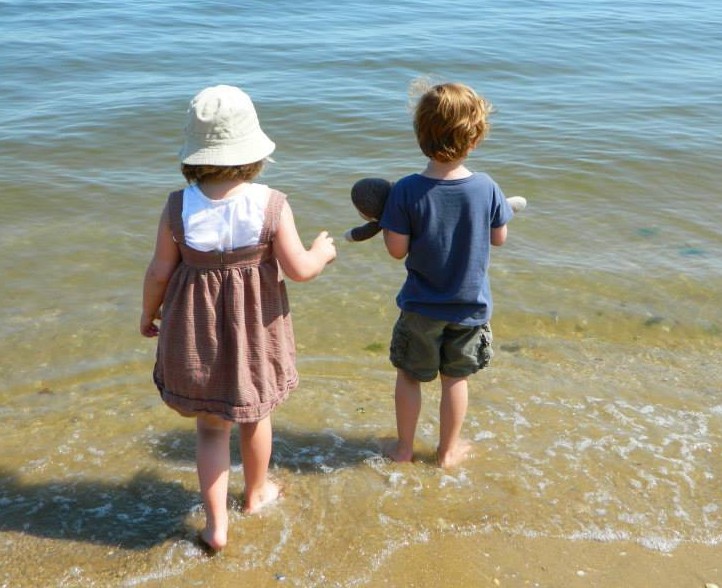
Mandy and Martin on the beach, August 2013.

Mandy and Martin on the beach, August 2013.