Beautiful, Terrifying

Here are two situations I’ve encountered recently:

At the music school again. I’m in the waiting area, with my laptop and four other adults, while Martin takes his piano lesson. A woman enters, accompanied by a teenager and a younger boy, maybe eight or nine years old. All three look alike; I assume these are a mother and her two sons. The mother approaches the front desk with questions about lessons and fees. As she talks to an employee, for a while, she turns her back to everyone else.

Immediately I see that her younger son is on the spectrum. He’s holding a small electronic device, a video game, close to his face as he paces urgent, long-stride circles, humming. He plops to the ground and focuses intensely on the video game, tapping the screen with his thumbs. He rises and recommences circling.

The teenage son, meanwhile, settles into a sofa and starts studying some sheet music. He appears comfortable with the situation, and not embarrassed by his brother. In fact, the teenager looks as if he could be a special-education professional. Magically, his eyes are on both his sheet music and his ASD brother. When the younger boy breaks his circle pattern and bolts down a hallway, the teenager follows him. They return seconds later, the teenager guiding and redirecting to the video game. When the ASD boy intensifies his pacing, then begins to disrupt objects in a sensory-seeking manner, the teenager calmly collects him in his arms and brings him to the sofa, cradling him in all-over pressure. Not once does the mother even have to divert her attention from the employee with whom she’s talking—although she, like any special-needs mom, must sense all that’s transpiring behind her.

After five minutes, the mom settles her business with the front desk, and the teenager’s music lesson is ready to begin. Before he heads off with the instructor, the teenager makes eye contact with his mother, so she knows he’s passing his younger brother’s safety to her.

It’s like watching a master-class in family ASD management.

In Texas, at an indoor playground. It’s Easter Sunday afternoon and Martin is antsy, so my brothers and I bring him to an indoor playground. Martin removes his shoes and dashes into the climbing structure, a sort of gigantic, netted jungle gym. I sit with my brothers in an ample lounge surrounded on all sides by the jungle gym.

Two men enter. They look cool. Super-cool. Sunglasses. Ample, sculpted chests, pecs, and biceps, visible under fitted polo shirts. Nice jeans and shoes. Okay, I’ll say it. They’re handsome. They have four or five children with them. I’m not really sure how many, because my attention goes directly to the one with autism. From his face, I’d say he’s ten or eleven years old, but he’s almost adult-sized. He’s tall and, like many ASD kids, with their gut problems and food issues, he’s overweight. He’s not looking at anyone, or speaking. The other children store their sneakers in the plastic cabinets set up for that purpose. The ASD boy tugs off his sneakers and leaves them on the floor. The kids disappear into the climbing structure.

The taller of the two men, in a white shirt, seems to be the one in charge of the ASD boy. I guess that he’s the boy’s dad. Almost without a pause he scoops the abandoned sneakers and tucks them in a plastic cabinet. The two men take adjacent chairs and begin talking. They seem like good friends. I’m too far away to hear what they’re discussing.

I imagine it’s the New York Rangers, because really cool, handsome men everywhere, even in Texas, like to talk about the New York Rangers.

After some time the ASD boy emerges from the jungle gym. He seems confused until he spots the two men, then runs to them and climbs onto his dad’s lap. The boy is so big that he looks absurd perched on a lap, like a teenager or even a small man curling his body onto another’s. His dad, Mr. Super-Cool, Mr. If-We-Were-in-Any-Other-Setting-I-Would-Take-Him-for-a-Childless-Playboy, continues talking to his friend while wrapping one arm around his son and using the other hand to rub the boy’s scalp. He betrays no hint of feeling awkward about the 150 pounds of kid smooshing his quads. He continues rubbing his son’s head until the boy springs to his feet and scampers back to the jungle gym.

The super-cool guys and their charges leave before we do. (My brothers and I, in tandem, are lazy caregivers. While Martin plays, for more than two hours, we’re sipping coffee and teasing each other, destitute of other ideas for filling a holiday afternoon.) As the other kids get themselves ready, Mr. Super-Cool puts shoes on his son’s feet and ties them. They’re nearer us now, and I hear him ask, “You okay, buddy?” Then, probably because his son is not verbal, he answers for the boy: “You’re okay.” They walk out holding hands.

There is a beauty to scenes like this, to a teenage brother forced to mature into vigilance, to a dude with nothing but tenderness for the child who requires more attention than the rest combined. I want to wave my arms and shout, “Hey, us, too! Autism’s got us, too! I’m proud to be like you!” I want to be counted with those who rise so brilliantly to the challenges they face.

Yet I also regret these scenes. Autism is a monster of our own making. Its incidence is rising from some combination (I don’t know which; who does?) of the dangers we humans have unleashed. Chemical concoctions disguised as food. GMO’s. Antibiotics, overused. Electromagnetic fields. Mercury and other heavy metals. Radio waves. Injected toxins. Pollutants. Pesticides. Sure, I admire the caregivers who meet autism head-on. They’re making positive choices. Where is the choice for the children with autism, who need calming, who crave sensory stimulation, who cannot sleep, cannot relate, cannot adapt, cannot ensure their own safety?

And where will they be when the brave and patient caregivers are no longer available?

We’ve got to stop this.

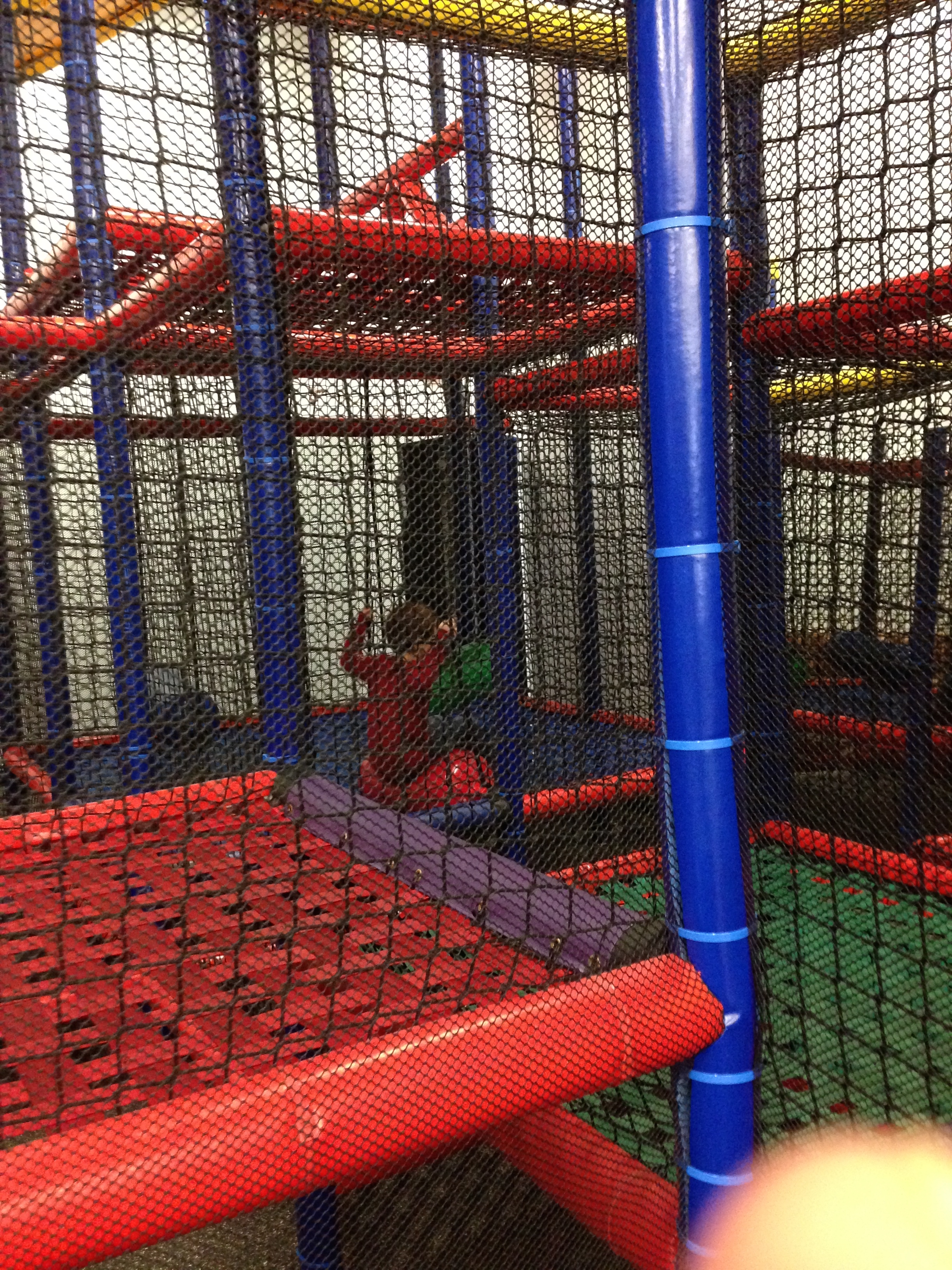
Martin, in the indoor playground, somewhere.

Martin, in the indoor playground, somewhere.

Once and Twice

When we still lived in the City, I spent several months touring private schools for kids with special needs. Martin was going to be entering kindergarten. Our zoned elementary school had no special education other than an integrated co-taught class, in which a general-education teacher and a special-education teacher worked together to handle more than 25 kids. No way was Martin ready for that. Indeed, New York City’s Department of Education determined that Martin didn’t have sufficient attention-span even to enter its public ASD Nest program, which has integrated co-taught classes of just 12 students. The DOE also has an ASD Horizon program, self-contained (i.e., all-special-education) classes for kids who are deemed ineligible for Nest, but (1) none was taking place anywhere near us, and (2) Horizon utilizes Applied Behavioral Analysis, or ABA. When Martin underwent ABA therapy in Early Intervention, he became frustrated and resistant, and also seemed to think perseveration and repetition are positive habits.

So the public Nest and Horizon programs were ruled out, and the DOE school psychologist overseeing Martin’s case said he didn’t have another appropriate placement to offer. By then we had started looking at the private schools. New York City has dozens of special-education private schools to fill the gaps in what the DOE is able to offer. Most of them won’t accept a child’s application without a parental tour, a neuropsychological assessment of educational needs, a written submission including developmental history, and one or more visits by the child. Looking for the best fit for Martin, I toured 14 schools, with each tour taking between one and three hours. From that, I came up with a list of four schools I thought would be appropriate for Martin, and then I started the applications.

Is there another American city where even special education is hyper-competitive?

During this time, while touring private special-education schools, I was beset by a couple whom I (privately) called “the Twice-Exceptionals.” I suppose I actually saw the Twice-Exceptionals only four or five times. Yet it felt like they were everywhere. You’re about to find out more about me than I should probably reveal. Here goes: The Twice-Exceptionals annoyed me.

The first time we shared a tour, I introduced myself and said I’d seen them around the special-ed preschool that both our sons attended. What did they think of this kindergarten we were visiting?

“It seems nice,” the mother responded, “but we’re pretty sure it isn’t right for [their wonder kid].”

“Is Wonder Kid’s diagnosis not on their ‘accept’ list?” I asked. A lot of the private special-ed schools, especially those that are “state-approved,” have a list of diagnoses that they are authorized to accept. “Speech-language delay” and “learning disability” might be in, for example, while “cognitive impairment” and “emotional disturbance” are out.

Aside: I’ll admit to feeling down on the kindergarten-admissions process when school after school claimed they didn’t accept kids with “autism or other global delay.”

“His diagnosis isn’t the problem. It’s that Wonder Kid is twice-exceptional. We feel like this school wouldn’t be able to handle his academic potential.”

“What does it mean that mean, twice-exceptional?”

“Wonder Kid is on the autism spectrum and also gifted.”

“Oh. Wow! How can you tell something like that already? I feel like our boys are so young.”

“We knew very early,” replied Mrs. Twice-Exceptional. “Wonder Kid started reading before he turned three. He already does math in his head. This morning when he woke up, he said, ‘It’s only 6:34, and I don’t have to get up until 6:40. I’m going to stay in bed for six minutes’.”

“That’s amazing!”

Mr. Twice-Exceptional spoke up: “We’re most interested in the Quirky Genius School that opened last year. It serves twice-exceptional students.” (Obviously, or not so obviously, “Quirky Genius School” is a pseudonym.)

I marveled at the world in which we live. “They have a whole school just for kids who are gifted and also have autism?”

Back to Mrs. Twice-Exceptional: “Yes! We can’t wait to tour the Quirky Genius School next month. We are almost certain that’s going to be the right fit for Wonder Kid. Haven’t you considered the Quirky Genius School for Martin?”

“No. I mean, I’m pretty sure Martin is only once exceptional.” At the time, late 2012—I read back in this blog to confirm—Martin had just started using the command form, and I marveled when he once managed an “I don’t know.” He could read, some. He lacked the language facility to tell me much more about what he knew, and his hand wasn’t steady or strong enough for writing or drawing.

“You never know. He might surprise you,” Mrs. Twice-Exceptional assured me. “You should at least take a look at the Quirky Genius School.”

I’ve always hoped that Adrian and I would make a bright kid. It seems perfectly plausible. I finished first in my college and graduated from an Ivy League law school. Adrian was among the top five students in the best law school in his country of origin. Smart genes! But during the kindergarten tour process, we were still working on getting Martin to sleep through the night and ask questions. “Gifted” felt far off. (Don’t beat me up, readers. Don’t beat me up, Martin, if you read this sometime in the future. I think my kid has a better-than-average chance to be, ahem, “gifted.” It’s just that he’s a work-in-progress, and it’s too early to tell.) “Thanks,” I said to Mrs. Twice-Exceptional. “I will. I’ll look into the Quirky Genius School.”

“Let’s stay in touch!” she exclaimed. She rummaged in her handbag and extracted a business card.

“Oh! I’m sorry,” I said as she handed me the card. “I don’t have a card to give you. I’m not working right now.” Icky. First I had a son only once exceptional, and now I didn’t even have a job.

Mrs. Twice-Exceptional said, “That one’s not my business card. It’s my personal card.”

As that morning’s school tour began, I examined the card. It had big blocks of primary colors, Mrs. Twice-Exceptional’s name and email and phone number, and her title: Wonder Kid’s Mother. That was her title. Mother of a twice-exceptional wonder kid.

I sensed we probably wouldn’t be staying in touch.

But alas, they were unavoidable. At the next kindergarten tour, just a few days later, there they were. Mr. and Mrs. They did all the tours together, a unified front of exceptionalism doubled. Adrian, with his long work hours, toured the two schools Martin’s social worker identified as likely best fits. The other 12 I visited alone.

“Hello again!” Mrs. Twice-Exceptional greeted me. “Did you get a chance to look at the Quirky Genius School?”

“I did,” I said. “I checked the website. It looks like a terrific program. I’m not sure it would be right for Martin, but wow. Looks like exactly what you want for Wonder Kid.”

“It is,” Mr. Twice-Exceptional said. “It really is. We’re just sorry that we have the Quirky Genius School tour scheduled so late. It would be great to find the perfect fit early instead of visiting so many schools.”

Why did I resent this friendly couple? Was it the insistence on “twice-exceptionalism”? Was it their forcing me to declare my own son just once-exceptional? Was it the business card? Both of them showing up at every tour? The fact that the wife followed me throughout one tour to share details of her weight-loss journey? That she informed me that they would leave the City for a suburban district if only their hands weren’t tied by living in a beautiful rent-stabilized apartment?

All I know is that, on each of several kindergarten tours, Mr. and Mrs. Twice-Exceptional inquired with uncomfortable determination whether I was now considering the Quirky Genius School for Martin.

Last weekend Adrian and I saw The Imitation Game. Lovely movie. For the most part, well-scripted and –acted, and a meaningful story. The main character, Alan Turing, is a math and computer-science prodigy who may have been on the autism spectrum. I didn’t know that detail before watching the movie; afterward, I did some research and found conflicting reports on whether Turing was on the spectrum, or just awkward, and if the latter, how awkward. For this post, I’m going to take the Hollywood version and assume that Turing was “twice-exceptional.” As in, wickedly super-twice-exceptional, on brain-power shots.

As the film depicts, and as additional accounts seem to bear out, Alan Turing’s genius and work effort shaped history, shaving some years from World War II and sparing millions of lives. Turing also ended up profoundly unhappy. To be sure, spiteful laws enabling the persecution of homosexuals (as Turing was) contributed to the malaise. So, very possibly, did his social challenges.

Which brings me to consider a hypothetical: Would I rather raise a genius who makes extraordinary, positive gifts to history, yet who himself wallows in despair? Or would I rather raise a man whose contribution to society is limited to taking care of himself and his own, and yet whose existence is marked by love and contentment?

Easy question. For the sake of humanity, I’d rather raise the desperate genius. For the sake of my own son, I’d rather raise the happy, ordinary gent. And my own son trumps society. My family first, then my friends, then my closest neighbors, my society, and the rest. That’s the natural order of things. (I’ve touched on this theme before.) How could I sacrifice my own child’s happiness for anything, even in order to shorten a war?

I’m not faced with that choice, at least not that I know. If Martin is a genius of historical proportion, I haven’t seen it yet. On the other hand, even if Martin is not twice-exceptional, he does have an unusual worldview and some exceptional abilities. He categorizes memories by specific date. “Mommy, on Thursday, September 25, I had lasagna and green smoothie at a restaurant in Manhattan,” he told me, unprovoked, one recent afternoon. “I don’t think that’s quite right, Martin. You had those at PeaceFood Cafe after we went to the children’s museum with Jason and his mommy, so I think it must have been a Saturday or Sunday.” When he insisted on the date, I checked my calendar. Indeed. Thursday, September 25. Rosh Hashanah. Martin didn’t have school, so we made a playdate with Jason. Yesterday, when Martin said, “Mommy, on Tuesday, December 16, did Georgie [one of the cats] sleep on my bed?”, which he meant more as a statement than a question, I responded, “You know, I don’t remember dates that well, but I’m sure it’s possible that Georgie slept on your bed on Tuesday, December 16.”

When Martin turned six-and-a-half, Adrian and I wished him a happy half-birthday. Martin answered, “Oh! I’m 78 months old.” At first, I thought he’d computed the number—(12 x 6) + (12 ÷ 2) = 78—completely in his head. Probably not, though; some weeks earlier, he’d asked me a string of questions on months and years: “How many months are in one year? How many months are in two years?” I reckon he must’ve remembered (his memory is uncanny) that six years have 72 months, then added six, for half of one year’s months. In any event, what an odd response to “It’s your half-birthday! Happy half-birthday!”

Last summer, we were up in the Adirondacks with my sister and her daughter, Mandy, whom based on her initials we sometimes call MC, pronounced “Mick.” The cabin we rented had some basic supplies: paper towels, cooking oil, spices. One morning at breakfast, Martin started asking about the salt and pepper on the table. Would MC take the salt and pepper with her when we left? Did MC bring the salt and pepper from home? Were there salt and pepper for Martin?

“Martin, what do you mean?” I asked. “Why would MC take the salt and pepper home?”

“Because they’re hers,” he replied.

“No. We found them here. They belong to the cabin.”

“Why do they have ‘MC’ on them?”

Because they were McCormick brand salt and pepper, and the containers had little “Mc” logos on them. To an average six-year-old, that might not mean that the condiments belong to Cousin Mandy. The average six-year-old might not even think through the meaning of the salt logo. The average six-year-old is not Martin.

“Will he lose that, as he gets better?” asked my sister that night, tactfully, while we doused the evening campfire. “That different way of looking at things?”

“I don’t know, but I think so. I think he will start to think more typically,” I said. One mother I know told me that her son used to be able to determine, within seconds, the day of the week on which a person was born, just by knowing the year and date. As her son’s coping and social skills improved, his ability to figure birthdays-of-the-week evaporated. (In my goings about the autism community, I’ve met several boys with that skill.) Another mother told me that when various biomed interventions increased her four-year-old’s speaking skills, his precocious reading declined.

I once mentioned this subject to Adrian. I asked whether he thought Martin will lose his super memory or advanced spelling ability, or his compartmentalized way of thinking. I asked whether he thought Martin might, in recovery, become less amazing.

Adrian was silent for a few moments. As between the two of us, I think, Adrian had the higher “traditional” expectations for Martin. Adrian and I come from different socioeconomic backgrounds, indeed different cultures. When we decided to procreate, we weren’t one or the other of us more or less reasonable in our aspirations, but different. I hoped for a well-rounded child who enjoyed sports as well as reading, who made friends and enjoyed their company. Adrian thought more about long-term educational prospects and prestigious careers.

Eventually Adrian replied to my question about unusual thinking versus recovery. He said, “You know what? I’ll settle for happy. I really will.”

The last time I saw the Twice-Exceptionals, other than preschool graduation, was on a kindergarten tour after their much-anticipated visit to the Quirky Genius School. “So how was it?” I asked, feigning enthusiasm. “Are you done? Are you going to apply to other schools, or just Quirky Genius?”

Mrs. Twice-Exceptional said, “We hated it.”

Mr. Twice-Exceptional echoed, “Hated it.”

Mrs. Twice-Exceptional continued, “It was the most disorganized place ever. It’s too new. They have no idea what they’re doing.”

Mr. Twice-Exceptional repeated, “Hated it.”

Their twice-exceptional wonder kid, I heard later, ended up in a public-school ASD Nest program, the very program that had rejected my Martin.

I hope we all get to “happy.”

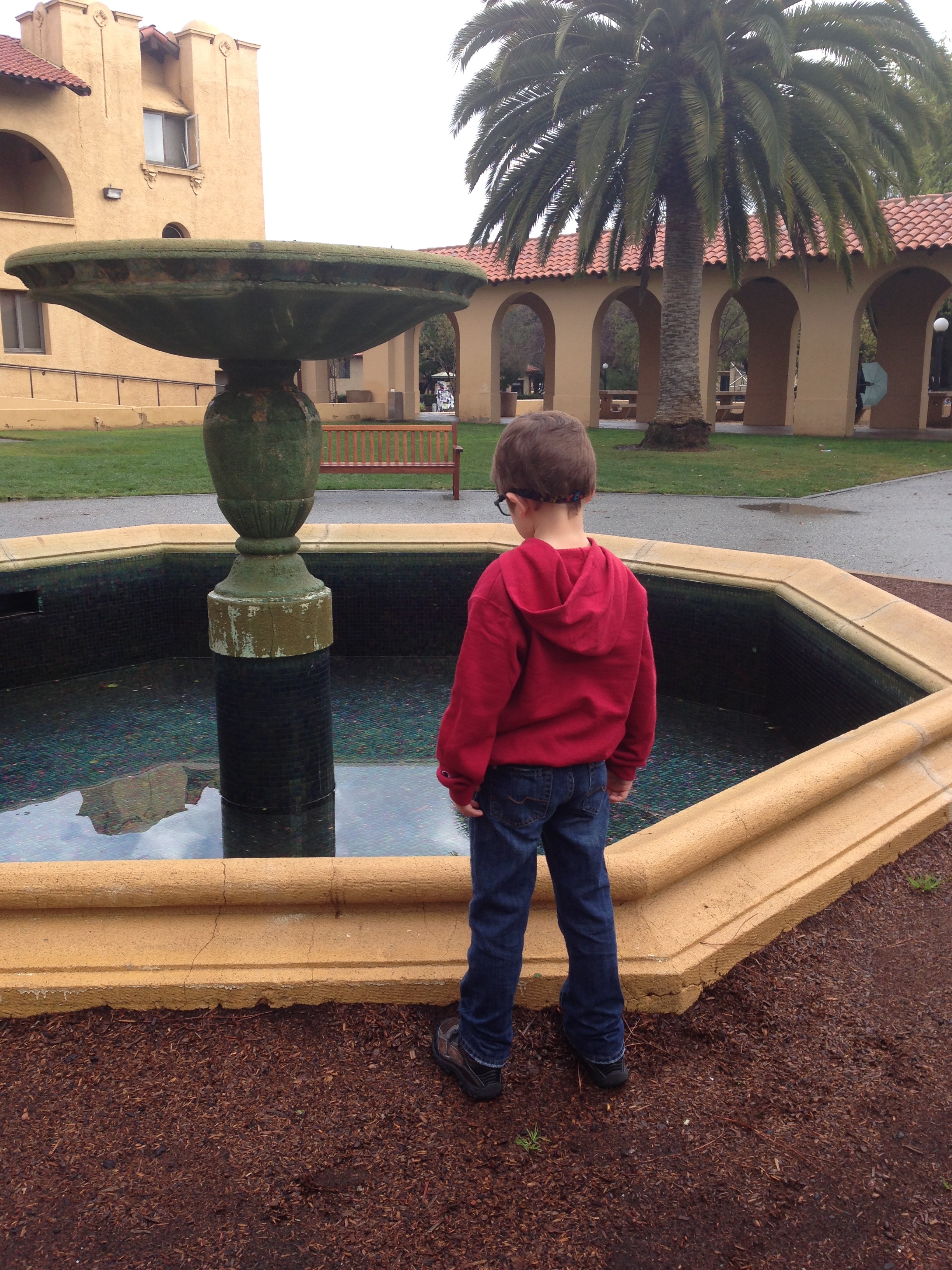
Martin visiting Stanford University. We are shooting for happy. That doesn't mean the sky isn't the limit.

Martin visiting Stanford University. We are shooting for happy. That doesn’t mean the sky isn’t the limit.

For Diana

Last week, in response to my “Journey” post, I received this comment:

I read your blog from time to time. We have had a few exchanges, where I argued against the idea of “recovery” and said we just need to support our kids to be successful. You said you thought that was mincing words and we both want the same things. I’m really glad to read that Martin is doing well and progressing. I’m sad to hear you are still trying to “recover” him. Some day he may read what you have written. And he will want to tell you that he wasn’t lost, just different. Keep helping him, of course, but maybe this holiday season there is a moment to see that he is not lost? It is a big job, I know, but it is tough on a kid when “fixing” him becomes his mother’s project. That is a lot to put on you both. I wish you well.

The comment comes from a woman I’ll call “Diana.” I don’t know her, except insofar as she is also a lawyer in the New York City area (that’s what I am), and insofar as she has a son with Asperger Syndrome, who I believe must be 10 or 11 years old now. Diana and I exchanged some comments on this blog in April and May 2012, and again in January 2013; we were respectful of each other’s positions on handling autism, and as is evident in the comment I’ve pasted above, she continues to be positive and respectful. I appreciate that, and I thought that, rather than tuck my response into the less-read comments, I would post it front and center.

Diana, this is for you—

Two and a half years ago, you wrote to me skeptical of the concept of ASD recovery. About your son, you said, “I want him to be proud of who he is and how he is. It is a hard balancing act, because I also want to improve his social skills and give him the most options, so to some extent I am working always to decrease how his ASD presents.” When I engaged you in discussion, you elaborated:

I do remain skeptical of recovery as a concept, but how to approach treatment is up to each parent and there are no clear answers. But the larger question, I guess, is that I don’t want to return my son to full neurotypicality because I don’t see him as having been in a certain place and then having regressed or changed. I don’t perceive an assault on who he is by ASD.

Eight months after that comment, in response to a post I wrote about Adam Lanza, the Newtown gunman, you said this:

. . . I don’t understand how the language and idea of ‘cure’ and ‘recovery’ is consistent with teaching our kids to love and accept themselves as they are. I don’t doubt your sincerity. But for me, I want to help my kid but not cure him. I really think autism is a big part of who he is. For me, lots of therapies are great and work well—but they are seeking to assist and not to fundamentally alter my kid. I like my son autistic and I like other family members of mine autistic. I would encourage you to check out grasp.org and watch the video there—it is a very smart introduction to how functioning autistic adults feel about this question. If we want our kids to be happy adults, I think we need to listen to these adult voices first and foremost. My hopes are the same as yours and I know we are all just trying to do the best by our kids.

We are all trying to do the best by our kids. I believe that, and I appreciate your recognizing and acknowledging it. Still, to be honest, I don’t think, at least not now, that we are undertaking the same goal and just mincing words. Our hopes are not the same: You hope to raise an autistic son whose behaviors are typical enough that he can function in society. I hope to raise a son who has no trouble functioning in society because he is typical.

Autism spectrum disorders do not just happen. They are not random behavioral conditions. Autism is not an individualized Weltanschauung, like the way my brother Eddie is super laid-back and my friend Stacey is Type A. Autism spectrum disorders are the manifest symptoms of health problems, most usually compromised immune function. We continue to debate the extent to which these health issues result more from genetics (MTHFR mutations, &c.), or more from environmental triggers (vaccines, GMO’s, toxins like synthetic chemicals, &c.). What is no longer up for debate, unless you ignore all current science, is that if your child has an autism spectrum disorder, he has some combination of underlying conditions affecting his health, and those conditions are resulting in neural misfires.

Your approach—and I invite correction if I am wrong—seems to leave the health conditions that result in Asperger’s uninvestigated and untreated. Instead, you rely on behavioral therapies “to improve his social skills and give him the most options,” because you are “working always to decrease how his ASD presents.”

You “remain skeptical of recovery as a concept.” I will say that I, personally, within my own circle, know three boys, ages 19, 15, and 12, who have recovered from autism. These are not children whom I have “heard of” or “read about.” They are boys whom I know. I can, and do, talk to them and their parents. Each of the three was diagnosed with autism, from mild to moderate, at age two. They recovered fully, by their parents’ estimation, at ages 8, 12, and six. They are not “quirky.” They no longer have rough edges or trouble with social skills. They are, for every purpose I can see, restored to typical neurofunctioning. They reached this point because their families treated their underlying health conditions, as I am doing with Martin. I know that every child is a puzzle, that not every child who is treated biomedically will recover (at least not with what we know today), and that Martin’s “autism” symptoms may, to whatever extent, persist his whole life. But if you need to know what “recovery as a concept” means, it means this: restoring a child’s immune function and overall health, which in turn alleviates autistic behaviors symptomatic of compromised health.

You “like [your] son autistic and … like other family members of [yours] autistic.” I adore my child. I will adore him whoever he is and however he behaves, a fact that I impart to him daily. But I do not “like” his being autistic, because his being autistic means his health is compromised. If I were to learn today that no biomedical intervention would ever change Martin’s behavior in any way, I would still continue with his special diet and homeopathy and supplements because I want to restore his health. I cannot think of another condition that I would leave untreated, so why would I stop treating his gut-flora imbalance, candida overgrowth, or mitochondrial processing disorder?

You encourage me to consider the experience of autistic adults when determining what course to pursue with Martin. I do. I have read at length about how demoralizing traditional behavioral therapies can be for persons with autism, about how ABA can frustrate and even humiliate its subjects. (Not all ABA. Some practitioners who begin with ABA and find their way to a gentle approach.) I referred above to a 15-year-old I know who reached recovery around age 12. His mother reduced his behavioral therapies after he protested, “Mom, they want to change everything about me!” By contrast, the family continued and even increased biomedical treatment, which by the end of his recovery process, the boy was requesting because of the way it made him feel better.

When Martin asks about why he cannot eat Goldfish® crackers, I explain, “Oh my goodness! If you eat those crackers, you will get those funny poopies, and the ingredients will make it hard to pay attention in school. Remember how that happens sometimes?” The culprits in this equation are the processed crackers, and how they affect Martin inside. When your son asks why you want to “improve his social skills” and “decrease how his ASD presents,” how can you respond? Is the culprit crackers and firm bowel movements, or does the culprit seem like him?

Martin does not know he has autism. He has never heard that diagnosis. He knows that he eats a restricted diet because some foods “hurt his belly” or “make his tummy do funny things.” He knows that the drops and supplements he takes are like Mommy’s vitamins and probiotics, a good idea for almost anyone. We don’t do traditional behavioral therapies. I have found that most traditional therapies—ABA, speech, even to some extent occupational and physical therapy—come with the theme, “Don’t [sit, rock, behave, chant, stim, &c.] that way. That is unacceptable. Try to fit in.” I don’t want Martin to hear that he needs “some work around the edges” (your phrase, from a comment on 23 April 2012). Martin’s behavior isn’t what needs work. His behavior naturally adjusts as his health improves.

(Note: Martin receives traditional OT and PT at school, because they are on his IEP. In that regard, I am grateful that he attends a self-contained special education school, where every student participates in OT and PT, so that they seem like a standard part of the curriculum rather than something directed at changing Martin.)

At your request, I checked out grasp.org; it presents testimonies similar to others I have read, from autistic teens and adults. In return, let me point you toward stories like What Is My Mother Doing to Me?, which was written by a 14-year-old in gratitude for his recovery. I hope that Martin will not have to tell anyone what it is like to be an autistic adult, because he will never know. And if he reaches neurotypicality, I don’t think either of us will regret the result. As I have written before, in all my experience communicating and working with other ASD families, I am yet to hear from anyone who regained his/her health biomedically and subsequently says, “I wish we hadn’t done this. I prefer being autistic to being neurotypical.” (My sample size is not restricted to the three aforementioned recovered boys whom I know personally. I know of dozens of recovered persons, on-line or otherwise.)

You seem to worry that Martin will one day read what I write on my blog. To that I say, he’d better. In part, I write this blog for Martin. I don’t think he is “lost” or that his personhood needs “fixing.” I’m not sure why you use those words. Two weeks ago, when I got socked with a virus and ended up in the hospital, I wasn’t “lost” (except maybe insofar as I passed in and out of consciousness…!). My immune system needed help fighting a health condition, and when I received that help, I recovered. My son’s immune system needs help. I’m struggling to give him that help. I look forward to the day when he understands what I’ve written here, when he receives confirmation that he is so precious and so loved that Adrian and I would scour every corner of God’s green earth to give him every advantage we can.

So that’s it. Your and my disagreement lies in whether it is preferable to treat the health conditions that underlie autism, and let the behavior do as it will, or whether it is preferable to leave the health problems untreated and try to “smooth” the resulting behavior. I’ve phrased the question in a biased way, of course. I’ve done so because I believe it is preferable to treat “autism” biomedically. You take a different approach, and that is fine. We’re cool. I don’t have all the answers.

I do hope you’ll stick with the blog, though, and continue to comment. I feel invested in your son and your journey. I pray that it leads you both to a place of contentment.

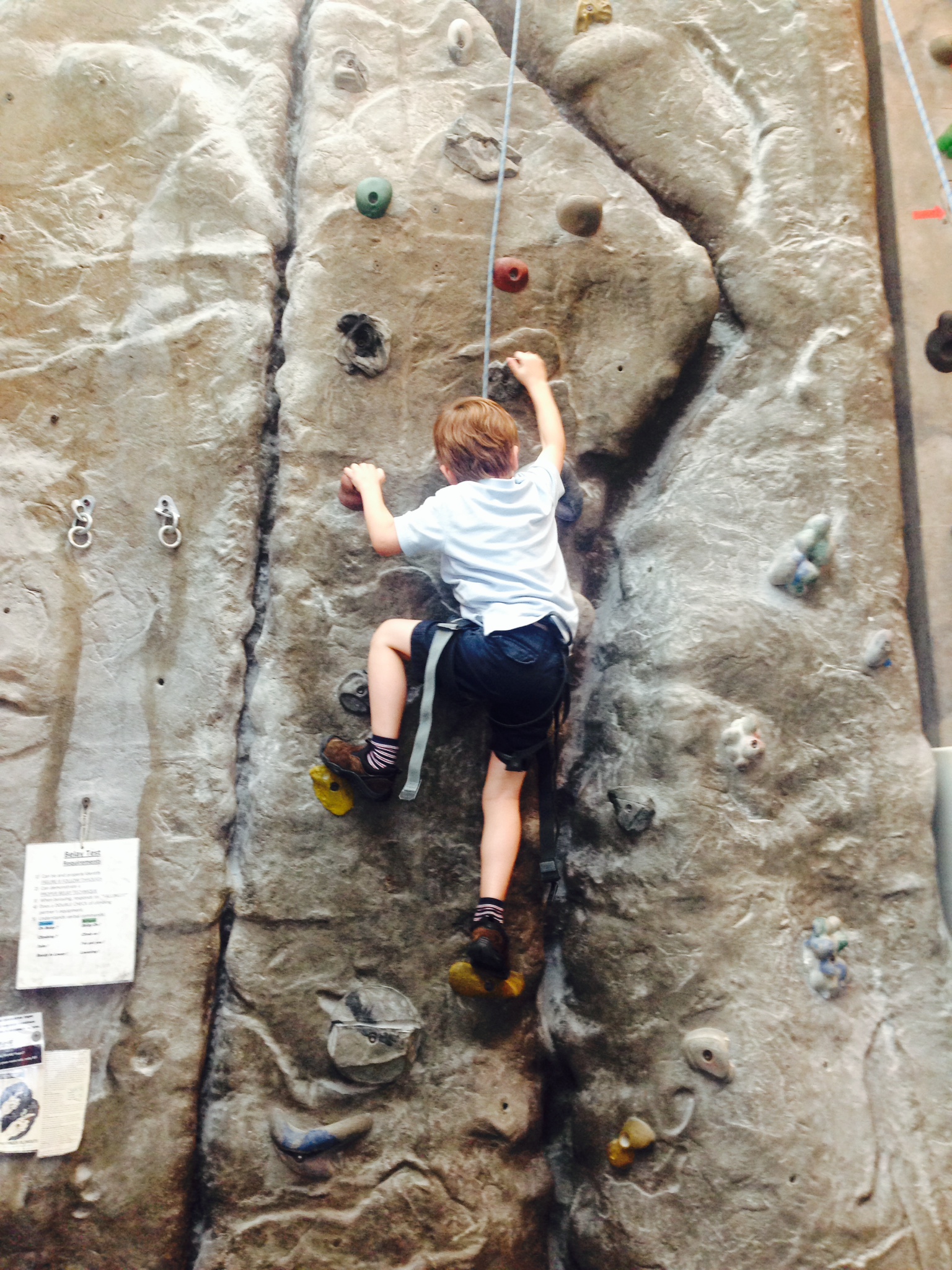
Martin in action at the trampoline gymnasium. Not lost. Just getting healthier.

Martin in action at the trampoline gymnasium. Not lost. Just getting healthier.

Conformity

When this blog picks up a new follower, I receive an email informing me, and a link to the person’s profile, or own blog. Usually, I take a look. I’m interested to see who’s interested in Martin. Among the followers are fellow special-needs parents, foodies or Paleo-types who I assume like the recipes, “inspirational” folks, and generic bloggers who (I think) follow bajillions of blogs, hoping to procure reciprocal followers.

I also find that this blog is being followed, increasingly, by readers who self-identify as persons on the autism spectrum. I feel honored to have these followers, and I want to find a way to explain that, although my family is working hard to recover Martin from autism, it is not because anything is “wrong” with Martin, or wrong with living with autism. Unfortunately, I’m not talented enough to do that explanation justice; the issue is so delicate, and complex. So instead, I wrote this post—

Last week I encountered a new member at my CrossFit box, in the 8:30 am WOD frequented by parents who have put their children on school buses and are fitting in a workout before heading to employment. The new member was about my age and dressed in exercise leggings, a sport bra, and a tank top. The same way I was dressed. The same way at least two other women were dressed. The new member and I chatted and ended up walking together to the parking lot, where we discovered that our cars were parked next to each other. The same car, except hers is white and mine is gray. We both drive the European SUV model owned by, as far as I can tell, about 10% of the families in our suburban enclave.

Gosh, I thought as I climbed into my standard-issue vehicle, just how much of a conformist have I become? Here we live in a pleasant suburban area, where I stay at home (working some, though!) while my husband commutes to Manhattan. Our yard and garden are landscaped just like all the other houses, with similar plants in a similarly lush but uncluttered configuration. Like our neighbors, we change our front-door wreath by season: We display cranberries for winter, white flowers in summer, orange berries for “harvest season,” pinecones at Christmas. We fly our flag on the Fourth of July, have jack-o’-lanterns on the stoop right now, and will set out a ceramic snow elf after Thanksgiving. Martin and I attend one of the five local churches. Our family shops at the nearest Whole Foods Market, shows up for fairs and events, runs into neighbors at the pubs and restaurants. Through our actions, we have proclaimed ourselves just like everyone else.

The autism universe includes many people who argue against “changing” an ASD child and instead support some form of “neurodiversity,” in which relating to the world in an autistic way is accepted equally with relating to the world in a more neurotypical way. For example, a group called Aspies for Freedom advocates against most behavioral treatments, and all biomedical interventions, for children on the spectrum. The group, according to a blog post in its name, states, “Autism isn’t a tragedy, or a side-effect of genius—it’s a difference to be valued,” and stands against the “idea that being neorotypical (i.e. not autistic, or another psychological neurotype) is ‘better’ than being autistic.”

As I’ve written, I don’t share the view that encouraging acceptance of all persons means we shouldn’t try to heal the autistic child. The best way I’ve got to explain it is this: There are many ways in which I conform to a suburban-mom lifestyle. There are also ways in which I choose not to conform. I’m vegan. I don’t drive that European SUV around town if I can walk or bike instead. The landscaped lawn and plant beds around our house? Maintained by an organic gardener; we pay a premium to avoid the chemicals our neighbors use. When Adrian and I were buying a house, we chose our town, and not the neighboring village, because we value socioeconomic diversity more than having neighbors like our family. In these ways, I allow myself to be an exception.

And then there is at least one way in which, apart from any choice I make, I cannot conform. That’s autism. Because of autism, my son does not attend the local elementary school, does not play in the Saturday morning soccer league, and spends his free time in therapeutic settings.

So there are choices about conforming that are within my control, and choices about conforming that are outside of my control. I am happier when I can choose whether to conform, when it is up to me whether to fit in or to stand out.

That’s what I want for Martin. I want Martin to be able to choose whether he conforms, or whether he rejects expectations. When he enters a party, I want him to think, “Do I feel like working the room, or do I just want to grab food and skulk off to a sofa?” (I, Martin’s mom, usually grab food and skulk off. Any Myers & Briggs devotees out there? I’m INFJ, strong I.) What I don’t want is for Martin to feel like working the room is not an option for him. When it comes time for Martin to choose a job, I want him to think, “What do I like to do?” I don’t want him to think, “Does that job require interpersonal skills? Dynamic thinking? Will enough support be available for me?”

If Martin wants to act quirky, so be it. If he doesn’t want to make eye contact, so be it. If he doesn’t want to play sports, so be it. If he prefers to be alone, so be it. But these should be Martin’s choices, not choices that are made for him because an immune disorder, a medical condition, leaves him clumsy and makes it difficult to relate to others.

Our school district sends a behaviorist to our home each week. Recently I addressed Martin’s social progress by explaining that Martin has reached a point where he asks about other kids and wants to engage them but doesn’t seem to know how. The behaviorist said that wanting to engage is an important step. She advised that I might foster further development by observing other children with Martin and discussing strategies for approaching the children. Martin might find common ground, she suggested, by asking if the other kids like the same things as he does. What does Martin like? she asked. Does he like Yankees baseball, or Mets? Giants or Jets? Superheroes, like Iron Man or Captain America, that sort of stuff? SpongeBob? Pokémon? Disney? Frozen? Bike riding? Karate?

No, I replied. No, no, no, no, no, no, no, no, and no. Martin likes classical music and drawing pictures. He doesn’t watch television or children’s movies.

You’ve got to get on that, the behaviorist advised. Have him do the same things as other kids. Give him some common ground.

That weekend Adrian and I took Martin, wearing a sports jersey, with his feet in brand-new Spider-Man sneakers, to see Alexander and the Terrible, Horrible, No-Good, Very Bad Day, his first children’s movie outing with us. We are helping him conform now, so that later he can choose for himself.

To my readers with autism, thank you for coming to this space. I hope you feel safe here.

Empowered Moms

These days I don’t feel so empowered, at least not on a macro-scale. I feel good about what I can do, what I am doing, for Martin. I am pleased to see other biomed moms banding together and trying to provoke change—see, e.g., The Thinking Moms Revolution or The Canary Party. I am grateful that other biomed moms create on-line forums and Facebook groups in which I can participate. As for me, my own engagement in collective action is on hold, not really in the realm of “what I think I can handle right now.” I need to recover Martin. Then I’ll change the world.

That all being said, recently I have joined together with two local special-needs moms (not biomed) to get something done. Actually get something done! Last summer, we were lamenting that our kids don’t have much way to make friends, and practice keeping them, here in our small town. When we make play dates for our kids, they engage in parallel play more than interactive play. There are professional resources available, like the play program that Martin attends (and adores) in the City. Unfortunately, those programs draw participants from a wide geographic swath, making after-school or casual get-togethers impracticable for the kids, and the cost excludes many families.

We three moms decided that what our town needs are facilitated social-skills playgroups for special-education students. And then we decided that, if the need is to be filled—we’re on deck. We formed a playgroup of six kids, grades kindergarten-through-second (ours kids plus three more, none in the same school class); hired a facilitator (a master’s student in elementary special education); found a time that works (late Friday afternoon); and got started, rotating each week among the participants’ homes. The facilitator comes prepared with games and exercises designed to foster social skills like sharing, taking turns, greeting, and getting to know each other.

By the fourth meeting Martin had fallen in love with his new playgroup. He calls his fellow participants “my friends from town.” All week he looks forward to Friday. He talks about whose home we’ll be visiting that week; one morning, he even created his own “Friday play date” schedule, listing out each child and checking off the retrospective house. He asks questions about what his “friends from town” do on the other afternoons. He wants to join them.

When the other moms reported similar enthusiasm from their kids, we knew we were onto something. We put together a formal proposal to bring the social-skills playgroup under the auspices of the local special-education parent-teacher association, which would both help defray the facilitator’s fees and also publicize to other parents who might be interested. Then we coordinated with a local Girl Scouts troop whose young women are interested in working with special-needs kids. As part of seeking their Silver Awards, several Scouts are going to come each week and assist our playgroup facilitator with keeping the kids focused.

Getting this project up and running, when so much else is on our shoulders, feels like a big achievement. We were correct that our town needs social-skills playgroups. As of this writing, enough parents have contacted us that we will be able to fill two additional six-member playgroups when we start our spring term next February.

Yay for moms, making stuff happen.

What’s Working Now

Are you familiar with miracle products?

I participate in various social media groups for parents with recovering children. Often, I see posts like this:

“We just started this [miracle enzyme, supplement, probiotic, oil, &c.] ten days ago, and I can’t believe the progress! My son is making consistent eye contact, he’s increased his vocabulary, and he finally potty trained! Today I got a note from his preschool teacher saying he is more ‘with it’ and making cognitive leaps. I’m kicking myself that we didn’t try this before now. Anyone having similar results?”

And then, comments like these:

Commenter 1: “Yes, yes, yes! [Miracle product] moved my son from babbling to words!”

Commenter 2: “We added [secondary product] to [miracle product], and the gains were even greater. We’ve been on them both for a month and will be continuing.”

Commenter 3: “This is all amazing! Where can I buy [miracle product]?”

Commenter 4: “[Miracle product] got my daughter into Princeton!”

Posts, and comments, touting a miracle product frustrate me.

Miracle-product proclamations frustrate me because autism varies from kid to kid. The health and immune challenges underlying autistic symptoms include, and exceed, neuroinflammation and other chronic swelling, mitochondrial disorder, genetic mutations, leaky gut, yeast overgrowth, oxidative stress, excess propionic acid. Autism exhibits disparate effects on cerebral function in girls versus boys. “Autism” is not a single malady and is never identical. That miracle product? Shoot a paint ball into a crowd. You’re bound to hit someone and splatter a few others. The rest will probably be left wondering what the fuss is.

I can understand that, if you’re thinking about trying a new product, you may want to post an inquiry about others’ experiences with the product. But given that the underlying disorders are child-specific, and that recovery means finding the right combination of many factors over time, why tout miracles? We parents of children with autism, we tread on hope. We’re easily led. When ten marvels in a row fail to help our kid, we end up embittered and broke.

Recovery from autoimmune disorder is a long, tedious slog without shortcuts. Sure, some families recover their children within a year, those lucky dogs. Most take much longer. Many children never get significantly better. The only miracle in autism is that, given our increasingly toxic world, we’re able to fight the spectrum at all. The amazing supplement, probiotic, or whatever, might indeed have given your kid the week of his life. That’s not a wonder. If you must tout a miracle product, don’t do it after a week, or a month. At least wait a year, then let us know if the developments continued, and speak in measured, child-specific terms.

Dear readers, are you wondering why I’m ranting? That was all an introduction to today’s post, which in comparison to its introduction, may seem brief. The topic is what interventions are working, right now, in combination, for my one kid, with his own particular combination of health challenges.

Following “Hard to Blog an Avalanche,” I received several inquiries about what I think has instigated Martin’s recent growth. Usually, when Martin improves and I’m asked why, I answer, “Don’t know. Obviously, something in the millions of things we’re doing is helping.” This year, I have a better inkling. I have seen five interventions correlate, almost certainly, with better health and/or increased speech:

1. Camel milk. Martin started drinking it this spring, and his language took off. Why? Too long for this post. Check back in a day or so to read “What’s the Deal with Camel Milk?”

2. The GAPS diet. I’ve written a lot about GAPS recently, and I’m also working on a post about how I don’t buy into everything that Dr. Campbell-McBride says. For now, it suffices to say that Martin’s digestion has improved.

3. Candex. We have battled yeast overgrowth, in one form or another, repeatedly since we began this journey. Going off just about every form of sugar helped, but only for a while. Nystatin did nothing positive. Earlier this year, poor Martin’s yeast was so bad that he clawed his skin raw. Finally, his biomed doctor said to try Candex, an enzymatic product. The same night he started Candex, Martin had a foul-smelling BM—yeast, I think, leaving his system. The next day, the skin rash began to clear. Since then, the candida has been under control, so much so that I’ve been able to add a little more fruit into Martin’s diet without worrying about the fructose feeding yeast.

4. Enhansa. Lee Silsby Compounding Pharmacy makes Enhansa, or curcumin, a derivative of turmeric. Martin suffers from chronic inflammation, which places undue pressure on his compromised immune system. Turmeric’s anti-inflammatory properties seem to be relieving that inflammation, even to the point that his face has lost its “puffy” appearance. (The puffiness was visible only to me and others to whom I pointed it out in photographs. Still, it was there, and a symptom of his systemic inflammation.)

5. MitoSpectra. This is a proprietary mitochondrial supplement blend of vitamin C (as ascorbic acid), vitamin E (as d-alpha tocopherol succinate), vitamin B5 (panthothenic acid), L-carnitine, and coenzyme Q10. We have used each of the component supplements before, alone and in combination, and indeed Martin still adds separate sources of vitamin C and L-carnatine. MitoSpectra, however, seems to combine the five supplements in a form and proportions that do well for him: He shows more coordination and energy, and less “floppiness.” At times I wonder whether those improvements are dependent on continued use of MitoSpectra; my hope is that, as his immune system overall continues to heal, his own mitochondria will be able to assume the work MitoSpectra is now doing.

Camel milk, GAPS, Candex, Curcuma, and MitoSpectra. Not a miracle, not any one of them.

Each a step in this tortuous recovery path.

Just maybe a longer stride than I’m used to.

Increased energy, coordination, and willingness to try new things. I'm so into these changes.

Increased energy, coordination, and willingness to try new things. I’m so into these changes.

Civility

I know that I should stay off social media, other than maybe the autism-recovery groups I enjoy.

I definitely know that I should refrain from taking the bait when people post uninformed opinions on topics about which I have, well, more informed opinions.

If you read this blog, you probably have thoughts about vaccines. I do. I’ve posted about the link that I think exists between vaccines and the symptoms of autoimmune disorders, symptoms like “autism.” It’s such a controversial topic. I try to read as much about vaccines, on both sides of the issue, as my schedule allows.

Which makes me ripe for a bad Facebook experience. I made the mistake of responding to a post by a guy I knew well in college and now know only through Facebook.

This Facebooker, the guy I know, posted an opinion piece deriding “anti-vaxx” celebrities. (“Anti-vaxx” was used in the posted piece. It’s not my term. I don’t think raising efficacy or complications concerns, or questioning ingredients, is necessarily “anti-” vaccinations). Beneath the link to the opinion piece, the Facebooker said something like, “It is a sad commentary on our society when people are willing to accept celebrity ‘opinion’ over scientific fact.” He then went on to compare “anti-vaxxers” to people who deny evolution or global climate change.

Within the comment thread under his post, the Facebooker asserted, without citation, that “any link between vaccines and autism has been scientifically disproven.”

Best course for me to take in such a situation: turn off Facebook and walk away.

Course I did take, this one time: I commented. I wrote:

“Can you point me to the study that you are referencing? I’m not advocating one way or the other. I am aware of studies suggesting the absence of a link, and of studies noting that vaccinations can cause neuro-disruptions. But I’m not aware of any study that compares autism rates in vaccinated versus unvaccinated populations.”

Then, lest anyone think I have a connection to autism (we’re not public about Martin’s diagnosis), I added:

“I am concerned about this topic because at age 12 I was very sick with measles, despite having been twice vaccinated against it.”

What did I want to achieve by commenting? I don’t know. I was frustrated. The Facebooker’s comment made no sense, empirically or otherwise. We cannot “scientifically disprove” a link between any two occurrences; the most we can do is, while attempting to control for other variables, demonstrate that the occurrences arise no more often in conjunction than they do independently. In the case of autism and vaccines, I know, that rigorous work has not been done. This Facebooker was carelessly spouting an untruth.

In seconds, without thought or ceremony, he responded: “There. Is. No. Fucking. LINK. NONE. STOP.”

And I, shocked, wrote: “Um, okay. That sounds scientific.”

Most of this is likely not verbatim. I recall, exactly, his comment, “There. Is. No. Fucking. LINK. NONE. STOP”—periods, explicative, and all. As for the rest, I am recreating the conversation. Immediately after I wrote, “Um, okay. That sounds scientific,” the Facebooker deleted the link and the comment thread, and replaced it with this status update:

“You’re not going to spoil my happy today. Period.”

Under that “spoil my happy” status came this comment thread:

Random commentator: “Oh, see now… someone’s going to try!”

Facebooker I know: “Already has. Why do you think I posted it? What it comes down to is this. To the world: As much as you are obviously in love with your own opinions, I DON’T CARE!!!!!! You may not care about my opinions either. That’s fine. No skin off my nose. BUT I DON’T CARE!!!!!!!!!”

Random commentator: “Ah, see, I almost had a sarcastic comment for your last post.”

Facebooker I know: “I swear to God, you could post that 1+1=2 and there’s going to be someone who argues with you. Not having it.”

Wow, right? This Facebooker, as I said, is a guy I knew in college. I’ve seen him once since college, when he was in New York a year or two ago, and we had a nice lunch to catch up. No prior animosity. Nothing. That explosive reaction resulted, as far as I know, 100% from my question about “scientific disproof” of a connection between vaccines and autism.

I commented no more. Instead, I took my boldest Facebook action ever. I stopped “following” the guy. I didn’t go so far as to unfriend him. Unfriending just isn’t in my nature. But now that I’ve stopped following him, his posts no longer appear in my news feed.

It’s justified. Around when Demi Moore was separating from Ashton Kutcher, this Facebooker posted a picture purporting to show cellulite on Demi’s legs and chastising her for not spending enough time on a treadmill. As if women don’t have enough trouble with body image! Demi Moore weighs, like, 70 pounds. Then, during the 2012 NFL referee lockout, when the league used less-experienced substitutes, this Facebooker complained about a game by posting something like, “These replacement refs are really ‘special,’ and I don’t mean that in a good way.” You see the problem there: He’s implying that the referees have special needs, which is “bad” and appropriate for ridicule. The way I see it, the vaccine incident was strike three, and this Facebooker is out. Or at least un-followed.

There’s a real shame in this story. In the original “anti-vaxxers” link and comments—the thread that the Facebooker deleted because he was “not having” any “argument”—there was a comment from a third-party who self-identified as a person with autism. She wrote something like, “Even if there were a link between vaccines and autism, people who abstain are suggesting that they would rather lose a child to preventable disease than have a child like me.” I would have appreciated the opportunity to follow up and engage that person further.

No such luck. Some topics, it seems, are just no longer available for discussion.

Judgments Redux

First an addendum, now a redux. Sorry.

In my defense, this was going to be part of Saturday’s “Judgments” post, but that post was getting way too long.

Judgments” ends this way:

“And so that’s it. I’m way, way beyond throwing stones at how anyone else treats autism.”

Which sounds pretty good, as if I’m all warm and fuzzy and “I’m okay, you’re okay.”

That last line, however, was carefully worded.

Here is a comment, written by an autism parent, in response to the CDC’s new estimate that one in 68 United States children is diagnosed with autism:

I’m kinda pleased…. When autism is more prevalent than ‘normalacy’ autism acceptance will be a whole lot easier! As you know, my son has high functioning autism and I don’t believe he needs to be changed or cured at all. Yeah, he sees the world differently, but different isn’t inherently wrong. I appreciate I can’t speak for all kids, but I love my very individual little boy just as he is 🙂

A mother in an on-line ASD-recovery group cross-posted that comment, from another group, with the identifying information removed.

Warning: I am about to be judgmental.

That “kinda pleased” comment is appalling.

I too “love my very individual little boy just as he is.” Indeed, I cannot conceive of anything Martin could do that would make me stop “loving him just has he is.” This extends even to moral culpability: If Martin recovers from autism, then grows up to be a serial killer, or a rapist, or a child abuser, I will be devastated, I will applaud when he is jailed for life, and I will seek help for his sociopathic tendencies. But I will still love him, even as he is.

Autism has no moral component, except perhaps insofar as manmade environmental factors are contributing to the rise in autism rates. In any event, Martin is not culpable. And if I am willing to get past intentional failings, how could autism ever make me reject “my very individual little boy just as he is”?

Loving a child is easy. Accepting a child is easy. As I have written time and again, there are days when I want to give up biomed, homeopathy, special diets, therapies, and everything else we do for Martin. At the lowest points, I want to say, “Martin has autism. I’m going to leave that as it is, and tell the world to accept autism.” I want to do so because that would be easy.

But I don’t. I don’t give up. My son does need to be cured. I would never say, “I don’t believe he needs to be changed or cured [of autism] at all,” any more than I would say, “We’re going to leave the multiple-personality disorder untreated. I love each of his personalities,” or, “Why eliminate psoriasis? I’m fighting for psoriasis acceptance instead.”

I’m way, way beyond throwing stones at how anyone else treats autism.

As for those who hide behind “acceptance” and “awareness,” who advocate “neurodiversity,” who stand by as autism takes over our children, who choose not to treat the condition at all—

For their approach, I have no patience.

I would never tell a parent who refuses to treat autism that she is selling her child short. Telling her that wouldn’t do anything to change her mind, and it might make her feel bad about herself. Instead, I try to lead by example. If asked, I respond that all kids are different, and that our family follows a special diet and biomedical protocol, and that Martin has made tremendous, if slow, improvement. I answer any questions honestly. I smile.

In my head, though, I’m thinking this:

I feel sorry for your child. Healing an immune system is hard work. Accepting autism is a lot more convenient. For you. Your child will have a more difficult life because you’ve chosen the passive path.

Stones be thrown.

Judgments

Our family is working to alleviate Martin’s autism by healing his immune system, instead of using medication to disguise the health problems. One day, that approach could change, as I mentioned in the post titled “New Sleep, No Crutch”:

Of course I’m familiar with methylphenidate, amphetamine salts, guanfacine, and so forth—drugs that might improve Martin’s still-abysmal attention span. Maybe one day we’ll turn to such resources (in the end, I remain a pragmatist). But for now, while we have the time and opportunity, I choose to work toward eliminating the cause of his short attention span, instead of using drugs to mask the symptoms.

In response, I received this comment from a reader:

As a pharmacist and a mom with a child diagnosed with Asperger’s I think your approach is great. I hesitated giving my own child medication until absolutely necessary. After years of hesitation, finally treating my son’s attention deficit with medication allowed his grades to improve significantly. If you aren’t at the point where that is necessary, by all means use as little drug intervention as possible.

Let’s talk about a topic underlying that comment: judgments.

I went to last year’s Autism One conference with my friend Stacey, who is also working to recover her son. Stacey attended Kerri Rivera’s presentation on her chlorine dioxide (ClO2, or “CD”) parasite protocol. (I was at another, concurrent lecture. Don’t remember which.) After Stacey told me about CD, I looked up some information and talked to many parents who use the protocol. Basically, Rivera uses low-dose oxidation, in the form of chlorine dioxide, to destroy pathogens/parasites and heavy metals.

I told Stacey that CD is not a protocol I would try with Martin, because (1) I have concerns about its long-term health effects, and (2) it requires giving enemas, which I think would violate Martin’s body integrity. (We treat pathogens and parasites through other methods. For example, Martin consumes diatomaceous earth daily, and around each full moon he takes pyrantel and, topically, warmed castor oil. In the past, Martin also has swallowed mebendazole to fight parasites.)

Some weeks later Stacey and I, back in New York, met for lunch. Stacey told me that she had done more research, read Rivera’s book, been in contact with Rivera via email, and ultimately decided to follow the CD protocol with her own son. As Stacey told me this last part—that she had decided to go ahead with CD—she looked away and ducked her head as if she were about to get slugged. Then she added, “I know you’re not keen on CD. I just feel like it will help. Don’t judge me.”

Much later, I had lunch with a friend whose elementary-school daughter has been diagnosed with ADD or similar disorder. My friend wanted to talk about what we do for Martin and whether any of our protocol might help her daughter. I explained what I think are some underlying similarities between ASD and ADD, and what diet and supplements might be able to achieve. She mulled the information, asked a lot of questions.

Fast-forward two months. I was lunching again with the same friend. She said that she and her husband are medicating their daughter to help the ADD. I sensed that she was watching for my reaction. Then she added, “We did try fish oil. It didn’t seem to work.” I realized my friend was afraid that, because we do diet and biomed/homeopathy for Martin, and not medication, I was going to deride her family’s decision to medicate.

My response was the same, to both Stacey and this friend. I said: “Don’t worry. After three years of biomed, I am way, way beyond judging anyone else’s path.”

I, personally, believe that Christianity, and specifically Protestantism, and more specifically the Protestantism most closely associated with the Magisterial Reformation, though tinted with elements of the later Radical Reformation, is the truest faith. That’s why I practice Mostly Magisterial Quasi-Radical Protestant Christianity. It does not mean that I think my friends who are Roman Catholic or Jewish or Muslim or Hindu or nothing at all are “damned” or destined to unfulfilling lives. I think I’m right. They think they’re right. Maybe we’re all right, to whatever degree.

In the world of children with challenges, regardless of what path a family takes, I respect anyone who is (1) trying, and (2) not acting callously. Stacey has looked into the CD protocol and believes it will help her son. My friend reports that a drug targeting ADD has ended the homework battles that were ruining her evenings. The pharmacist who was kind enough to comment on my earlier post hesitated to medicate her son but now finds that doing so has improved his focus and grades.

Plenty of people—I’m pretty sure that, somehow, I run into all such people, all of them in the entire world—are ready to condemn my and my husband’s choices for Martin, from diet to homeopathy to school. I hate that. I hate to be judged.

And so that’s it. I’m way, way beyond throwing stones at how anyone else treats autism.

Martin, out and about. No judgments here.

Martin, out and about. No judgments here.

Link of the Day

Through the community that is Autism Parenting in the New York City Area (“APNYCA.” I just coined the acronym. You saw it here first.), I know a mother who is a recent and enthusiastic arrival in biomed. She’s started a blog and posted about her son’s experience with hippotherapy. I’ve seen the progress her Jaeden is making, and I like the forum she’s creating. Full Spectrum Essentials—it’s worth a look.